

1 Michelin Star · Gault & Millau Remarkable Restaurant
Our verdict
A Michelin-starred address in a quiet Orne market town, La Renaissance stands out for its sharp modern architecture and Norman produce sourced with unusual precision. Chef Arnaud Viel draws on Carteret lobster, Port-en-Bessin monkfish, and Veules-les-Roses oysters to deliver cooking the Michelin Guide calls “delicate, modern cuisine, skilfully accomplished and harmoniously balanced.” At €€€, it is the culinary anchor of the Argentan region.

Pearl is the En Primeur Club membership app — saves, bookings, and concierge access live there. Same editors, same standards.
- Address
- 20 Av. de la 2ème Division Blindée, 61200 Argentan, France
- Phone
- +33 2 33 36 14 20
- Website
- arnaudviel.com
- Directions
- Get directions
- Booking
- Book on TheFork
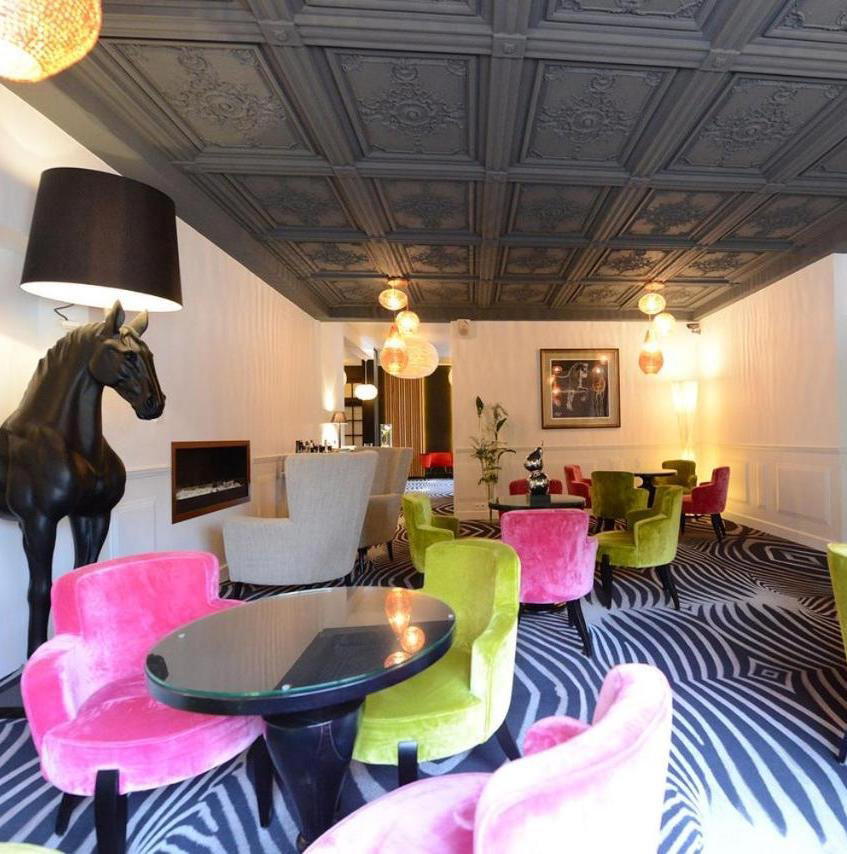
Where Normandy Finds a Modern Voice
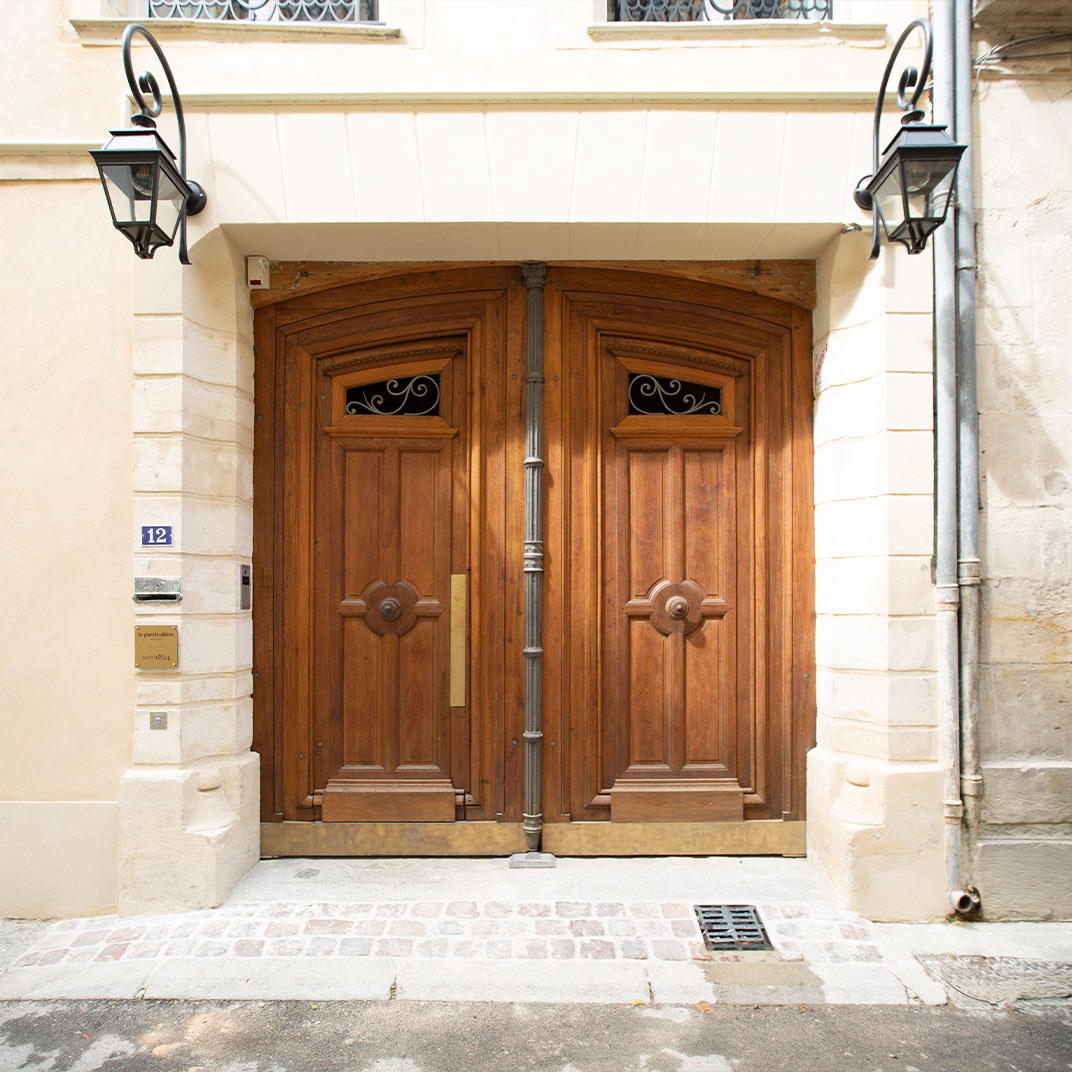
The avenue leading into central Argentan is not the kind of street that announces culinary ambition. This is a working Orne market town, quiet and functional, where the old and the new coexist without much ceremony. Which makes the angular, coffee-coloured extension of La Renaissance all the more arresting: a deliberately contemporary facade grafted onto a substantial main building, signalling something different before you have even stepped inside. In a region where traditional auberge formats dominate and regional cooking often defaults to comfort over precision, this visual declaration matters.
That architectural specificity sets the register for what follows at the table. Normandy's finest producers supply the kitchen: Carteret lobster, oysters from Veules-les-Roses, monkfish landed at Port-en-Bessin, sand carrots from Créances, foie gras from the Pays d'Auge. These are not generic Norman ingredients deployed as shorthand for regional identity. They are named, located, traceable — the kind of sourcing that places La Renaissance in the same supply-chain conversation as far larger French kitchens, despite operating in a town of fewer than 9,000 people.
A Chef Shaped by Where He Comes From
The editorial angle on La Renaissance is inseparable from the fact of rootedness. Chef Arnaud Viel is from this part of Normandy, which in French gastronomy is not merely biographical colour but a culinary position. The French fine dining tradition has long valorised the chef who returns to or remains in their native territory, and the Michelin Guide's "Remarkable" category designation (as of 2024) for La Renaissance implicitly recognises this: the cooking earns its star not by emulating Paris or the grandes tables of the south, but by pressing harder into the specific geography of the Orne.
That regional grounding shapes what modern cuisine means here. Across France, "modern cuisine" at the one-star level encompasses a wide range of approaches, from technically driven abstraction to refined classicism. At La Renaissance, the modernism appears to operate in service of the ingredient rather than in spite of it, a characteristic that distinguishes ambitious regional cooking from the kind of technique-first approach more common in urban fine dining. The Michelin assessors' own language, describing the cooking as "delicate, modern cuisine that is skilfully accomplished and harmoniously balanced," suggests a kitchen that has found a consistent register rather than one still searching for its identity.
There is also an unusual intellectual dimension to the dining experience here. Michel Onfray, the French philosopher and Argentan native, provides preface texts for the restaurant's menus. This is not a decorative gesture: Onfray is one of France's most widely read public intellectuals, and his engagement with the menu frames the meal as something more considered than a standard tasting sequence. It also connects La Renaissance to a broader Norman cultural self-consciousness, a region that tends to identify strongly with its own writers and thinkers as well as its produce.
The Normandy Supply Chain as Editorial Statement
To understand what La Renaissance is doing, it helps to place it within the geography of Norman gastronomy. The region has a strong artisanal food culture, anchored in dairy, apple orchards, seafood, and livestock, but its fine dining infrastructure is thin compared to Brittany to the west or the Île-de-France to the east. One-star restaurants in smaller Norman towns are not common, and the ones that do hold stars tend to rely heavily on the proximity of Rouen or Caen for their customer base.
La Renaissance at €€€ occupies a price point that is considered in this context. It is not competing with €€€€ multi-star destinations like Mirazur in Menton or Alléno Paris au Pavillon Ledoyen. It sits instead in a tier of serious, single-star regional restaurants, the kind that operate as the culinary anchor for their localities, alongside destinations like Assiette Champenoise in Reims or Au Crocodile in Strasbourg in their respective regional roles, and at some remove from the three-star architectural grandeur of Troisgros - Le Bois sans Feuilles or Auberge de l'Ill in Illhaeusern. The comparison that is most instructive may be Bras in Laguiole or Auberge du Vieux Puits in Fontjoncouse: restaurants where a chef's deep knowledge of a specific, non-metropolitan territory becomes the source of the cooking's authority.
For a one-star in a town of this size, that volume of review data is meaningful: it suggests a dining room that is not surviving on occasional special-occasion visits alone but drawing repeat and regional custom with some regularity.
Planning a Visit to Argentan
Argentan sits in the Orne department of Lower Normandy, roughly equidistant between Caen and Alençon, and accessible by road from Paris in under three hours. The town itself is compact and manageable; the address at 20 Avenue de la 2ème Division Blindée places La Renaissance on one of the main approach avenues, which means it is direct to locate without local knowledge. Given the lack of a high-density hotel scene in Argentan itself, most visitors driving from Paris or arriving via Caen or Le Mans will want to book accommodation in advance; our [Argentan hotels guide]() covers current options in and around the town.
Booking for a one-star in a small French town requires the same forward planning you would apply in any city. Normandy's short tourism window (broadly April through September, with summer weekends heavily subscribed) means that walk-in availability at La Renaissance is not a reliable strategy. At €€€ pricing within a regional Norman context, an evening here represents serious expenditure relative to local alternatives, which makes it worth treating as a planned event rather than a spontaneous dinner.
For those building a wider Normandy or Orne itinerary, the broader dining scene in Argentan is mapped in our [Argentan restaurants guide](). For drinks before or after, our [Argentan bars guide]() and [Argentan wineries guide]() cover those options, and if you are planning activities around the visit, the Argentan experiences guide is the place to start.
Those interested in exploring other examples of modern French cooking at similar or higher tiers, from AM par Alexandre Mazzia in Marseille to Flocons de Sel in Megève, or looking further afield to Frantzén in Stockholm or FZN by Björn Frantzén in Dubai or Paul Bocuse - L'Auberge du Pont de Collonges, will find those pages useful for contextualising where La Renaissance sits within a wider spectrum of French-influenced fine dining.
Frequently asked questions
Is La Renaissance suitable for children?
At €€€ pricing in a Michelin-starred dining room in a small French town, La Renaissance is structured around an adult fine dining experience rather than a family-casual one.
Is La Renaissance formal or casual?
For a one-star restaurant in a small regional French city like Argentan, the expected register is smart-casual to smart. The contemporary architecture and modern-cuisine format suggest a room that is serious without being stiff. At €€€ price points in French fine dining generally, a degree of sartorial consideration is the norm; equally, the non-Parisian setting and regional positioning imply that the kind of rigid formality associated with the grandes tables is unlikely to be the mood here. Dress thoughtfully and you will be fine.
What do people recommend at La Renaissance?
The Michelin Guide's own citation points to the kitchen's handling of Norman seafood and produce: Carteret lobster, Veules-les-Roses oysters, Port-en-Bessin monkfish, and Pays d'Auge foie gras are named as the building blocks of Chef Arnaud Viel's cooking.
Quick Comparison
| Venue | Cuisine | Price | Awards |
|---|---|---|---|
| La RenaissanceThis venue — the venue you are viewing | Modern French Fine Dining | $50–100 | 1 Michelin Star · Gault & Millau Remarkable Restaurant |
| Alléno Paris au Pavillon Ledoyen | Creative | Not listed | Michelin 3 Star |
| Kei | Contemporary French, Modern Cuisine | Not listed | Michelin 3 Star |
| L'Ambroisie | French, Classic Cuisine | Not listed | Michelin 3 Star |
| Le Cinq - Four Seasons Hôtel George V | French, Modern Cuisine | Not listed | Michelin 3 Star |
| Plénitude | Contemporary French | Not listed | Michelin 3 Star |
Recognition history
Dated appearances from independent guides and award organizations, with the underlying list record or original source where available.
Michelin 1 Star
Michelin
Gault & Millau Remarkable Restaurant
Gault & Millau
Full recognition history (4 entries)
Michelin 1 Star
Michelin
Michelin 1 Star
Michelin
Continue exploring
More in Argentan
Restaurants in Argentan
Browse all →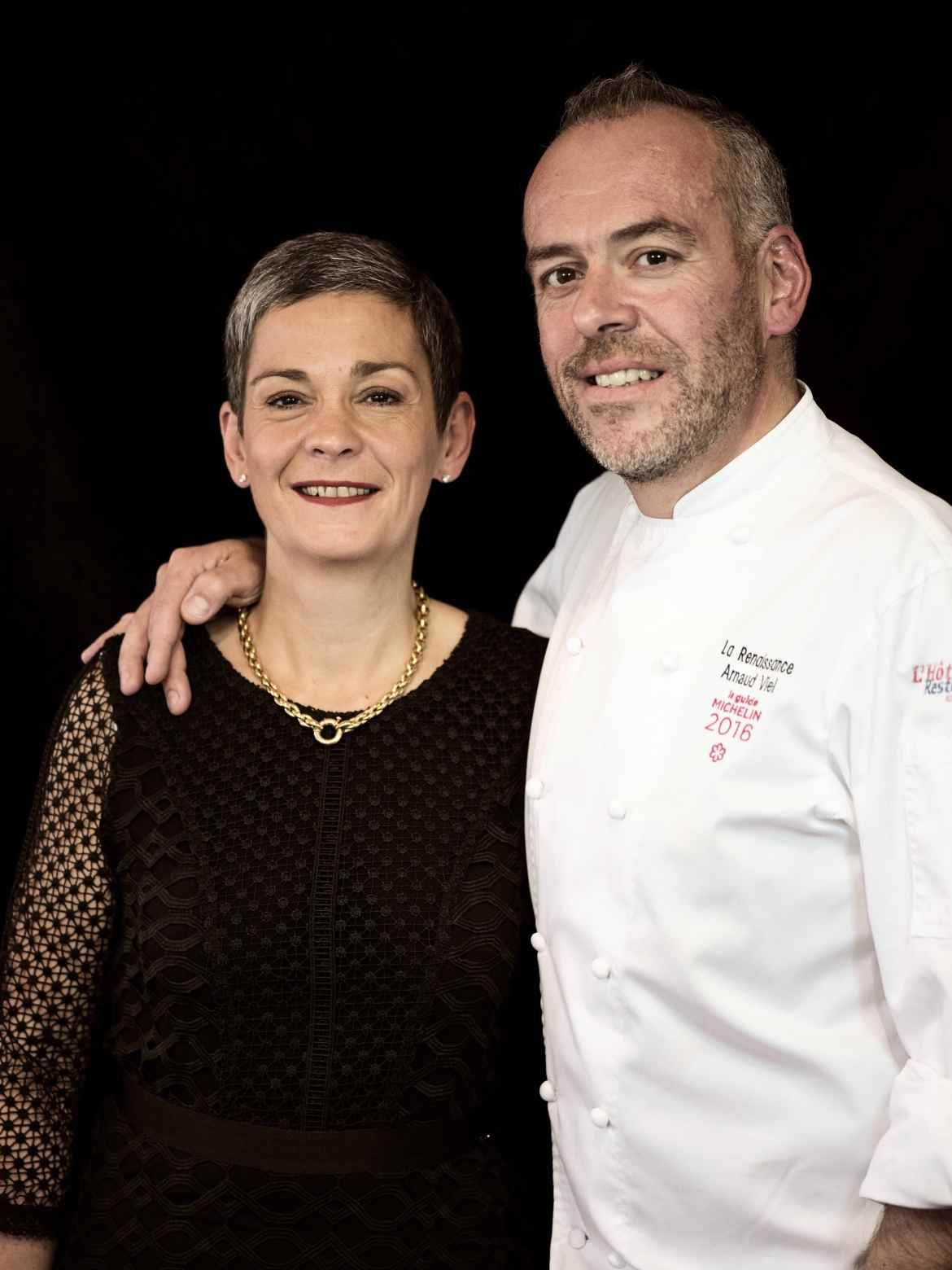
Bars in Argentan
Browse all →

Hotels in Argentan
Browse all →

Details
- Elegant
- Sophisticated
- Cozy
- Intimate
- Date Night
- Special Occasion
- Celebration
- Historic Building
- Local Sourcing
- A La Carte
- Tasting Menu
- Vegetarian Friendly
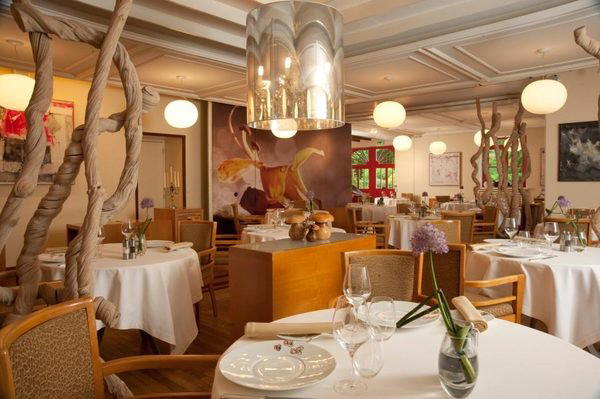
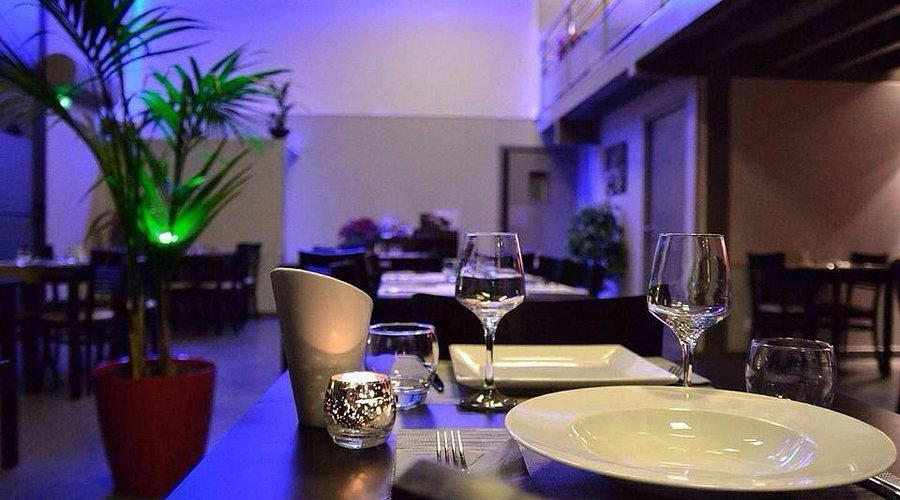
Feutré atmosphere with soft cream tones, natural materials, generous lighting, white tablecloths, and elegant tableware creating a refined and soothing dining room.