

1 Michelin Star · Gault & Millau Remarkable Restaurant
Our verdict
A Michelin-starred address in the Alsatian village of Rhinau, Au Vieux Couvent operates from a half-timbered building beside the Brunnwasser canal and earns its star through rigorous seasonal cooking. Alexis Albrecht, trained at Au Crocodile and with the Pourcel brothers, anchors his menu in Rhine fish, Ried game, and produce from the family kitchen garden. At €€€€, this is destination dining at a serious remove from city competition.

Pearl is the En Primeur Club membership app — saves, bookings, and concierge access live there. Same editors, same standards.
- Address
- 6 Rue des Chanoines, 67860 Rhinau, France
- Phone
- +33 3 88 74 61 15
- Hours
- Mon 12–1:30 PMTue–Wed ClosedThu–Sun 12–1:30 PM, 7–8:45 PM
- Website
- auvieuxcouvent.fr
- Directions
- Get directions
- Booking
- Book on Zenchef
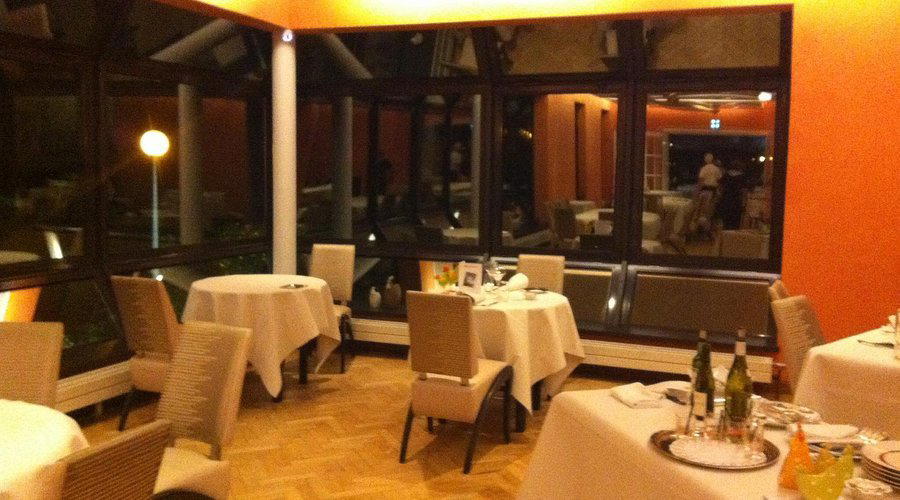
A Village Setting That Sets the Tone
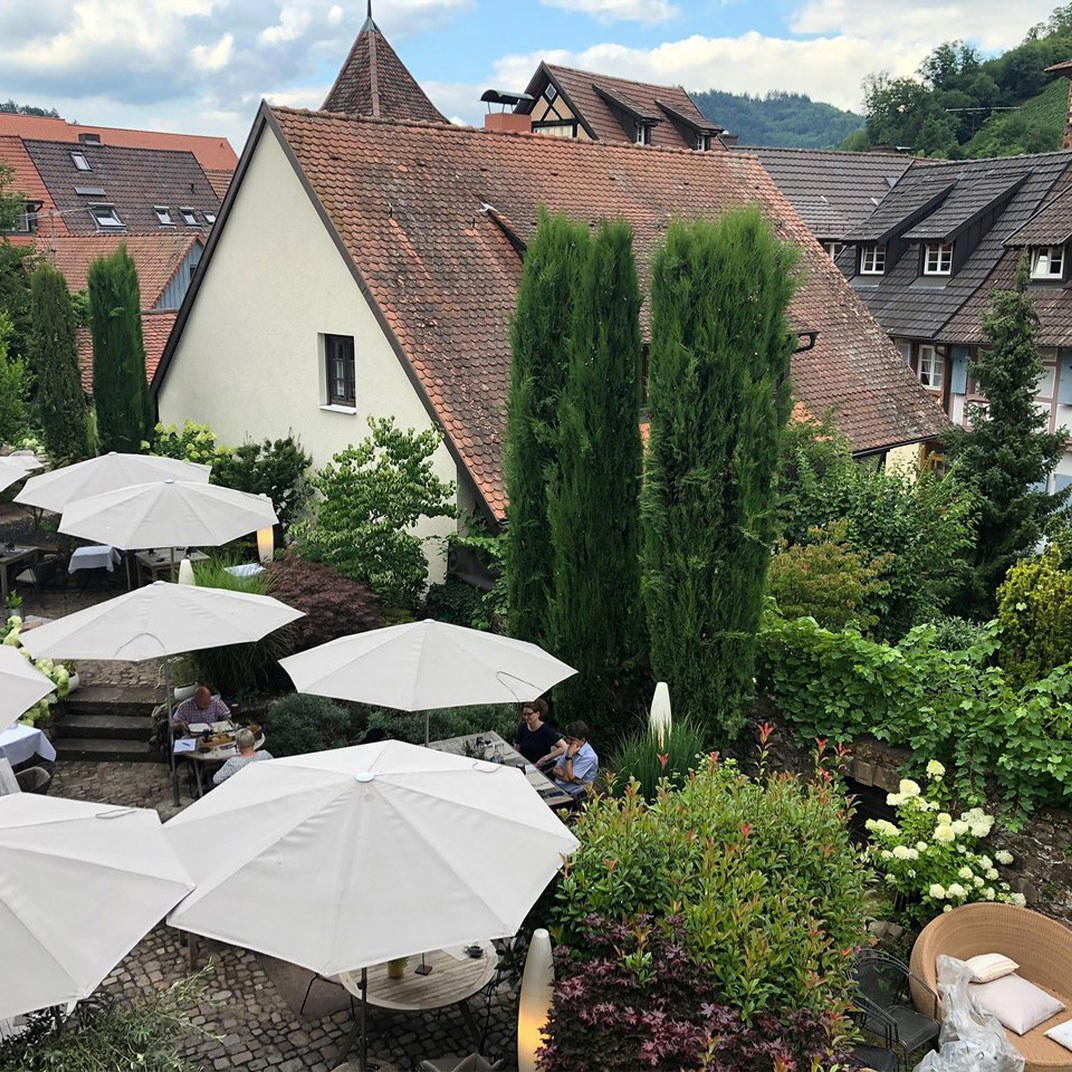
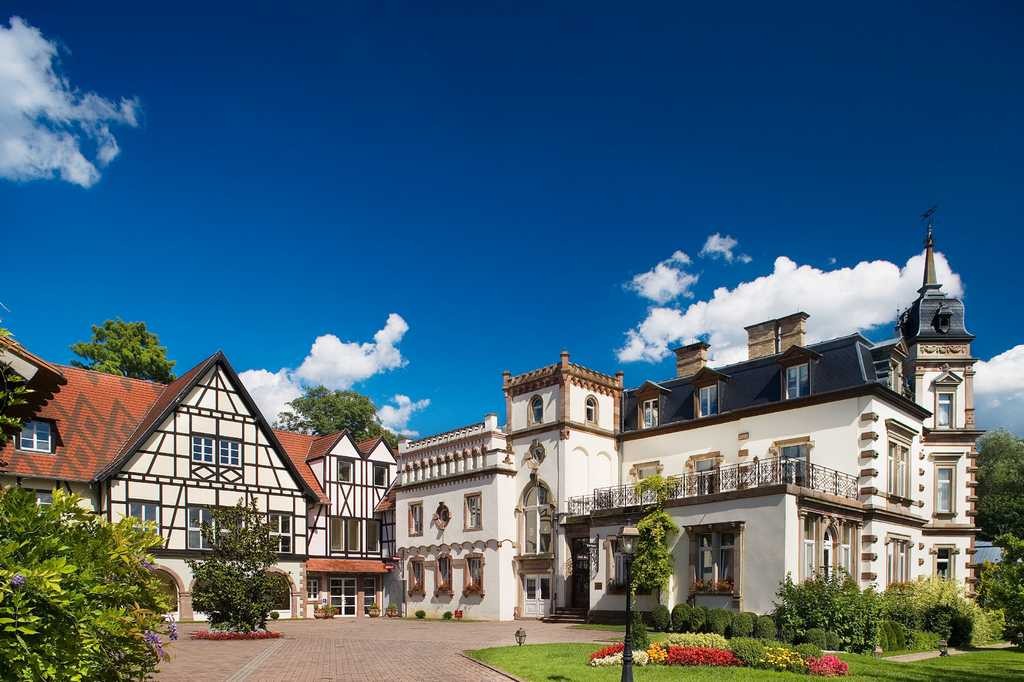
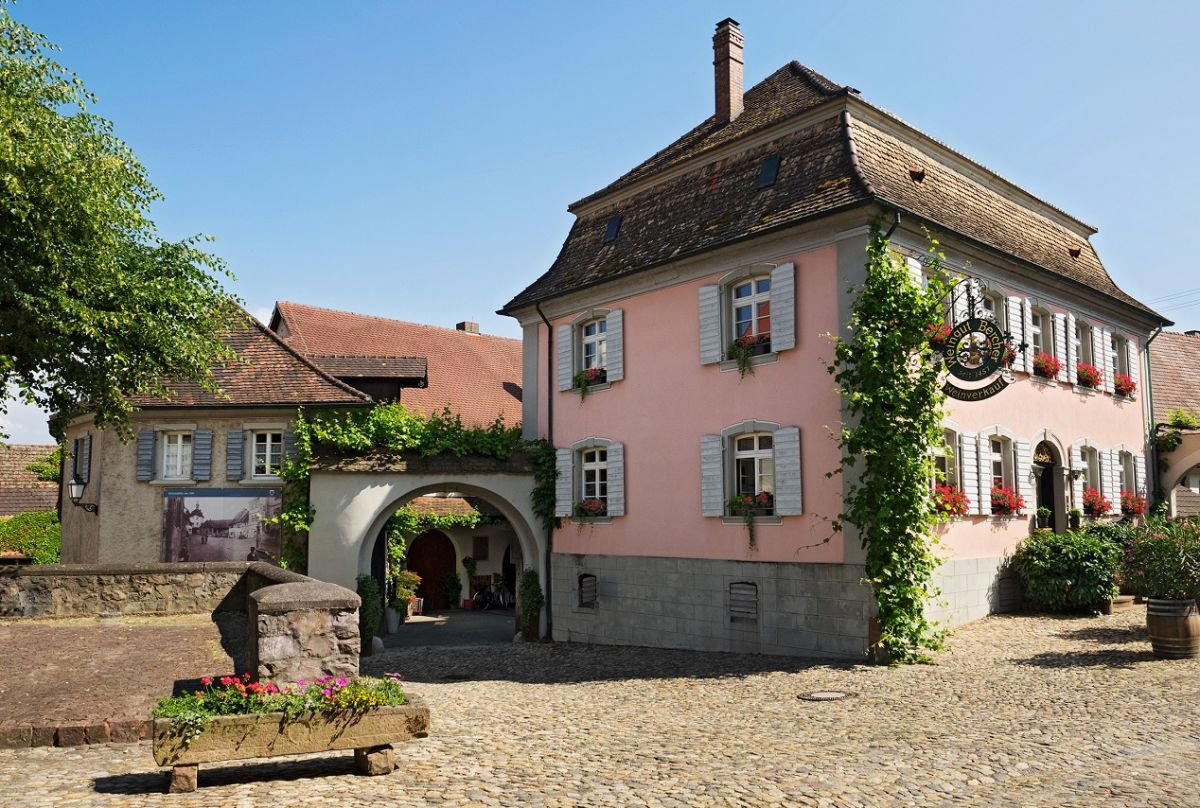
The approach to Rhinau is a lesson in how thoroughly Alsace can insulate itself from the world outside. The village sits on a sliver of land between the Rhine and the Brunnwasser canal, a geography that makes it feel less like a detour and more like a deliberate arrival. The half-timbered building that houses Au Vieux Couvent announces itself early: its mushroom-coloured façade and decorative timber framing belong to a vernacular that has defined this stretch of the Upper Rhine plain for centuries. The flower-decked banks of the Brunnwasser run alongside, and by the time you reach the door, the setting has already done a significant portion of the work. Few Michelin-starred dining rooms in France are arrived at quite like this one.
That physical context is not incidental. Alsatian cuisine has always drawn its identity from the territory between two cultures — the garden traditions of Lorraine to the west, the Rhine's aquatic larder to the east, the forest game of the Ried plain in between. A kitchen that wants to express this place has an unusually specific set of ingredients to work with, and the leading Alsatian tables have historically organised themselves around that specificity rather than against it.
The Training Behind the Plate
French fine dining has a well-documented apprenticeship culture, and the résumé of any serious chef functions as a map of the kitchens that shaped their technique. At Au Vieux Couvent, that map covers significant ground. Alexis Albrecht spent formative years at Au Crocodile in Strasbourg, one of the most decorated addresses in Alsatian dining history, before passing through the brigades of the Pourcel brothers and Jacques Maximin — kitchens associated with southern French creativity and Mediterranean precision respectively.
The significance of that formation is not biographical; it is technical. Chefs who have cooked with the Pourcel brothers at Le Jardin des Sens carry an understanding of how to bring intensity from vegetables and herbs without reducing everything to a single dominant register. Maximin's influence, meanwhile, runs toward precision and restraint. These are not contradictory pressures. Across French fine dining, the chefs who have absorbed both tend to produce cooking that is generous in flavour while disciplined in execution, which aligns precisely with what Michelin's own citation describes as Albrecht's approach at this address. For context on what comparable training pipelines produce at the multi-star level, the work at Flocons de Sel in Megève and Mirazur in Menton illustrates how different regional rootings can coexist with serious technical ambition.
What makes the Rhinau context distinctive is that Albrecht returned not to a city kitchen but to a village one, and to a family enterprise. The kitchen garden that he and his father cultivate is not a marketing addition to a tasting menu; it is an operational decision about supply. The aromatic herbs and vegetables that come from that garden represent a compression of supply chain that most city kitchens cannot replicate. The ingredients arrive at full maturity, at the chef's discretion, on a seasonal schedule that the kitchen controls rather than purchases. In a country where terroir-led cooking has produced addresses like Bras in Laguiole, a kitchen that built its entire identity around the Aubrac plateau's botanical abundance, the logic of working this way is well established. Au Vieux Couvent occupies a comparable position within its own territorial frame.
What the Menu Is Organised Around
The seasonal cooking at Au Vieux Couvent is anchored by three primary sources: fish from the Rhine, game from the Ried, and garden produce from the family plot. These are not decorative references. The Rhine between Rhinau and the German bank is one of the last stretches of the river to retain a meaningful freshwater fish population, pike, perch, and the local zander, and a kitchen positioned this close to the water has access that restaurants in Strasbourg, thirty kilometres north, cannot match on logistics alone. The Ried, the wetland plain to the west, delivers seasonal game that follows the same principle of proximity.
This organisation around local supply chains places Au Vieux Couvent in a category of French fine dining that is distinct from the creative laboratories of Paris. Compare the approach with Alléno Paris au Pavillon Ledoyen or AM par Alexandre Mazzia in Marseille and you are looking at kitchens organised around technical innovation and personal creative systems. At Rhinau, the organising principle is territorial, the cooking expresses a geography rather than a creative signature in the abstract sense. Both are legitimate modes; they attract different kinds of attention and reward different kinds of travel. For readers who have followed the terroir-first argument at addresses like Auberge du Vieux Puits in Fontjoncouse or Troisgros - Le Bois sans Feuilles in Ouches, the cooking philosophy here will read as immediately familiar.
Michelin's own Remarkable designation is a signal worth reading carefully. In the Guide's framework, Remarkable is not a consolation category; it indicates a property that the inspectorate has identified as worth specific travel. For a village restaurant operating at €€€€ pricing in a region that already competes with Auberge de l'Ill in Illhaeusern for Alsatian fine dining attention, that designation functions as a positioning statement within a well-established regional hierarchy.
Rhinau in the Broader Alsatian Dining Picture
Alsace produces a concentration of Michelin-starred restaurants per capita that is disproportionate even by French standards. The Route des Vins corridor from Thann to Marlenheim accounts for a significant share of that total, and the villages along the Rhine island communities add further addresses that most international visitors overlook in favour of Strasbourg or Colmar. Rhinau sits in this secondary tier not because its cooking is secondary but because its location demands a specific commitment from anyone based outside the region.
That commitment is, in practical terms, a drive. Rhinau is most easily reached by car from Strasbourg, roughly thirty kilometres south on routes that pass through vineyard villages and Rhine plain farmland. There is no fast rail connection. For visitors planning a day or evening around the meal, accommodation in Rhinau is worth considering, and the surrounding area offers its own reasons to stay: the wine producers near Rhinau and the village's position on the edge of the Ried nature reserve make it a plausible base for a longer Alsatian circuit. Those building an extended stay can also consult bars and experiences in Rhinau, as well as our full Rhinau restaurants guide for the wider local picture.
Both illustrate how regional French fine dining can carry national authority from village or small-city addresses without the density of a capital. Au Vieux Couvent operates on the same structural logic, with Rhinau's geographical specificity, the river, the wetland, the garden, providing the raw material that a chef with serious urban training has chosen to work with rather than leave behind.
Planning Your Visit
Au Vieux Couvent is priced at €€€€, placing it at the top tier of the regional market and in line with what a Michelin-starred seasonal tasting menu commands across provincial France. The address is at 6 Rue des Chanoines, 67860 Rhinau, and is most practically reached by car. Those arriving from Strasbourg should allow adequate time to appreciate the approach through the Rhine plain, which is itself part of what makes this meal feel like a specific act of travel rather than a city restaurant detour.
Frequently asked questions
Can I bring kids to Au Vieux Couvent?
At €€€€ pricing within a Michelin-starred room built around a seasonal tasting format, the experience is calibrated for adults focused on the food. Rhinau itself is a quiet village with little else competing for attention, so families with young children would likely find the format a poor fit.
Is Au Vieux Couvent better for a quiet night or a lively one?
Quiet is the right word here. A Michelin-starred village restaurant in Rhinau, housed in a half-timbered building beside the Brunnwasser, draws a clientele that has made a deliberate drive into rural Alsace for serious seasonal cooking. Expect focused, unhurried dining rather than a buzzing room.
Is Au Vieux Couvent award-winning?
Au Vieux Couvent has received recognition including: Category: Remarkable; With its decorative half-timbering that is emblematic of this part of Alsace, the inviting mushroom-coloured building catches the eye from afar. Close to the flower-decked banks of the Brunnwasser, it houses this resta….
What's the signature dish at Au Vieux Couvent?
Michelin's own citation names Rhine fish and Ried game as the structural anchors of Alexis Albrecht's menu, threaded through with vegetables and aromatic herbs from the family kitchen garden he cultivates with his father. The cooking changes with the season, so the specific dish shifts, but those three sources define what lands on the plate.
A Quick Peer Check
| Venue | Cuisine | Price | Awards |
|---|---|---|---|
| Au Vieux CouventThis venue — the venue you are viewing | Modern French Gastronomic | $50–100 | 1 Michelin Star · Gault & Millau Remarkable Restaurant |
| Alléno Paris au Pavillon Ledoyen | Creative | Not listed | Michelin 3 Star |
| Kei | Contemporary French, Modern Cuisine | Not listed | Michelin 3 Star |
| L'Ambroisie | French, Classic Cuisine | Not listed | Michelin 3 Star |
| Le Cinq - Four Seasons Hôtel George V | French, Modern Cuisine | Not listed | Michelin 3 Star |
| Plénitude | Contemporary French | Not listed | Michelin 3 Star |
Recognition history
Dated appearances from independent guides and award organizations, with the underlying list record or original source where available.
Michelin 1 Star
Michelin
Gault & Millau Remarkable Restaurant
Gault & Millau
Full recognition history (4 entries)
Michelin 1 Star
Michelin
Michelin 1 Star
Michelin
Continue exploring
More in Rhinau
Restaurants in Rhinau
Browse all →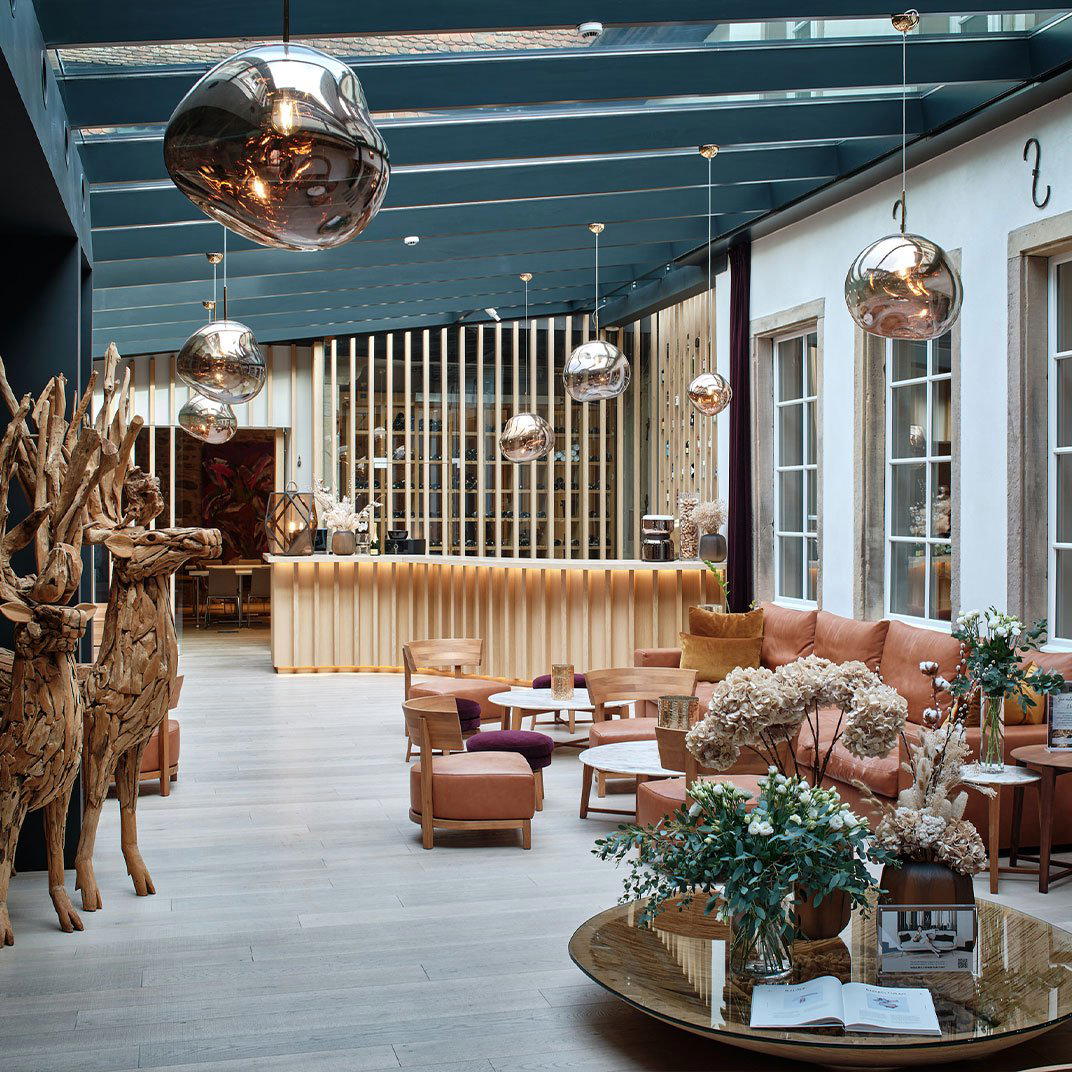
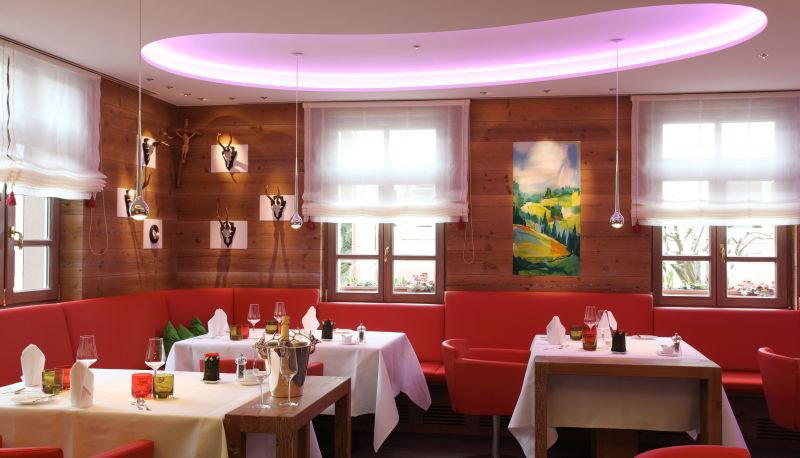

Bars in Rhinau
Browse all →


Hotels in Rhinau
Browse all →
Au Vieux Couvent
The wine
- Wine program
- Curated wine list
- Extensive wine list
Details
- Cozy
- Elegant
- Rustic
- Intimate
- Special Occasion
- Date Night
- Historic Building
- Extensive Wine List
- Local Sourcing
- Tasting Menu
- A La Carte
- Vegetarian Friendly
- Allergy Accommodating
Current opening hours
- Monday
- 12–1:30 PM
- Tuesday
- Closed
- Wednesday
- Closed
- Thursday
- 12–1:30 PM, 7–8:45 PM
- Friday
- 12–1:30 PM, 7–8:45 PM
- Saturday
- 12–1:30 PM, 7–8:45 PM
- Sunday
- 12–1:30 PM, 7–8:45 PM
Hours can change for holidays and private events. Last verified .
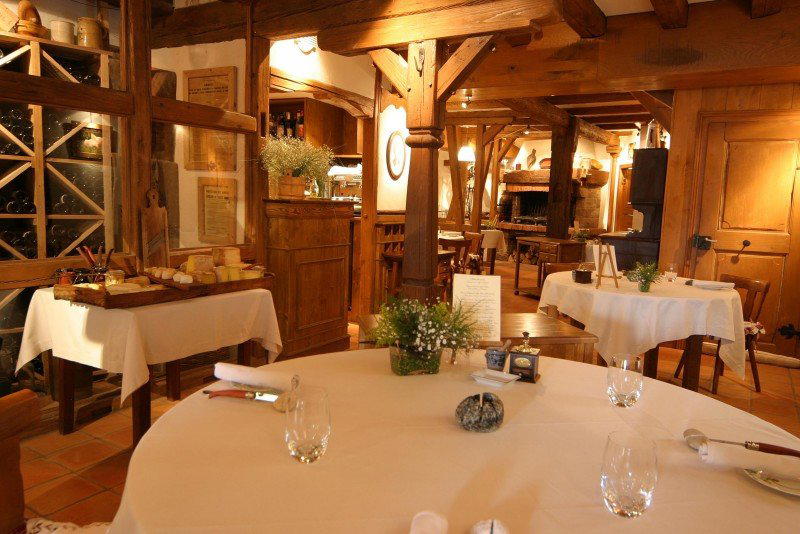
Warm, elegant, and inviting with cozy indoor decor, attentive service, and a relaxed atmosphere.