Au Cœur de la Famille runs as an Italian Family Bistro at 104 Rue du Faubourg Saint-Antoine, with lasagnes, pizza, and tiramisu in a casual, conversational setting.
Pearl is the En Primeur Club membership app — saves, bookings, and concierge access live there. Same editors, same standards.
- Address
- 104 Rue du Faubourg Saint-Antoine, 75012 Paris, France
- Phone
- +33686343498
- Directions
- Get directions
 Saves & bookings on Pearl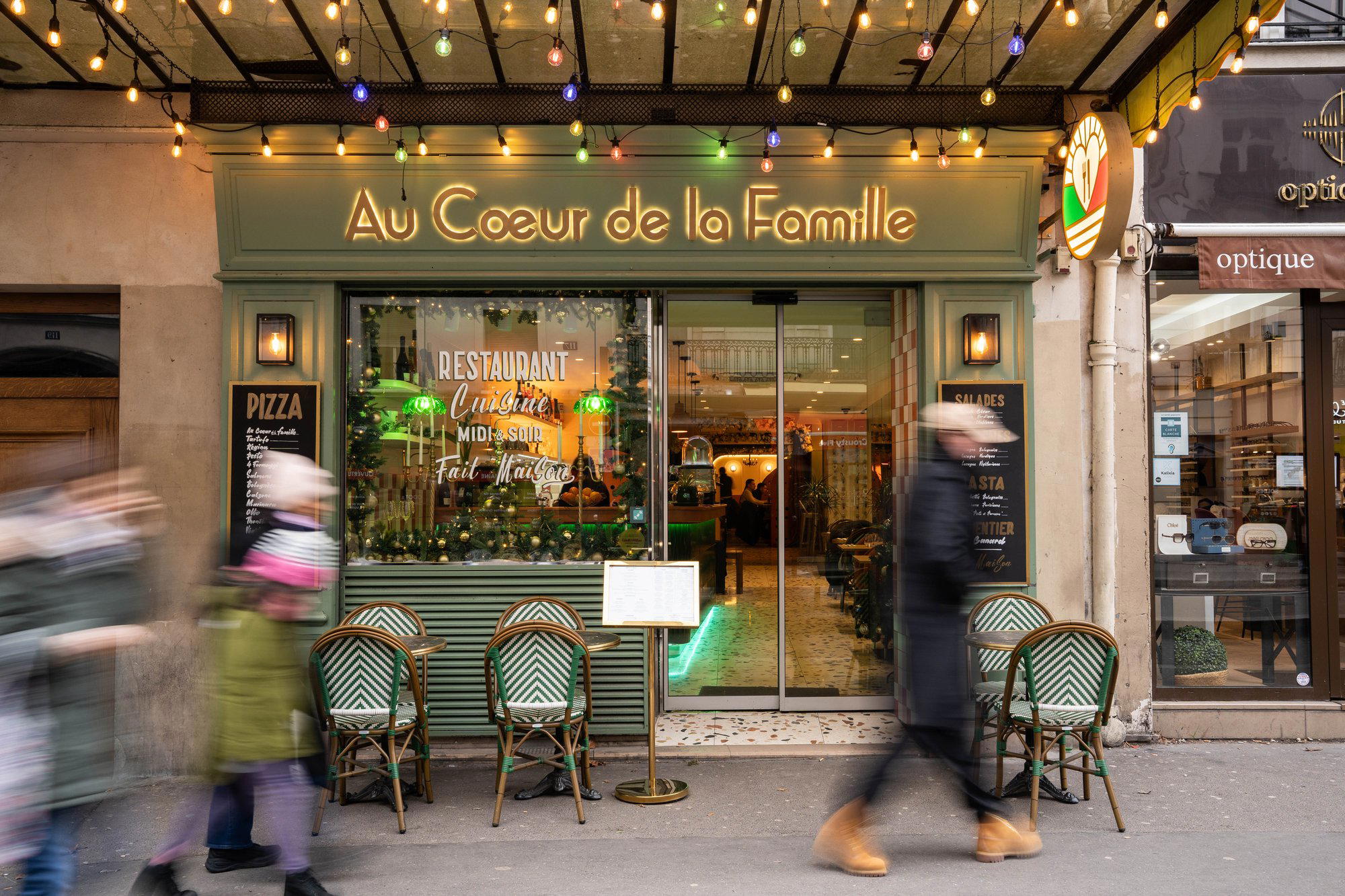
Faubourg Saint-Antoine and the Ritual of the Neighbourhood Table
The 12th arrondissement does not announce itself the way the 6th or the 8th do. Rue du Faubourg Saint-Antoine runs east from the Bastille column toward Nation, its pavements carrying a working rhythm that the more touristed quarters have largely shed. The furniture workshops that gave this street its identity across several centuries are mostly gone, replaced by a more mixed commercial fabric, but the neighbourhood retains a density and self-sufficiency that shapes how people eat here. Restaurants in this corridor tend to serve the quartier first and destination diners second, which changes both the atmosphere and the pace of a meal in ways that are worth understanding before you sit down.
Au Coeur de la Famille occupies an address at number 104 on this street, and the name itself signals an intention: this is a casual Italian Family Bistro in Paris's 12th arrondissement at 104 Rue du Faubourg Saint-Antoine, recommended for reservations and priced at about $26 per person. The dining rooms that define French culinary prestige at the level of L'Ambroisie, Alléno Paris au Pavillon Ledoyen, or Le Cinq at the Four Seasons George V operate with a different grammar entirely: long menus, formal service choreography, and price points that reflect the competitive tier they occupy. A neighbourhood address in the 12th is a deliberate departure from that register.
The Dining Ritual in a Faubourg Context
French neighbourhood dining has its own liturgy, and understanding it is as useful as knowing the menu. The meal begins with the physical settling-in: the greeting at the door, the placement at a table sized for the group rather than optimised for covers, and the unhurried arrival of the first carte. In Paris's outer arrondissements, this pacing is rarely theatrical. It is simply what a meal looks like when the room is not managing a three-hour choreography designed around a fixed tasting format.
The contrast with high-formal French dining is instructive. At Arpège or Kei, service follows a sequence that the kitchen controls from the first amuse-bouche to the final mignardises. The diner's role is largely receptive. At a neighbourhood table like this one, the dynamic inverts: the kitchen produces, but the diner sets the pace, orders selectively, and may spend two hours over three courses or forty-five minutes over one. Both are legitimate French dining experiences; they are simply different rituals with different social contracts.
That distinction matters when considering what to order and how long to stay. French regional cooking at the neighbourhood level is typically structured around a few strong points rather than a comprehensive mise-en-scène. The classic format is an entrée, a plat, and a dessert, with wine chosen by the glass or a modest carafe rather than from a cellar curated to flatter a chef's tasting menu. This is not a lesser version of haute cuisine; it is a different tradition with its own rigour and its own pleasures.
Where This Address Sits in the Wider Paris Picture
Paris's restaurant scene in 2024 is stratified with unusual clarity. At the apex sit the multi-starred houses whose peer comparisons extend to Mirazur in Menton and Troisgros in Ouches rather than to the next street. Below that tier, a dense mid-market of brasseries, bistrots, and neighbourhood tables serves the city's daily eating life, and it is within this broader grouping that an address like Au Coeur de la Famille should be understood. The 12th is not a traditional dining destination in the way that Saint-Germain or the Marais are, which means that the restaurants along Faubourg Saint-Antoine draw local clientele more consistently than visitors, and local clientele is generally a reliable quality signal in Paris.
For those building a broader picture of French dining, the contrast between a neighbourhood table in the 12th and a destination restaurant such as Paul Bocuse's Auberge du Pont de Collonges, Bras in Laguiole, or Auberge de l'Ill in Illhaeusern is almost as instructive as the food itself. Provincial grande maison dining requires planning, travel, and a certain commitment of the day; urban neighbourhood dining requires only that you show up. Both are part of the French table's identity, and both reward a reader who understands the distinction. For those exploring France's south, Auberge du Vieux Puits in Fontjoncouse and La Table du Castellet represent another register again, and Les Prés d'Eugénie in Eugénie-les-Bains and Georges Blanc in Vonnas show how the grande maison format sustains itself outside Paris entirely. Within the city, our full Paris restaurants guide maps the range from neighbourhood tables to the upper tier of the capital's formal dining circuit.
For international reference points: the community-table format that neighbourhood Paris restaurants represent has close analogues in cities like New York, where Le Bernardin sits at the formal apex while the borough's neighbourhood dining operates on a completely different register. San Francisco's Lazy Bear has taken a different approach entirely, formalising the communal table format into a ticketed experience that reflects how American dining often packages informality into a structured product. The Parisian neighbourhood table has no need of that framework: its informality is ambient rather than designed. Similarly, Flocons de Sel in Megève shows how destination-level ambition can coexist with a deeply regional identity, which is its own form of the tension between formality and rootedness.
Planning Your Visit
The practical logistics for an address like this are worth framing clearly. The venue sits on Rue du Faubourg Saint-Antoine in the 12th arrondissement, accessible from the Bastille or Ledru-Rollin metro stations.
| Dimension | Au Coeur de la Famille | L'Ambroisie | Alléno Ledoyen |
|---|---|---|---|
| Price tier | €€ | €€€€ | €€€€ |
| Arrondissement | 12th | 4th | 8th |
| Format | Neighbourhood table | Classic haute cuisine | Creative haute cuisine |
Comparable Venues
Comparable venues nearby, for context on price, style, and recognition.
| Venue | Cuisine | Price | Notes |
|---|---|---|---|
| Au Cœur de la FamilleThis venue — the venue you are viewing | Italian Family Bistro | $$ | Not listed |
| Pizzeria Popolare | Neapolitan Pizza Trattoria | $$ | 2ème Bourse |
| Doppio - Paris 18 | Italian Trattoria with Mediterranean Influences | $$ | Montmartre (18th Arrondissement) |
| o Bistrot de Tom | Italian-French Bistro | $$ | Madeleine |
| Big Mamma Group | Authentic Italian Trattoria | $$ | Multiple Paris arrondissements |
| Faggio | Calabrian Thin-Crust Pizzeria | $$ | Pigalle |
Continue exploring
More in Paris
Restaurants in Paris
Browse all →
Bars in Paris
Browse all →
Hotels in Paris
Browse all →

At a Glance
- Cozy
- Classic
- Family
- Casual Hangout
- Open Kitchen
Current opening hours
- Monday
- 9 AM–11 PM
- Tuesday
- 9 AM–11 PM
- Wednesday
- 9 AM–4 PM, 7–11 PM
- Thursday
- 9 AM–4 PM, 7–11 PM
- Friday
- 9 AM–4 PM, 7–11 PM
- Saturday
- 9 AM–4 PM, 7–11 PM
- Sunday
- 9 AM–4 PM, 7–11 PM
Hours can change for holidays and private events. Last verified .
Chaleureuse et authentique ambiance familiale avec déco italienne soignée et cadre cosy.