
Our verdict
On Calle de Ponzano in Chamberí, Arima Basque Gastronomy brings the cooking traditions of the Basque Country into one of Madrid's most food-literate neighbourhoods. Chef Nagore Irazuegi's kitchen has earned recognition on the Opinionated About Dining Casual Europe list in both 2023 and 2025, placing it among a small group of Basque addresses in the capital worth tracking seriously.

Pearl is the En Primeur Club membership app, where members save venues, book tables and use the concierge.
The menu
What to order
- Gilda
- Stilton croquettes
- Stewed cheek
Chamberí's Basque Anchor
Calle de Ponzano has spent the better part of a decade cementing itself as one of Madrid's most concentrated dining streets, a strip in Chamberí where bar-to-bar grazing competes with sit-down ambition. Within that context, Arima Basque Gastronomy occupies a specific position: a kitchen that takes the Basque tradition seriously enough to invite comparison not just with its Madrid neighbours but with the broader canon of Basque cooking as practised back in the País Vasco itself. The address at number 51 places it in the denser, more residential end of the street, where the clientele skews local and the room rewards those who arrive knowing what they're looking for.
Madrid's relationship with Basque food is long and well-documented. The city has absorbed Basque txoko culture, the pintxos format, and the grander tradition of the asador with more enthusiasm than almost any other Spanish capital outside the region itself. What has shifted in the past few years is the tier between casual pintxos bar and destination-level Basque fine dining. A generation of chefs trained in the Basque Country has started opening in Madrid at a middle register: serious about product and technique, operating in relaxed rooms, and pricing against a neighbourhood rather than a tasting menu benchmark. Arima sits in that space, alongside addresses like Haramboure, Jaizkibel, and Pelotari as part of a growing Madrid cluster of Basque-led rooms worth distinguishing from one another.
The Chef Behind the Kitchen
The editorial angle on Arima that holds up under scrutiny is the one that connects Chef Nagore Irazuegi's background to the broader question of what Basque culinary training produces when it migrates to a capital city. Irazuegi represents a cohort of Basque-trained chefs whose education was shaped by some of the most technically demanding kitchens in Europe. The Basque Country has, for decades, operated as a kind of professional formation system for Spanish cuisine: chefs come out understanding stocks, product sourcing, and the discipline of the sea-to-table chain in a way that is difficult to replicate without that geographic and cultural grounding.
What that background produces in a Madrid context is a kitchen that brings coastal Basque instincts to a landlocked city. The tradition Irazuegi works within is traceable to institutions like Arzak in San Sebastián and Martin Berasategui in Lasarte-Oria at the fine dining end, and to the txoko and asador culture at the everyday end. Arima operates closer to the latter register, which is part of what makes the OAD recognition meaningful: casual Basque cooking done with the rigour of the former tradition is a specific skill set, and one that Madrid diners have historically had limited access to outside the city's handful of Basque-run tabernas.
The parallel in the broader Spanish context is instructive. When chefs trained in regions with strong culinary identities, whether the Galician seafood tradition, the Catalan market-cooking lineage, or the Basque school, move to Madrid, they do one of two things: they adapt the format toward what Madrid's dining public expects, or they hold the line on what the original tradition requires. Kitchens at Azurmendi in Larrabetzu and Cocina Hermanos Torres in Barcelona demonstrate what happens at the high-investment end of that spectrum. Arima's OAD placement suggests the kitchen is doing the latter in its own tier: maintaining fidelity to the source tradition rather than softening it for the market.
OAD Recognition and What It Signals
Opinionated About Dining's casual Europe list operates as a different kind of signal from Michelin. Where Michelin inspectors weight service formality, room quality, and a particular idea of fine dining, OAD's crowd of informed eaters tends to reward cooking that is genuinely worth seeking out regardless of format. A ranking of 838 in the 2025 Casual Europe list, combined with a recommendation in 2023, indicates a kitchen that has maintained quality across a two-year window and has accumulated enough votes from serious diners to place on a list that spans the entire continent. In Madrid's Basque dining subset, that kind of sustained recognition matters.
Madrid's most-decorated kitchens, including DiverXO with three Michelin stars and Coque with two, operate in a different economic and experiential register entirely. Arima does not compete with that tier. For a broader picture of the Spanish kitchen tradition as it extends beyond Madrid, the restaurants at El Celler de Can Roca in Girona and Aponiente in El Puerto de Santa María provide useful reference points for the ambition ceiling of Spanish regional cooking at its most developed.
The Basque in Madrid Context
Understanding Arima also means understanding what Basque gastronomy in Madrid is not. It is not the pintxos bar format, which operates on standing, volume, and turnover. It is not the grand Basque asador, which anchors its identity in whole fish and grilled meat priced accordingly. The middle register that Arima occupies, and that addresses like Ama Taberna in Tolosa and iBAi by Paulo Airaudo in San Sebastián represent in the Basque Country itself, is a sit-down, product-driven room where the cooking does the work without theatrical framing.
That format is increasingly where serious casual dining in Spanish cities is converging. The room at Arima reflects that tendency: a neighbourhood address in Chamberí that functions as a genuine restaurant rather than a concept vehicle.
Planning Your Visit
Arima operates across a generous weekly schedule. Lunch service runs from 1:30 pm on Monday and Tuesday, while Wednesday through Saturday the kitchen opens at 1:30 pm and runs through to 1:30 am, making it one of the more flexible options on Ponzano for those arriving after a late start. Sunday service begins at noon and closes at 5:30 pm. The Chamberí location is accessible from several metro lines, and the street itself is walkable from the Alonso Martínez and Ríos Rosas stations. For those building a wider Madrid itinerary, EP Club's full Madrid restaurants guide, hotels guide, bars guide, wineries guide, and experiences guide provide a fuller map of the city's options across categories.
What to Eat at Arima Basque Gastronomy
The kitchen's OAD recognition in the casual category points toward the kind of cooking that defines serious Basque tradition at a non-tasting-menu register: product-driven dishes built around the sea, the grill, and the market rather than elaborate technique for its own sake. The Basque canon in this format typically runs through salt cod preparations, grilled fish with pil-pil or green sauce, and cured and fresh seafood that reflects the coastal sourcing the region is known for. Chef Irazuegi's training background positions the kitchen to handle that tradition with the rigour it requires rather than approximating it for a metropolitan audience. The sustained OAD presence across 2023 and 2025 suggests the kitchen has maintained those standards across multiple service cycles, which in a casual-format restaurant on a high-traffic street like Ponzano is a more demanding achievement than it might appear from the outside.
Frequently asked questions
Does Arima Basque Gastronomy have a Michelin star or similar recognition?
Arima Basque Gastronomy has received recognition including: Opinionated About Dining Casual in Europe Ranked #838 (2025); Opinionated About Dining Casual in Europe Recommended (2023).
What should I eat at Arima Basque Gastronomy?
Arima's OAD recognition in the casual category, ranked #838 in Europe in 2025 and recommended in 2023, points to serious Basque cooking outside the tasting-menu format. Chef Nagore Irazuegi works within a tradition that prioritises product and technique over elaborate presentation, so the kitchen's strengths are rooted in Basque ingredient discipline: fish, meat, and vegetable preparations tied to northern Spanish culinary logic. The extended evening service (until 1:30 am Wednesday through Saturday) suggests Arima functions well as both a full dinner destination and a later-night table, so arriving with appetite for a proper meal rather than grazing makes most sense here.
What are Arima Basque Gastronomy's hours?
Hours at Arima Basque Gastronomy: Hours: Monday 1:30–5 pm, 8 pm–1 am Tuesday 1:30–5 pm, 8 pm–1 am Wednesday 1:30 pm–1:30 am Thursday 1:30 pm–1:30 am Friday 1:30 pm–1:30 am Saturday 12 pm–1:30 am Sunday 12–5:30 pm.
Where exactly is Arima Basque Gastronomy?
Arima Basque Gastronomy is located at C/ de Ponzano, 51, Chamberí, 28003 Madrid, Spain, Madrid.
Where the Accolades Land
| Venue | Cuisine | Price | Awards | Notes |
|---|---|---|---|---|
| Arima Basque GastronomyThis venue (the venue you are viewing) | Modern Basque Gastronomy | $50–100 | Not listed | Not listed |
| DiverXO | Avant-Garde Spanish Tasting Menu | $300–500 | 3 Michelin Stars · World's 50 Best #4 | Progressive - Asian, Creative |
| Deessa | Modern Valencian Fine Dining | $150–200 | 2 Michelin Stars · La Liste Top Restaurants | Modern Spanish, Creative |
| Smoked Room | Modern Japanese Fire Omakase | $200–300 | 2 Michelin Stars · La Liste Top Restaurants | Progressive Asador, Contemporary |
| Coque | Modern Spanish Fine Dining | $300–500 | 2 Michelin Stars · La Liste Top Restaurants | Spanish, Creative |
| Paco Roncero | Avant-Garde Spanish Fine Dining | $150–200 | 2 Michelin Stars · La Liste Top Restaurants | Creative |
Recognition history
Dated appearances from independent guides and award organizations, with the underlying list record or original source where available.
Opinionated About Dining Casual in Europe Recommended
Opinionated About Dining
Full recognition history (3 entries)
Opinionated About Dining Casual in Europe Ranked #838
Opinionated About Dining
Opinionated About Dining Casual in Europe Recommended
Opinionated About Dining
Continue exploring
More in Madrid
Restaurants in Madrid
All restaurants in Madrid →
Bars in Madrid
All bars in Madrid →

Details
- Cozy
- Modern
- Intimate
- Elegant
- Date Night
- Casual Hangout
- Open Kitchen
- Extensive Wine List
- Small Plates
- A La Carte
- Vermouth
- Cocktails
- Vegetarian Friendly
- Vegan Options
- Gluten Free Options
Current opening hours
- Monday
- Closed
- Tuesday
- 1:30–5 PM, 8 PM–1 AM
- Wednesday
- 1:30–5 PM, 8 PM–1 AM
- Thursday
- 1:30–5 PM, 8 PM–1 AM
- Friday
- 1:30–5 PM, 8 PM–1:30 AM
- Saturday
- 1:30–5 PM, 8 PM–1:30 AM
- Sunday
- Closed
Hours can change for holidays and private events. Hours as of .
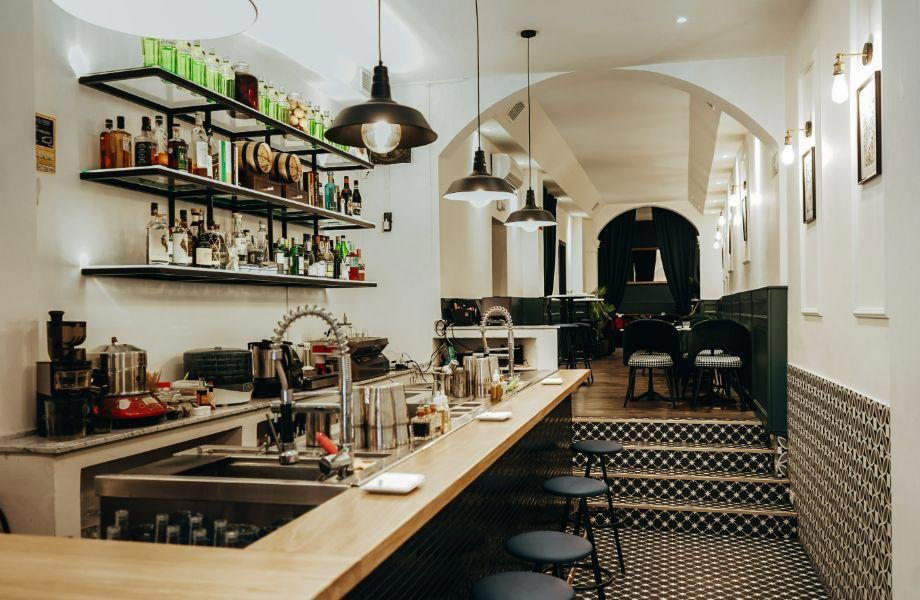
Cozy and intimate with minimalist design softened by wood, visible kitchen, but can get noisy in the small space.