Our verdict
Where the Gulf Meets the Grill: Seafood Culture on Koh Kood Approach Ao Salat by road in the late afternoon and the scene tells its own story before you arrive: fishing boats returning to a village jetty, the smell of charcoal smoke drifting...

Pearl is the En Primeur Club membership app — saves, bookings, and concierge access live there. Same editors, same standards.
- Address
- Koh Kood, Thailand
- Directions
- Get directions
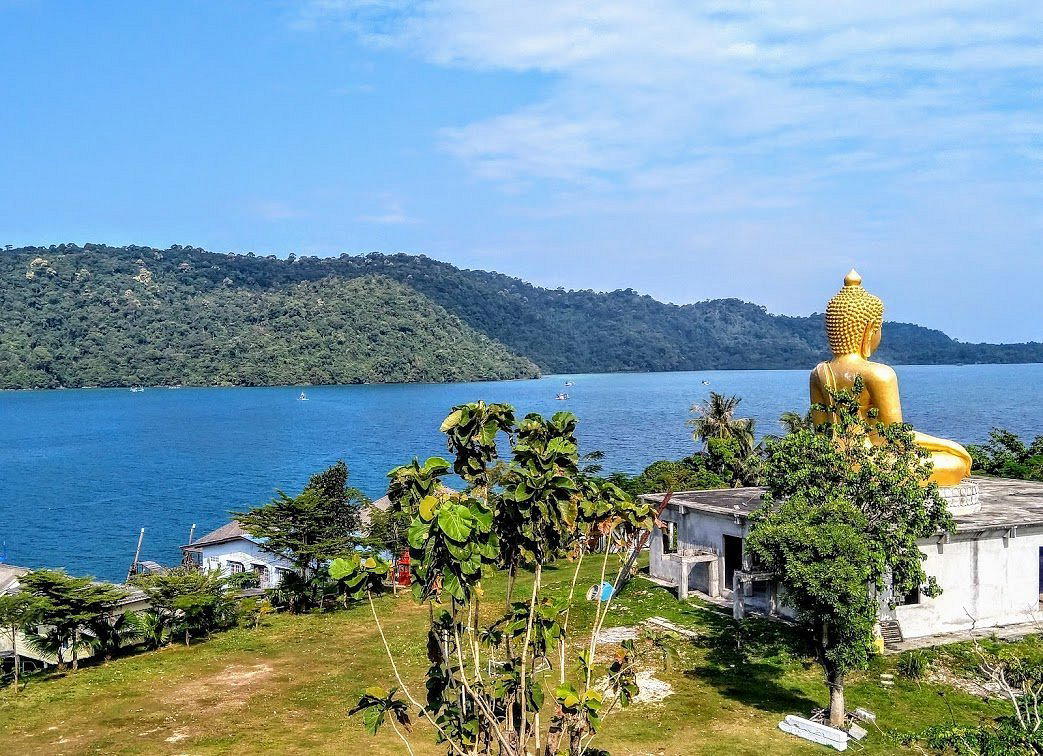
Where the Gulf Meets the Grill: Seafood Culture on Koh Kood
Approach Ao Salat by road in the late afternoon and the scene tells its own story before you arrive: fishing boats returning to a village jetty, the smell of charcoal smoke drifting through coconut palms, plastic tables arranged close to the water's edge where the tide line is near enough to hear. Ao Salat is one of Koh Kood's working fishing communities, and the seafood barbecue culture that has grown around it follows the oldest logic in Thai coastal eating: catch in the morning, grill in the evening, sell to whoever shows up.
This is not resort dining. It is not the kind of experience you find at Benz Restaurant at Soneva Kiri, where the same island's seafood arrives as part of a composed, resort-polished format. Ao Salat Village Seafood BBQ sits at the other end of the spectrum: open air, direct sourcing, no ceremony. That contrast matters to understanding what Koh Kood actually offers as a dining destination, and why visitors who only eat at their resort miss a significant part of the island's character. For a broader view of where this fits within Koh Kood's eating options, the full Koh Kood restaurants guide maps the range.
The Cultural Logic of Thai Coastal BBQ
Seafood grilling in Thai fishing villages is not a trend or a tourist format invented for export. It is a provisioning tradition that predates modern hospitality infrastructure by generations. Along the Gulf of Thailand coastline, from the Trat archipelago down through Surat Thani and the southern peninsula, village seafood spots operate on the same structural model: the catch determines the menu, charcoal is the dominant cooking method, and pricing is set by weight rather than by dish. The diner's role is to select from whatever is displayed on ice or in tanks, agree a price, and wait for the grill to do its work.
The cultural weight of this format is easy to underestimate if you arrive expecting the kind of curated regional sophistication found at Sorn in Bangkok, where Southern Thai ingredients are handled through a fine-dining framework with two Michelin stars behind it. Village BBQ is not competing in that space. Its authority comes from proximity and directness: the fish on the grill was in the water that morning, and the cook's only agenda is not burning it. That simplicity, executed well, carries its own integrity.
The same tradition appears across Thailand's coast in different registers. DEVASOM BEACH GRILL in Takua Pa represents a more resort-adjacent interpretation on the Andaman side. Krua Laew Tae R-Rom in Pattaya occupies a similar coastal-casual register on the Eastern Seaboard. What distinguishes Ao Salat is the village setting itself: no resort infrastructure, no international menu crossover, just the fishing community and the grill.
What the Setting Involves
Ao Salat is one of Koh Kood's smaller coastal communities. The village sits on the island's northern end, away from the main resort concentration around Ao Ngam Kho and Ao Tapao in the south. Getting there requires either a rental vehicle or a driver arranged through accommodation, and the road runs through interior forest before opening to the bay. That distance is part of what keeps the area as a working village rather than a developed strip.
The eating format at the seafood BBQ operations around Ao Salat follows the weight-based selection model standard to this type of venue. Whole fish, shellfish, and crustaceans are grilled over charcoal and served with standard accompaniments: steamed rice, nam jim seafood (the lime-chilli-garlic dipping sauce that anchors Thai coastal eating), and typically a rotating short list of stir-fried vegetables. The meal is built by the diner, not designed by the kitchen.
Evening is the operating window. Tables fill as the sun drops and the boats are in. Arrive before dark to get a sense of what is available and to claim a table with a water view. There is no reservation system of the kind you would use at a formal venue. Logistics at this type of spot are managed on arrival, in person. Visitors staying at resort properties would do well to confirm transport arrangements before heading out, as taxis on Koh Kood are not abundant and return journeys after dark require advance planning.
How This Fits the Broader Thai Seafood Picture
Thailand's seafood eating culture is one of the most developed in Southeast Asia, built on both the Gulf of Thailand and Andaman coastlines and their very different catch profiles. The Eastern Gulf, where Koh Kood sits, is associated with prawns, squid, blue crab, and a range of reef and demersal fish. The preparation philosophy at the village level prioritises freshness over technique: a whole fish grilled to the point of slight char on the skin, flesh still moist inside, is the standard against which the cook is judged.
That standard is different from what you encounter at Bangkok's Michelin-recognised Thai restaurants, or at venues like AKKEE in Pak Kret or PRU in Phuket, where the sourcing story is filtered through a fine-dining editorial lens. It is also different from the pan-Asian coastal formats you encounter at spots like Little Edo Suratthani. Village BBQ in the Trat islands operates without that framing, and the value in understanding it lies in reading it on its own terms.
For context outside Thailand entirely: the simplicity-over-ceremony approach in places like Ao Salat inverts what destination restaurants like Le Bernardin in New York City represent at the top of the seafood-focused dining spectrum. Both are serious about the fish. The gap is everything else: room, service, menu architecture, price tier. Neither is the wrong format. They answer different questions.
Planning a Visit
Ao Salat Village Seafood BBQ operates in the informal category of coastal Thai dining where neither booking systems nor published hours are reliable guides. The practical approach is to go in the evening, go with flexibility on timing, and go with cash. Koh Kood has limited ATM coverage, and small village restaurants operate on cash exclusively. Transport should be arranged in both directions before leaving accommodation. The drive from the southern resort areas takes 30 to 45 minutes depending on road conditions and vehicle type.
Visitors comparing options for a single evening on the island face a clear choice of register: a composed dining experience at a resort property such as the one at Soneva Kiri, or the direct, unmediated version of island seafood eating that the village represents. Both are legitimate. The second is harder to replicate elsewhere. Thai coastal dining in its village form is increasingly marginalised as development pressure moves through the Gulf islands; Koh Kood remains, for now, one of the places where the format survives in something close to its original character.
Frequently asked questions
Can I bring kids to Ao Salat Village Seafood BBQ?
Ao Salat Village Seafood BBQ operates as an open-air, informal coastal venue on Koh Kood's northern shore, which makes it a natural fit for families. There are no formal seating arrangements or dress codes, and the relaxed village setting gives children room to move. The grilled seafood format is direct and unpretentious, with food arriving as it comes off the coals rather than in a structured multi-course sequence.
What is the atmosphere like at Ao Salat Village Seafood BBQ?
The setting is a working fishing village on Koh Kood's northern end, away from the resort-heavy parts of the island, so the atmosphere reflects the community rather than the tourism industry. Expect open-air tables, the smell of charcoal, and boats at or returning to the jetty nearby. It is the kind of place where the setting does the work: no curated decor, just the Gulf of Thailand and whatever came in that day.
Is Ao Salat Village Seafood BBQ open year-round, and does the season affect what's available?
Koh Kood's weather follows the Gulf of Thailand pattern, with a wetter monsoon period roughly from May through October that can affect both boat access to the island and daily fishing activity. During lower-season months, some informal village venues reduce hours or close intermittently based on demand and sea conditions. For Ao Salat specifically, no fixed annual schedule is published, so checking locally on Koh Kood before making the trip to the northern village is the reliable approach.
What do people recommend at Ao Salat Village Seafood BBQ?
Specific menu details are not published which is consistent with how informal coastal Thai seafood spots operate: the selection depends on the day's catch from local Koh Kood fishing boats. Grilled whole fish, shellfish, and squid are the standard framework for village BBQ dining of this type along the Gulf coast. Ordering what the cook or host suggests based on what arrived that morning is the practical approach.
What's the best way to book Ao Salat Village Seafood BBQ?
Ao Salat Village Seafood BBQ does not operate a booking system in the conventional sense. This is consistent with informal Thai coastal dining, where turning up in person is the norm. Visiting in the late afternoon, when fishing boats have returned and grilling begins, is the approach that aligns with how the village operates. Accommodation staff on Koh Kood can often provide current guidance on timing and access.
Budget Reality Check
Comparable venues nearby, for context on price, style, and recognition.
| Venue | Cuisine | Price | Awards | Notes |
|---|---|---|---|---|
| Ao Salat Village Seafood BBQThis venue — the venue you are viewing | Village Seafood BBQ | Not listed | Not listed | Not listed |
| Benz Restaurant at Soneva Kiri | Authentic Thai Fine Dining | $100–150 | Not listed | Koh Kood, Authentic Thai Fine Dining |
| Ann Guay Tiew Kua Gai | Thai Fried Noodles with Chicken | $1–10 | Not listed | Bom Phrap Satru Pai Khwaeng, Thai Fried Noodles with Chicken |
| Guay Jub Ouan Pochana | Thai Guay Jub (Rolled Noodle Soup) | $1–10 | Not listed | Samphanthawong Khwaeng, Thai Guay Jub (Rolled Noodle Soup) |
| Khon Kaen Khaaw Muu Yaang | Isaan Grilled Pork Neck | $1–10 | Michelin Bib Gourmand | Nai Mueang, Isaan Grilled Pork Neck |
| Him Tang Pig's Blood Soup | Northern Thai Pig's Blood Soup | $1–10 | Not listed | Mae On District, Northern Thai Pig's Blood Soup |



Details
- Rustic
- Scenic
- Casual Hangout
- Waterfront
- Local Sourcing
- Sustainable Seafood
- Waterfront
- A La Carte
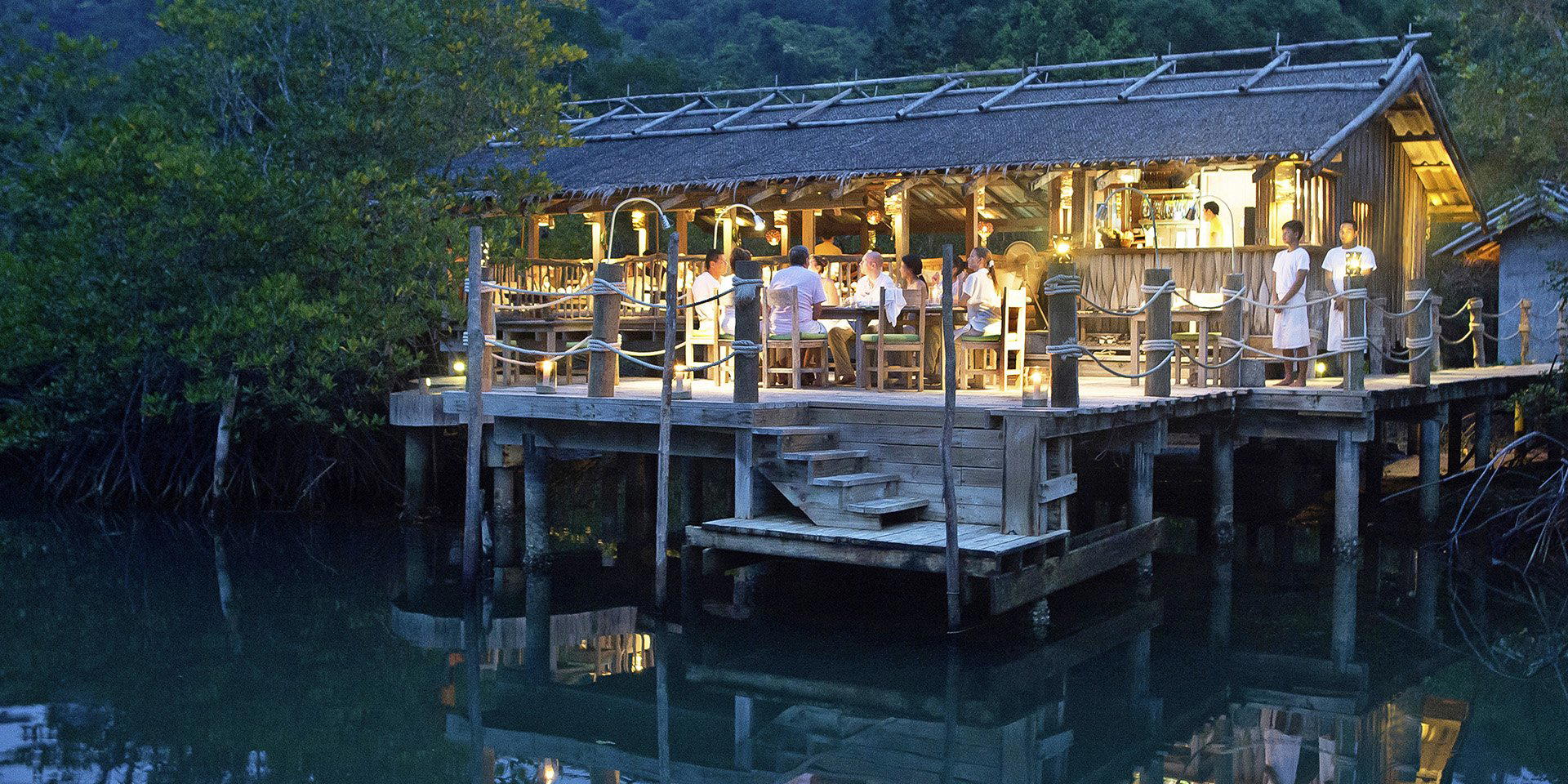
Rustic fishing village atmosphere with stilt houses over the water and scenic bay views.