
Simon Rogan's first Thailand venture opened in December 2023 at Baan Natai, Phang Nga, bringing the chef's-table format that defined his UK restaurants to the Gulf of Thailand coast. A multi-course tasting menu draws on native Thai ingredients and local grower collaborations, served in front of an open kitchen. The non-alcoholic pairing is among the more considered options in southern Thailand's fine-dining tier.
Pearl is the En Primeur Club membership app — saves, bookings, and concierge access live there. Same editors, same standards.
- Address
- A, 40/14 Moo 6 Baan Natai, Khok Kloi, Takua Thung District, Phang Nga 82140, Thailand
- Phone
- +66 96 604 5469
- Website
- aulisphuket.com
- Directions
- Get directions
 Saves & bookings on Pearl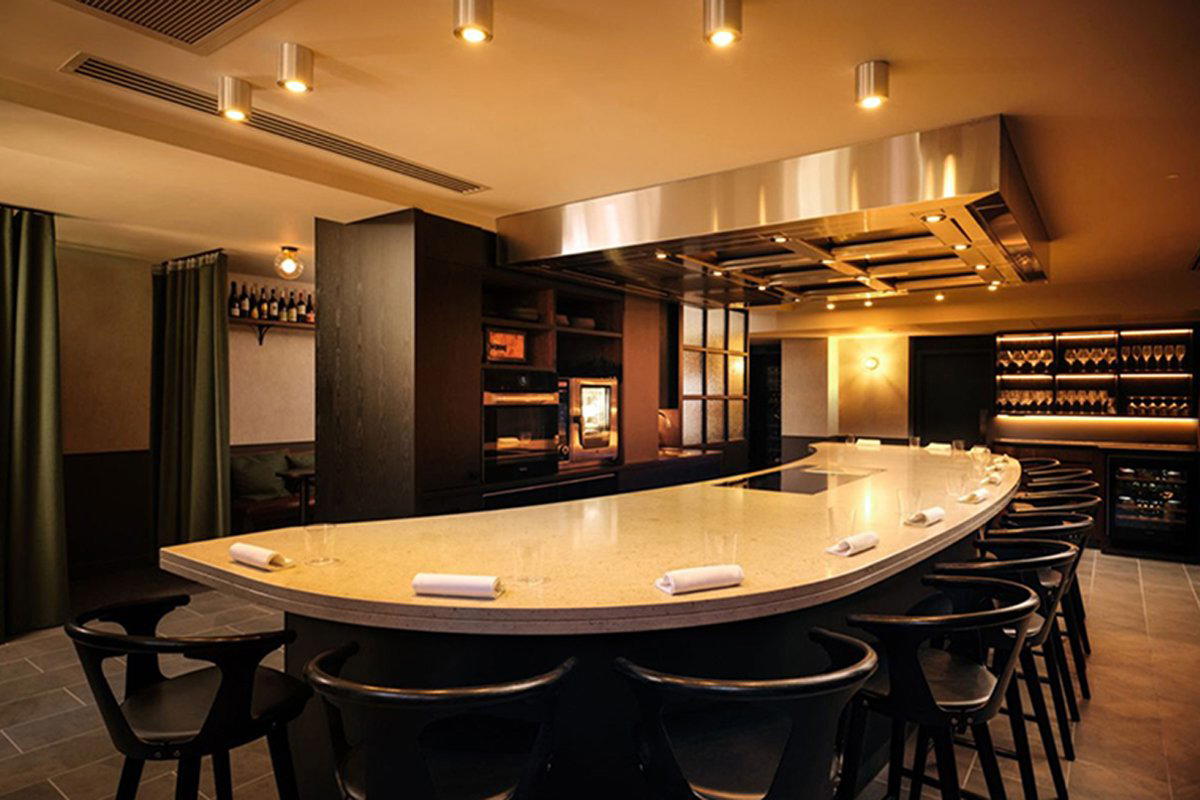
A British Fine-Dining Format Meets Southern Thailand's Ingredient Culture
Southern Thailand's upper end of the dining spectrum has long been anchored in Phuket, where hotel-backed kitchens and international-brand restaurants set the reference points for the region. Phang Nga, the province directly to the north, has operated at a different register: seafood shacks along the mangrove channels, market stalls serving southern Thai curries with the ferocity of fresh turmeric and kaffir lime, and a handful of mid-range spots like Baan Rearn Mai and the Thai-Chinese institution Hok Kee Lao that trade in honest regional cooking rather than tasting-menu theatre. Into this context, the December 2023 opening of Aulis at Baan Natai reads as a deliberate repositioning move, placing a European-pedigreed chef's-table concept in a province that had no prior equivalent.
The format is drawn directly from the Aulis model established in the UK, where the concept functions as a development kitchen and intimate dining counter. That structure, a lounge for amuse-bouche and aperitifs, then a counter seat facing the open kitchen, travels intact to Phang Nga. The kitchen operates with Thai produce at its centre, sourcing from local growers and collaborators. The lineage matters as context: Rogan's UK reputation rests on multi-decade engagement with hyper-local sourcing at a time when the term was still gaining mainstream traction in European fine dining. Aulis Phang Nga is that same sensibility relocated to a coastline with dramatically different raw materials.
What the Chef's-Table Format Does in This Setting
The chef's-table concept carries specific expectations in contemporary fine dining. Counter formats emerged partly as a reaction against the anonymity of large dining rooms, creating a setting where the kitchen is the event and the chefs become visible participants in the meal rather than background operators. In Thailand, the template has precedent at Sorn in Bangkok, where the multi-course format around southern Thai cuisine earned the restaurant sustained international recognition, and at PRU in Phuket, which built a similar farm-to-table argument around Phuket's own agricultural surrounds. Aulis enters this small cohort with a different point of origin: the driving creative signature comes from a British kitchen tradition rather than a Thai culinary lineage, which raises an immediate question about how the two interact.
Answer, at least in structural terms, is ingredient-forward sourcing as the connector. Southern Thailand's produce, galangal, pandan, long pepper, wild herbs from the coastal forest fringe, seafood from the Andaman, carries cultural specificity that resists reduction to decorative garnish. When a kitchen trained in the Rogan methodology applies the same forensic attention to Thai ingredients that it would to Lake District lamb or heritage root vegetables, the cultural content of those ingredients becomes the architecture of the menu. That is a different proposition from the common pattern of European technique applied to Asian produce as a stylistic move. Whether execution consistently honours that ambition is a question only sustained observation can answer, but the structural commitment to local grower collaboration suggests the intention is genuine.
Where Aulis Sits in Phang Nga's Dining Range
Phang Nga's dining scene spans a considerable price and format range. At the accessible end, Anuwat and Bang Dean represent the street-food culture that defines everyday eating across the province, operating at single-baht price points with the kind of recipe specificity that takes decades to develop. Beach Grill and Bar sits at the ฿฿฿ tier, offering a Mediterranean-inflected coastal option. Aulis, priced at ฿฿฿฿, occupies stronger examples from that range without a local peer in Phang Nga itself. Its nearest competitive references are in other Thai cities: the precision counter formats at AKKEE in Pak Kret or the creative-tasting programs at Aeeen in Chiang Mai, and further afield at internationally recognised rooms like Le Bernardin in New York City or Atomix, which operate the same counter-format seriousness at a comparable or higher price tier.
That comparative isolation in Phang Nga cuts both ways. There is no local benchmark against which to measure the kitchen's consistency, but there is also no nearby competition drawing from the same diner pool. Visitors staying at Baan Natai's resort properties, the address sits within what has become one of southern Thailand's more carefully developed coastal strips, have limited alternatives at the same format level, which gives Aulis a structural advantage that has nothing to do with the quality of the cooking itself.
The Non-Alcoholic Pairing as Signal
Among Thai fine-dining programs, the non-alcoholic pairing has become an increasingly reliable indicator of how seriously a kitchen engages with the full dining experience. Fermented shrubs, cold-brew infusions, and distillations built from local botanicals have appeared across creative-tasting rooms in Bangkok and Chiang Mai as an alternative to wine that reflects the same seasonal and local sourcing logic as the food. Aulis's non-alcoholic pairing positions the beverage program within that broader shift. For guests who prefer not to drink or who find that wine pairings in the Thai climate sit uneasily with heat and humidity, a considered non-alcoholic option changes the calculus of the full tasting experience.
Planning a Visit
Aulis operates Tuesday through Saturday, with sittings beginning at 6:30 PM; Tuesday service closes at 10 PM while Wednesday through Saturday extends to 11 PM. The restaurant is closed Sunday and Monday. The address at 40/14 Moo 6, Baan Natai, Khok Kloi in Takua Thung District places it roughly midway between Phuket International Airport and Khao Lak, accessible by car and well-positioned for guests staying along the Natai Beach corridor. Given the format, a fixed multi-course menu in a counter setting with a finite number of seats, advance reservation is expected to be necessary, particularly for weekend dates. Those planning broader Thailand travel might also consider Agave in Ubon Ratchathani and The Spa in Lamai Beach for regional context at different points on the country's culinary map.
Price and Recognition
Comparable venues nearby, for context on price, style, and recognition.
| Venue | Cuisine | Price | Awards | Notes |
|---|---|---|---|---|
| AulisThis venue — the venue you are viewing | ฿฿฿฿ · Creative | $$$$ | Michelin 1 Star | Not listed |
| Beach Grill and Bar | Bang Muang, Mediterranean Beach Grill | $$$ | Michelin Plate | Not listed |
| Hok Kee Lao | Not listed | $$ | Bib Gourmand | Takua Pa, Thai-Chinese with Southern Thai influences |
| Baan Rearn Mai | Khok Kloi, Takua Thung, Thai Seafood | $$ | Michelin Plate | Not listed |
| Krachang Khao Lak | Thai Mueang, Fresh Andaman Seafood | $$ | Bib Gourmand | Not listed |
| Krua Luang Ten | Khuekkhak, Takua Pa, Southern Thai | $ | Bib Gourmand | Not listed |
Recognition history
Dated appearances from independent guides and award organizations, with the underlying list record or original source where available.
Michelin 1 Star
Michelin
Michelin 1 Star
Michelin
Continue exploring
More in Phang Nga
Restaurants in Phang Nga
Browse all →
Bars in Phang Nga
Browse all →
At a Glance
- Intimate
- Elegant
- Sophisticated
- Date Night
- Special Occasion
- Chefs Counter
- Open Kitchen
- Extensive Wine List
- Sommelier Led
- Farm To Table
- Local Sourcing
Current opening hours
- Monday
- 9 AM–11 PM
- Tuesday
- 6:30–11 PM
- Wednesday
- 6:30–11 PM
- Thursday
- 6:30–11 PM
- Friday
- 6:30–11 PM
- Saturday
- 6:30–11 PM
- Sunday
- Closed
Hours can change for holidays and private events. Last verified .
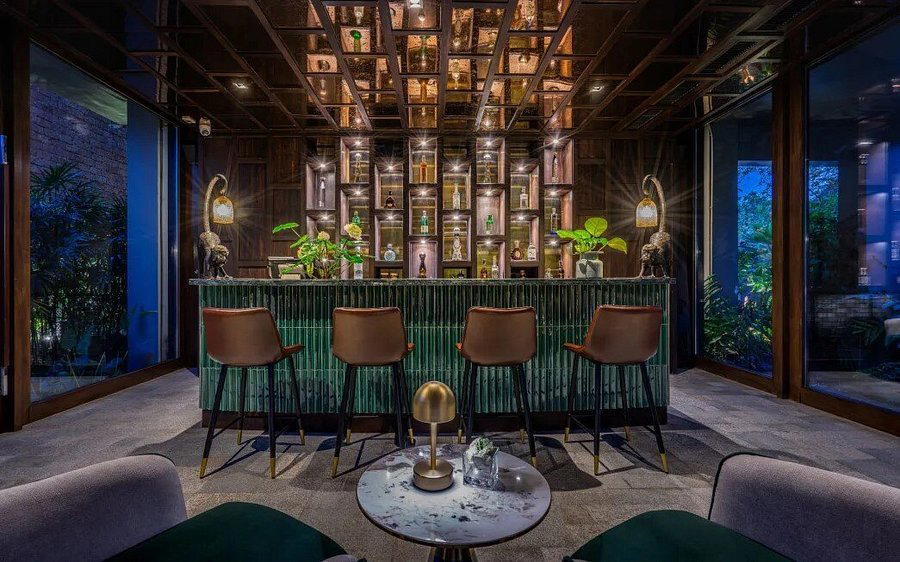
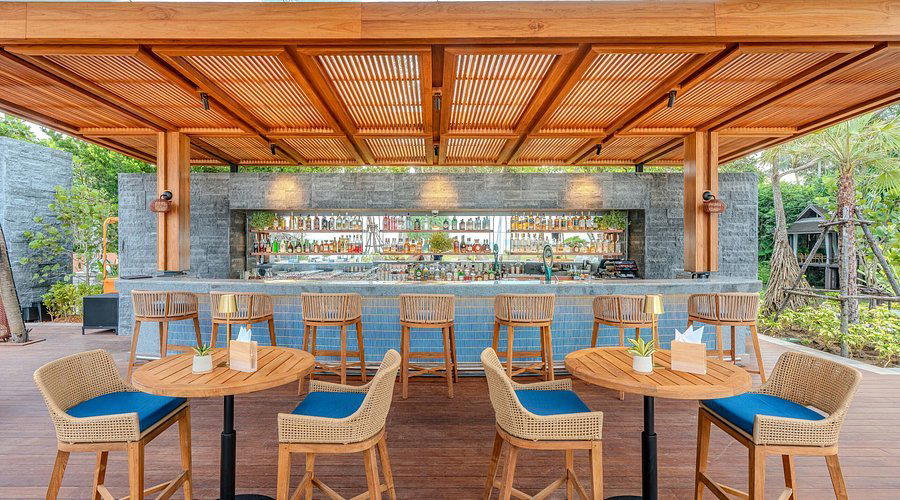
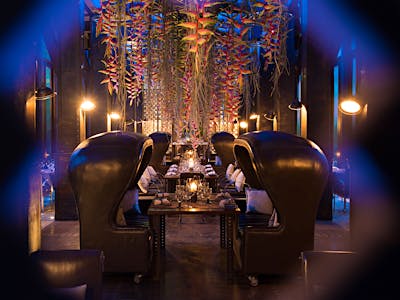
Intimate chef's table with moody lighting around the open kitchen, creating an elegant and immersive fine dining atmosphere.