Anthony's La Piazza
Our verdict
Anthony's La Piazza sits on the southwestern edge of Raleigh along NC-42, positioning itself within a broader wave of Italian-American dining that has moved steadily into the Triangle's suburban corridors. The restaurant draws on the community-anchored tradition of neighborhood Italian formats, where familiarity and consistency matter more than seasonal reinvention. It serves as a practical reference point for understanding how the genre functions outside Raleigh's downtown core.

Pearl is the En Primeur Club membership app, where members save venues, book tables and use the concierge.
The menu
What to order
- Veal Saltimbocca
- Zuppa Di Pesce
- Lobster Ravioli
Italian-American Dining on Raleigh's Southwestern Edge
The drive southwest on NC-42 out of central Raleigh tells you something about how the Triangle's dining geography actually works. The concentration of restaurants thins, strip-mall formats take over, and the question shifts from which cutting-edge concept to visit to which neighborhood anchor has earned its place over time. Anthony's La Piazza operates in this part of the city, at 7277 North Carolina 42 W, where the audience is primarily residential and repeat custom matters more than destination traffic. That context shapes what Italian-American dining means at this address.
Suburban Italian-American restaurants occupy a specific and often underexamined position in American dining culture. They are not competing with the farm-to-table tasting menus coming out of places like Blue Hill at Stone Barns in Tarrytown or the hyper-sourced, ingredient-led menus at Single Thread Farm in Healdsburg. Their reference points are different: consistency across visits, familiar flavor profiles, portions calibrated to households rather than tasting-menu pacing, and a pricing structure accessible to families rather than expense accounts. Understanding Anthony's La Piazza requires understanding that frame first.
The Sourcing Logic Behind Neighborhood Italian
The Italian-American tradition in the United States has always maintained an interesting dual relationship with ingredients. On one side sits the question of authenticity: San Marzano tomatoes versus domestic canned, imported Parmigiano-Reggiano versus domestic parmesan, fresh pasta versus dried. On the other sits the practical reality of running a neighborhood operation outside a major import hub, where supply chains, cost structures, and customer expectations all push toward pragmatic sourcing decisions.
Raleigh sits far enough from the coastal import infrastructure of New York or the specialty wholesale networks of Chicago that suburban Italian restaurants in the Triangle have historically relied on regional distributors rather than artisan suppliers. This is not a criticism: it reflects the economics of a dining tier that prioritizes accessibility. The restaurants that have succeeded in this model, across Raleigh and across the broader American suburban Italian genre, have done so by building consistency around a defined pantry rather than chasing ingredient variation. What changes from season to season in this format is rarely the sourcing; it is the specials list and the kitchen's capacity to execute reliably on core dishes.
This dynamic contrasts sharply with the ingredient-first programs at destination restaurants. At Smyth in Chicago or Providence in Los Angeles, sourcing decisions drive the menu structure itself. At neighborhood Italian-American operations, the menu drives the sourcing decisions. That inversion is not a failure of ambition; it is a different service contract with a different audience.
Where Anthony's La Piazza Sits in Raleigh's Dining Spread
Raleigh's dining identity has diversified considerably over the past decade. Downtown has absorbed nationally recognized formats and locally driven concepts: Brewery Bhavana's combination of dim sum and craft beer, Poole's Downtown Diner's refined Southern comfort approach, and Death and Taxes' wood-fire American cooking have all anchored distinct tiers of the market. Restaurants like Ajja and Azitra have brought more specialized international perspectives to the city's dining conversation, while Barcelona Wine Bar Raleigh has established a strong foothold in the wine-and-small-plates format.
Anthony's La Piazza operates in a different sector of this geography, one that rarely generates editorial coverage but accounts for a significant share of actual dining occasions in any city. The NC-42 corridor serves neighborhoods where the decision calculus favors familiarity and convenience over novelty. In that context, a restaurant maintaining a consistent Italian-American format serves a real and recurring community need. For a broader orientation to how Raleigh's restaurant scene is organized across formats, price tiers, and neighborhoods, the full Raleigh restaurants guide maps the city's dining across all relevant categories.
The La Piazza name itself signals a deliberate placement within the Italian-American tradition, one that references the communal gathering logic of Italian public squares rather than the fine-dining register of, say, an osteria or enoteca branding. That positioning is consistent with a restaurant serving a neighborhood audience in a suburban format. For comparison, the related Anthony's La Piazza Prime represents a different tier of the same operating identity, suggesting the brand has explored at least some degree of format differentiation.
The Broader Context of Italian-American Dining in the American South
Italian-American cuisine in the American South follows patterns distinct from its Northeast counterparts. The red-sauce tradition that dominated Italian-American cooking in New York, New Jersey, and Philadelphia arrived in Southern cities later and through different demographic channels. The result is a category where the reference points are more diffuse: some restaurants draw on the classic red-sauce playbook, others adapt to Southern ingredient availability, and a few integrate Southern flavor logic into Italian frameworks in ways that neither coast has fully replicated.
At the national level, the conversation around ingredient sourcing in Italian-adjacent cooking has moved dramatically. The farm-to-table discipline that The French Laundry in Napa helped normalize, and that The Inn at Little Washington has applied to Mid-Atlantic European cooking, has filtered into urban Italian restaurants as an expectation. Chefs like those behind Atelier Moessmer Norbert Niederkofler in Brunico have taken ingredient provenance to its logical extreme in a European Alpine context. These reference points set the outer edge of what ingredient-led Italian cooking looks like. Neighborhood Italian-American formats in suburban Raleigh occupy a different position on that spectrum, one defined by community service rather than culinary statement.
What connects both ends of this spectrum is the underlying logic of hospitality: the question of what a restaurant owes its regular guests. At the destination level, that debt is paid in seasonal surprise and technical achievement. At the neighborhood level, it is paid in recognition, reliability, and the kind of comfort that comes from a menu you already know how to read.
Planning a Visit
Anthony's La Piazza is located at 7277 North Carolina 42 W in Raleigh, NC 27603, accessible primarily by car given its position along a suburban highway corridor southwest of the city center. Diners coming from downtown Raleigh should plan for the drive out on NC-42, which situates the restaurant within a residential and commercial zone rather than a walkable dining district. For comparison options closer to the urban core, Bazil Indian Cuisine and Barcelona Wine Bar Raleigh represent distinct formats in Raleigh's more central dining corridors. Those interested in how ingredient-sourcing philosophy translates into tasting-menu formats at the national level can reference Le Bernardin in New York City, Lazy Bear in San Francisco, Emeril's in New Orleans, Addison in San Diego, and Atomix in New York City for the full range of what American fine dining sourcing currently looks like.
Frequently asked questions
Where is Anthony's La Piazza located?
Anthony's La Piazza is located at 7277 North Carolina 42 W, Raleigh, NC 27603, Raleigh.
How does Anthony's La Piazza fit into the broader Raleigh dining scene compared to downtown options?
Anthony's La Piazza occupies a different part of Raleigh's dining geography than the nationally recognized concepts that have clustered downtown over the past ten years. Positioned along NC-42 in the 27603 zip code, it functions as a neighborhood anchor for the southwestern residential corridor rather than a destination restaurant drawing visitors from across the Triangle. Diners looking for Italian-American cooking without the downtown parking and pricing dynamics of central Raleigh will find it a practical alternative in its part of the city.
What should I eat at Anthony's La Piazza?
Anthony's La Piazza follows the Italian-American tradition built around pasta, red-sauce preparations, and familiar comfort formats that define this category across the American South. Given its position along NC-42 in Raleigh's southwestern corridor, it draws a neighborhood crowd that returns for reliable, familiar plates rather than rotating seasonal menus. Specific current dishes are best confirmed directly with the restaurant before visiting.
What's the best way to book Anthony's La Piazza?
Anthony's La Piazza is located at 7277 North Carolina 42 W, Raleigh, NC 27603, and given its suburban highway position, the majority of guests arrive by car rather than foot traffic. Booking details, including whether reservations are accepted or walk-ins are the norm, are best verified by contacting the restaurant directly. No online booking portal is currently listed in public records for this location.
What's the standout thing about Anthony's La Piazza?
Its location tells part of the story: Anthony's La Piazza sits along NC-42 on the southwestern edge of Raleigh, away from the downtown restaurant concentration that has absorbed most of the Triangle's national attention over the past decade. That placement puts it squarely in neighborhood-Italian territory, serving a local residential draw rather than competing in the city's more visible dining corridors. For Raleigh diners in the 27603 zip code, proximity and consistency are the relevant factors.
Is Anthony's La Piazza good for vegetarians?
Italian-American menus typically carry a reasonable range of pasta and tomato-based dishes that work without meat, and that structural tradition applies across most restaurants in this category.
At-a-Glance Comparison
Comparable venues nearby, for context on price, style, and recognition.
| Venue | Cuisine | Price | Awards | Notes |
|---|---|---|---|---|
| Anthony's La PiazzaThis venue (the venue you are viewing) | Upscale Italian | $30–50 | Not listed | Not listed |
| Cafe Tiramisu | Authentic Northern Italian | $30–50 | Not listed | Wakeview |
| Caffe Luna | Tuscan Italian | $30–50 | Not listed | Fayetteville Street |
| The Angus Barn | Classic American Steakhouse | $50–100 | Wine Spectator Grand Award | Glenwood Crossing |
| Irregardless | Farm-to-Table American Fusion with Vegetarian Focus | $30–50 | Not listed | downtown |
| Il Falò Wood-Fired Kitchen | Wood-Fired Italian | $30–50 | Not listed | Leesville Hollow |
Continue exploring
More in Raleigh
Restaurants in Raleigh
All restaurants in Raleigh →
Bars in Raleigh
All bars in Raleigh →
Details
- Elegant
- Sophisticated
- Modern
- Date Night
- Special Occasion
- Late Night
- Standalone
- Extensive Wine List
- A La Carte
- Gluten Free Options
- Vegetarian Friendly
Current opening hours
- Monday
- 11:15 AM–9 PM
- Tuesday
- 11:15 AM–9 PM
- Wednesday
- 11:15 AM–9 PM
- Thursday
- 11:15 AM–9 PM
- Friday
- 11:15 AM–10 PM
- Saturday
- 11:15 AM–10 PM
- Sunday
- 11 AM–9 PM
Hours can change for holidays and private events. Hours as of .
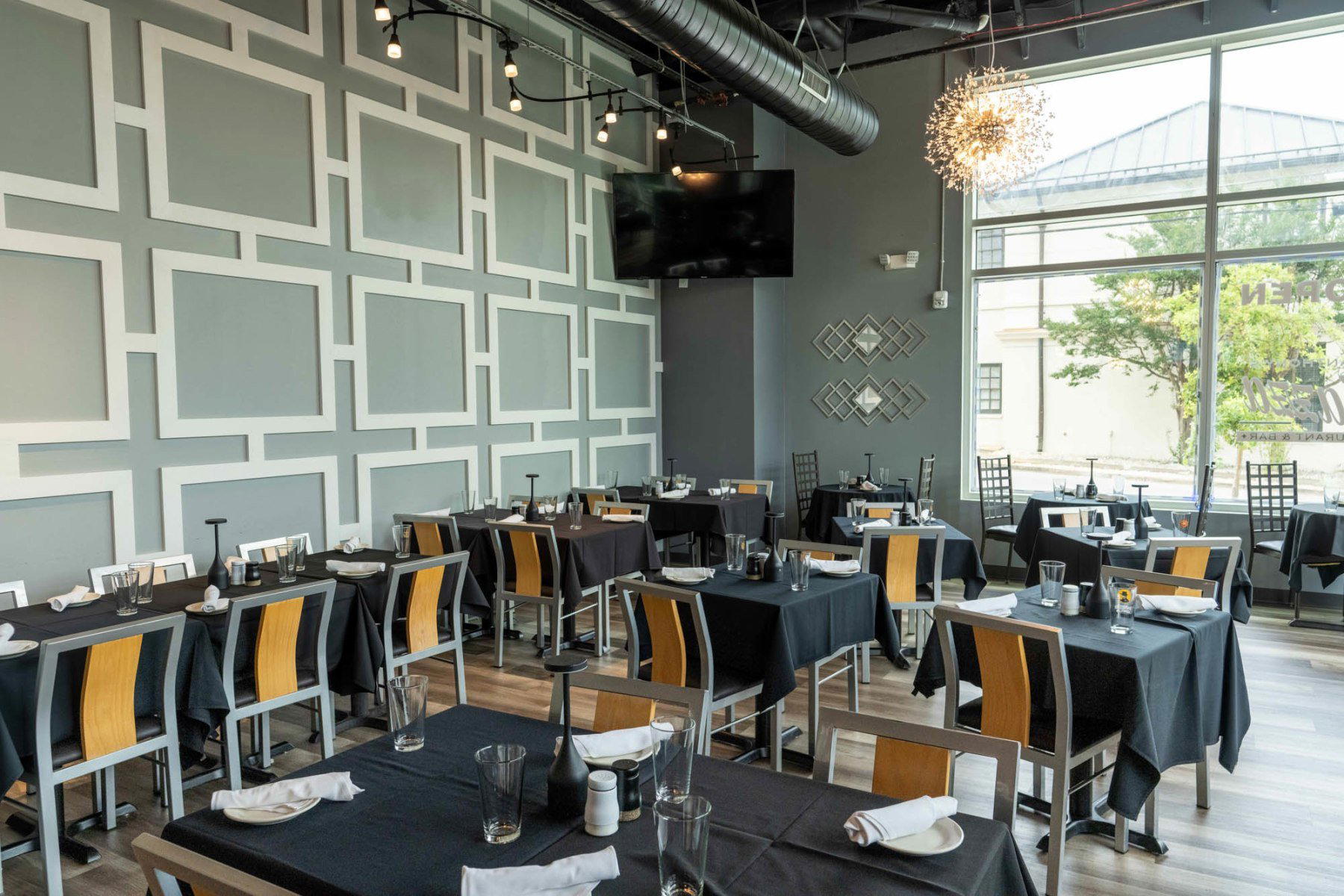
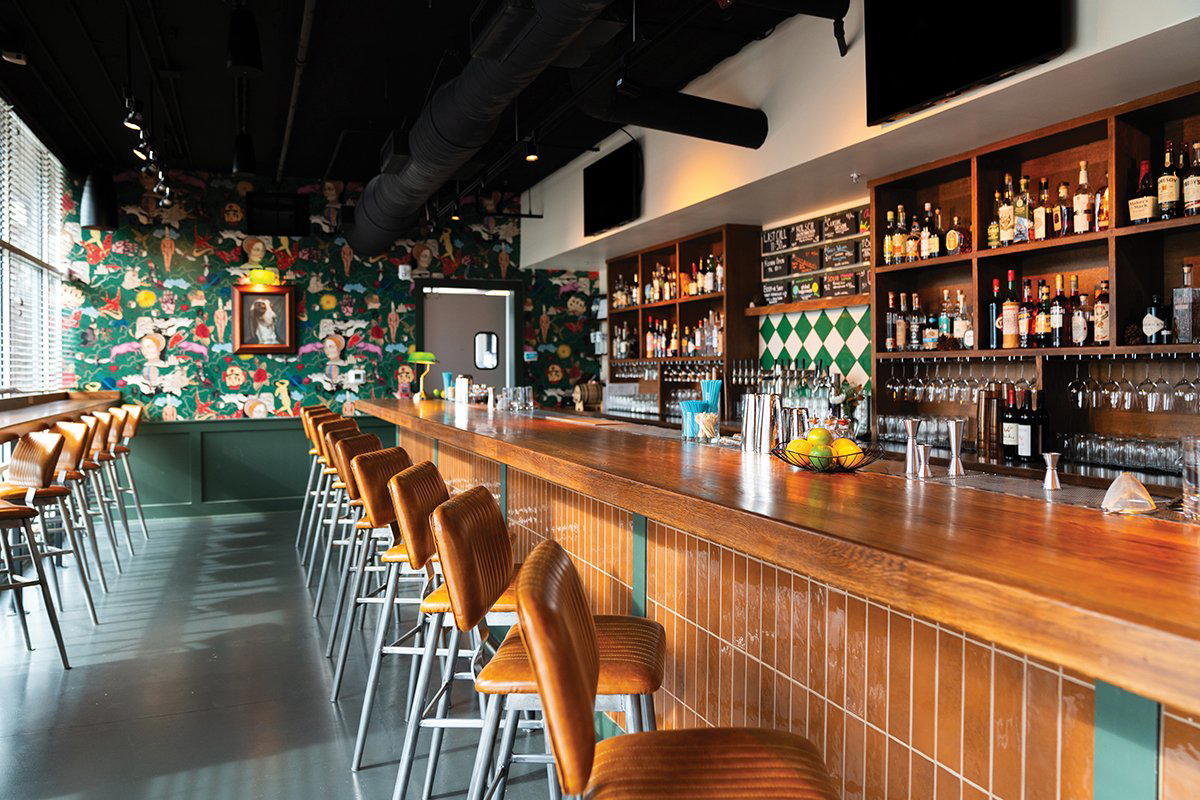
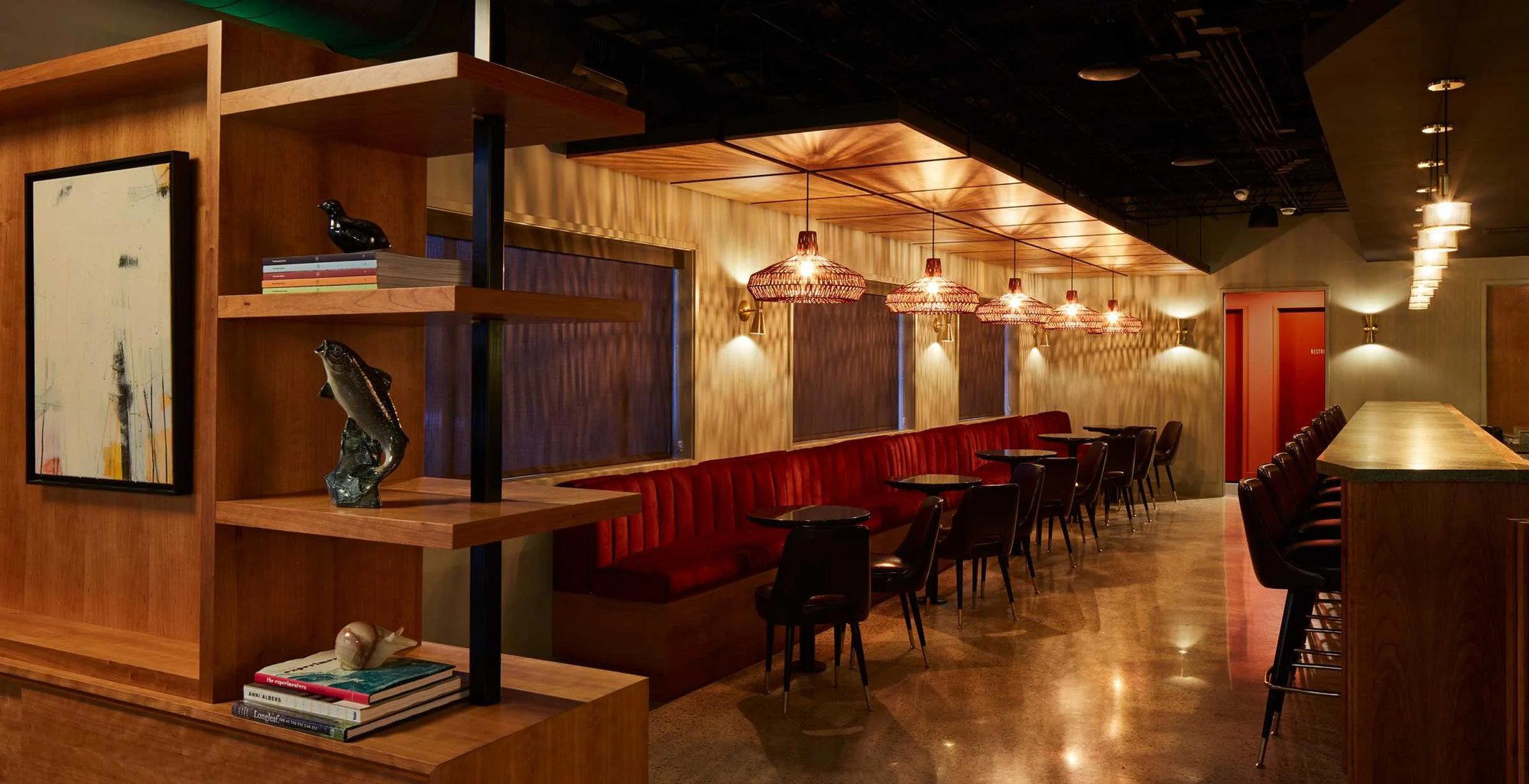
Elegant and modern decor with a friendly, warm atmosphere ideal for date nights and special occasions.