Aman New York
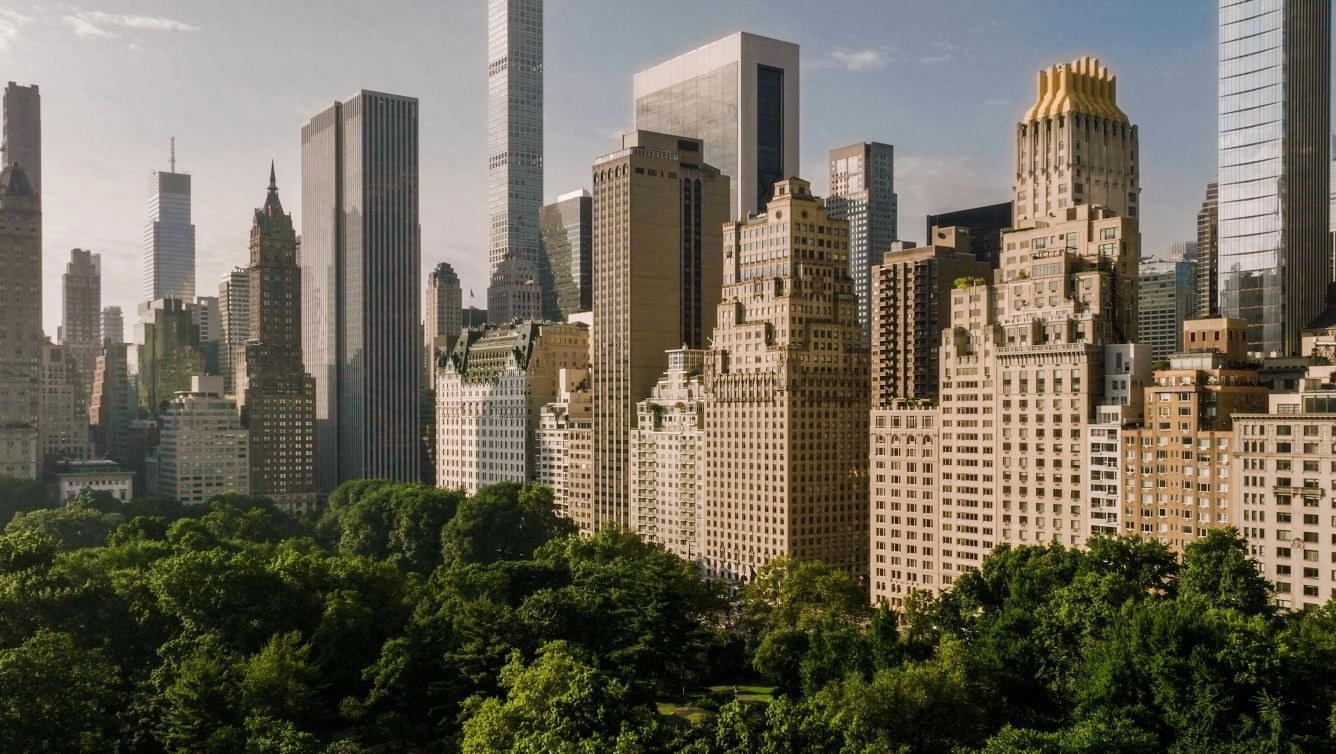
Aman New York occupies the landmarked Crown Building at 730 Fifth Avenue, positioning itself within a small cohort of ultra-low-key Manhattan hotel properties that trade scale for discretion. The property sits steps from Central Park and mid-block on Midtown's most surveilled retail corridor, placing it in a different competitive register than conventional luxury hotel towers. For dining and stays at this price tier, the booking window and format discipline matter as much as the address.
 Discover on Pearl
Pearl is the En Primeur Club membership app — saves, bookings, and concierge access live there. Same editors, same standards.
- Address
- 730 5th Ave, New York, NY 10019
- Phone
- +12129702626
- Website
- aman.com
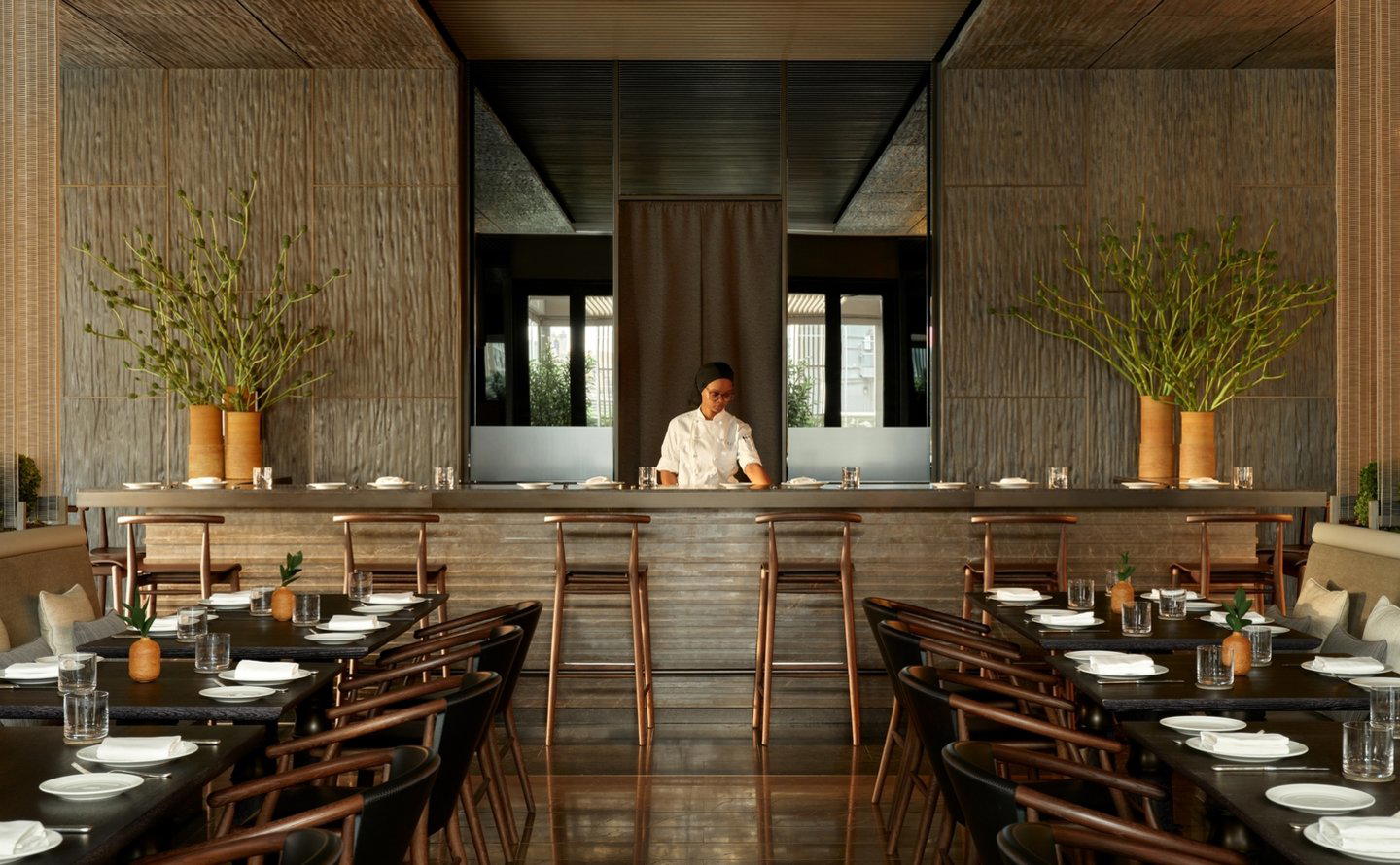
Fifth Avenue's Quietest Luxury Tier
Manhattan's luxury hotel market has cleaved over the past decade into two distinct camps: the large-format flagships that anchor Times Square and Park Avenue with hundreds of rooms, celebrity chefs, and publicist-driven programming, and a much smaller cohort of low-inventory properties that use scarcity as their primary differentiator. Aman New York is a restaurant at 730 Fifth Avenue in Midtown Manhattan, with a price tier of $$$$ and a reservation policy that is essential. Aman New York, which opened in 2022 inside the landmarked Crown Building at 730 Fifth Avenue, sits firmly in the second camp. With fewer than 100 rooms and residences combined, it operates at a room count that most Midtown competitors clear before the tenth floor. That constraint is structural, not incidental, it defines the experience before a guest has checked in.
The Crown Building itself provides the historical anchor. Completed in 1921 and designed by Warren & Wetmore, the same firm behind Grand Central Terminal, it spent decades as one of Midtown's most recognized commercial addresses. Aman's arrival marked the building's conversion to mixed hospitality and residential use, a transformation that required navigating New York City's landmarks preservation framework while inserting contemporary infrastructure into a century-old shell. The result places the property in a specific comparable set: buildings with genuine architectural pedigree, not manufactured heritage.
Where the Editorial Angle Gets Interesting: Local Ingredients, Global Technique
Aman properties have historically oriented their food and beverage programs around the intersection of place-specific sourcing and technically sophisticated preparation, a positioning that maps directly onto what New York's serious dining scene has been working through since at least the mid-2010s. The city's upper tier of restaurants has largely moved away from purely European classical templates toward frameworks that import global technique and apply it to regional American product. Blue Hill at Stone Barns in Tarrytown built its entire identity around Hudson Valley sourcing married to high-level culinary craft. Eleven Madison Park restructured its menu around a plant-forward approach that relies heavily on domestic producers. Atomix applies Korean culinary logic to ingredients sourced from both Korean suppliers and American farms.
An Aman food and beverage program operating in New York in 2024 enters that conversation by default. The expectation at this price point, sitting alongside properties and restaurants like Masa and Per Se in the upper bracket of Manhattan hospitality spend, is that sourcing will be deliberate and technique will be documented. The proximity of the Northeast's agricultural infrastructure, from the Hudson Valley to Long Island's fishing grounds, makes that sourcing legible to guests who follow food seriously. Properties at comparable price tiers elsewhere in the country, including Single Thread Farm in Healdsburg and Addison in San Diego, have made local-to-global translation a central program feature rather than a footnote.
The Midtown Fifth Avenue Context
730 Fifth Avenue sits at 56th Street, one block south of Central Park and in the middle of the densest retail corridor in North America. The immediate neighbourhood is destination-oriented, heavily trafficked, and priced accordingly at every level from retail to hospitality. What the address does provide is proximity to a critical mass of serious dining. Le Bernardin, which has held three Michelin stars since the Guide's New York launch in 2005, is within ten minutes on foot. For guests building a multi-day itinerary around serious eating, the location functions as a central node rather than a detour.
Aman properties globally have tended to position their in-house dining as substantive enough that guests are not expected to leave for meals. In cities like New York, where the external dining scene is dense and the competitive pressure from standalone restaurants is high, that positioning is tested harder than in resort contexts. The comparison is instructive: at The French Laundry in Napa or The Inn at Little Washington, the in-house dining program is effectively the destination. In Manhattan, it competes against a much wider field.
How It Sits Against the comparable set
The useful comparison class for Aman New York is the small cohort of ultra-low-key Manhattan properties that combine architectural provenance, minimal public programming, and pricing structures above the standard luxury tier. In dining terms, the relevant comparable set includes properties whose restaurants compete with dedicated fine dining destinations rather than operating as hotel amenities.
Across the US, comparable editorial reference points for the intersection of place-specific sourcing and high-technique programs include Smyth in Chicago, Lazy Bear in San Francisco, Providence in Los Angeles, and Emeril's in New Orleans. Internationally, properties and restaurants that have defined the local-ingredients, global-technique format include Atelier Moessmer Norbert Niederkofler in Brunico and Dal Pescatore in Runate, both of which have built multi-decade reputations around territorial sourcing interpreted through refined technique. Frasca Food & Wine in Boulder represents how a non-coastal American market has applied a similar framework at high execution levels.
Planning a Stay: Practical Orientation
| Property | Address / Area | Format | Price Tier |
|---|---|---|---|
| Aman New York | 730 Fifth Ave (Midtown) | Ultra-low-inventory hotel + residences | $$$$+ |
| Per Se | Columbus Circle | Standalone fine dining, tasting menu | $$$$ |
| Masa | Columbus Circle | Omakase counter, 26 seats | $$$$ |
| Le Bernardin | West 51st St (Midtown) | Standalone fine dining, three Michelin stars | $$$$ |
| Eleven Madison Park | Madison Square Park | Plant-forward tasting menu, three Michelin stars | $$$$ |
Aman New York does not publish a central booking page through standard OTA channels, the property operates its own reservation infrastructure, consistent with the brand's low-public-interface approach. Guests combining a stay with external dining at Michelin-level restaurants should account for booking windows of six to eight weeks minimum for most three-star tables, and considerably longer for Masa.
Pricing, Compared
Comparable venues nearby, for context on price, style, and recognition.
| Venue | Cuisine | Price | Awards | Notes |
|---|---|---|---|---|
| Aman New YorkThis venue — the venue you are viewing | $$$$ | , | ||
| Japanese fine-dining restaurant at One Bryant Park | $$$$ | , | Midtown, Modern Japanese Fine Dining with Kaiseki & Omakase | |
| Sushi Sho | Midtown East, Edomae Omakase Sushi | $$$$ | , | |
| Kappo Sono | Greenwich Village, Kaiseki | $$$$ | , | |
| Kumiko Room | $$$$ | , | West Loop, Modern Japanese Cocktail Bar & Omakase | |
| Sugiyama | $$$$ | , | Midtown West, Traditional Japanese Kaiseki |
Continue exploring
More in New York City
Restaurants in New York City
Browse all →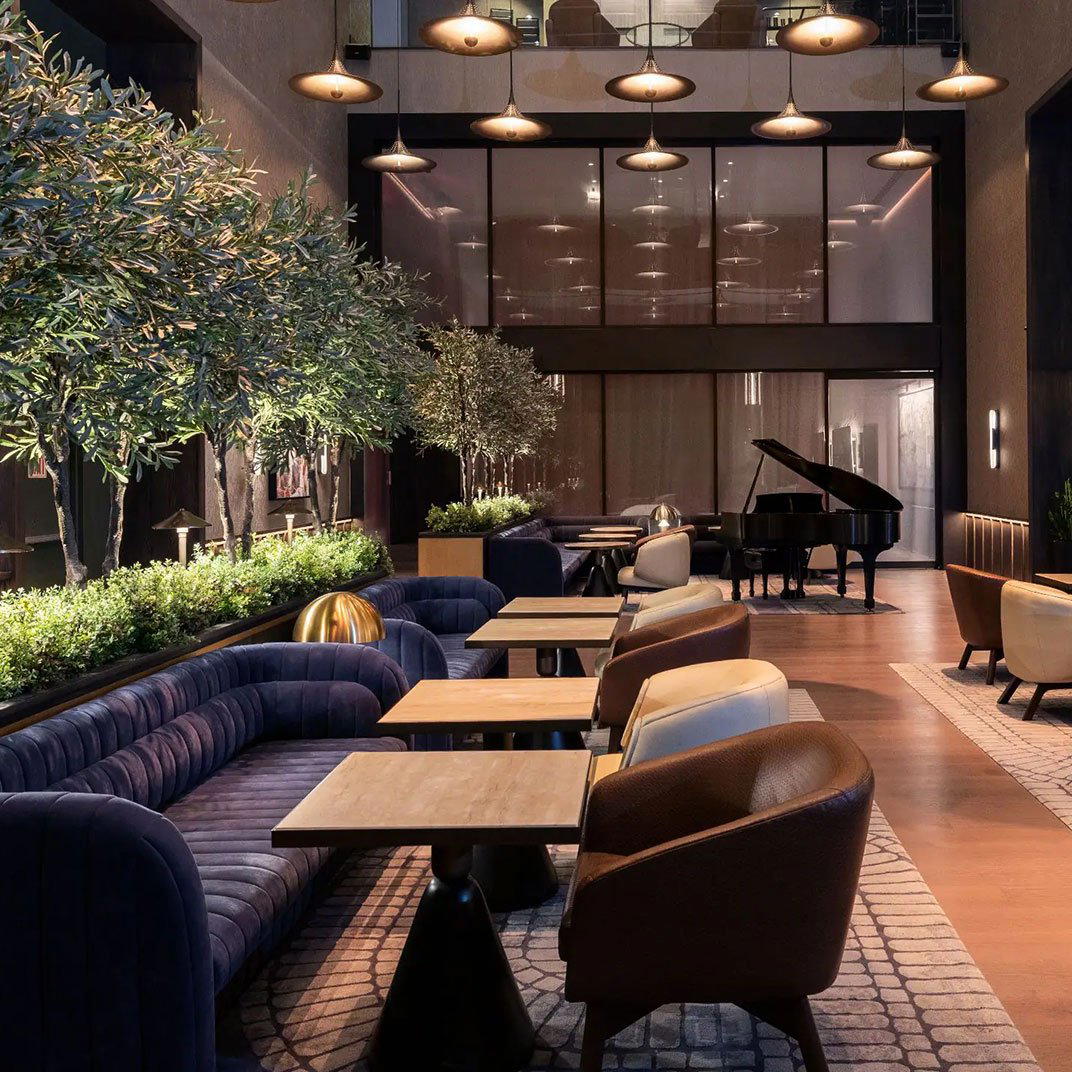
Bars in New York City
Browse all →
Hotels in New York City
Browse all →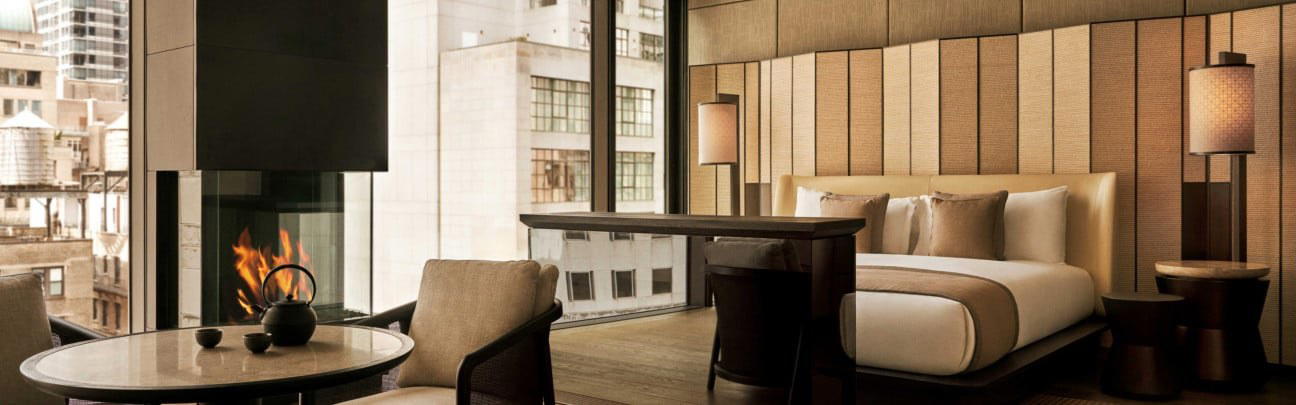


At a Glance
- Elegant
- Sophisticated
- Modern
- Intimate
- Date Night
- Special Occasion
- Business Dinner
- Chefs Counter
- Hotel Restaurant
- Private Dining
- Design Destination
- Extensive Wine List
- Sommelier Led
- Local Sourcing
- Street Scene
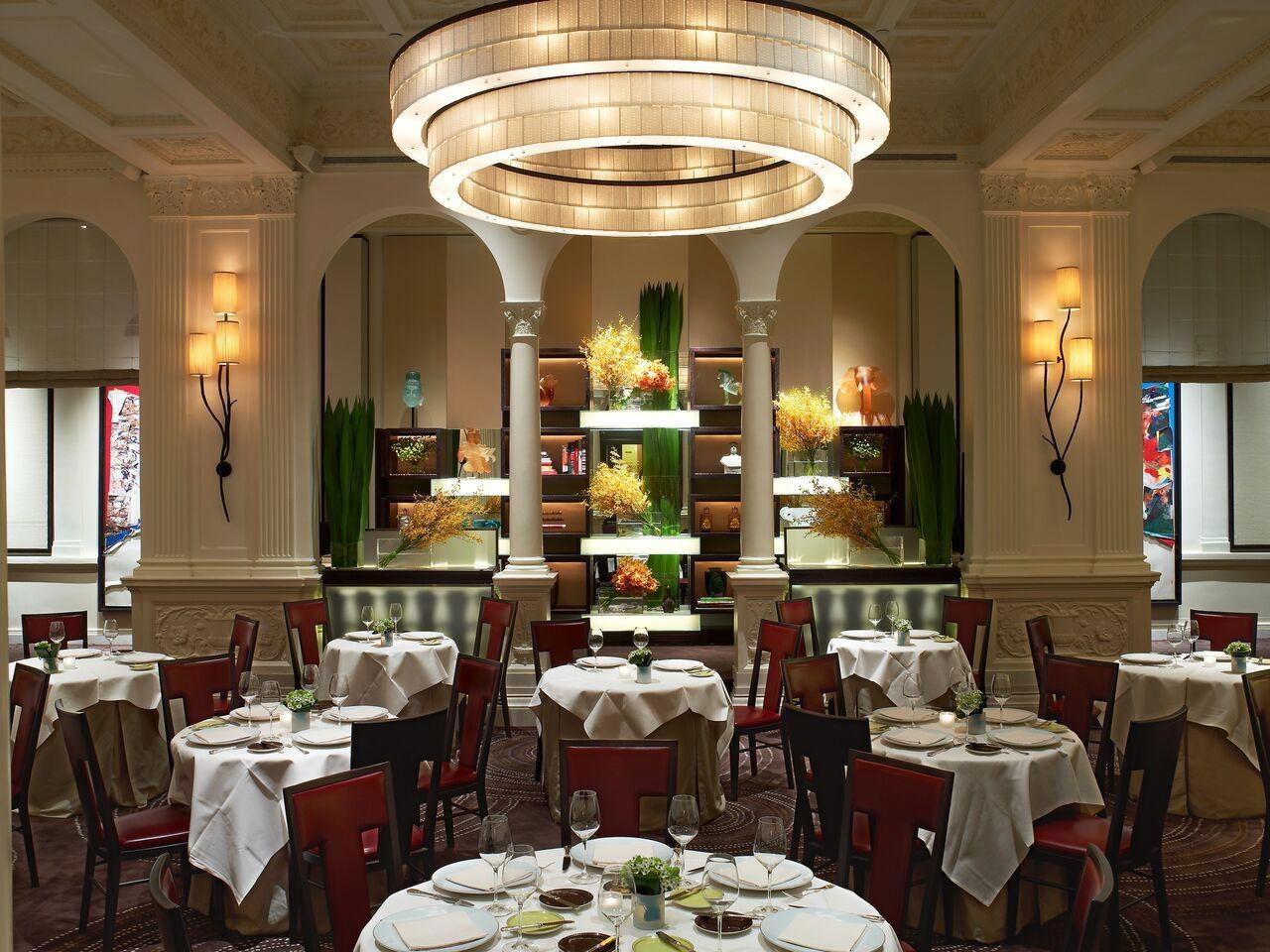
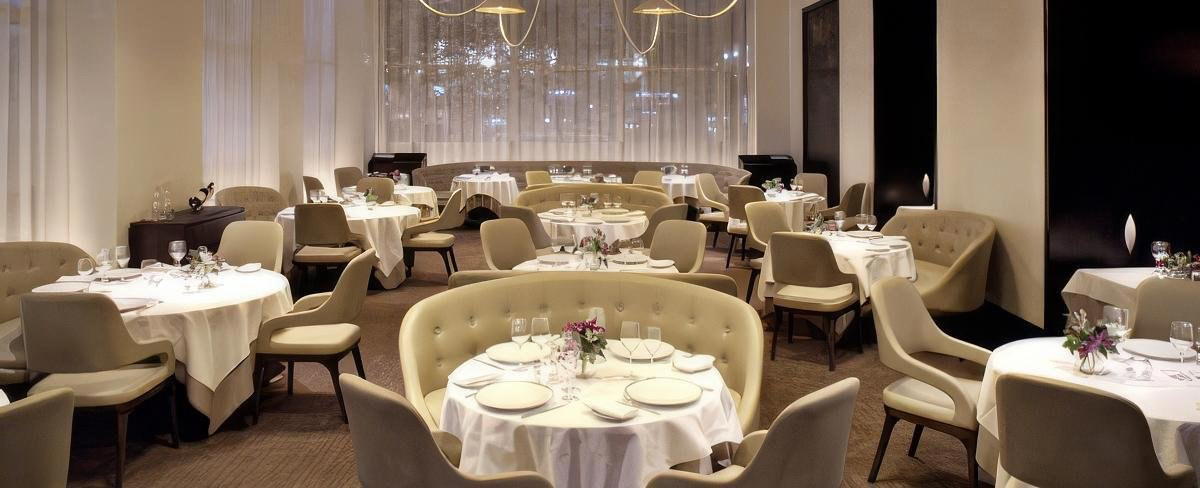
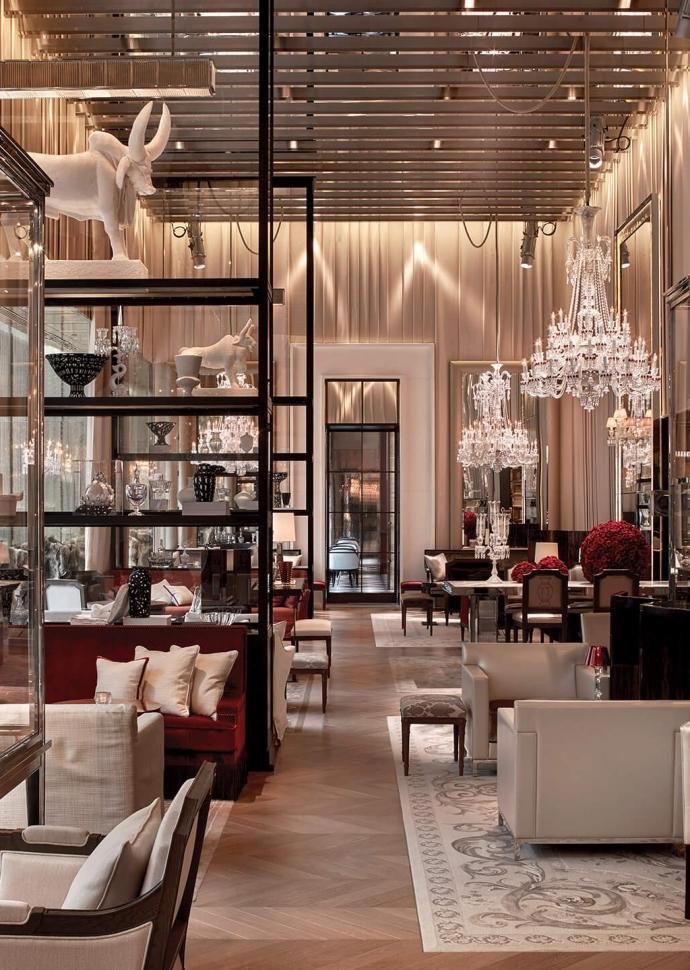
Refined and serene with limited lighting in public areas; restaurant spaces feature elegant design with a zen-like quality at breakfast transitioning to a sophisticated scene at dinner.