Amalfi Cucina Italiana - Carmel Valley
Italian-American Dining in the San Diego Suburbs Carmel Valley sits in the northern arc of San Diego, a planned community where the dining scene skews toward neighborhood reliability over destination ambition. In that context, Italian-American...
- Address
- 5980 Village Way #106, San Diego, CA 92130
- Phone
- +18584610622
- Website
- amalficucinaitaliana.com
- Directions
- Get directions
Italian-American Dining in the San Diego Suburbs
Carmel Valley sits in the northern arc of San Diego, a planned community where the dining scene skews toward neighborhood reliability over destination ambition. In that context, Italian-American restaurants occupy a specific and well-worn role: they function as communal anchors, places where the food is familiar enough to bring extended families but specific enough to reward attention. Amalfi Cucina Italiana, addressed on Village Way in the 92130 zip code, is a neighborhood restaurant serving Modern Neapolitan Italian cuisine within that tradition. The name references the Amalfi Coast, the stretch of southern Italian coastline whose culinary identity runs through preserved lemons, fresh seafood, pasta built from semolina and patience, and sauces that prioritize acidity and brightness over the heavy cream registers of northern Italian-American cooking.
The Amalfi Culinary Tradition
The Amalfi Coast sits in the Campania region, a part of Italy where the cooking is shaped more by the sea and the terraced cliffs than by any agricultural abundance. Dishes from this tradition typically feature spaghetti alle vongole, paccheri with fresh tomato and seafood, limoncello-inflected desserts, and a general commitment to letting primary ingredients carry the plate. This is southern Italian cooking, which in American restaurant contexts has often been flattened into red-sauce shorthand, but at its most considered, it is precise and restrained. The Amalfi reference in a restaurant name is a signal of intent: it points toward coastal Campanian cooking rather than the broader southern Italian-American canon that defined decades of stateside Italian dining.
Across the United States, Italian restaurants occupy a wider price and quality range than almost any other European cuisine. At the institutional end, places like Le Bernardin in New York City show how French-influenced precision shapes what upper-tier dining looks like nationally, while Italian dining's own premium tier in the US tends toward seasonal tasting menus or hand-made pasta programs that draw from both regional tradition and fine-dining technique. San Diego's Italian dining scene fits a different pattern: it is anchored by neighborhood restaurants that serve a residential clientele, and the competitive pressure comes from consistency and value rather than from Michelin-level ambition. For destination-level dining in the city, travelers tend to gravitate toward Addison, San Diego's only Michelin-starred property, or toward the focused Japanese precision of Soichi.
Where Carmel Valley Sits in San Diego's Dining Map
San Diego's dining energy concentrates in different neighborhoods depending on what you're after. Downtown and Little Italy hold the highest density of ambitious kitchens, while neighborhoods like Carmel Valley and Del Mar trade ambition for consistency and access. Restaurants in this corridor serve a population that includes tech and biotech workers, families in newer housing developments, and diners who want a reliable meal without driving into the city center. That commercial reality shapes the format: these are restaurants built around repeat visits, not around the occasion dinner that a place like 1450 El Prado or 777 G St might anchor. The 94th Aero Squadron represents another point on the city's spectrum: a restaurant where setting and atmosphere drive the decision as much as the food.
The Village Way address places Amalfi Cucina Italiana inside a retail and dining strip that serves the immediate residential catchment. This is a format common to planned communities across Southern California, where dining options cluster in lifestyle centers rather than organic street-level corridors. The model tends to reward restaurants that have earned neighborhood loyalty rather than destination traffic.
Italian Dining in Context: What the Regional Tradition Demands
Restaurants that invoke southern Italian coastal cooking make an implicit promise about sourcing and technique. Campanian cuisine, when done with fidelity, leans on San Marzano tomatoes or their close equivalents, on pasta shapes that match their sauces in weight and texture, on olive oil as a finishing element rather than a cooking base, and on seafood that has not been held too long. Whether a neighborhood Italian restaurant in suburban San Diego can execute at that level depends on supply chain access, kitchen discipline, and the kitchen's own frame of reference. Nationally, the restaurants that get this right often have identifiable Italian regional training in their kitchen leadership, the way Frasca Food and Wine in Boulder built its identity around Friulian specificity or the way Atelier Moessmer Norbert Niederkofler in Brunico applies Alpine Italian discipline at the highest level. For a Carmel Valley neighborhood restaurant, the frame of reference is different, but the regional claim still sets expectations worth holding.
Other comparisons illuminate the range of what Italian-influenced cooking looks like at various levels of ambition. Single Thread Farm in Healdsburg represents the farm-to-table end of California dining with Japanese precision layered in. Blue Hill at Stone Barns in Tarrytown operates at the intersection of agricultural sourcing and fine-dining format. Smyth in Chicago and Lazy Bear in San Francisco represent the tasting-menu end of American fine dining more broadly. None of these are direct comparators for a neighborhood Italian restaurant in Carmel Valley, but they sketch the wider continuum that any restaurant invoking regional Italian identity sits within, and they clarify how different the expectations are at different points on that continuum.
Planning Your Visit
Carmel Valley is accessible by car from downtown San Diego in roughly 25 to 30 minutes depending on traffic, and the Village Way address has street-level parking consistent with suburban retail centers. The restaurant format and location make it a neighborhood dinner rather than a cross-city destination trip. Diners traveling from elsewhere in San Diego or arriving from out of town might bracket it with other North County stops or plan it as part of an evening that includes the Carmel Valley area specifically.
Know Before You Go
- Address: 5980 Village Way #106, San Diego, CA 92130
- Neighbourhood: Carmel Valley, North San Diego
- Parking: Street-level lot typical of Village Way retail center
- Format: Neighborhood Italian restaurant; suited to casual and family dining
- Booking: Reservation recommended
- Hours: not listed
Credentials Lens
Comparable venues nearby, for context on price, style, and recognition.
| Venue | Cuisine | Price | Notes |
|---|---|---|---|
| Amalfi Cucina Italiana - Carmel ValleyThis venue — the venue you are viewing | Modern Neapolitan Italian | $$ | Not listed |
| The Godfather | Classic Italian Steakhouse | $$ | Kearny Mesa |
| Parma Cucina Italiana | Northern Italian Trattoria | $$ | Uptown |
| Pizzeria Luigi | New York-Style Pizza | $$ | Greater Golden Hill |
| Elvira | Roman Osteria | $$ | Mission Bay Park |
| Sorrento Ristorante | Authentic Italian Trattoria & Pizzeria | $$ | Downtown |
Continue exploring
More in San Diego
Restaurants in San Diego
Browse all →
Bars in San Diego
Browse all →
At a Glance
- Modern
- Elegant
- Classic
- Family
- Group Dining
- Casual Hangout
- Date Night
- Standalone
- Open Kitchen
- Craft Cocktails
- Beer Program
- Local Sourcing
- Sustainable Seafood
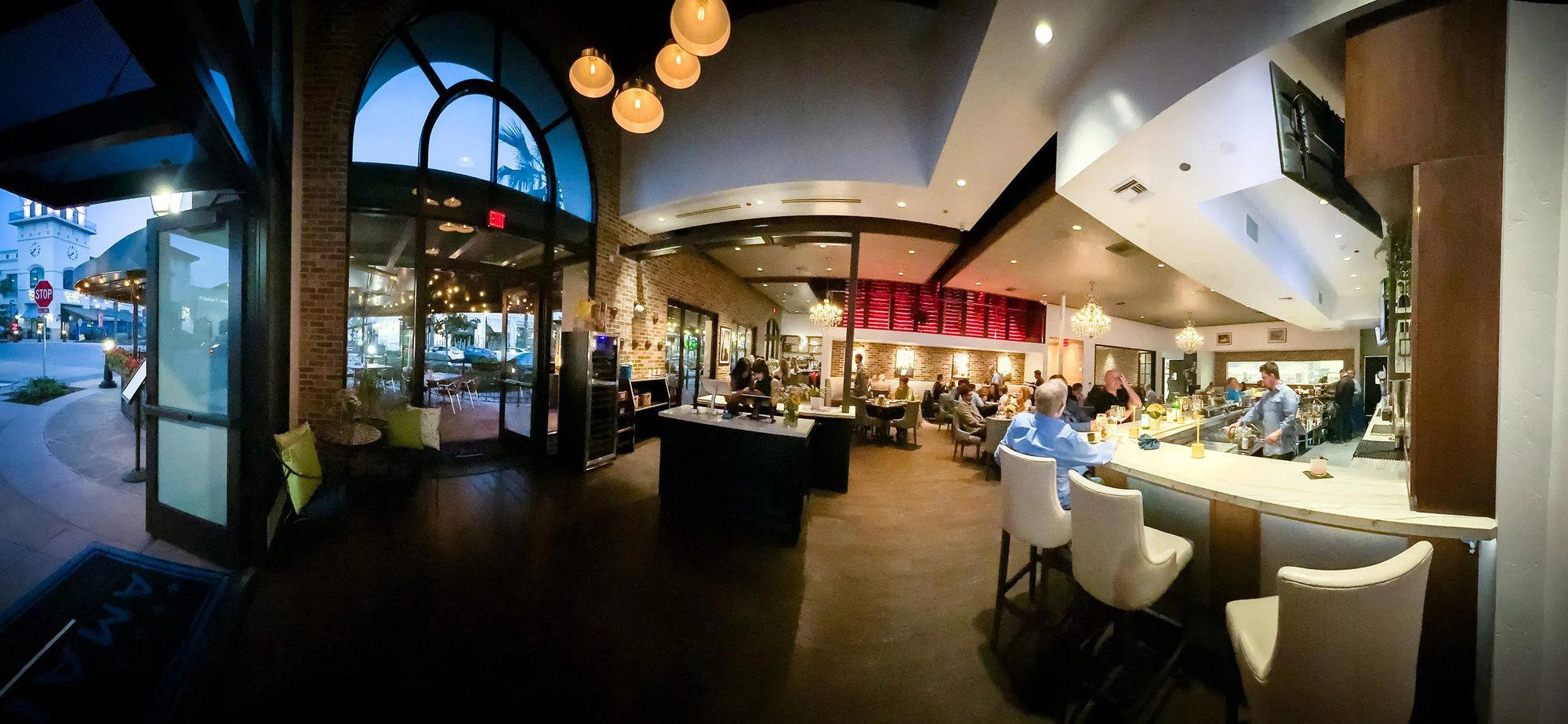
Contemporary brown-brick interior with slate-hued leather seating, crystal chandeliers, and framed photos of Italian cinematic stars, creating an upscale yet approachable atmosphere.