Altenburg 1 sits at the address of Bamberg's historic Altenburg castle, placing it within one of Franconia's most storied dining settings. The kitchen works within a regional tradition that prizes locally sourced ingredients and the agricultural rhythms of the surrounding countryside. For visitors to Bamberg seeking a table that connects place and plate, it occupies a position worth understanding before you book.
Pearl is the En Primeur Club membership app — saves, bookings, and concierge access live there. Same editors, same standards.
- Address
- Altenburg 1, 96049 Bamberg, Germany
- Phone
- +49 951 96431088
- Website
- altenburg1.de
- Directions
- Get directions
 Saves & bookings on Pearl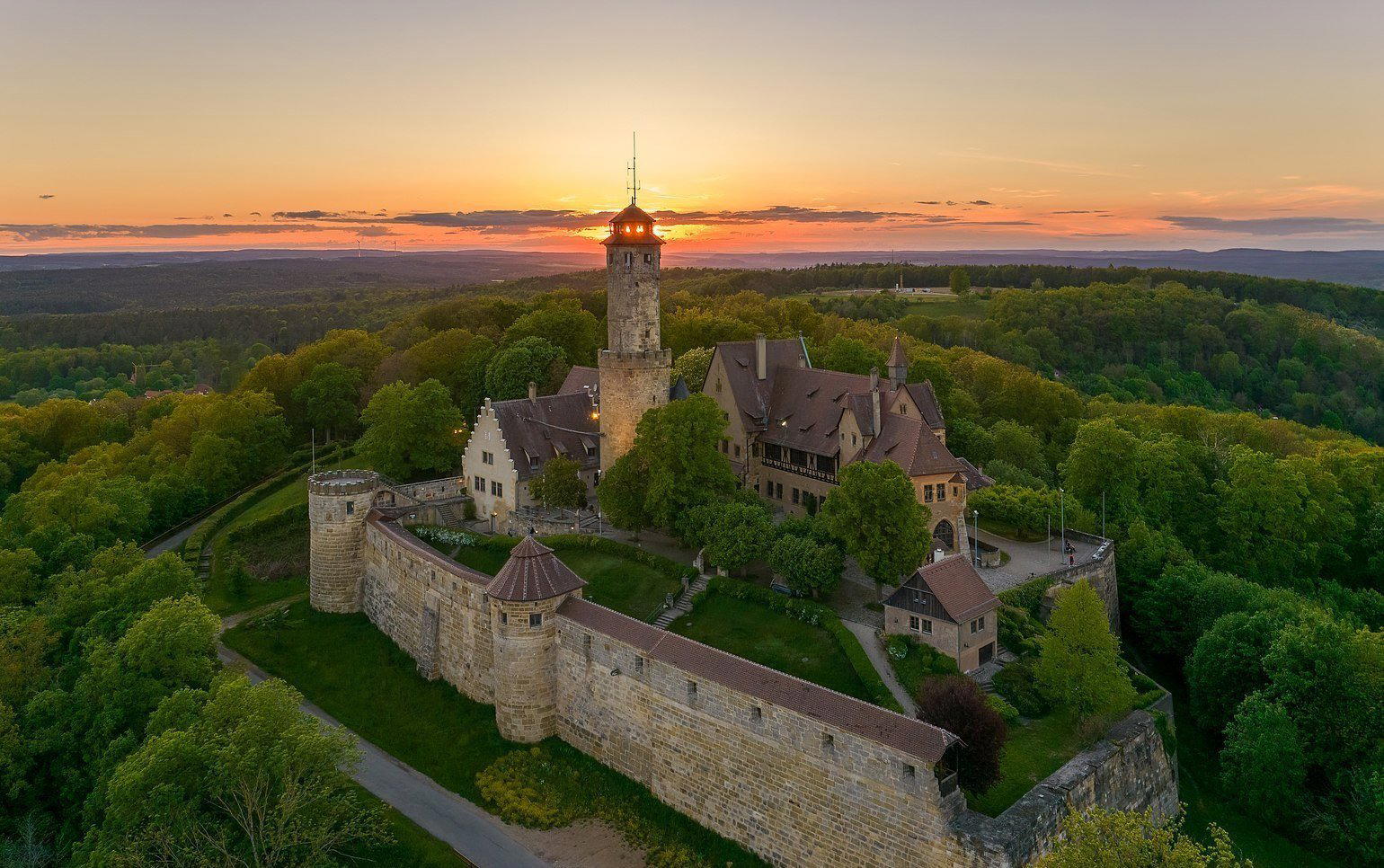
Approaching Altenburg: What the Address Tells You Before You Arrive
The address alone carries information. Altenburg 1 sits at the Altenburg, a hilltop castle complex above Bamberg that has defined the city's skyline since the eleventh century. Arriving here means climbing above the UNESCO-listed old town, through a forested approach that strips away the noise of the Regnitz riverside. By the time the stone walls come into view, the setting has already done considerable editorial work on your expectations. Dining at altitude, inside a medieval structure, in a city as architecturally coherent as Bamberg, belongs to a specific category of German restaurant experience: one where the room is not incidental but is, in fact, the first course.
Bamberg sits at the intersection of Franconian culinary identity and a heritage tourism draw that sustains a more varied dining offer than a city of its size might otherwise support. The old town receives visitors from across Europe precisely because it survived the Second World War intact, and that same intactness extends to its food culture. Franconian smoked beer, local carp from the surrounding pond farms, game from the Franconian forests, and the regional baking traditions that predate modern German cuisine all remain active here rather than reconstructed. For a restaurant operating within a castle at the edge of that city, ingredient sourcing is not a marketing choice but a geographic logic.
Franconian Sourcing and Why It Matters at This Address
The broader argument for regional sourcing in Franconia is stronger than in many parts of Germany. The area between Bamberg, Nuremberg, and the Franconian Switzerland contains a concentration of food producers, trout and carp farms, game forests, hop fields, and horticultural smallholdings that gives kitchens real options. Carp in particular has a history in this region stretching back to monastic aquaculture; the ponds around Bamberg and the adjacent Aischgrund are among the more productive freshwater fish-farming areas in central Europe. A kitchen positioned at the Altenburg, drawing on that supply chain, has access to ingredients whose provenance is not a story invented for the menu but a fact of local geography.
The same applies to game. Franconia's forested uplands produce venison, wild boar, and game birds that appear on autumn and winter menus across the region with a regularity that reflects genuine supply rather than seasonal affectation. A restaurant at this elevation, surrounded by woodland, occupies a position where the distance between source and kitchen can be measured in minutes rather than supply-chain stages. That proximity matters both for quality and for the kind of menu honesty that distinguishes regionally grounded cooking from cuisine that gestures toward locality without committing to it.
For comparison, Germany's most recognised fine dining addresses, including Schwarzwaldstube in Baiersbronn, Aqua in Wolfsburg, and Vendôme in Bergisch Gladbach, have built their reputations partly on sourcing discipline applied to regional ingredients. Altenburg 1 operates in a different tier of recognition, but the underlying logic of place-led ingredient selection is the same principle at work across German fine dining, from three-star Michelin kitchens to well-positioned regional houses.
The Room and the Setting
Castle dining in Germany spans a wide range of experiences, from tourist-facing medieval spectacle to serious kitchens that happen to occupy historic buildings. The Altenburg falls into the latter register. The castle is not a reconstruction or a themed venue; it is an operational historic site, and the dining space within it inherits the proportions and materials of a building that was not designed for restaurant use. Stone walls, the play of natural light through windows cut for fortification rather than ambience, and the refined position above the city create an atmosphere that cannot be replicated in a purpose-built room. This is architecture doing the work that lighting designers and interior consultants are paid to approximate elsewhere.
From a practical standpoint, reaching Altenburg 1 requires either a short drive or a walk up through the castle gardens from the Bamberg side. The castle grounds are publicly accessible, which means the approach to the restaurant passes through a shared civic space rather than a private enclave. That detail shapes the experience in a way that separates Altenburg 1 from the category of destination restaurants that operate as sealed worlds. Here, the transition from city to table is gradual and involves the same landscape that Bamberg residents use for weekend walks.
Where Altenburg 1 Sits in Bamberg's Dining Context
Bamberg's restaurant offer is more concentrated than its size suggests. The old town and the surrounding districts support a range of serious kitchens, and visitors navigating the city's dining options will find that the competition for quality tables is genuine. Edelfrei and HENRII represent two of the other notable addresses in the city, each occupying a different point on the spectrum between Franconian tradition and contemporary European cooking. The restaurant distinguishes itself through location above all: no other Bamberg table offers the combination of medieval setting and refined city views that this address provides.
For visitors already familiar with Germany's more internationally recognised dining destinations, including JAN in Munich, Restaurant Haerlin in Hamburg, or GästeHaus Klaus Erfort in Saarbrücken, the restaurant occupies a different position in the hierarchy. It is not a three-star destination in the mould of Waldhotel Sonnora in Dreis or Victor's Fine Dining by Christian Bau in Perl. What it offers is something those addresses cannot: a specific geographic and historical setting that makes the meal inseparable from its location.
Internationally, the principle of architecture-led dining is well-established. Restaurants like Le Bernardin in New York City demonstrate that a room's identity can become part of the dining proposition itself, while format-driven concepts like Lazy Bear in San Francisco show that the frame around a meal shapes how the food is received. At the restaurant, the frame is eleventh-century stone and a panoramic view of a UNESCO old town. That is a specific kind of asset.
Visitors planning a broader sweep of southern German dining might also consider ES:SENZ in Grassau, Schanz in Piesport, or L.A. Jordan in Deidesheim for a fuller picture of the regional range. For dessert-focused innovation, CODA Dessert Dining in Berlin and Bagatelle in Trier represent further points of reference. The full picture of what Bamberg specifically offers is covered in our full Bamberg restaurants guide.
Planning Your Visit
Given that specific details on hours, pricing, and booking method are not publicly confirmed at the time of writing, contacting the venue directly before arrival is advisable. The castle setting and the logistical specifics of reaching the Altenburg mean that planning ahead is more important here than at a city-centre address where walk-in options or flexible timing are easier to manage. Seasonal menus tied to Franconian produce cycles, particularly autumn game and the spring and summer carp season, suggest that timing a visit around those periods aligns the meal with the ingredients at their leading availability. For a city like Bamberg, where the visitor calendar peaks around summer and the Christmas market season, booking well in advance for either period is a reasonable precaution regardless of the specific format the restaurant operates in.
How Altenburg 1 Bamberg compares with similar nearby venues.
| Venue | Cuisine | Price |
|---|---|---|
| VITA | Mediterranean Cuisine | €€€ |
| Rocus | International | €€€ |
| Gasthaus Hofmann | Country cooking | €€ |
Continue exploring
More in Bamberg
Restaurants in Bamberg
Browse all →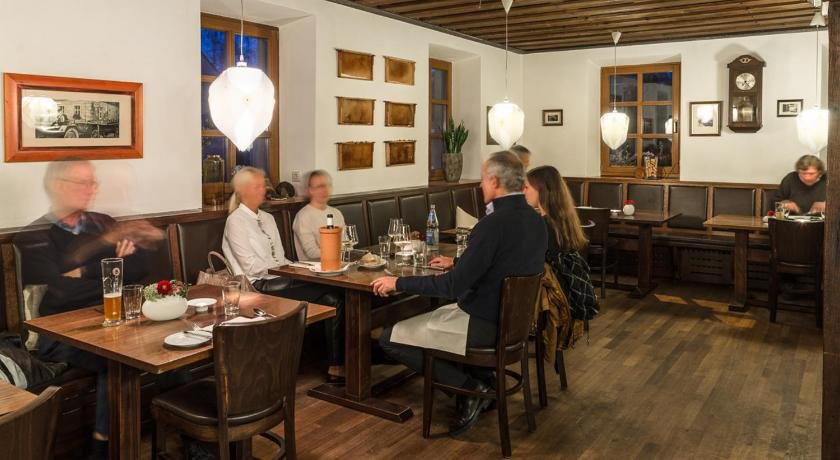
Bars in Bamberg
Browse all →
Hotels in Bamberg
Browse all →

At a Glance
- Scenic
- Cozy
- Rustic
- Casual Hangout
- Terrace
- Historic Building
- Beer Program
- Street Scene
Current opening hours
- Monday
- Closed
- Tuesday
- Closed
- Wednesday
- 11:30 AM–9 PM
- Thursday
- 11:30 AM–9 PM
- Friday
- 11:30 AM–9 PM
- Saturday
- 11:30 AM–9 PM
- Sunday
- 11:30 AM–4 PM
Hours can change for holidays and private events. Last verified .
Atmospheric with leafy trees, castle views, and spacious seating in a historic setting.