Alquimia - Laboratorio



Alquimia - Laboratorio holds a Michelin star and sits at the foot of Valladolid's Santa María de La Antigua church, operating a dual-format model: an informal gastro-bar (Crisol) for sharing plates and a dedicated gastronomic space running three creative tasting menus. Chef Alvar Hinojal's programme places it squarely within Spain's technically driven creative dining tradition, at €€€ pricing. Open Thursday evenings and Thursday lunch only.
Pearl is the En Primeur Club membership app — saves, bookings, and concierge access live there. Same editors, same standards.
- Address
- C. de la Antigua, 6, 47002 Valladolid, Spain
- Phone
- +34 983 07 53 78
- Website
- alquimiavalladolid.es
- Directions
- Get directions
 Saves & bookings on Pearl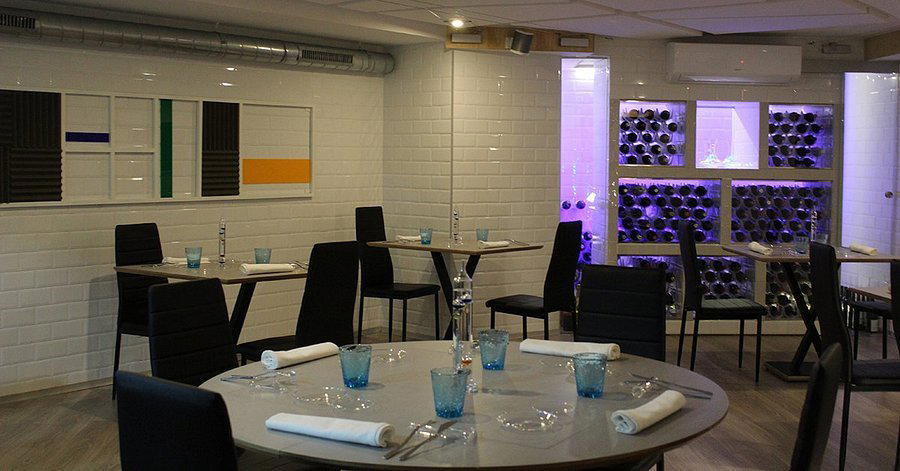
Where Santa María de La Antigua Meets the Open Kitchen
Valladolid's historic centre does not lack for stone, shadow, and the accumulated weight of Castilian identity. The Gothic tower of Santa María de La Antigua rises above the surrounding streets with the quiet authority of a building that has outlasted every culinary trend the city has seen. It is against this backdrop, literally at the church's foot on Calle de la Antigua, that Alquimia - Laboratorio positions itself: a Michelin-starred restaurant whose interior decorative references to molecular technique sit in deliberate contrast to the medieval architecture just outside the window. That tension between the ancient and the experimental is not incidental. It is the operating premise of the room.
Spain has a long tradition of restaurants that layer formats, the casual front room feeding one clientele while a more considered gastronomic space operates behind it, and Alquimia practices this with clear intent. The gastronomic space, with its open-view kitchen, is where the Michelin star resides.
Spain's Creative Dining Tradition and Where Valladolid Fits
Spanish creative cuisine has occupied an outsized place in the global conversation since the late 1990s, shaped by the Basque Country's technical rigour and the avant-garde departures that emerged from Catalonia. The country's Michelin-starred creative restaurants now span a wide geographic and stylistic range, from Arzak in San Sebastián, with its multigenerational creative lineage, to DiverXO in Madrid, which operates at one maximalist end of the spectrum. El Celler de Can Roca in Girona and Azurmendi in Larrabetzu represent a more research-oriented strand, while Aponiente in El Puerto de Santa María and Cocina Hermanos Torres in Barcelona demonstrate how the creative category continues to diversify geographically. Valladolid, historically associated with Castilian roasts and the wines of Ribera del Duero, sits outside the primary circuits of Spain's creative dining map. Alquimia's Michelin recognition in 2024 signals that the city now holds a position within that broader national conversation, if still a peripheral one.
The name itself carries editorial weight. Alquimia, alchemy, and the suffix Laboratorio together invoke the scientific-creative idiom that defined Spanish haute cuisine's most influential decade. That framing, reinforced by the kitchen design and the molecular references in the room's decorative choices, places the restaurant in deliberate dialogue with a culinary tradition rather than a local one. In this sense, Alquimia reads less as a statement about Castile and more as a statement about what Spanish creative cooking has become when practised outside the established centres.
Three Menus, One Kitchen
The gastronomic space operates across three tasting menus named Noradrenalina-Adarsa, Serotonina, and Dopamina, neurotransmitter nomenclature that reinforces the laboratory concept structurally, not merely decoratively. Chef Alvar Hinojal oversees this space, and the open-view kitchen format means the production process is part of the dining experience rather than concealed behind it. Across European creative dining, the visible kitchen has become a standard signal of technical confidence; at Alquimia it also carries specific ideological weight given the molecular framing of the restaurant's identity.
Three-menu structure follows a pattern that has become common among mid-tier Michelin creative restaurants across Spain and France: graduated depth of experience rather than a single price point. Comparable format thinking can be found at Alléno Paris au Pavillon Ledoyen and Arpège in Paris, both of which use structured menu architecture to accommodate different levels of commitment from the same diner profile. The approach acknowledges that the creative tasting menu format demands time and appetite from guests, and that calibrating entry points is part of managing the format's accessibility. At Alquimia, the naming system adds a conceptual layer to what is, operationally, a tiered menu offering.
Valladolid's Wider Dining Context
Within Valladolid itself, the restaurant occupies the upper end of a relatively compact fine-dining tier. Trigo holds the city's other Michelin star, positioned in the modern cuisine category at the same €€€ price point, making the two restaurants the primary reference pair for anyone visiting Valladolid at the higher end. Below that tier, the city's dining character is defined by its Castilian roots: roasted meats, lechazo, and the kind of product-led cooking that reflects the surrounding landscape's agricultural identity. Dámaso and 5 Gustos represent the farm-to-table strand at the €€ level, while La Cocina de Manuel and Llantén anchor the traditional end of the spectrum. Alquimia sits apart from this product-first tradition by orientation; its references are technical and conceptual where much of Valladolid's dining culture is rooted in regional specificity.
That positioning creates a certain productive friction. A visitor spending several days in Valladolid, touring the Museo Nacional de Escultura, walking the Pisuerga riverfront, or using the city as a base for Ribera del Duero wine visits via our Valladolid wineries guide, will find Alquimia operating on a different register from the city's default culinary character. Whether that contrast is part of the appeal depends on what the visit is for. For context on the full range of options across the city's restaurants, bars, hotels, and experiences, see our Valladolid restaurants guide, Valladolid bars guide, Valladolid hotels guide, and Valladolid experiences guide.
Planning Your Visit
A Pricing-First Comparison
Comparable venues nearby, for context on price, style, and recognition.
| Venue | Cuisine | Price | Awards | Notes |
|---|---|---|---|---|
| Alquimia - LaboratorioThis venue — the venue you are viewing | Creative | $$$$ | Michelin 1 Star | Not listed |
| Trigo | centro, Contemporary Spanish Fine Dining | $$$ | Michelin 1 Star | Not listed |
| Suite 22 | Not listed | $$$ | Michelin Plate | Calle Fray Luis de León, Contemporary Spanish Fine Dining |
| Sibaritas Klub | Not listed | $$$ | Not listed | Creative Castilian km0 tasting menus with global influences |
| Llantén | Not listed | $$ | Bib Gourmand | Pinar de Antequera, Modern Traditional Spanish |
| Villa Paramesa | Valladolid, Modern Spanish Tapas | $$$ | Michelin Plate | Not listed |
Recognition history
Dated appearances from independent guides and award organizations, with the underlying list record or original source where available.
Guía Repsol 1 Sol
Guía Repsol
Macarfi 7.5 Food Rating
Macarfi
Michelin 1 Star
Michelin
Michelin 1 Star
Michelin
Michelin 1 Star
Michelin
Continue exploring
More in Valladolid
Restaurants in Valladolid
Browse all →
Hotels in Valladolid
Browse all →

At a Glance
- Elegant
- Sophisticated
- Modern
- Intimate
- Date Night
- Special Occasion
- Open Kitchen
- Extensive Wine List
- Street Scene
Current opening hours
- Monday
- Closed
- Tuesday
- Closed
- Wednesday
- 1:30–5 PM, 8:30–11:30 PM
- Thursday
- 1:30–5 PM, 8:30–11:30 PM
- Friday
- 1:30–5 PM, 8:30–11:30 PM
- Saturday
- 1:30–5 PM, 8:30–11:30 PM
- Sunday
- 1:30–5 PM
Hours can change for holidays and private events. Last verified .
Contemporary space with open kitchen, decorative molecular cuisine details, relaxed yet professional atmosphere.