

Set inside a restored colonial building on one of Macau's quietest historic lanes, Albergue 1601 serves Portuguese cuisine in a setting that connects directly to the territory's four-century Lusophone heritage. Ranked #435 in Opinionated About Dining's Top Restaurants in Asia for 2024 and recommended in 2023, it occupies a niche among Macau's dining options that the city's casino-floor Portuguese restaurants do not.
Pearl is the En Primeur Club membership app — saves, bookings, and concierge access live there. Same editors, same standards.
- Address
- 8 Calçada da Igreja de São Lázaro, Macao
- Phone
- +853 6386 3796
- Directions
- Get directions
 Saves & bookings on Pearl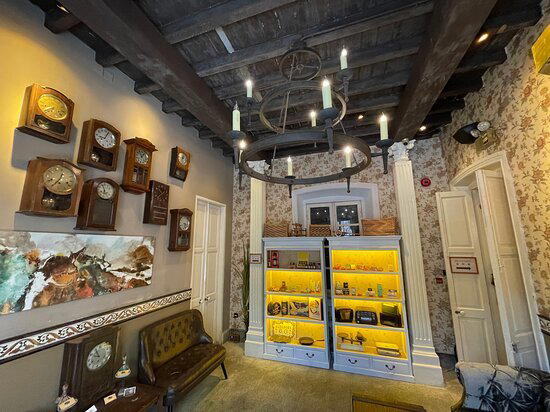
São Lázaro and the Architecture of Memory
The Calçada da Igreja de São Lázaro is one of Macau's more deliberate streets. The cobblestones are original, the low colonial façades are painted in ochre and pale yellow, and the Igreja de São Lázaro itself anchors the upper end of the lane with a quiet authority that most of Macau's newer precincts cannot manufacture. Arriving at number 8 on foot, the only sensible way to approach it, you pass through a neighbourhood that operates at a pace detached from the Cotai casino strip a few kilometres south. The contrast is the point. Albergue 1601 sits inside a restored colonial-era building that belongs to this streetscape in both age and temperament, and the experience of the restaurant begins before you reach the door.
Macau's Portuguese dining options have always been uneven. The territory's Lusophone connection spans four centuries, but that history has been absorbed unevenly into its restaurant scene. Casino hotels replicate Lisbon tavern aesthetics in hermetically sealed interiors, while the older, family-run Macanese joints in the northern districts skew toward the hybrid cuisine, the African chicken and tamarind-spiced crab that emerged from centuries of Portuguese colonial trade routes, rather than the more precise Portuguese culinary tradition. Albergue 1601 occupies a different register entirely, operating from one of the few surviving heritage buildings in a UNESCO-listed zone as a restaurant where the physical environment and the menu are in genuine conversation with each other.
What the OAD Recognition Signals
Opinionated About Dining ranked Albergue 1601 at #435 among Leading Restaurants in Asia in 2024, following a Recommended listing in 2023. A #435 Asia ranking places Albergue 1601 inside a meaningful cohort: it is not competing directly with Macau's Michelin-starred Cantonese rooms like Jade Dragon or Chef Tam's Seasons, nor with the three-star French Contemporary tier occupied by Robuchon au Dôme or Alain Ducasse at Morpheus. Its comparable set is the narrower category of heritage-anchored, cuisine-specific restaurants that earn recognition through consistency and a defined identity rather than spectacle or scale.
A restaurant in a quiet residential quarter of Macau, serving a cuisine that has limited mass-market appeal locally, sustaining that volume of reviews at that score over time suggests a clientele that returns and refers rather than one driven purely by tourist footfall.
Portuguese Cuisine in the Context of Macau
The question worth asking in Macau is what Portuguese dining actually means in a city where the influence has been present for so long that it has hybridised into a distinct culinary tradition of its own. Macanese cuisine, the product of Portuguese sailors, African ports, Indian spice routes, and Cantonese ingredients, is not the same thing as contemporary Portuguese cooking. The restaurant, under chef Pedro Almeida, operates in the latter register, which is a more demanding position in this market. Diners comparing it to Macanese staples from neighbourhood tascas will be using the wrong frame of reference. The relevant comparison is with what a city like Lisbon is doing with its own culinary heritage, the ingredient-forward, Atlantic-influenced cooking at places like A Taberna da Rua das Flores or the more traditional anchoring of Café de São Bento, transposed into a Macau context where Portuguese produce is not always available and local sourcing requires creative substitution.
That context also explains why Guincho a Galera, Macau's other significant Portuguese fine dining address, occupies a different competitive position: it is casino-integrated and priced at a different tier, drawing on a separate audience. The two restaurants are not in direct competition in the way that two Cantonese rooms of similar standing might be. They represent different arguments about what Portuguese cooking should look and feel like in this city.
The Neighbourhood as Part of the Proposition
The São Lázaro district is one of the few areas in Macau where the UNESCO World Heritage designation translates into a genuinely coherent streetscape rather than an isolated monument surrounded by development. The neighbourhood has a small gallery and arts community, a lower density of tourist infrastructure than the Historic Centre around the Ruins of St. Paul, and a residential character that has survived both the casino boom and the post-2002 liberalisation of the gaming industry that reshaped much of the peninsula. Eating in this neighbourhood is a different act than eating on the Cotai Strip or in a casino tower; the context changes the experience in ways that are difficult to quantify but easy to register.
For visitors covering Macau's wider restaurant scene, the São Lázaro quarter pairs well with the Historic Centre and the quieter lanes of the northern peninsula before or after a meal. Those planning a broader stay will find that Macau's dining options extend well beyond the casino hotels, from Michelin-decorated Chinese rooms to independent regional specialists. EP Club's full Macau restaurants guide maps the full range, while guides to hotels, bars, wineries, and experiences cover the rest.
Placing It in the Region
Macau's stronger suit in the OAD Asia rankings tends to be Cantonese and French Contemporary, with Chinese regional cooking also represented by high-scoring venues. Portuguese cuisine is a narrower seam. Across the broader region, OAD-listed Chinese heritage restaurants in heritage settings, such as 102 House in Shanghai or Ru Yuan in Hangzhou, demonstrate that building a restaurant around its physical context and culinary specificity, rather than around a brand or a casino hotel footprint, is a viable model for sustained critical recognition. The restaurant follows the same logic in a different cuisine register. The comparison also extends to how precision-focused Chinese regional specialists like Xin Rong Ji in Chengdu or Xin Rong Ji in Beijing have built reputations on ingredient fidelity and spatial integrity, not scale. Imperial Treasure Fine Chinese Cuisine in Guangzhou and Dai Yuet Heen in Nanjing reinforce that the Pearl River Delta region rewards restaurants that commit to a single culinary argument and execute it with consistency.
Planning a Visit
The restaurant is at 8 Calçada da Igreja de São Lázaro, in the São Lázaro heritage district on the Macau Peninsula. The address is walkable from the Historic Centre around the Ruins of St. Paul, roughly a ten-minute walk northeast. Taxis from the ferry terminals or Cotai hotels are direct, though the lane itself is too narrow for vehicles to approach directly. Given the 4.4 score across nearly a thousand reviews and its OAD-ranked status, reservations ahead of your visit are advisable, particularly on weekends when the heritage district draws more foot traffic. The restaurant is recommended for reservations, and its regular hours are Monday to Friday from 12 to 3 PM and 5:30 to 10 PM, with Saturday and Sunday service from 12 to 10 PM.
Frequently Asked Questions
What is the vibe at Albergue 1601?
The atmosphere is defined by the building and the neighbourhood rather than by designed hospitality theatre. The São Lázaro district is one of Macau's quieter heritage quarters, and the colonial-era setting at number 8 carries the texture of somewhere that has been standing for a long time. It reads as an independent restaurant with a specific identity rather than a casino-adjacent dining room. The OAD ranking.
What should I order at Albergue 1601?
What the OAD recognition, Leading Restaurants in Asia Ranked #435 in 2024, Recommended in 2023, and chef Pedro Almeida's presence at the pass indicate is that the kitchen is operating in the more precise register of Portuguese cuisine rather than the hybrid Macanese tradition. That means the Atlantic ingredient logic of bacalhau preparations, slow-cooked pork, and wine-forward sauces is the relevant frame. For confirmed current dishes, the restaurant itself is the right source.
A Credentials Check
Comparable venues nearby, for context on price, style, and recognition.
| Venue | Cuisine | Price | Awards | Notes |
|---|---|---|---|---|
| Albergue 1601This venue — the venue you are viewing | Traditional Portuguese | $$$ | Not listed | Not listed |
| Mesa by José Avillez Grand Lisboa Palace Resort Macau | Contemporary Portuguese | $$$$ | Not listed | Cotai |
| Clube Militar De Macau | Traditional Portuguese | $$$ | Not listed | Praia Grande |
| Portugália | Authentic Portuguese | $$$ | Michelin Plate | Taipa Village |
| Mesa by José Avillez | Contemporary Portuguese | $$$$ | Not listed | Cotai |
| Saffron | Contemporary Thai Cuisine | $$$ | Michelin Plate | Cotai |
Recognition history
Dated appearances from independent guides and award organizations, with the underlying list record or original source where available.
Michelin Plate
Michelin
Opinionated About Dining Top Restaurants in Asia Recommended
Opinionated About Dining
Opinionated About Dining Top Restaurants in Asia Ranked #435
Opinionated About Dining
Opinionated About Dining Top Restaurants in Asia Recommended
Opinionated About Dining
At a Glance
- Historic
- Cozy
- Elegant
- Intimate
- Date Night
- Celebration
- Special Occasion
- Historic Building
- Extensive Wine List
- Garden
- Street Scene
Current opening hours
- Monday
- 12–3 PM, 5:30–10 PM
- Tuesday
- 12–3 PM, 5:30–10 PM
- Wednesday
- 12–3 PM, 5:30–10 PM
- Thursday
- 12–3 PM, 5:30–10 PM
- Friday
- 12–3 PM, 5:30–10 PM
- Saturday
- 12–10 PM
- Sunday
- 12–10 PM
Hours can change for holidays and private events. Last verified .
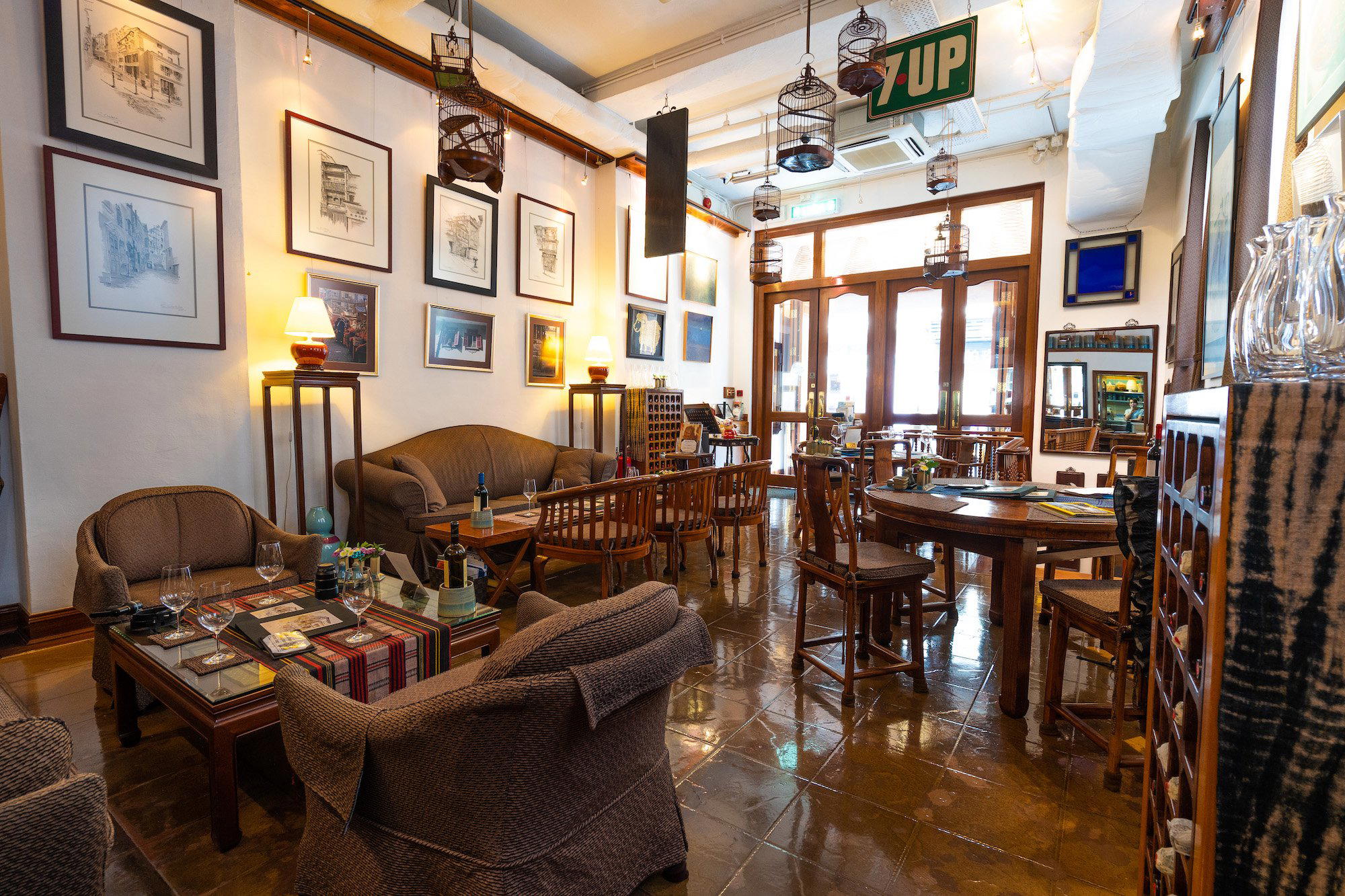
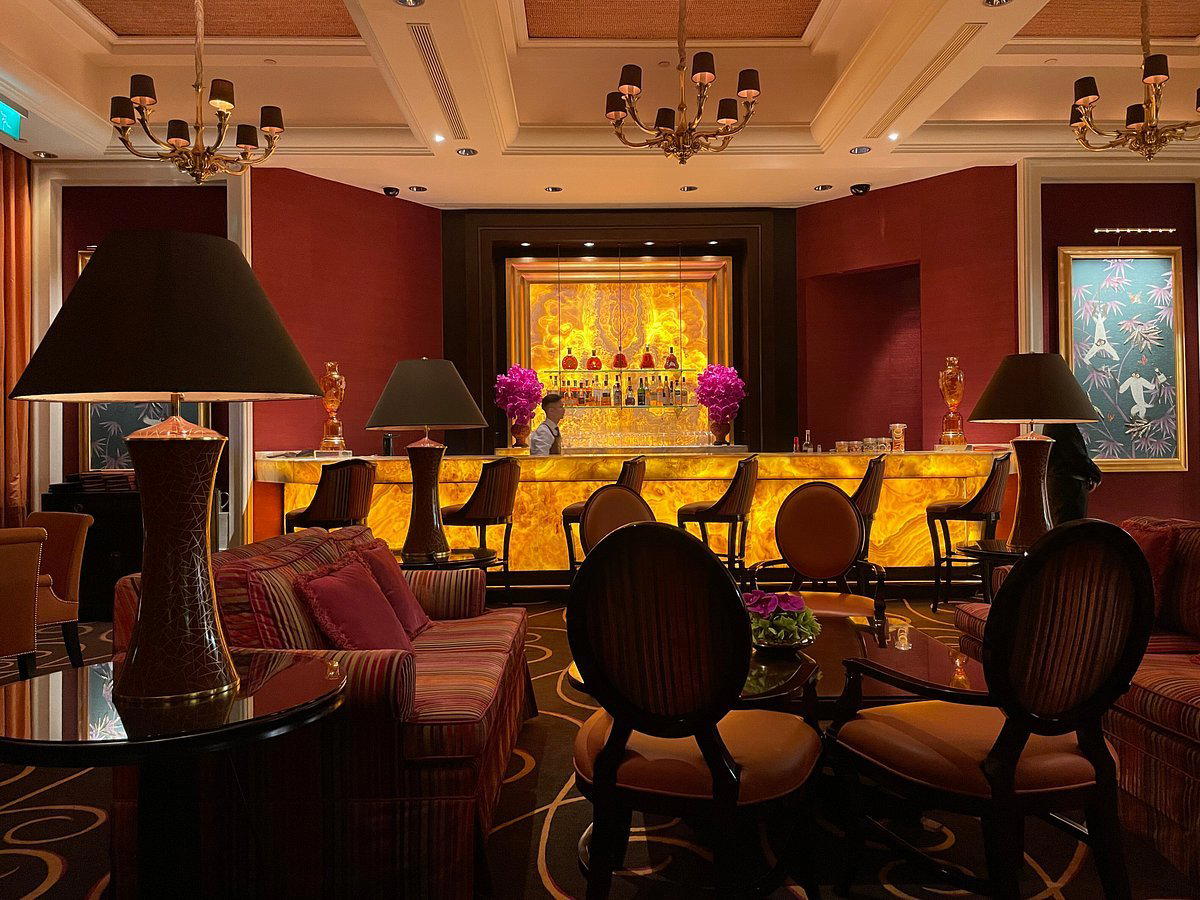
Cozy and atmospheric historic setting with preserved antique features, lovely garden environs, and warm lighting creating an intimate, homey feel.