
Star Wine List
Our verdict
Built in 1870 and originally reserved for military officers, Clube Militar de Macau opened to the public in 1995 as one of the city's most enduring Portuguese restaurants. Where Macau's casino-strip dining skews toward spectacle and high production values, the Clube Militar operates on a different register entirely: colonial architecture, measured service, and a kitchen rooted in the traditions of mainland Portuguese cooking.

Pearl is the En Primeur Club membership app, where members save venues, book tables and use the concierge.
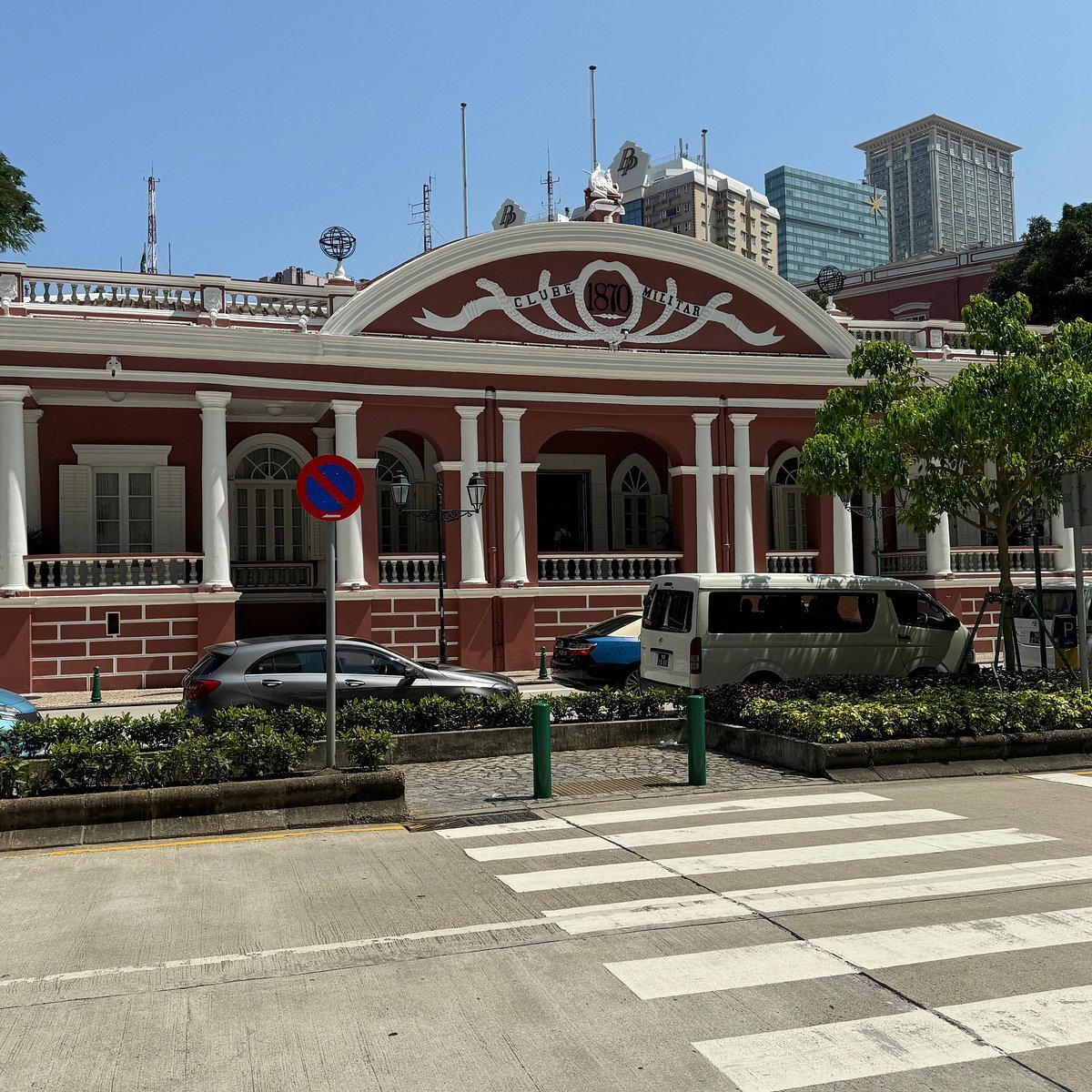
A Different Macau, Preserved in Stone and Plaster
Avenida da Praia Grande was once the administrative spine of Portuguese Macau, lined with government buildings and colonial institutions that asserted a European presence on the South China coast. That era has largely given way to reclaimed land and casino towers, but at number 975, the Clube Militar de Macau still occupies its original 1870 building, a two-storey neoclassical structure with wide verandahs and shuttered windows that read as an architectural document of the territory's 400-year Portuguese chapter. Approaching it from the avenue, before you have considered the menu or the wine, the building itself makes an argument about continuity that few dining addresses in Macau can match.
This part of the city, the older peninsular core away from the Cotai Strip's hotel-casino complexes, is where the sediment of Macau's layered identity sits closest to the surface. The Historic Centre of Macao, a UNESCO World Heritage Site, is walkable from here, and the neighbourhood's street-level texture, pastel plasterwork, cobbled lanes, Portuguese-language signage alongside Cantonese characters, gives the Clube Militar a setting that functions almost as an extension of the dining experience itself. Context in this part of Macau is not decorative; it is structural to how the place is understood.
From Officers' Mess to Public Table
For most of its history, the Clube Militar operated as a private institution, its dining rooms accessible only to army officers and invited guests. That arrangement ended in 1995, when the club opened its restaurant to the general public, arriving at a moment when Macau's transition from Portuguese territory to Special Administrative Region was already underway. The timing gave the restaurant a particular cultural weight: it became, almost by circumstance, a custodian of Portuguese dining traditions in a city that would soon be formally reintegrated into China.
That backstory matters for understanding what the Clube Militar is not. It is not a heritage-themed restaurant constructed around nostalgia for an audience of tourists. It is an institution that predates the tourism infrastructure by more than a century, and its public-facing incarnation is layered on top of a social history with genuine depth. In a Macau dining scene that includes Chef Tam's Seasons and Jade Dragon at the Cantonese end of the high-end spectrum, and Robuchon au Dôme and Alain Ducasse at Morpheus representing French fine dining inside the casino-resort tier, the Clube Militar occupies a different axis altogether, one defined by historical legitimacy rather than production scale or imported culinary celebrity.
Portuguese Cooking in a Macanese Context
The cuisine category here is Portuguese, and understanding what that means in Macau requires a short calibration. Portuguese cooking as practiced in Macau carries two distinct registers. One is Macanese cooking proper, a hybrid tradition shaped by four centuries of trade routes, incorporating Cantonese ingredients and technique alongside Goan, Malay, and African influences from other Portuguese colonial ports. The other is the more direct mainland Portuguese tradition of salt cod preparations, grilled meats, slow-braised dishes, and wine-forward sauces. The Clube Militar's kitchen operates predominantly within the latter, providing a version of Portuguese cuisine that connects more directly to Lisbon than to the hybridised Macanese tradition, though the two are never entirely separable in this city.
That distinction places the Clube Militar in a particular niche within Macau's dining options. For visitors whose primary interest runs toward the intricate, heavily researched Cantonese cooking at venues like Feng Wei Ju or the broader range covered in our full Macau restaurants guide, the Clube Militar offers something orthogonal: a kitchen tradition with European roots, served in a room that reads as entirely consistent with that tradition. The coherence between setting and plate is not incidental.
The Room as Evidence
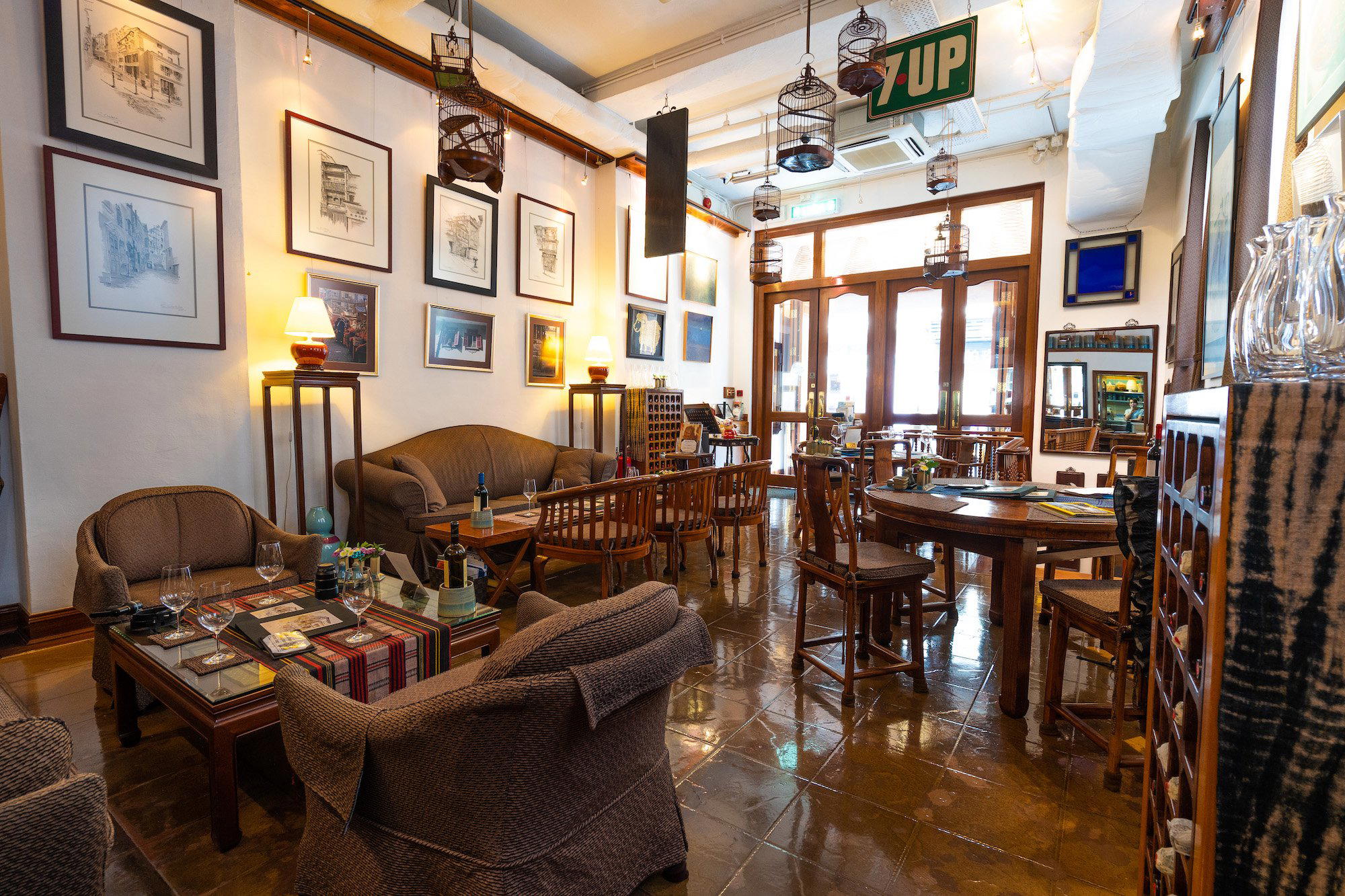
The interior of the 1870 building has been maintained in a manner that preserves rather than restores, a distinction that matters in practice. The high ceilings, tiled floors, and period furnishings do not feel reconstructed for effect; they carry the small imperfections and settled quality of spaces that have been in continuous use. Ceiling fans, wooden furniture, and the architectural proportions of a pre-air-conditioning tropical building all contribute to an atmosphere that Portuguese food in a modern Lisbon setting would not produce. Here the cuisine and the room exist in the same time signature.
That atmospheric coherence is one of the specific reasons the Clube Militar draws visitors who have already covered the casino-resort dining circuit. Macau's higher-end restaurant options, including those reviewed in our Macau hotels guide and the wider experiences guide, are often embedded within large hotel complexes where the dining room's identity is subordinate to the resort's branding. The Clube Militar's room belongs to no such hierarchy. It was built for a specific institutional purpose and carries that specificity forward.
Placing It in the City
Macau's dining geography splits broadly between the peninsula's older districts and the Cotai Strip. Most of the casino-tier restaurants, the addresses that attract Michelin attention and corporate expense accounts, sit in Cotai. The peninsula retains older, smaller establishments with more variable quality but often more character. The Clube Militar sits at the higher end of peninsula dining not because of production values or culinary ambition measured in tasting-menu courses, but because of the irreplaceable combination of the building, the history, and a kitchen that treats Portuguese cooking as a tradition to be respected rather than reinvented.
For travellers moving through southern China, the Clube Militar is one address that does not have equivalents in nearby cities. The Portuguese dining tradition visible in restaurants like 102 House in Shanghai or the broader Chinese dining culture represented by Imperial Treasure Fine Chinese Cuisine in Guangzhou and Ru Yuan in Hangzhou exist within entirely different culinary frameworks. The Clube Militar's point of reference is Iberian, filtered through a specific colonial history that only Macau carries.
Planning Your Visit
The restaurant is located at 975 Avenida da Praia Grande on the Macau Peninsula, reachable by taxi from either the ferry terminals or Cotai. Given its position in the older city core, a visit pairs naturally with walking the UNESCO Heritage Zone, which reduces the need for additional transport. Booking ahead is advisable, particularly for lunch on weekends, when the dining room attracts both local residents and visitors spending time in the historic centre rather than at the casino resorts. For the wider picture on drinking and nightlife options around your visit, our Macau bars guide covers the current scene, while our Macau wineries guide provides context on what's available in the territory's increasingly active wine retail and storage sector.
Frequently asked questions
Is Clube Militar De Macau Michelin-listed?
Clube Militar De Macau has received recognition including: Built 1870, this used to be a private club serving only army officers but then opened to the public as a Portuguese restaurant in 1995. The venue provides an authentic atmosphere of old times Portugal....
What part of town is Clube Militar De Macau in?
Clube Militar De Macau is located at Clube Militar, 975 Av. da Praia Grande, Macao, Macau.
What do people recommend at Clube Militar De Macau?
The kitchen follows Portuguese cooking as it developed in Macau, a tradition shaped by long trade routes through Africa, India, and Southeast Asia rather than purely Lisbon precedent. Dishes rooted in that Macanese-Portuguese hybrid tradition are consistently cited by visitors as the reason to come. The building's atmosphere, in place since 1870, frames the meal in a way that purpose-built restaurants on the Cotai Strip cannot replicate.
Do they take walk-ins at Clube Militar De Macau?
The dining room at 975 Avenida da Praia Grande occupies a historic 1870 colonial building, and demand from both locals and visitors to the Macau Peninsula makes advance planning sensible. Given its status as one of the few genuine Portuguese dining institutions open to the public since 1995, a reservation reduces the risk of arriving to a full house.
What makes Clube Militar De Macau worth seeking out?
The Clube Militar is one of a small number of places in Macau where the physical setting and the cuisine share the same historical origin story. Built in 1870 as a private officers' club and opened to the public only in 1995, the building on Avenida da Praia Grande has not been refitted as a heritage attraction, it functions as a working restaurant inside a structure that has changed very little. That combination of authentic Portuguese cooking and an interior that predates the casino era by more than a century is not replicated elsewhere on the peninsula.
Can Clube Militar De Macau adjust for dietary needs?
Portuguese cooking in the Macanese tradition is built around fish, seafood, pork, and egg-heavy pastries, which means vegetarian and vegan diners will find the menu narrow by default. Contacting the restaurant at 975 Avenida da Praia Grande ahead of your visit is the most reliable way to confirm what substitutions or omissions are possible.
Is Clube Militar De Macau one of the oldest restaurants in Macau?
The building dates to 1870, making it among the older surviving colonial structures on the Macau Peninsula, though it operated as a private military institution for most of that history and only began serving the general public as a Portuguese restaurant in 1995. That means the dining room itself is relatively young in operational terms, even if the architecture is not. For context, Macau's casino-driven dining boom is largely a post-2002 phenomenon, which places the Clube Militar's public-restaurant history squarely ahead of most addresses on the Cotai Strip.
The Minimal Set
Comparable venues nearby, for context on price, style, and recognition.
| Venue | Cuisine | Price | Awards | Notes |
|---|---|---|---|---|
| Clube Militar De MacauThis venue (the venue you are viewing) | Traditional Portuguese | $30–50 | Star Wine List | Not listed |
| Mesa by José Avillez Grand Lisboa Palace Resort Macau | Contemporary Portuguese Fine Dining | $150–200 | Michelin Plate · SCMP 100 Top Tables Restaurants | Cotai, Contemporary Portuguese |
| Albergue 1601 | Traditional Portuguese | $30–50 | Michelin Plate | St. Lazarus District, Traditional Portuguese |
| Vista 38 | Modern Sichuan Fine Dining | $150–200 | Not listed | Cotai Strip, Modern Sichuan Fine Dining |
| Hip Seng Seafood Hot Pot (Almeida Ribeiro) | Seafood Hot Pot | $30–50 | Black Pearl 1 Diamond | São Lourenço, Seafood Hot Pot |
| Broth by André Chiang at Mizumi - Wynn Macau | Elevated Pan-Asian Hotpot | $100–150 | La Liste Top Restaurants | NAPE, Polished Pan-Asian Hotpot |
Recognition history
Dated appearances from independent guides and award organizations, with the underlying list record or original source where available.
Star Wine List
Star Wine List
Continue exploring
More in Macau
Restaurants in Macau
All restaurants in Macau →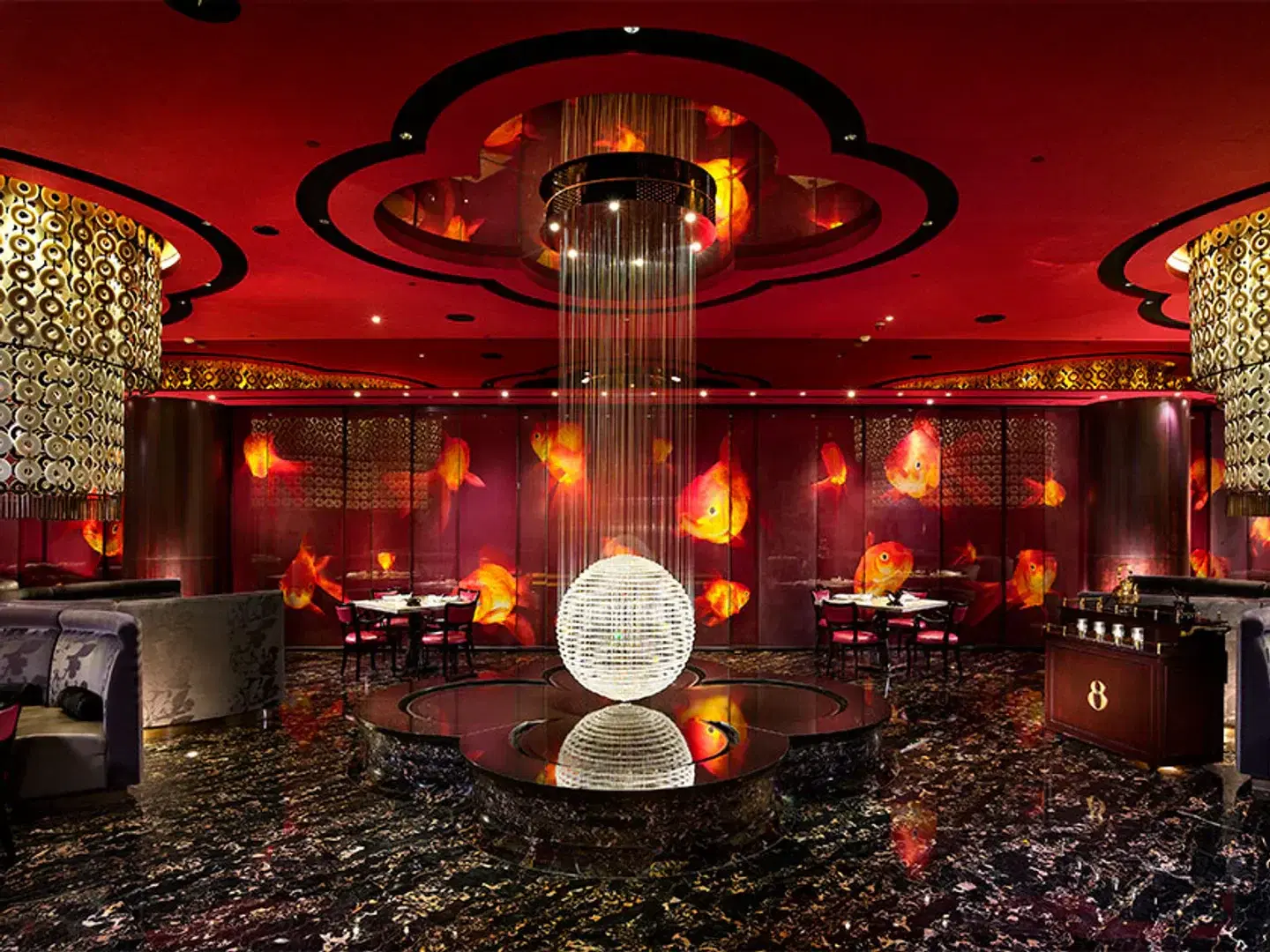
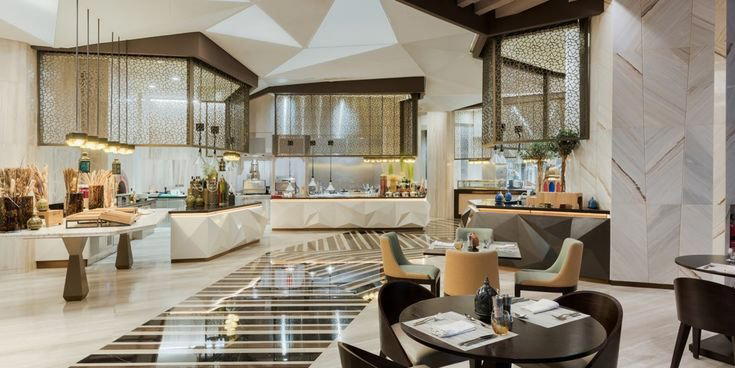
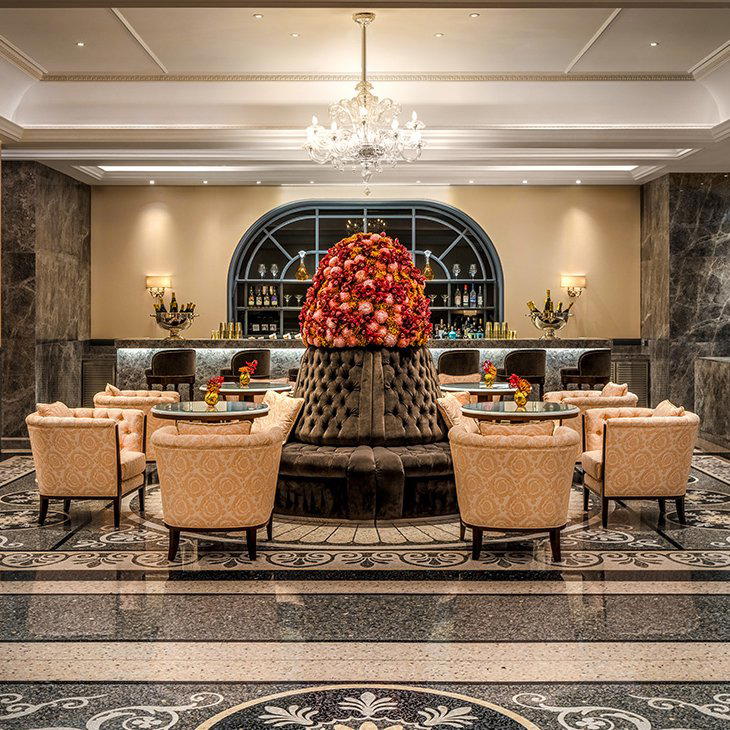
Bars in Macau
All bars in Macau →
Details
- Classic
- Elegant
- Historic
- Sophisticated
- Business Dinner
- Special Occasion
- Historic Building
- Extensive Wine List
- A La Carte
- Buffet
Current opening hours
- Monday
- 12:30–2:45 PM, 6:30–10 PM
- Tuesday
- 12:30–2:45 PM, 6:30–10 PM
- Wednesday
- 12:30–2:45 PM, 6:30–10 PM
- Thursday
- 12:30–2:45 PM, 6:30–10 PM
- Friday
- 12:30–2:45 PM, 6:30–10 PM
- Saturday
- 12–3 PM, 6:30–10 PM
- Sunday
- 12–3 PM, 6:30–10 PM
Hours can change for holidays and private events. Hours as of .
Classic European colonial atmosphere with high ceilings, teak floors, ceiling fans, and understated elegance reminiscent of an officers' mess.