
Tabelog 100 #24
Our verdict
Aigamo Ippin Toriyasu belongs to Tokyo’s older, narrower tradition of specialist bird cooking, built around one traditional aigamo sukiyaki course since 1872, with appetizers, soup, and seasonal dishes served within that single course. Its 2025 Tabelog 100 selection for chicken cuisine, 40-guest capacity (including private bookings) and Higashinihonbashi address place it in a category built for planned dinners, private rooms and drink pairings that range from sake to wine.

Pearl is the En Primeur Club membership app, where members save venues, book tables and use the concierge.
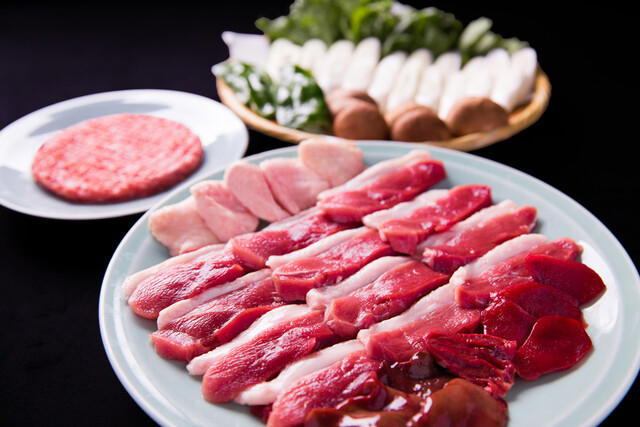
The menu
What to order
- Aigamo sukiyaki course
- Grilled aigamo breast in iron pot
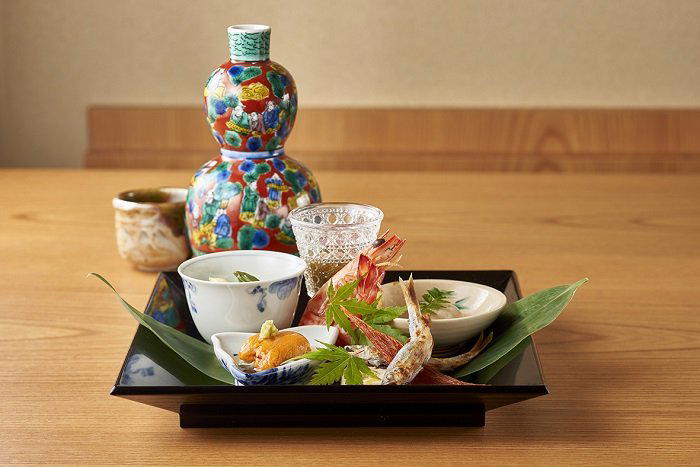
- Appetizer and soup course items
Higashinihonbashi after office hours has a different rhythm from Ginza or Aoyama: fewer cameras, more purposeful arrivals, and restaurants that read less as stage sets than as working addresses. In that setting, the appeal of specialist bird cuisine is not novelty but continuity. Aigamo Ippin Toriyasu sits inside this older Tokyo grammar, where one traditional aigamo sukiyaki course has been served since 1872, with appetizers, soup, and seasonal dishes inside that single course rather than a broader Japanese menu.
Tokyo bird cuisine after the yakitori boom
Tokyo’s international dining reputation has often been flattened into sushi counters, ramen queues and kaiseki rooms, but bird cookery has its own hierarchy. Yakitori gave the category global visibility; chicken sukiyaki, duck courses and private-room bird restaurants occupy a quieter lane. That lane rewards regulars, group dinners and drink-led pacing more than spectacle. The 2025 Tabelog 100 selection for chicken cuisine places Aigamo Ippin Toriyasu within that specialist bracket, not among general Japanese restaurants competing on breadth.
The distinction matters. A restaurant built around a single aigamo sukiyaki course asks a different question from a tasting-menu room: how much depth that one specialty can sustain across heat, broth, grill, pot and seasoning? In Tokyo, that answer often depends less on constant reinvention than on disciplined repetition. A Tabelog score of 3.61 and inclusion in the chicken-cuisine list signal a venue recognized by diners within a specific field, rather than a place trading on broad tourist fame.
That field has also shifted. Tokyo’s premium casual dining has become more format-conscious, with counter seats, tightly scripted menus and reservation anxiety shaping the way visitors read value. Aigamo Ippin Toriyasu points in another direction: a maximum of 40 guests, table and sunken kotatsu seating, private rooms across multiple party sizes, and private use for groups. In a city where many serious meals now compress into intimate counters, this is a reminder that old-school hospitality in Tokyo can be expansive without becoming impersonal.
Why the Higashinihonbashi setting changes the meal
Higashinihonbashi, Bakuro-Yokoyama and Bakurocho form a practical triangle on the east side of central Tokyo, shaped by wholesale history, offices and transport links rather than destination dining theatre. That context suits a restaurant where the room matters as much as the plate. Private rooms for small parties, larger groups and full-floor use for groups of 20 or more make the format closer to a Japanese business dinner house than a modern chef showcase.
The drinks list also clarifies the positioning. Sake, shochu and wine are all part of the offer, with stated attention to each category. That combination is not incidental: bird cuisine can move from delicate broth or sukiyaki sweetness into charcoal-led richness, and the drink structure needs more flexibility than a narrow sake-only program. For travelers used to Tokyo meals where beverage choices follow the chef’s sequence, this format leaves more room for the table to set its own pace.
Service details suggest a restaurant accustomed to mixed-use occasions. English menus are available, parties over 2.5 hours are supported, and children are welcomed with advance contact requested. The presence of charcoal cooking adds a practical caution for families, but the broader point is clear: this is not a hushed micro-counter designed only for culinary pilgrims. It is a dinner house with enough infrastructure for friends, families and business entertaining.
Where it fits in a Tokyo itinerary
The decision to book here should come from category intent. If the goal is sushi minimalism, ramen speed or cocktail experimentation, Tokyo offers cleaner matches. If the interest is in a slower dinner built around one aigamo sukiyaki course, private-room comfort and a drink range that crosses sake, shochu and wine, Aigamo Ippin Toriyasu has a defined role. The aigamo sukiyaki course is JPY 18,000 per person including tax and service, with beverages separate; the JPY 20,000 to JPY 29,999 band is an approximate budget including drinks.
Its weekday-only dinner rhythm also shapes planning. The restaurant operates in the evening from Monday to Friday, with weekends and public holidays generally closed, while Saturdays open only in December and January. That makes it better suited to a business-trip dinner or a midweek Tokyo stay than a spontaneous weekend plan. Advance reservations are strongly recommended, and same-day seating may not be available. Cancel by the end of the business day before the reservation for a fee of 50% of the reserved meal; same-day cancellations and no-shows are 100%.
For context inside EP Club’s Tokyo coverage, readers comparing nearby or adjacent dining styles can look at . 鮪と炭火焼き うお炭 秋葉原店 for tuna and charcoal, 124. KAGURAZAKA (Yakitori) for a more direct yakitori reference, or 12/10 Shinjuku ten and 3 Chome no Curry Ya San for different Tokyo dining moods. 2D Cafe shows the city’s visual café culture, while the broader city index sits at Our full Tokyo restaurants guide.
Travel planning around the meal can be widened through Our full Tokyo hotels guide, Our full Tokyo bars guide, Our full Tokyo wineries guide and Our full Tokyo experiences guide. Readers extending the comparison beyond Tokyo might place its sukiyaki connection against -Grilled beef Sukiyaki- KAMAKURA TANUKIAN 鎌倉 たぬき庵 in Kamakura, then contrast Japan’s wider dining range through.cafe in Osaka,.know in Kumamoto, (Shoku) Vietnam in Kawasaki, [Curry Senmon Ten] Maruyama Kyoju. in Sapporo and [ki:] in Kyoto. For a trans-Pacific Japanese-drinks thread, Jōdo Saké Bar in Los Angeles and Onigiri Time in Pasadena pull the conversation into California.
The editorial read is simple: this is a category restaurant, not a personality restaurant. Its interest lies in how an older Tokyo specialist format has adapted to current dining expectations: English-language support, credit-card acceptance, private-room flexibility, wheelchair access and a drinks program broad enough for contemporary tables. In a city increasingly defined abroad by tiny counters and reservation mythology, that makes Aigamo Ippin Toriyasu useful for a different kind of Tokyo dinner, one grounded in tradition, group comfort and a narrow cuisine taken seriously.
Frequently asked questions
What are the opening hours for Aigamo Ippin Toriyasu?
Hours at Aigamo Ippin Toriyasu: Mon: 5–9 PM; Tue: 5–9 PM; Wed: 5–9 PM; Thu: 5–9 PM; Fri: 5–9 PM; Sat: Closed (open Dec/Jan); Sun: Closed. Last admission is 7:30 p.m.
Where exactly is Aigamo Ippin Toriyasu?
Aigamo Ippin Toriyasu is located at 2 Chome-11-7 Higashinihonbashi, Chuo City, Tokyo 103-0004, Japan, Tokyo.
Is Aigamo Ippin Toriyasu expensive?
The aigamo sukiyaki course is JPY 18,000 per person including tax and service; beverages are separate. The listed JPY 20,000–29,999 band is an approximate budget including drinks.
What do critics highlight about Aigamo Ippin Toriyasu?
The clearest signal is its inclusion in Tabelog 100 for chicken cuisine in 2025, which puts it in a selective national list rather than a casual neighbourhood tier. Critics also tend to notice the format: a house restaurant in Higashinihonbashi for up to 40 guests, serving one traditional aigamo sukiyaki course (JPY 18,000 including tax and service; beverages separate), with private rooms.
What if I have allergies at Aigamo Ippin Toriyasu?
The restaurant’s English multilingual menu is a useful starting point, but allergies should be flagged before arrival because the kitchen uses charcoal for cooking. Reservations are available, and the safest approach is to state the allergy clearly when booking or call 03-3862-4008 to confirm what can be accommodated.
What is the cancellation policy at Aigamo Ippin Toriyasu?
Cancel by the end of the business day before the reservation and the fee is 50% of the reserved meal. Same-day cancellations are 100%, and no-shows are 100%.
Do I need a reservation at Aigamo Ippin Toriyasu?
Advance reservations are strongly recommended; same-day seating may not be available. Last admission is 7:30 p.m., and arriving by 6:30 p.m. is recommended for the full course at a relaxed pace.
How It Stacks Up
Comparable venues by price and recognition.
| Venue | Cuisine | Price | Awards | Notes |
|---|---|---|---|---|
| Aigamo Ippin ToriyasuThis venue (the venue you are viewing) | Traditional Duck Sukiyaki (Aigamo) | $50–100 | Tabelog 100 #24 | Not listed |
| Kuzushi Teppan AVAGURA Kanda ten | Modern Teppanyaki | $50–100 | Tabelog 100 #100 | Chiyoda |
| Tokyo Kyobashiya Curry | Additive-free Japanese curry house | $10–20 | Tabelog 100 #27 | Chūō |
| Tori Aroma | Hinai Jidori Yakitori Omakase | $50–100 | Tabelog 100 #31 | Chiyoda |
| Teppanyaki Iwakura | Japanese Teppanyaki | $150–200 | Tabelog 100 #40 | Shinjuku |
| Yakitori Katou | Traditional Yakitori Counter | $50–100 | Tabelog 100 #82 | Minato |
Recognition history
Dated appearances from independent guides and award organizations, with the underlying list record or original source where available.
Tabelog 100 #24 · No. 24
Tabelog · Tabelog 100 - Chicken cuisine - 2025
Continue exploring
More in Tokyo
Restaurants in Tokyo
All restaurants in Tokyo →








Details
- Classic
- Cozy
- Intimate
- Elegant
- Business Dinner
- Group Dining
- Special Occasion
- Private Event
- Date Night
- Private Dining
- Historic Building
- Standalone
- Sake Program
- Beer Program
- Tasting Menu
- Set Menu
- Family Style
- Sake
- Beer
- Shochu
Current opening hours
- Monday
- 5–9 PM
- Tuesday
- 5–9 PM
- Wednesday
- 5–9 PM
- Thursday
- 5–9 PM
- Friday
- 5–9 PM
- Saturday
- Closed
- Sunday
- Closed
Hours can change for holidays and private events. Hours as of .
A quiet, traditional Japanese hideaway just off the main bustle, with nostalgic decor, private rooms and warm service that create a serene, old‑Tokyo atmosphere ideal for relaxed conversation and formal gatherings.