
Tabelog 100 #27
Our verdict
A six-seat curry room in Kyobashi gives Tokyo’s curry culture a more intimate register than the city’s quick lunch counters. Selection for Tabelog Curry TOKYO “Tabelog 100” 2024 places Tokyo Kyobashiya Curry in a serious local category, with daytime value and evening scarcity shaping how diners should read the experience.

Pearl is the En Primeur Club membership app, where members save venues, book tables and use the concierge.
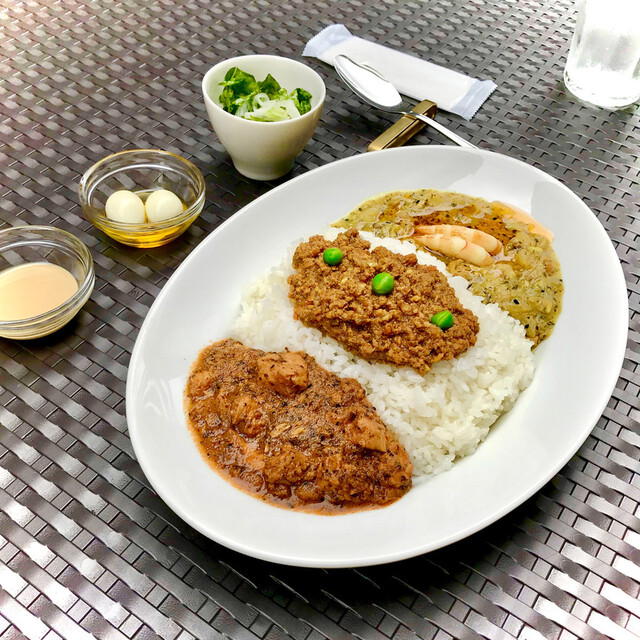
The menu
What to order
- Tokie Curry
- Keema Curry
- Spicy Date Chicken Curry
- Three-curry plate
- Frozen take-home curry
Tokyo’s curry addresses rarely announce themselves with theatre. The setting is often compact: office blocks, station exits, narrow stairwells, and small rooms where lunch feels more like a focused appointment than a pause. Tokyo curry is often treated as convenience food, but its stronger operators approach it with specialist-kitchen discipline: spice structure, rice balance, pacing, repeatability, and price all matter.
Tokyo Kyobashiya Curry belongs to that exacting side. Its selection for Tabelog Curry TOKYO “Tabelog 100” 2024 is a useful signal because Tokyo curry is not a thin field; it spans Japanese curry rice, South Asian-derived spice shops, soup curry, European-style roux, and hybrid counters built for office lunch. Recognition here points less to luxury than to consistency within a crowded, opinionated local form.
Kyobashi curry sits between office lunch culture and specialist dining
The daytime curry economy in Tokyo rewards speed, clarity, and pricing discipline. Around central business districts and restaurant-dense areas, lunch is shaped by workers who know exactly how long a queue can be tolerated before the afternoon collapses. Curry fits because it can be served efficiently without surrendering complexity. Serious shops use the format to express a point of view through spice and texture, not ceremony.
That distinction matters because the best small-format curry rooms can change the meal’s psychology. A focused setting moves curry away from anonymous high-volume churn and toward concentration. Scale does not automatically make a restaurant stronger, but it changes the expectation: the diner is not simply buying calories between meetings. The meal becomes a narrow-window version of Tokyo specialist dining, where capacity pressure and category focus carry weight.
The lunch-versus-dinner divide is the useful lens. Lunch here is value-coded, even when the cooking is serious; diners compare curry with ramen, tonkatsu, soba, and set meals within a tight midday budget. Dinner changes the frame. The same category can feel more deliberate after office hours, especially when the meal no longer competes with a calendar alert. Tokyo Kyobashiya Curry’s listed budgets of Dinner: JPY 3,000 - JPY 3,999 and Lunch: JPY 2,000 - JPY 2,999 place it above the city’s bare-bones curry-rice tier, which is why the award context matters: the premium should be read against specialist peers, not chain curry.
The value question is different at lunch than at dinner
Tokyo often hides serious cooking inside modest formats, and curry shops are part of that habit. The category’s ceiling is not defined by white tablecloths or wine lists, but by how far a kitchen can push one format without making the meal feel over-designed. A Tabelog Curry TOKYO “Tabelog 100” selection is therefore more relevant than broad fine-dining language. It places the restaurant inside a curry-specific conversation, judged against kitchens working within the same constraints.
At lunch, the calculus is direct: a diner pays for a more considered curry experience in a city with many cheaper, faster alternatives. Nearby comparison helps. DOMINICA Ginza ten, another Tokyo curry address in the supplied comparison set, frames Tokyo Kyobashiya Curry as a specialist choice rather than a default office option. That does not make either format superior; it clarifies the decision. Choose the more selective curry meal when the meal itself is the point, not a gap between appointments.
At dinner, the category shifts again. Curry after dark in Tokyo is revealing: casual foods lose their purely functional role and become a way to eat seriously without adopting the rituals of sushi, kaiseki, or French dining. Tokyo is useful here. It offers access to high-density dining intensity without the formal codes attached to higher-ticket rooms. In a city mentally dominated by polished counters and expense-account restaurants, a curry specialist gives the dining map another register.
For readers building a Tokyo dining sequence, the point is not to rank curry against sushi or yakitori, but to know when curry is the sharper move. A meal here makes sense when lunch needs focus rather than breadth, or when dinner calls for Tokyo specialist culture without a tasting menu’s long arc. For a broader map, compare the curry lane with other Tokyo dining rooms, casual counters, and more direct restaurant scouting in Our full Tokyo restaurants guide.
How to place it in a Tokyo itinerary
The strongest Tokyo itineraries are built by contrast. A curry counter gains force when it is not forced to imitate fine dining. Pair it with other registers to clarify the city: polished counters, casual specialist rooms, or a different style of Tokyo meal altogether. The contrast lets curry read as a serious Tokyo form rather than convenience.
Tokyo planning also benefits from keeping food, lodging, drinks, and cultural programming separate rather than blurred. Use broader Tokyo hotel planning for neighbourhood anchoring, bar planning for after-dinner pacing, experience planning for non-restaurant structure, and wine-focused planning where it is relevant. Beyond Tokyo, the contrast widens through other Japanese casual forms, regional specialities, and curry-focused meals in other cities, but those are a different conversation from the narrow case for Tokyo Kyobashiya Curry.
The editorial case for Tokyo Kyobashiya Curry is narrow and persuasive: a Tokyo curry room, recognised in a Tokyo-specific curry list, asking diners to treat lunch and dinner differently. Lunch is the sharper value test; dinner is the better argument for curry as destination dining without ceremony. In a city obsessed with category mastery, that distinction is enough.
Frequently asked questions
What should I budget for a meal at Tokyo Kyobashiya Curry?
Pricing at Tokyo Kyobashiya Curry is listed as Dinner: JPY 3,000 - JPY 3,999; Lunch: JPY 2,000 - JPY 2,999.
What's Tokyo Kyobashiya Curry's location?
Tokyo.
Can I walk in to Tokyo Kyobashiya Curry?
Specific walk-in and booking details are not provided here. Check the latest information directly before planning a meal at Tokyo Kyobashiya Curry.
What makes Tokyo Kyobashiya Curry worth seeking out?
It has been selected for Tabelog Curry TOKYO "Tabelog 100" in 2024, with a listed Tabelog score of 3.68. That gives it clear standing in the city’s curry scene and keeps the focus on curry as a serious Tokyo specialist format.
Where the Accolades Land
Comparable venues at the same tier.
| Venue | Cuisine | Price | Awards | Notes |
|---|---|---|---|---|
| Tokyo Kyobashiya CurryThis venue (the venue you are viewing) | Additive-free Japanese curry house | $10–20 | Tabelog 100 #27 | Not listed |
| Unitora (うに虎) | Uni Specialty Sushi | $50–100 | Not listed | Tsukiji |
| Nanban Ginen Tei | Ginza yoshoku (Japanese-style Western) restaurant | $100–150 | Tabelog 100 #20 | Chūō |
| TsuruTonTan UDON NOODLE Brasserie GINZA | Udon Noodle Brasserie | $20–30 | Not listed | Chūō |
| Yakitori Toge | Modern Yakitori Omakase | $50–100 | Tabelog 100 #59 | Shinjuku |
| Okashiya Ucchi | Seasonal Japanese cake & dessert shop | $50–100 | Tabelog 100 #20 | Shibuya |
Recognition history
Dated appearances from independent guides and award organizations, with the underlying list record or original source where available.
Tabelog 100 #27 · No. 27
Tabelog · Tabelog 100 - Curry - TOKYO - 2024
Continue exploring
More in Tokyo
Restaurants in Tokyo
All restaurants in Tokyo →





Details
- Quiet
- Cozy
- Intimate
- Classic
- Solo
- After Work
- Casual Hangout
- Special Occasion
- Standalone
- Local Sourcing
- Set Menu
- Allergy Accommodating
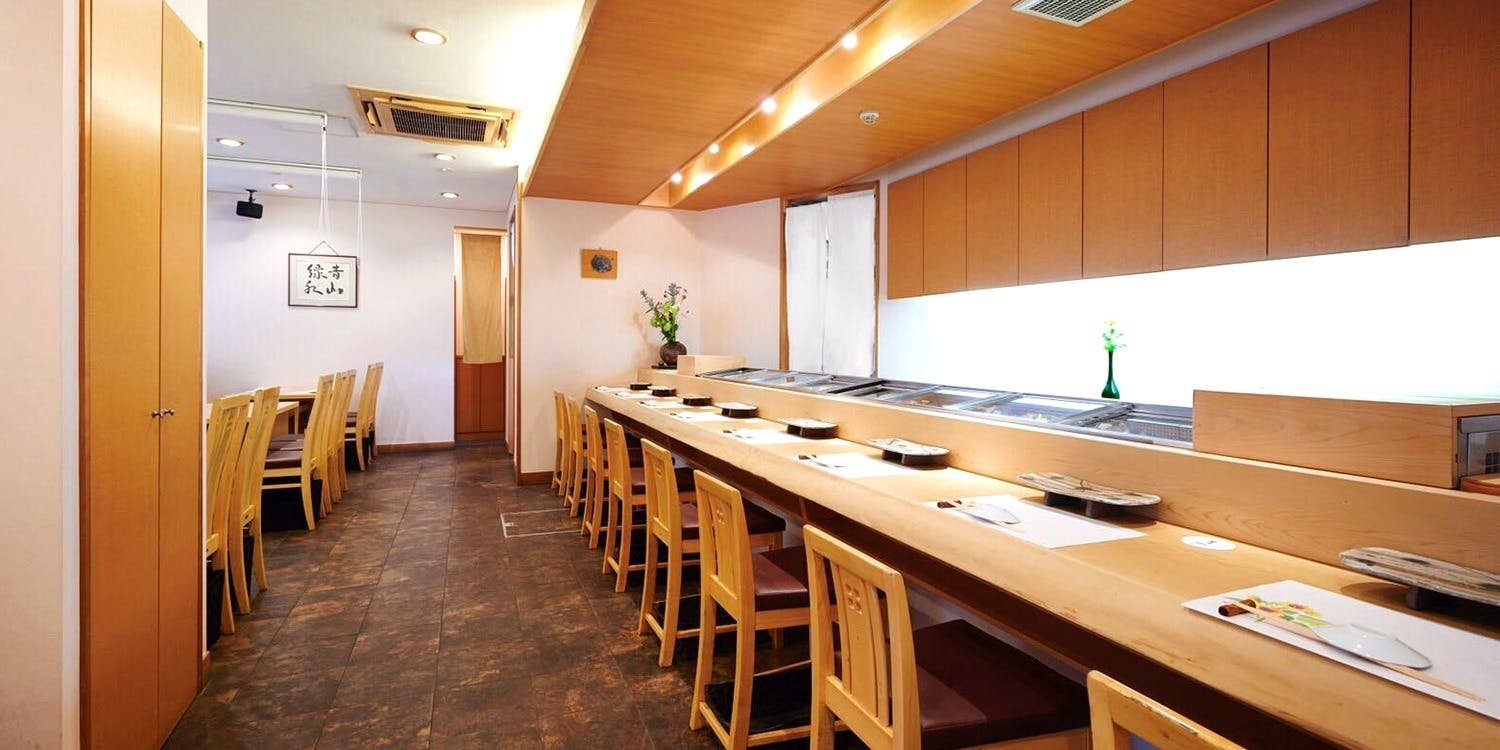
small, secluded second-floor curry shop down a narrow lane in Kyobashi, with a quietly contemplative atmosphere where guests are asked to knock softly on the door and enjoy a slow, carefully prepared meal rather than a busy, high-turnover lunch spot.