Çka Ka Qëllu


On Arthur Avenue in the Bronx, Çka Ka Qëllu brings Albanian and Kosovar cooking to one of New York's most underserved culinary traditions. Burek, sarma, and a wide spread of meats and dips arrive in a dining room lined with regional artifacts and sepia photographs,300 reviews signals how firmly it has landed with the neighbourhood. Budget-friendly at the $$ price point, it earns its place as the city's most visible Albanian table.
Pearl is the En Primeur Club membership app — saves, bookings, and concierge access live there. Same editors, same standards.
- Address
- 2321 Hughes Ave, Bronx, NY 10458
- Phone
- (718) 933-6194
- Website
- ckakaqellu.com
- Directions
- Get directions
 Saves & bookings on Pearl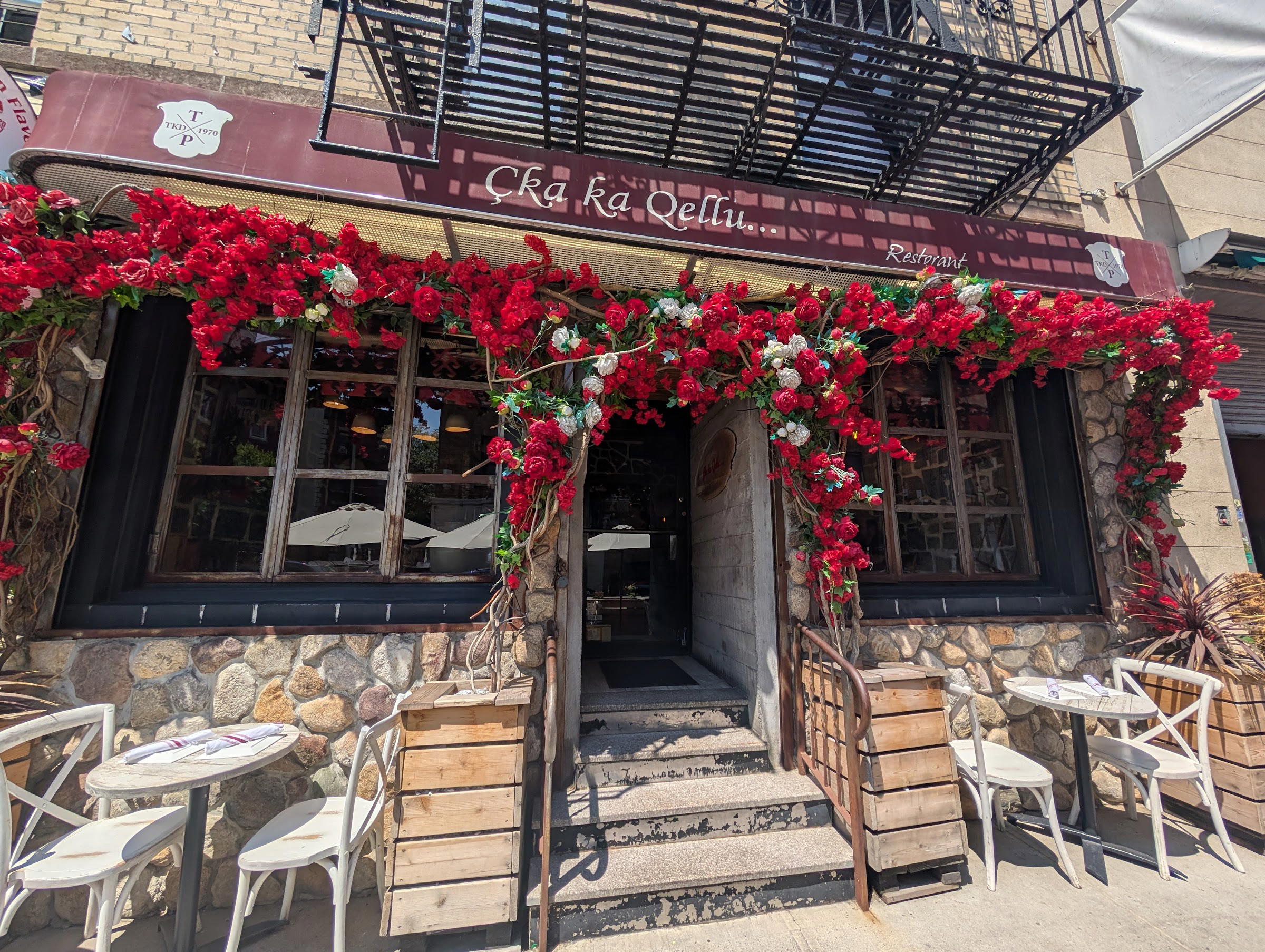
A Corner of the Balkans on Arthur Avenue
Çka Ka Qëllu is a traditional Albanian and Kosovan restaurant in the Bronx, New York, with. Step into Çka Ka Qëllu and the Bronx recedes for a moment. The walls are hung with Albanian artifacts, ornate frames enclosing sepia-toned photographs, glass cases displaying intricate regional garb, and the effect is less decoration than document. This is a dining room that treats its own cultural inheritance seriously, converting a narrow corner beside the rear entrance of the Arthur Avenue Retail Market into something closer to a community archive than a restaurant. That combination of food and material history is not accidental. Albanian cooking in New York has existed largely in the background since the first wave of immigration picked up pace in the 1990s, and venues like this one carry the weight of representing a cuisine that most of the city has not yet encountered.
The Albanian Presence in the Bronx, and Why It Matters
Albanian immigration to New York accelerated significantly through the 1990s and into the 2000s, with residential pockets forming across multiple Bronx neighbourhoods. The Belmont area, already established as an Italian-American enclave centred on Arthur Avenue, absorbed Albanian newcomers with relatively little friction, partly because the food cultures share an appetite for long-cooked meats, dairy-heavy accompaniments, and communal eating. What took longer to arrive was Albanian cooking presented on its own terms rather than folded into a broader vague Eastern European category. Çka Ka Qëllu addresses that gap directly. The servers are actively willing to explain the menu to first-time visitors, an unusual posture in a neighbourhood restaurant that suggests the kitchen understands its educational role as much as its cooking one.
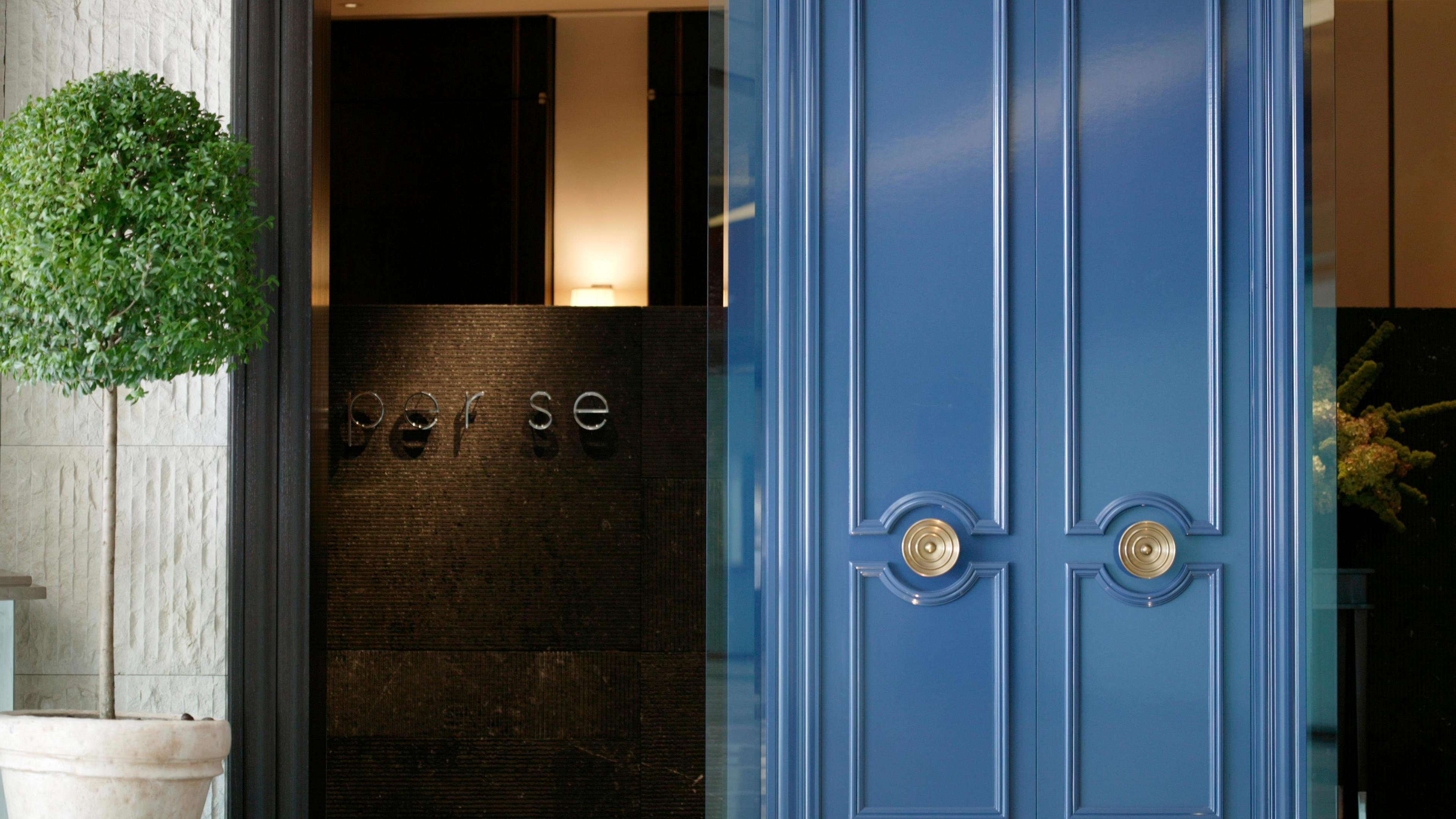
The broader context matters here: Albanian cuisine sits at a crossroads of Ottoman, Mediterranean, and Balkan influences, and within New York's extraordinary range of immigrant food traditions, it remains conspicuously sparse in representation. Compare this to the depth of, say, the city's Korean dining scene, where restaurants like Atomix have pushed the cuisine to the highest levels of critical recognition, or the long-standing French tradition running through Le Bernardin, Eleven Madison Park, and Per Se. Albanian cooking has nothing equivalent in New York, which makes a neighbourhood spot,300 reviews a meaningful data point rather than a modest one.
What the Menu Covers
Albanian and Kosovar cooking as served here is not cuisine of minimalism or architectural restraint. The menu orients around meats, dips, and dairy-forward accompaniments, yogurt applied generously, baked cheese crowning dishes, phyllo deployed in various forms. The burek, a golden-brown pastry filled with soft cheese, functions as one of the clearest entry points to the cuisine: the technique is Ottoman in origin, common across the Balkans and Turkey, but Albanian versions carry their own regional inflections in seasoning and pastry weight. Sarma, cabbage rolls filled with ground veal, rice, and vegetables, represents the slow-cooked, filling register that defines much of the cooking here.
For first-time visitors, the brumat, a spread of Albanian specialties offered as an introductory course, is one practical way to read the kitchen's range before committing to individual dishes. The format mirrors what you find in Balkan restaurants elsewhere in the diaspora; for comparison, 21 Grams in Dubai and Esthiō in Athens both work within similar Balkan sharing traditions, though the Bronx context produces something considerably less polished and considerably more direct. The cooking here is described uniformly as simple, comforting, and filling, none of which are diminishments in the context of a cuisine built around hospitality and abundance.
The Room and Its Dual Presence
The restaurant operates across both a Bronx location and a Manhattan location, with both spaces described as lined with Albanian artifacts along brick walls. The Bronx original sits at 2321 Hughes Ave, adjacent to the Arthur Avenue Retail Market, a position that places it within one of the borough's most historically layered food corridors. Arthur Avenue has been a destination for food-focused visitors for decades, functioning as a working market street rather than a curated food hall, and the restaurant benefits from that foot traffic while serving a regular clientele that extends well beyond the curious tourist.
The atmosphere functions as both dining room and informal cultural institution. In cities with larger and longer-established Albanian communities, Pristina, Tirana, some pockets of northern Greece, restaurants of this kind are unremarkable. In New York, where the cuisine has almost no public-facing infrastructure, the combination of good food and active cultural display makes the space function differently.
Where This Fits in New York's Broader Dining Picture
New York's restaurant culture rewards the extremes: the technically precise tasting menus at places like Masa, or the neighbourhood institutions that serve a specific community with no particular interest in wider recognition. The restaurant sits firmly in the latter category, though the consistent critical attention it has received suggests it has crossed into something wider. Eater has flagged the restaurant by name, and a serious, unpretentious Albanian and Kosovar kitchen that takes its cultural context as seriously as its cooking. That posture is not common in any cuisine at the $$ price point, and it is essentially absent in Albanian cooking in New York.
For visitors whose New York dining itinerary is concentrated in Manhattan, the Bronx address requires a deliberate trip. The Arthur Avenue corridor makes that trip easier to justify, and a visit to the retail market before or after dinner extends the experience into the broader context of the neighbourhood's food culture.
Planning Your Visit
Address: 2321 Hughes Ave, Bronx, NY 10458 (beside the rear entrance of the Arthur Avenue Retail Market, Belmont neighbourhood). Budget: $$ price range, accessible across the menu without significant spend. Reservations: Recommended. Opening hours: Daily, 12 to 10 PM.
- Tava Kosi
- Mixed Grill Platter
- Mantia (Veal Dumplings)
- Sheqerpare
- Albanian Trilece
- Sausage Dip
- Ajvar
Reputation Context
Comparable venues nearby, for context on price, style, and recognition.
| Venue | Cuisine | Price | Awards | Notes |
|---|---|---|---|---|
| Çka Ka Qëllu | Traditional Albanian & Kosovan | $$ | Michelin Plate | Belmont |
| Barawine | French Bistro | $$ | Michelin Plate | Harlem (South) |
| Sami & Susu | Mediterranean Small Plates & Natural Wine | $$ | Bib Gourmand | Lower East Side |
| Reverence | Dining | Not listed | Michelin Plate | New York City |
| Glasserie | Mediterranean with Middle Eastern influences | $$ | Not listed | Greenpoint |
| Ariari | Dining | Not listed | Michelin Plate | East Village |
Recognition history
Dated appearances from independent guides and award organizations, with the underlying list record or original source where available.
New York Times Best Restaurants in New York City #96
New York Times
Michelin Plate
Michelin
New York Times Best Restaurants in New York City
New York Times
Continue exploring
More in New York City
Restaurants in New York City
Browse all →
Bars in New York City
Browse all →
Hotels in New York City
Browse all →




At a Glance
- Rustic
- Cozy
- Intimate
- Group Dining
- Casual Hangout
- Date Night
- Special Occasion
- Standalone
- Historic Building
- Design Destination
- Local Sourcing
Current opening hours
- Monday
- 12–10 PM
- Tuesday
- 12–10 PM
- Wednesday
- 12–10 PM
- Thursday
- 12–10 PM
- Friday
- 12–10 PM
- Saturday
- 12–10 PM
- Sunday
- 12–10 PM
Hours can change for holidays and private events. Last verified .
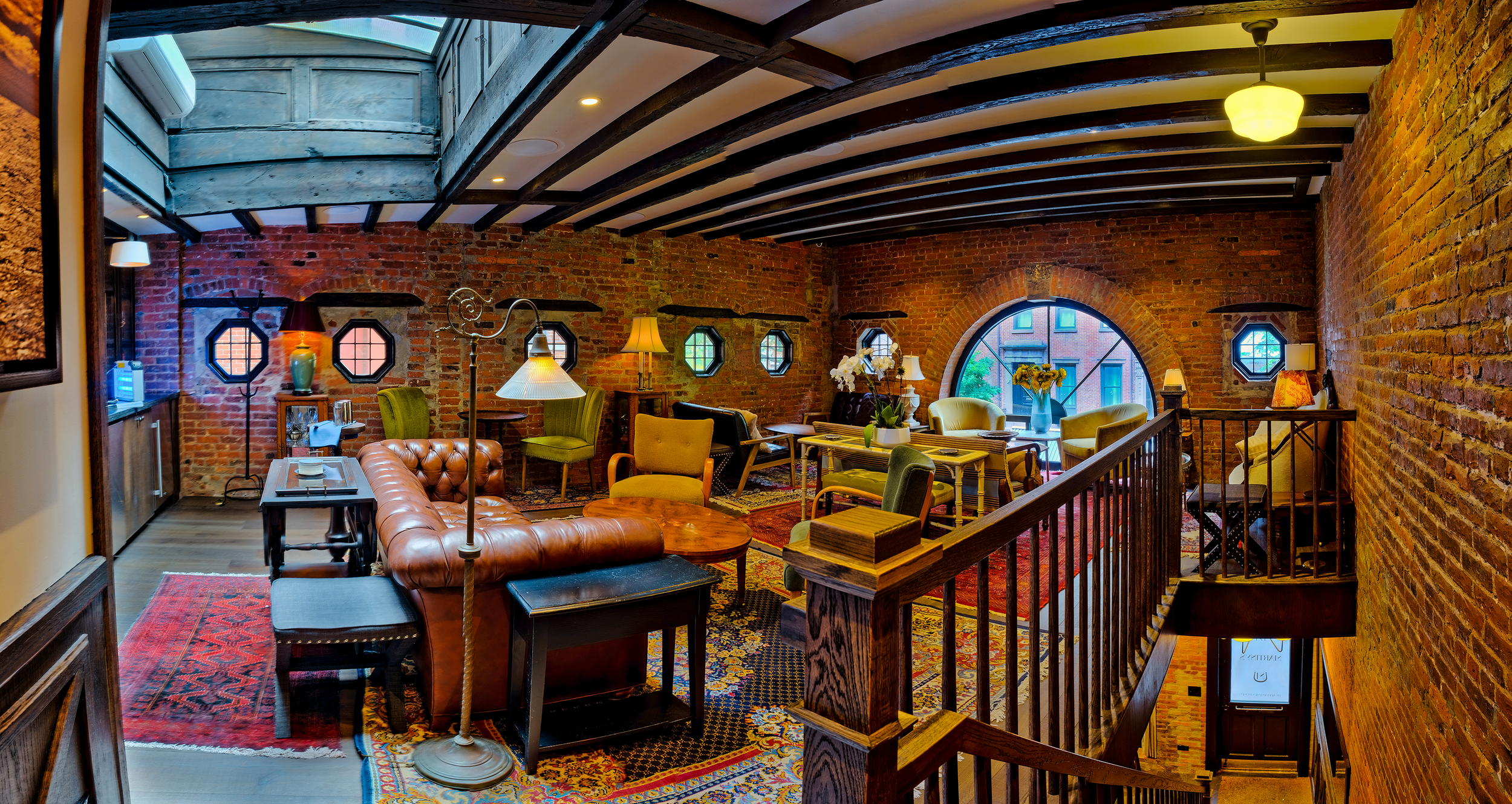
Warm, old-timey authentic space with exposed wood beams, brick walls, earthy tones, intricately woven textiles, and subtle lighting that evokes a Balkan countryside home or museum.