.png)
Set within a 12th-century building in Toledo's historic quarter, Adolfo runs a seasonal tasting menu anchored by produce from its own country estate, with particular attention to herbs, vegetables, and regional ingredients including Camuñas asparagus and Melanosporum black truffle. Recognised with the Michelin Plate in both 2024 and 2025, it occupies the mid-premium tier of Toledo's dining scene, sitting between the neighbourhood's traditional tavernas and the two-Michelin-starred benchmark set by Iván Cerdeño.
 Discover on Pearl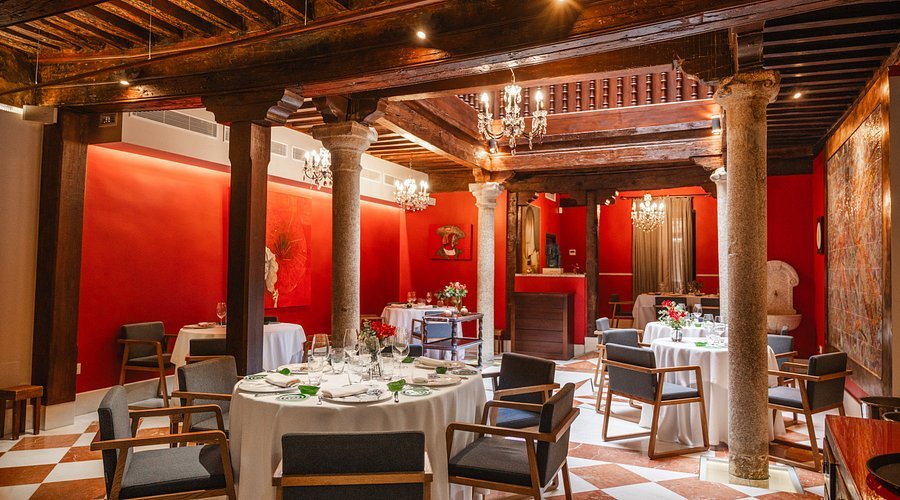
Where the Building and the Garden Meet on the Plate
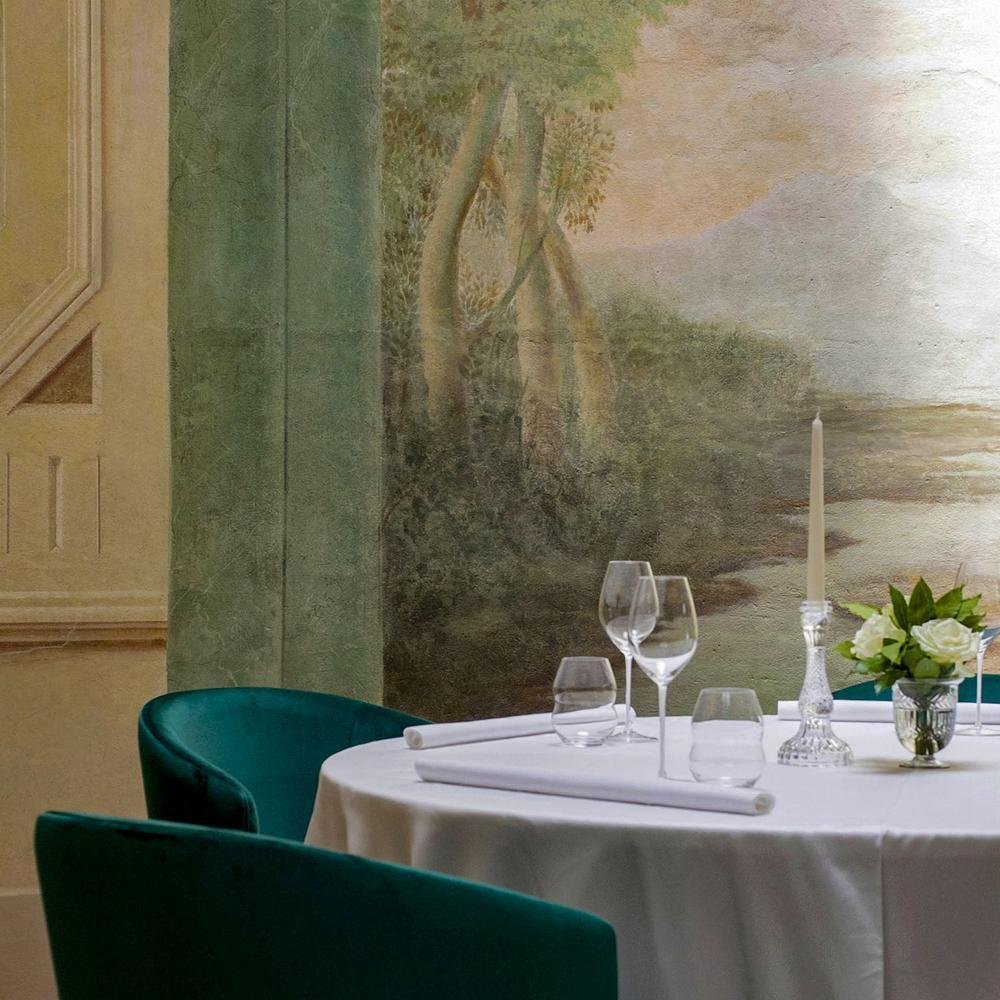
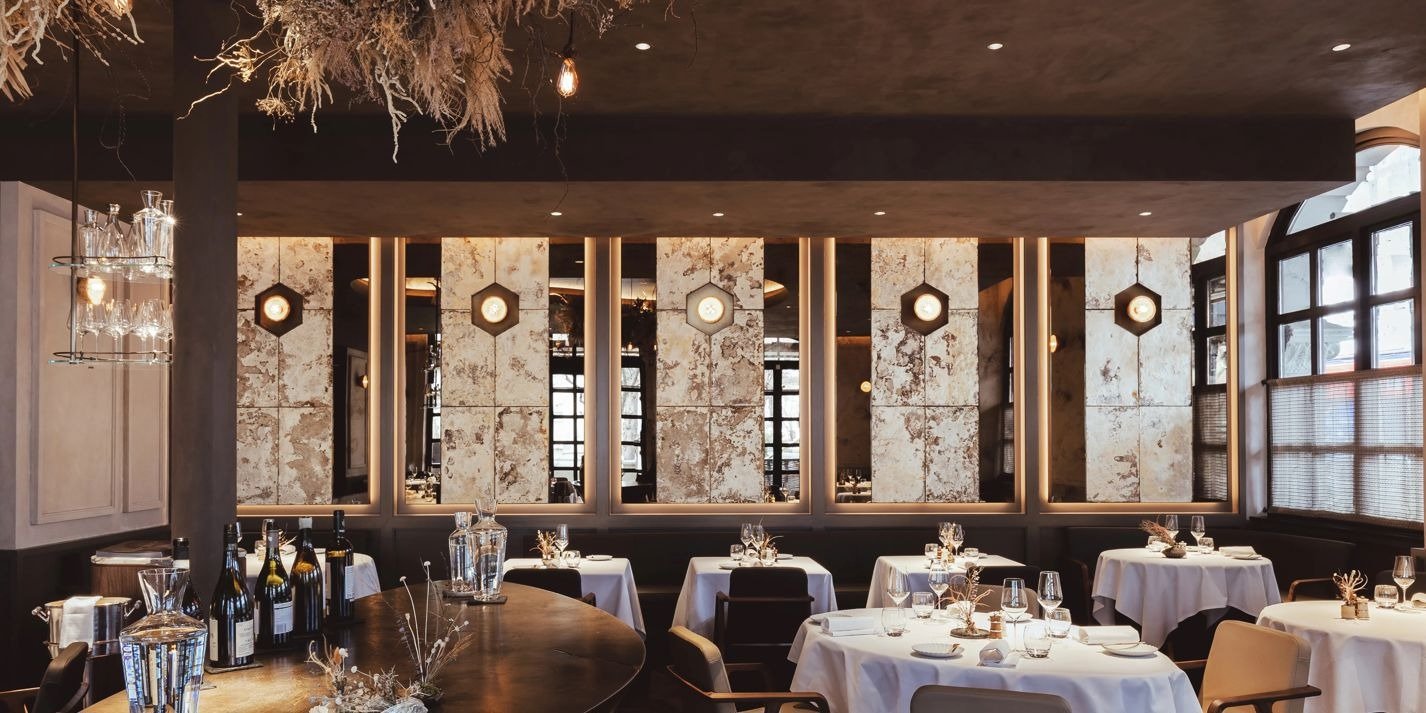
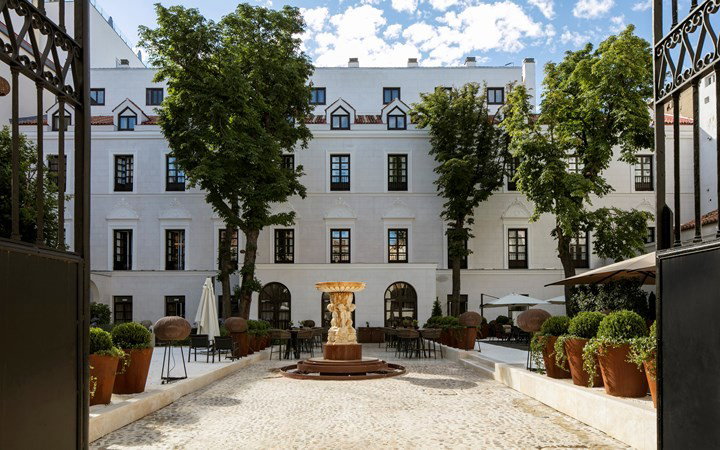
The approach to Adolfo along the Calle del Hombre de Palo sets expectations before you reach the door. Toledo's historic quarter moves at its own pace: narrow stone streets, medieval facades, the quiet authority of a city that has been at the centre of Castilian culture for a thousand years. The restaurant occupies a structure dating to the 12th century, and the interior patio that doubles as the dining room preserves that architectural register — exposed stonework, proportions that predate modern hospitality design, an atmosphere that no interior decorator could replicate from scratch.
That physical context is not merely decorative. It frames a dining philosophy that treats continuity as a working principle rather than a marketing theme. The kitchen is now directed by the sons of Adolfo Muñoz, the figure who gave the restaurant its name and its regional reputation over decades. What has shifted under the new generation is the angle of approach: the cooking is contemporary in technique and presentation while remaining anchored in the agricultural traditions of the Castilla-La Mancha region.
A Single Menu Built Around One Estate
Adolfo operates on a single seasonal tasting menu format, which in itself is an editorial choice. In a city where the majority of mid-range restaurants offer broad à la carte selection, the commitment to one menu signals a kitchen confident enough to ask guests to follow its lead entirely. That confidence is grounded in the ingredient supply chain: produce comes substantially from the Muñoz family's own country estate, giving the kitchen a degree of sourcing control that most urban restaurants cannot replicate.
This kind of estate-to-table model is more common in France's wine country or in the farm-adjacent restaurants of northern Spain than in a Castilian city. In Toledo's dining scene, where Víctor Sánchez-Beato operates explicitly along farm-to-table lines at a lower price point, Adolfo takes the same sourcing logic and runs it through a more formally structured tasting format.
The menu places particular emphasis on herbs and vegetables, a decision that reflects both the estate's output and a broader shift in Spanish fine dining toward vegetable-forward cooking. The asparagus from Camuñas, a town roughly 80 kilometres south of Toledo in the province of Toledo itself, arrives organically grown and paired with turmeric and Melanosporum black truffle — a combination that works across multiple registers simultaneously, the earthiness of the truffle deepening rather than competing with the green freshness of the asparagus. Melanosporum, the Périgord black truffle variety cultivated in parts of Castilla-La Mancha, is one of the region's more significant luxury agricultural products, and its presence here is not tokenistic. It is a statement about provenance and about what this particular corner of Spain actually produces at the highest level.
Suckling pig with its own jus and a fruit compote represents the other axis of the menu: the deep-rooted traditions of Castilian meat cookery, treated with enough technical precision to read as modern without abandoning what makes the dish recognisable in the first place. Toledo and its surrounding region have a long history with roasted meats, and Adolfo treats that tradition as a starting point rather than a constraint.
Where Adolfo Sits in Toledo's Restaurant Tier
Toledo's fine dining scene is small relative to the city's cultural profile. At the leading sits Iván Cerdeño, which holds two Michelin stars and operates at the €€€€ price tier , the clearest reference point for what ambitious cooking in the region can reach. Adolfo, priced at €€€ and recognised with the Michelin Plate in both 2024 and 2025, occupies the bracket immediately below: formal enough in ambition and format to sit apart from the traditional taverna circuit, but positioned at a price point that makes it accessible to a wider range of visitors.
The Michelin Plate designation signals kitchen competence and consistent quality rather than the transformative cooking that earns stars. For many diners, that distinction is a practical advantage: the experience is serious without requiring the advance planning and expenditure that starred restaurants demand. By contrast, El Albero and La Cábala both operate at €€, positioning them in a different tier altogether, while Tobiko brings a creative format at comparable value. Adolfo's differentiation within this field is the tasting menu structure and the estate provenance, neither of which is easily replicated at lower price points.
For context within Spain's wider fine dining conversation, the restaurants earning the most attention , DiverXO in Madrid, El Celler de Can Roca in Girona, Arzak in San Sebastián, Azurmendi in Larrabetzu, Aponiente in El Puerto de Santa María, and Cocina Hermanos Torres in Barcelona , operate at a different altitude of recognition entirely. Adolfo is not competing in that register. It is, instead, doing something more specific: representing Castilian regional cooking at a serious level within a city that most international visitors treat as a day trip from Madrid rather than a dining destination in its own right.
The Wine Cellar as a Destination Within the Destination
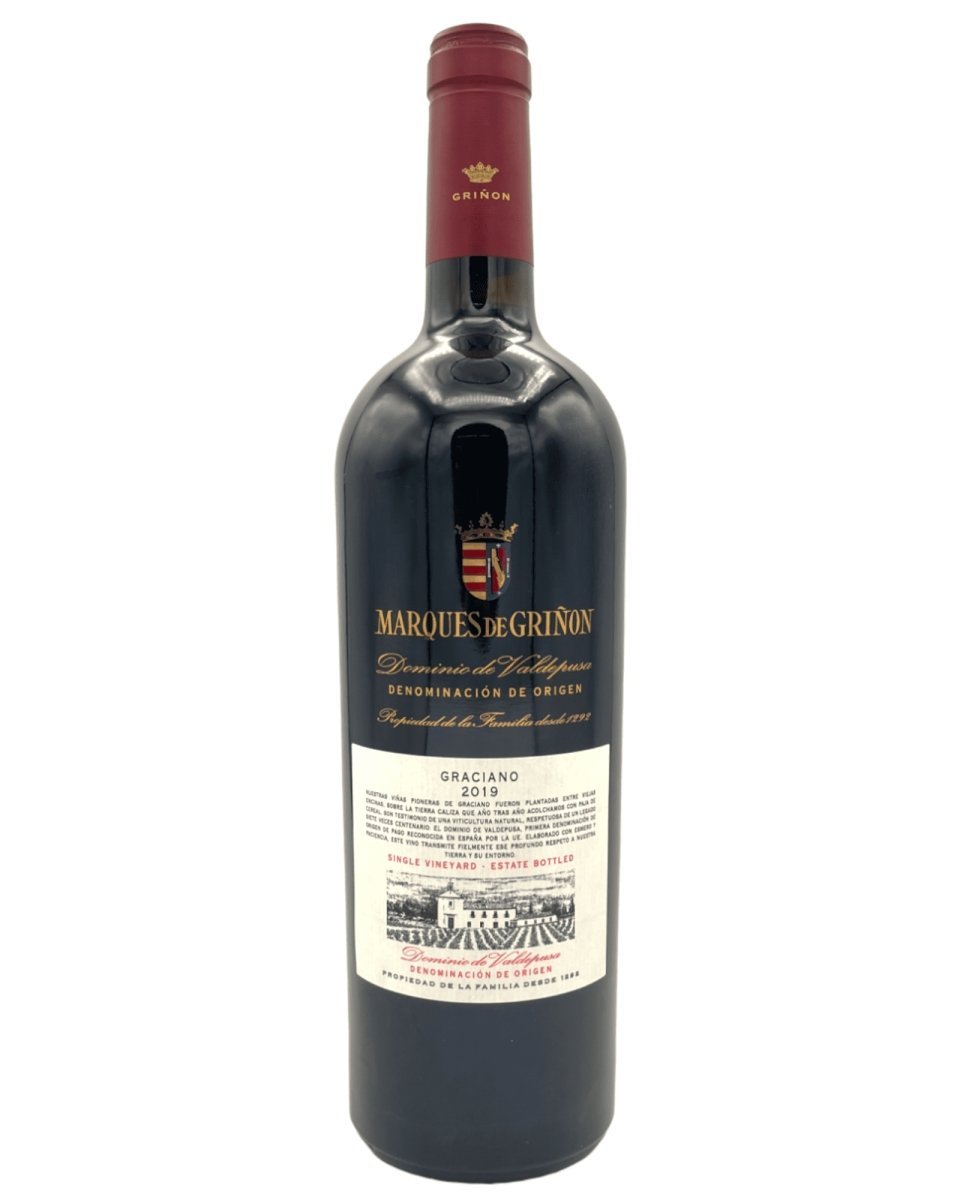
The restaurant's underground wine cellar is considered one of the more notable features of the property, and it functions as an extension of the dining experience rather than a storage facility glimpsed from the stairs. In a region that produces wine under the La Mancha and Méntrida denominations, among others, the cellar's depth and curation provide an appropriate pairing infrastructure for the tasting menu format. Guests with a particular interest in Castilian wine would do well to ask about what the cellar holds from local producers. For a broader view of what the region's producers offer, our full Toledo wineries guide covers the relevant denominations in detail.
Planning a Visit
Adolfo sits at Calle del Hombre de Palo, 7 in the 45001 postcode , central to Toledo's historic quarter and walkable from the main tourist circuits, though the street itself is quiet enough that you are unlikely to stumble across the restaurant by accident. Given the single tasting menu format and the restaurant's established local reputation (Google reviews average 4.5 across 773 ratings, a reliable proxy for consistent delivery over time), booking in advance is the sensible approach rather than attempting to walk in. The price tier of €€€ places a full dinner experience in the range typical of serious tasting menu restaurants in Spanish regional cities rather than Madrid or Barcelona, which tends to represent relative value for the format.
Visitors combining a Toledo trip with broader Castilian food and drink interests will find our full Toledo restaurants guide, hotels guide, bars guide, and experiences guide useful for building an itinerary that extends beyond a single meal.
Quick Comparison
Comparable venues for orientation, based on our database fields.
| Venue | Cuisine | Price | Awards | Notes |
|---|---|---|---|---|
| Adolfo | Modern Cuisine | €€€ | This classic restaurant in the heart of Toledo’s historic quarter boasts a delig… | This venue |
| Iván Cerdeño | Modern Cuisine | €€€€ | Michelin 2 Star | Modern Cuisine, €€€€ |
| El Albero | Traditional Cuisine | €€ | Traditional Cuisine, €€ | |
| La Cábala | Contemporary | €€ | Contemporary, €€ | |
| Tobiko | Creative | €€ | Creative, €€ | |
| Víctor Sánchez-Beato | Farm to table | €€ | Farm to table, €€ |
Continue exploring