ADKT
On North Fairfax Avenue, ADKT occupies a stretch of Los Angeles where Mid-City's independent dining culture runs deeper than the headlines suggest. The address places it alongside some of the city's more considered independent operators, and the kitchen's approach to ingredient sourcing positions it within a broader LA conversation about where food comes from and why that matters.
Pearl is the En Primeur Club membership app — saves, bookings, and concierge access live there. Same editors, same standards.
- Address
- 531 N Fairfax Ave, Los Angeles, CA 90036
- Phone
- +13232295618
- Website
- adktla.com
- Directions
- Get directions
 Saves & bookings on Pearl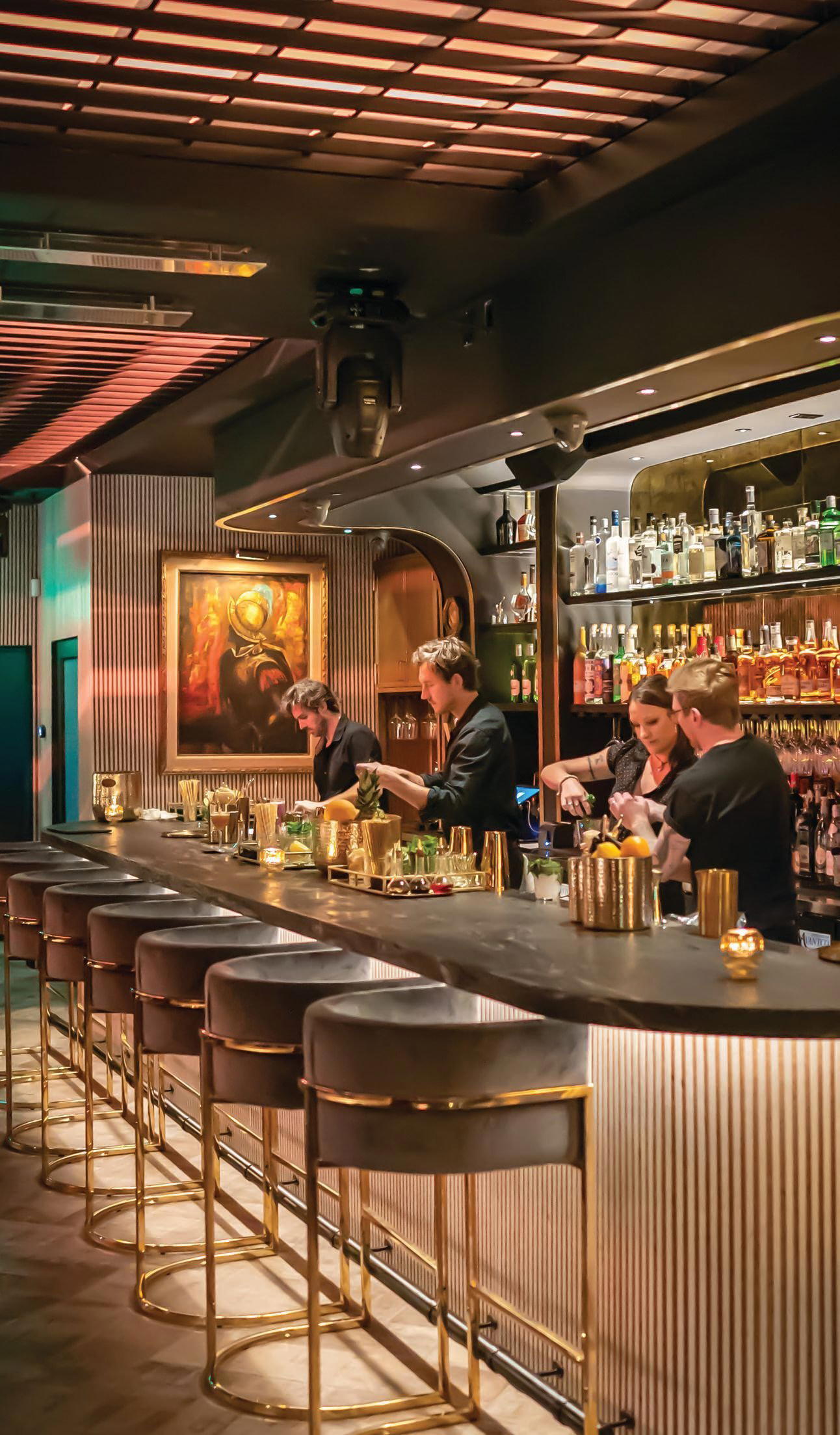
North Fairfax and the Sourcing Conversation
Fairfax Avenue between Melrose and Beverly has quietly become one of the more interesting corridors in Los Angeles dining, not because of any single opening but because the strip rewards the kind of operator willing to work outside the obvious West Hollywood and Silver Lake circuits. The street's mix of long-standing Jewish delis, recent Korean-influenced concepts, and independent neighborhood restaurants reflects how Mid-City absorbs influence without fully committing to any single identity. ADKT, at 531 N Fairfax Ave, sits inside that ecosystem, and its address alone signals something about the kind of restaurant it chooses to be.
Across American fine dining, the sourcing conversation has fractured into two camps. One treats provenance as marketing, printing farm names on menus without meaningful kitchen integration. The other builds the menu around supplier relationships that actually shape what gets cooked and when. Restaurants in the latter camp, places like Single Thread Farm in Healdsburg or Blue Hill at Stone Barns in Tarrytown, treat the supply chain as a genuine editorial constraint. The interest in ADKT lies in where it positions itself within that split.
What the Address Implies About the Audience
Los Angeles has a particular talent for distributing serious cooking across neighborhoods that don't announce themselves as dining destinations. Hayato, one of the city's most precise Japanese counters, operates out of a Japanese marketplace in the Arts District rather than a purpose-built fine dining room. Kato, which holds serious national recognition for its New Taiwanese approach, spent years in a Sawtelle strip mall before moving. The pattern suggests that the city's most committed diners are accustomed to traveling for food that doesn't rely on a glamorous setting to justify the trip. North Fairfax, with its working-neighborhood density, fits that model. A restaurant choosing this address is, implicitly, making an argument that the cooking carries the weight.
That calculus matters particularly for a restaurant oriented around ingredient sourcing. California's agricultural infrastructure gives Los Angeles kitchens access to produce, proteins, and specialty suppliers that most American cities cannot replicate. The Central Valley, the coastal fishing operations, the small-scale farms in Ventura and Santa Barbara counties, and the region's long growing season collectively create conditions where a kitchen committed to sourcing has genuine material to work with, not just a narrative. Whether a given restaurant actually uses that access is a separate question, but the geography makes the ambition credible in a way it simply isn't in, say, a landlocked Midwestern city in February.
The Sourcing Framework in Practice
The broader shift in American cooking over the past decade has moved ingredient sourcing from a differentiator to an expectation at the upper end of the market. Restaurants like Smyth in Chicago, which maintains a farm in downstate Illinois to supply its kitchen, and Addison in San Diego, which has invested in regional producer relationships as part of its culinary identity, illustrate how supply-chain integration has become a structuring principle rather than an afterthought. On the national circuit, Le Bernardin in New York City has long treated seafood sourcing with near-obsessive precision, treating supplier relationships as a kitchen discipline in their own right.
In Los Angeles specifically, the range of approaches is wide. At one end, restaurants like Providence have built a reputation across two decades on sourcing seafood with unusual rigor, working directly with fishermen and adjusting the menu to what's actually available rather than what's convenient to stock. At the other, any number of restaurants invoke California produce in language without the supply relationships to back it up. ADKT's positioning on North Fairfax suggests an operator more interested in the former model, though the specifics of those relationships are what ultimately determine the answer.
The ingredient-sourcing frame also matters for understanding how a restaurant sits within its price tier. In a market where Somni and the upper end of the omakase circuit charge accordingly for the depth of their sourcing programs, a restaurant that can demonstrate genuine supply-chain integrity at a different price point occupies a distinct competitive space. Sourcing credibility is increasingly what separates mid-market restaurants that feel serious from those that simply charge mid-market prices.
Fairfax in the Wider Los Angeles Picture
Understanding ADKT requires some orientation to what North Fairfax is not. It is not the concentrated fine dining density of downtown's Arts District, where restaurants compete for the same expense-account clientele. It is not the celebrity-facing dining strip of West Hollywood. And it is not the tasting-menu circuit centered on places like Osteria Mozza, which anchors a different part of the city's dining conversation. Fairfax's independent character gives a restaurant more room to define itself on its own terms, without the comparative pressure that comes from proximity to a named cluster.
That independence carries trade-offs. Discovery is slower, word-of-mouth matters more, and a restaurant on this stretch cannot rely on foot traffic from diners who came for something else. The restaurants that work here tend to be the ones that build a specific, committed audience rather than a broad one. That audience, in Los Angeles, often skews toward diners who have already worked through the better-publicized lists and are looking for something that doesn't feel curated for them.
For context on how Los Angeles's broader dining culture fits together, the full Los Angeles restaurants guide maps the city's major dining corridors and the distinct character of each. Nationally, the ingredient-sourcing conversation that frames ADKT's positioning also runs through restaurants like Frasca Food and Wine in Boulder, Lazy Bear in San Francisco, and The Inn at Little Washington, each of which treats regional sourcing as a defining structural commitment rather than a seasonal feature. Internationally, Atelier Moessmer Norbert Niederkofler in Brunico represents one of the more rigorous expressions of this approach, where alpine ingredient constraints become the entire culinary logic. Atomix in New York City applies a comparable discipline to Korean sourcing and fermentation traditions. And Emeril's in New Orleans has spent decades demonstrating that regional ingredient identity and fine dining ambition are not in tension. The French Laundry in Napa remains the reference point for how California's agricultural depth can be channeled into a kitchen program at the highest level of precision.
Planning Your Visit
ADKT is located at 531 N Fairfax Ave, Los Angeles, CA 90036, in the Mid-City neighborhood between Melrose Avenue and Beverly Boulevard. Street parking on Fairfax and the surrounding blocks is available, and the location is accessible from West Hollywood, Hancock Park, and Koreatown without significant transit complexity. Dress: No confirmed dress code; neighborhood-casual is consistent with the Fairfax corridor's character. Budget: Pricing tier not confirmed in current records; verify directly before booking. Timing: Operating hours are not confirmed; confirm before visiting, particularly for lunch service.
At a Glance
| Venue | Cuisine | Price |
|---|---|---|
| ADKTThis venue — the venue you are viewing | Not listed | Not listed |
| Kato | New Taiwanese, Asian | $$$$ |
| Hayato | Japanese | $$$$ |
| Vespertine | Progressive, Contemporary | $$$$ |
| Holbox | Mexican Seafood, Mexican | $$ |
| Sushi Kaneyoshi | Sushi, Japanese | $$$$ |
Continue exploring
More in Los Angeles
Restaurants in Los Angeles
Browse all →
Bars in Los Angeles
Browse all →
Hotels in Los Angeles
Browse all →
Wineries in Los Angeles
Browse all →
At a Glance
- Elegant
- Sophisticated
- Trendy
- Intimate
- Date Night
- Special Occasion
- Live Music
- Craft Cocktails
Current opening hours
- Monday
- Closed
- Tuesday
- Closed
- Wednesday
- 6 PM–12 AM
- Thursday
- 6 PM–12 AM
- Friday
- 6 PM–1 AM
- Saturday
- 6 PM–1 AM
- Sunday
- 6 PM–12 AM
Hours can change for holidays and private events. Last verified .
Elegant Parisian boudoir art, refined atmosphere with live jazz or DJ energy.
Know Before You Go
- Getting there
- 531 N Fairfax Ave, Los Angeles, CA 90036