Sorry Not Sorry
Sorry Not Sorry occupies a low-profile address on West Pico Boulevard in Los Angeles, sitting in a broader West Side dining corridor that rewards those who track neighborhood-level shifts rather than headline addresses. The venue's name signals a certain studied irreverence that has become a recognizable posture in LA's mid-tier dining scene, where operators calibrate attitude as carefully as menus.
Pearl is the En Primeur Club membership app — saves, bookings, and concierge access live there. Same editors, same standards.
- Address
- 11520 W Pico Blvd, Los Angeles, CA 90064
- Phone
- +14248327000
- Website
- sorrynotsorryla.com
- Directions
- Get directions
 Saves & bookings on Pearl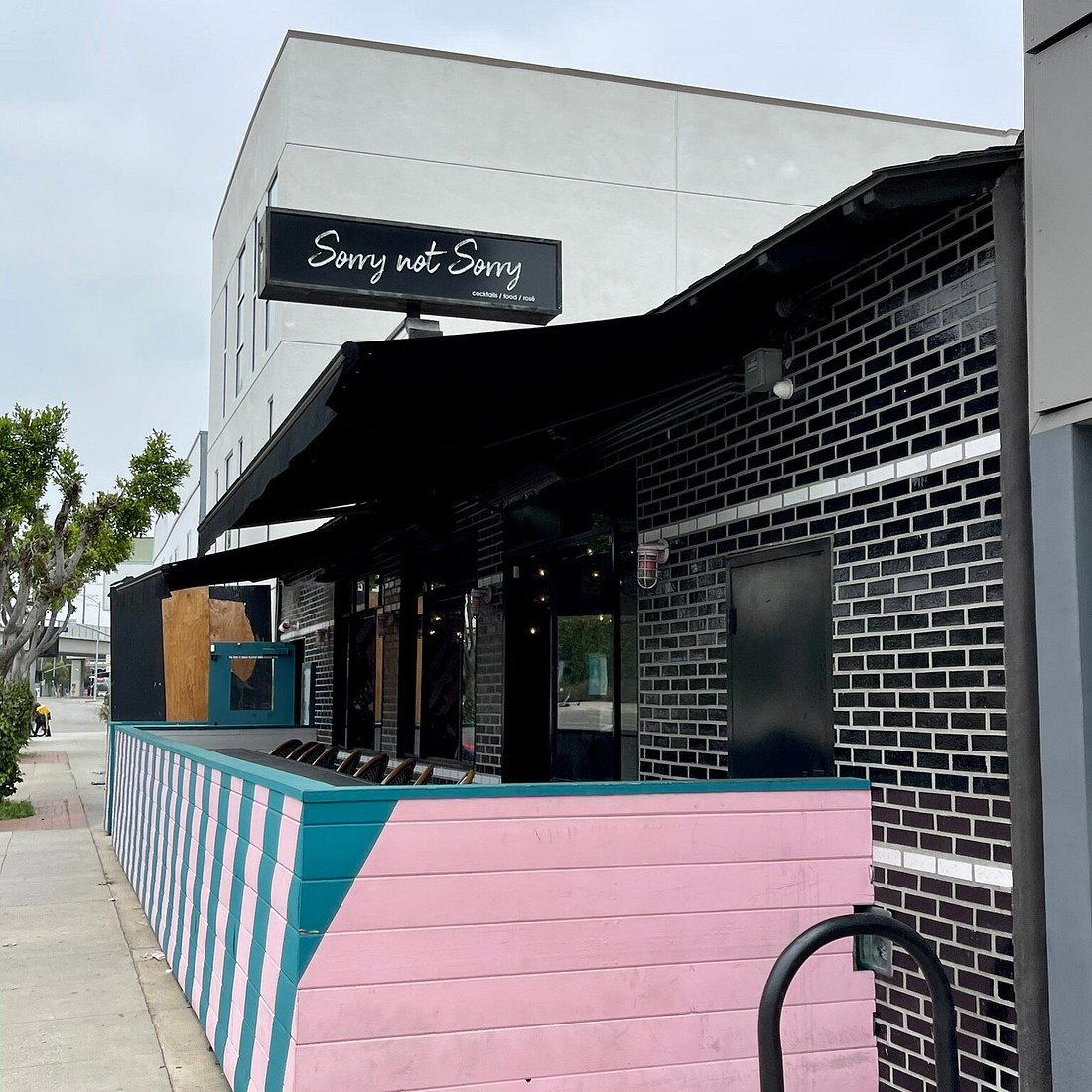
West Pico and the Restaurants That Don't Announce Themselves
Los Angeles has a long tradition of restaurants that do their leading work without marquee addresses or celebrity adjacency. The West Side corridor running along Pico Boulevard, from the edges of Santa Monica east toward Century City, has quietly accumulated a set of dining rooms that prioritize repeat local custom over destination traffic. Sorry Not Sorry, at 11520 W Pico Blvd, belongs to that pattern: a neighborhood address in a city where neighborhood dining has historically been undervalued relative to the flagship rooms in Beverly Hills or downtown. That positioning is itself a statement, whether intentional or not, about where LA's dining culture is moving.
Across the broader West Side, the dining conversation has shifted considerably over the past decade. The concentration of serious cooking at accessible formats — the kind of room where a regular might eat twice a month rather than twice a year — reflects a maturation of the city's food culture. Compare this to the formal tasting-menu tier occupied by venues like Providence (Contemporary Seafood) or the precision small-plate format of Kato (New Taiwanese, Asian), and you start to see the stratification clearly: LA now runs a full spectrum from highly engineered omakase and tasting sequences to relaxed neighborhood formats, and Sorry Not Sorry occupies a point along that spectrum defined more by attitude and local regularity than by occasion dining.
The Ritual of the Neighborhood Room
In cities with a deep restaurant culture, the neighborhood room carries its own set of customs. The pacing is different from a tasting-menu counter: there is no fixed sequence, no preset number of courses, no sommelier steering you from one chapter to the next. Guests self-direct, which places more interpretive weight on the menu design and the floor team's ability to read a table. This is, in some ways, a harder format to execute consistently than a controlled omakase or progression meal. Venues like Hayato (Japanese) or Somni (Molecular) script the experience almost entirely; the neighborhood room has to earn the same sense of intention through looser means.
Sorry Not Sorry's name indexes directly into this dynamic. The studied casualness of the branding, a phrase that signals both confidence and deliberate informality, is part of a wider LA tendency to use irony as a design material. Where Osteria Mozza (Italian) trades on Californian-Italian tradition with clear institutional weight, and the molecularly driven rooms compete on technical credibility, places like Sorry Not Sorry frame their proposition differently: come as you are, order what you want, and the kitchen will meet you there. Whether the cooking validates that promise is the question any serious diner needs to answer for themselves.
Calibrating the Meal: What the Format Asks of You
The dining ritual at a room with this kind of positioning asks guests to do a specific kind of work. Without a fixed tasting sequence, the order in which dishes arrive, and how much of the table's budget goes to food versus drink, becomes a live negotiation. This is the format most common in LA's neighborhood mid-tier, and it rewards a particular approach: arrive knowing whether you want to eat across many small plates or anchor on a few larger ones, and be willing to ask the floor team directly about what's moving well on a given night. That question, in a room calibrated for regulars, tends to unlock better information than scanning the menu cold.
For context on how this format plays out across the US, similar neighborhood-register rooms have attracted serious critical attention in other cities. Lazy Bear in San Francisco built its reputation on a different end of the spectrum, a ticketed communal format, while Bacchanalia in Atlanta and Addison in San Diego both demonstrate how regional American dining can carry genuine culinary ambition outside the headline cities. At the formal extreme, venues like Alinea in Chicago, Le Bernardin in New York City, and The French Laundry in Napa define what fully scripted dining ritual looks like at its most controlled. Sorry Not Sorry sits at a deliberately different point on that axis, which is a choice, not a gap.
The West Side in Context
West Pico has historically sat outside the primary food media circuits that tend to cluster coverage around Melrose, the Arts District, or the Westwood-to-Brentwood corridor. That means restaurants here accumulate reputations more slowly, through word of mouth and repeat visits, rather than through opening-night press cycles. The dynamic favors operators who can hold their audience across time, the kitchen that is good on a Thursday in March, not just on a Saturday in November when the buzz is fresh.
Internationally, this neighborhood-loyalty model appears in dining cultures where the room's relationship with its immediate community matters as much as broader recognition. 8 1/2 Otto e Mezzo Bombana (Hong Kong) in Hong Kong operates in a entirely different register, Michelin-starred Italian fine dining, but it demonstrates how a clear proposition held consistently over years can anchor a restaurant's place in a city's dining hierarchy regardless of the format. The principle scales down to neighborhood rooms just as well.
For those building a West Side eating itinerary, the surrounding Pico corridor offers a genuinely diverse set of formats and cuisines. Our full Los Angeles restaurants guide maps the city's dining scene across neighborhoods, price tiers, and styles, and is the most efficient way to place Sorry Not Sorry within the broader picture. Comparisons to farm-to-table anchors like Blue Hill at Stone Barns in Tarrytown, or to long-format seasonal meals at Single Thread Farm in Healdsburg, clarify the distance between neighborhood dining and destination dining, a distinction that is not a hierarchy so much as a different set of values about what a meal is for.
Practically, 11520 W Pico Blvd is accessible by car with street and lot parking typical of this stretch of West LA; the neighborhood is not walkable from major hotels, so building the visit into an evening that starts or ends nearby makes more logistical sense than treating it as a standalone destination from across the city. Given the limited public information currently available on the venue, contacting the restaurant directly before visiting is the reliable way to confirm current hours, any booking requirements, and whether specific dietary needs can be accommodated in advance.
Planning Your Visit to Sorry Not Sorry
For venues at this format and address tier, late spring through early fall tends to bring the most consistent neighborhood foot traffic on the West Side, as the evening light stays longer and the outdoor-dining culture that defines LA picks up. That seasonal rhythm affects wait times and energy levels at neighborhood rooms more than at the city's formal tasting-menu houses, where bookings are fixed months out regardless of season. If Sorry Not Sorry operates a walk-in or short-lead booking policy, common at this address tier, arriving earlier in the service window on a weekday gives the most reliable access.
Diners in the same evening's radius might also consider how the meal fits into the wider West Side sequence. Emeril's in New Orleans and The Inn at Little Washington in Washington illustrate how occasion-dining destinations operate in regional markets; Sorry Not Sorry is not that kind of commitment, which is precisely the point. And for those tracking LA's newer wave of technically serious rooms, Atomix in New York City offers a useful external benchmark for what high-intention, chef-driven tasting formats look like when they are operating at full pressure, a contrast that clarifies what a neighborhood room, done well, is actually offering instead.
How Sorry Not Sorry Los Angeles compares with similar nearby venues.
| Venue | Cuisine | Price |
|---|---|---|
| Mori Nozomi | Sushi, Japanese (Sushi) | $$$$ |
Continue exploring
More in Los Angeles
Restaurants in Los Angeles
Browse all →
Bars in Los Angeles
Browse all →
Hotels in Los Angeles
Browse all →

Wineries in Los Angeles
Browse all →
At a Glance
- Lively
- Sophisticated
- Trendy
- Casual
- Group Dining
- Casual Hangout
- Celebration
- After Work
- Late Night
- Open Kitchen
- Private Dining
- Standalone
- Craft Cocktails
- Extensive Wine List
- Zero Proof
- Local Sourcing
- Organic
Current opening hours
- Monday
- Closed
- Tuesday
- 5–10 PM
- Wednesday
- 5–10 PM
- Thursday
- 5–10 PM
- Friday
- 5 PM–12 AM
- Saturday
- 12 PM–12 AM
- Sunday
- 12–10 PM
Hours can change for holidays and private events. Last verified .
Backyard supper club atmosphere with LA skyline views, warm lighting, and energetic group-friendly vibe that balances precision cooking with relaxed hospitality.
Know Before You Go
- Getting there
- 11520 W Pico Blvd, Los Angeles, CA 90064