Our verdict
On Cours Victor Hugo, one of Bordeaux's most traversed commercial arteries, Adiu occupies a position that places it squarely inside the city's evolving mid-to-upper dining conversation. With the Gironde's farm network and Atlantic coastline within close reach, the kitchen has access to ingredient sources that define serious southwestern French cooking — and the city's growing appetite for produce-led menus makes that sourcing story worth following.

Pearl is the En Primeur Club membership app — saves, bookings, and concierge access live there. Same editors, same standards.
- Address
- 12 Cr Victor Hugo, 33000 Bordeaux, France
- Phone
- +33974641695
- Hours
- Mon–Tue ClosedWed–Sat 5 PM–2 AMSun Closed
- Website
- restaurantadiu.fr
- Directions
- Get directions
- Booking
- Book on the venue's website
Cours Victor Hugo and the Bordeaux Dining Shift
Bordeaux's dining identity has been reorienting for the better part of a decade. The city long carried a reputation as a wine capital whose restaurant culture lagged behind its cellar depth — a place where the bottle outpaced the plate. That gap has narrowed considerably. A younger cohort of kitchens has emerged across the central arrondissements, drawing on the Gironde's exceptional agricultural radius: Atlantic seafood from the Bassin d'Arcachon, heritage breed livestock from the Landes, early-season vegetables from the Périgord, and fungi from the region's forested interior. Adiu, addressed at 12 Cours Victor Hugo in the 33000 district, sits inside this shift. Cours Victor Hugo is one of the city's principal commercial axes, connecting the Saint-Michel quarter to the Capucins market and carrying a foot traffic that mixes local residents with visitors working through the UNESCO-listed centre. It is not a dining street in the curated sense of the Place du Parlement or the Chartrons, which means a restaurant here earns its clientele through word of mouth and plate rather than through neighbourhood positioning alone.
What Ingredient Sourcing Means in Southwestern France
To understand what produce-led cooking looks like in this corner of France, it helps to map the supply geography. The Gironde estuary delivers sturgeon (the region's caviar tradition is older than most visitors realise), shad, and lamprey in season. The Bassin d'Arcachon, less than an hour from the city centre, produces oysters that are among the most consistently benchmarked in France — briny, mineral-forward, and harvested at small-scale family operations that have supplied Bordeaux tables for generations. Inland, the Périgord and Lot-et-Garonne corridors supply black truffles from December through February, walnut oils, foie gras from ethically managed farms, and stone fruits in summer that arrive at peak ripeness within hours of harvest. This is the raw material context for any serious southwestern kitchen, and it is what separates produce-led cooking in this region from the same concept applied elsewhere in France. Comparatively, kitchens at the level of Bras in Laguiole or Les Prés d'Eugénie - Michel Guérard in Eugénie-les-Bains have built their entire identities around the specific terroir of their respective subregions, an approach that has influenced a generation of kitchens across the southwest, including those operating at more accessible price points in the city itself.
The Bordeaux Mid-Table: Where Adiu Sits
The French Ingredient-First Model: National Context
Sourcing-forward restaurants in France operate inside a tradition that stretches back well before the farm-to-table terminology arrived from across the Atlantic. The Michelin three-star houses that built France's international reputation, Paul Bocuse - L'Auberge du Pont de Collonges in Collonges-au-Mont-d'Or, Auberge de l'Ill in Illhaeusern, Troisgros - Le Bois sans Feuilles in Ouches, and Georges Blanc in Vonnas, all built their menus around hyper-local supply chains long before the concept had a name. More recently, Mirazur in Menton and Flocons de Sel in Megève have taken the same logic and applied it with contemporary technique and a sharper foraging sensibility. The point is that ingredient sourcing in French fine and near-fine dining is not a marketing angle, it is structural. A kitchen that cannot name its suppliers or defend its seasonal rotation is operating outside the logic that defines serious French cooking at any price point. Bordeaux kitchens, benefiting from one of the country's most diverse regional larders, have fewer excuses than most for loose sourcing practice.
Planning Your Visit
Adiu is located at 12 Cours Victor Hugo, 33000 Bordeaux, in a part of the city easily reached on foot from the Saint-Michel tram stop or from the Capucins market area. The surrounding streets carry an everyday Bordeaux energy, this is not the polished tourist corridor of the Quais, which means the dining experience here sits within a more genuinely local residential and commercial context. For comparison on format and ambition at nearby addresses, Maison Nouvelle and L'Oiseau Bleu both operate with confirmed booking infrastructure and defined tasting formats that give a useful sense of what the city's contemporary French mid-tier delivers. Those visiting France more broadly and comparing regional dining depth might also consider the range represented by Alléno Paris au Pavillon Ledoyen at the formal end or Lazy Bear in San Francisco and Le Bernardin in New York City as international benchmarks for what produce-forward and seafood-led menus can achieve at the highest tier. La Table du Castellet in Le Castellet offers a further regional reference point for those moving through the south of France.
Frequently asked questions
Is Adiu a family-friendly restaurant?
Nothing in Adiu's positioning at 12 Cours Victor Hugo rules out families, but the kitchen's ingredient-forward approach places it closer to a focused dining room than a casual family stop. Bordeaux's Cours Victor Hugo corridor runs toward the Saint-Michel quarter, a neighbourhood with a mixed, local clientele rather than a tourist-family crowd. If travelling with children, it is worth contacting the venue directly to confirm arrangements.
How would you describe the vibe at Adiu?
Adiu sits in the mid-table of Bordeaux's current restaurant tier, below the grand hotel kitchens on the Quinconces side and above the wine-bar circuit. That positioning suggests a room that takes the plate seriously without the formality of a white-tablecloth address. Cours Victor Hugo attracts a neighbourhood-rooted crowd, which tends to set a grounded, unselfconscious tone.
How does Adiu fit into Bordeaux's broader shift away from wine-capital dining toward ingredient-led cooking?
Bordeaux spent years in the shadow of its own wine reputation, with restaurants that treated the glass as the main event and the plate as an afterthought. Adiu, positioned on Cours Victor Hugo near the Saint-Michel quarter, represents the city's more recent correction: kitchens that take the produce of Southwestern France as a starting point and build menus around what the Gironde and Aquitaine suppliers can deliver season by season. It is part of a cohort, not an isolated case, but its address in a working neighbourhood rather than on the tourist waterfront reinforces that the shift has moved beyond the city's prestige postcodes.
What's the signature dish at Adiu?
What shapes the kitchen's identity is its reliance on Southwestern French supply geography: the Gironde estuary, Aquitaine producers, and the seasonal logic that determines what reaches the pass. That sourcing discipline, rather than any single preparation, appears to be the through-line.
Where exactly is Adiu?
Adiu is located at 12 Cr Victor Hugo, 33000 Bordeaux, France, Bordeaux.
Is Adiu reservation-only?
Given that Adiu sits on one of Bordeaux's busier central arteries near Saint-Michel, contacting the venue before visiting is advisable, particularly for weekend evenings when mid-table Bordeaux restaurants tend to fill quickly.
What's the defining dish or idea at Adiu?
The defining idea is the sourcing framework rather than a single dish. Adiu works within a Southwestern French tradition that mapped regional ingredient networks long before contemporary farm-to-table rhetoric arrived. The Gironde estuary, the Landes, and Aquitaine's broader agricultural belt provide the raw material; the kitchen's job is to keep the distance between field and plate as short as possible.
In Context: Similar Options
Comparable venues nearby, for context on price, style, and recognition.
| Venue | Cuisine | Price | Awards | Notes |
|---|---|---|---|---|
| AdiuThis venue — the venue you are viewing | Gasconne Tapas | $20–30 | Not listed | Not listed |
| La Saint Georges | Breton Crêperie | $20–30 | Not listed | Centre ville |
| Memes'tra | Modern French Bistronomique | $30–50 | Not listed | Nansouty - Saint Genès |
| Hortus | Seasonal French Brasserie | $50–100 | Not listed | Chartrons - Grand Parc - Jardin Public |
| Soif | French Bistro with Organic Wines | Not listed | Star Wine List | Centre ville |
| Brasserie Bordelaise | Classic French Brasserie – South-West Specialties | $50–100 | Star Wine List | Centre ville |
Continue exploring
More in Bordeaux
Restaurants in Bordeaux
Browse all →
Bars in Bordeaux
Browse all →
Hotels in Bordeaux
Browse all →
Details
- Lively
- Energetic
- Cozy
- Group Dining
- Celebration
- After Work
- Live Music
- Historic Building
- Craft Cocktails
- Natural Wine
- Local Sourcing
- Small Plates
Current opening hours
- Monday
- Closed
- Tuesday
- Closed
- Wednesday
- 5 PM–2 AM
- Thursday
- 5 PM–2 AM
- Friday
- 5 PM–2 AM
- Saturday
- 5 PM–2 AM
- Sunday
- Closed
Hours can change for holidays and private events. Last verified .
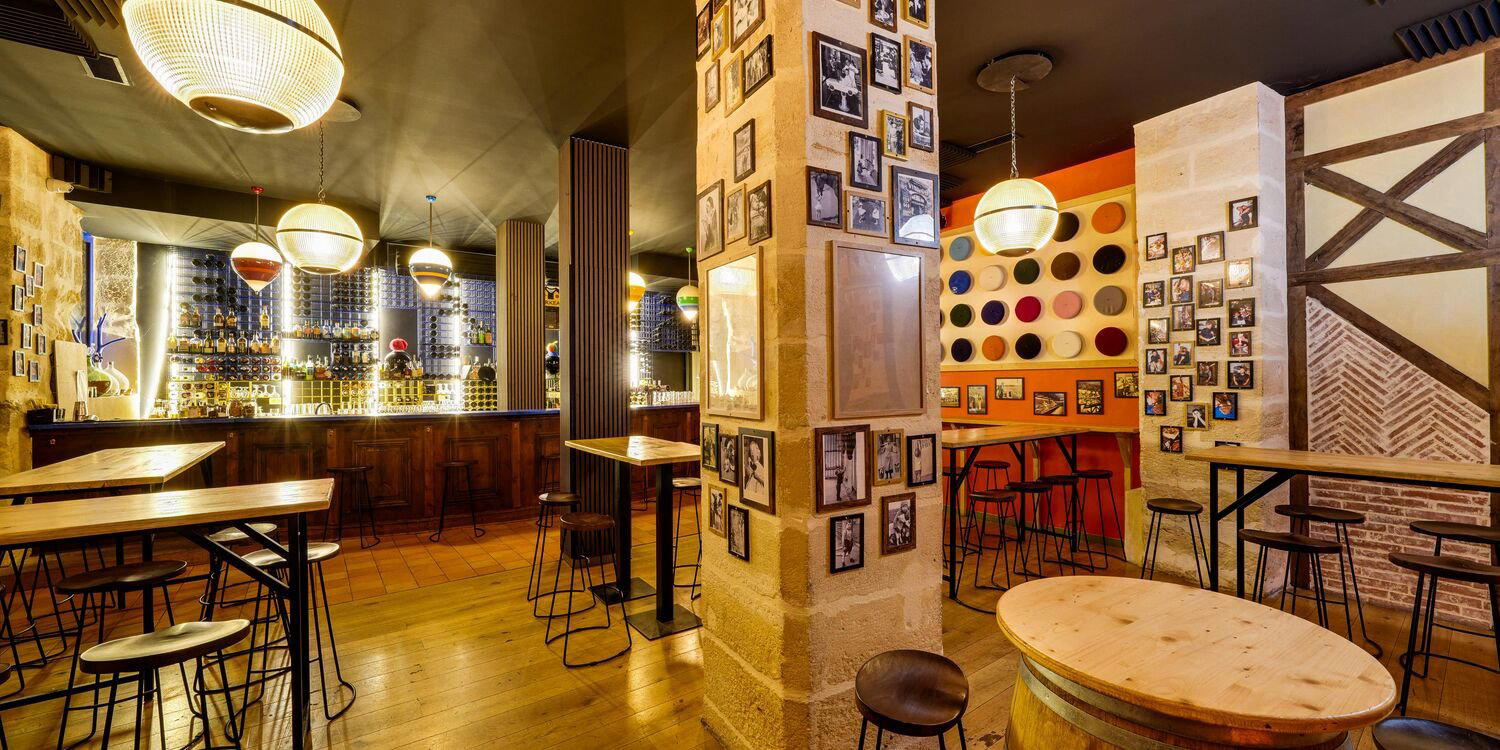
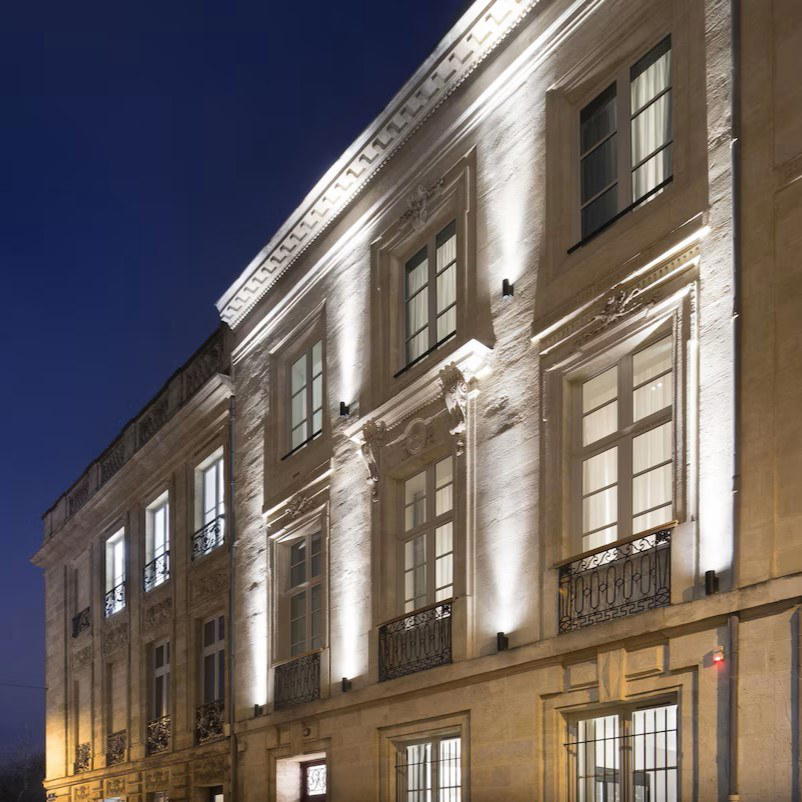
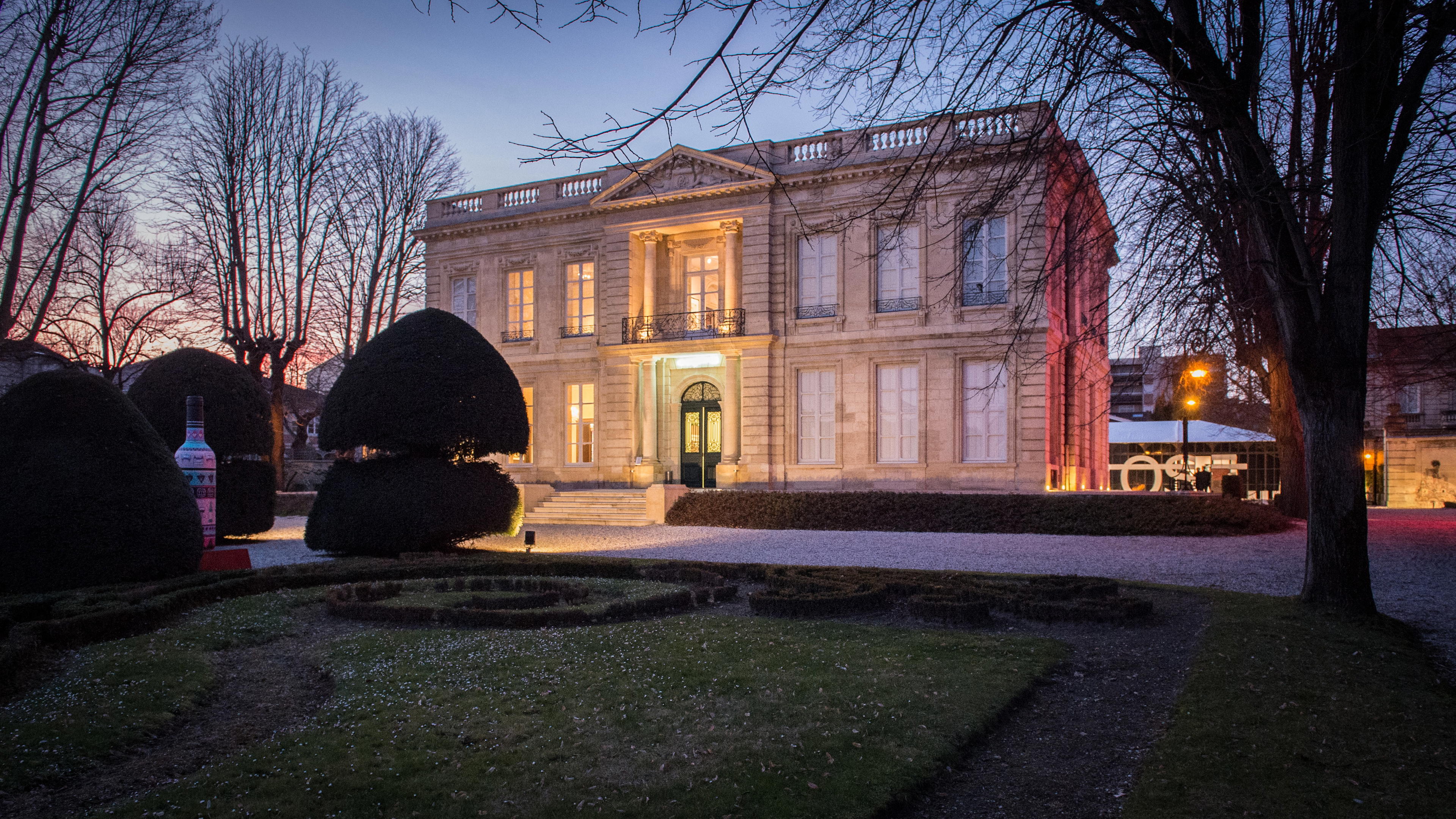
Warm lighting with pine wood fixtures and traditional Gascon decor in a lively historic setting with dancing cellar.