
A due passi gives Ogaki a serious Italian address outside Japan’s major dining capitals, with Tabelog Italian EAST 100 selection in 2025 and earlier Tabelog Award Bronze recognition in 2020 and 2021. The draw is the regional-Italian frame applied in Gifu, where ingredient sourcing and wine matter more than urban spectacle.
Pearl is the En Primeur Club membership app — saves, bookings, and concierge access live there. Same editors, same standards.
- Address
- 214-1 Sunomatacho Futatsugi, Ogaki, Gifu 503-0105, Japan
- Phone
- +81 584-62-7887
- Website
- a-due-passi-gifu.com
 Saves & bookings on Pearl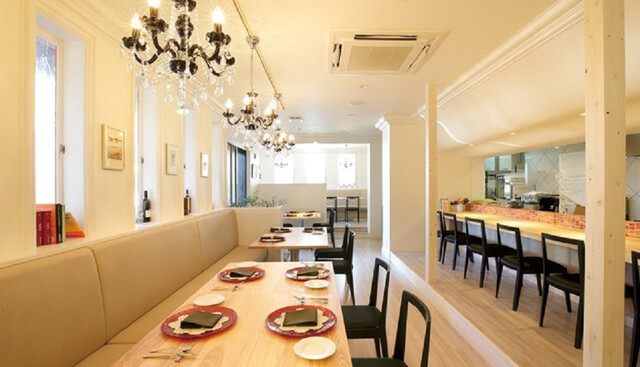
Approaching Italian dining in Ogaki means lowering the volume. This is not the high-gloss hotel dining room or the capital-city counter where scarcity becomes theatre. The stronger story is quieter: regional Italian cooking taking root in a Gifu city better known to travellers for waterways, castle history, confectionery, and commuter proximity to Nagoya than for destination dining. A due passi belongs to that smaller category of Japanese Italian restaurants where the question is not how faithfully Italy is copied, but how local ingredients, portion rhythm, and wine culture are translated for a regional Japanese audience.
That translation matters because Italian food in Japan has split into several lanes. There is everyday pasta and pizza, there are urban tasting-menu rooms, and there is a more disciplined middle tier where regional recipes meet local produce without losing the directness of trattoria cooking. Ogaki’s version is less saturated than Tokyo or Kyoto, so recognition carries a different weight. Selection for Tabelog Italian EAST 100 in 2025, plus Tabelog Award Bronze recognition in 2020 and 2021, places the restaurant inside a competitive field that extends beyond Gifu, rather than only within the city’s local circuit.
Regional Italian cooking measured against Gifu ingredients
The useful way to read the menu is through sourcing rather than spectacle. The restaurant is listed across Italian, cafe, and dining bar categories, yet its public description points toward authentic Italian regional cuisine, quality ingredients, thoughtful hospitality, and wine. In Japan, that combination often signals a kitchen built around seasonal produce, pasta, meat or fish courses, and a wine-led meal structure rather than a single signature plate. The defining idea is not one named dish; it is the adaptation of Italian regional grammar to Ogaki’s dining tempo.
That matters in a city where culinary identity is not dominated by one luxury format. Sushi Matsuoka sits in a higher-priced sushi bracket, while Asahiya and Kinchoen Sohonke Oogaki ekimae honten represent more everyday local spending patterns. Against that spread, A due passi occupies a useful middle-to-upper dining position: serious enough for wine and course-led eating, but not priced like the city’s more rarefied sushi counters. Nearby references such as CUCINA and Mochi So also help frame Ogaki as a place where small specialist restaurants matter more than large-format dining theatre.
The ingredient-sourcing angle also explains why this kind of Italian restaurant travels well in Japan’s regional cities. Local vegetables, fish supply chains, and domestic meat producers can be folded into Italian structures without requiring imported luxury at every turn. That is where Japanese Italian cooking often becomes more interesting than a literal recreation of the peninsula: the cuisine keeps its sequence and restraint, while the produce speaks with a local accent. The wine listing reinforces the point, moving the meal away from casual cafe usage and toward a fuller dinner rhythm.
A compact room in Ogaki's specialist dining tier
Scale is part of the editorial signal. The room runs 28 seats, split between counter and table seating, with semi-private use possible for small groups and private use listed for larger parties. That size puts the restaurant in the specialist tier, where a kitchen can stay close to its ingredients and service can remain personal without becoming ceremonious. It also explains why the restaurant functions across several occasions: family meals, dates, and dinner with friends all fit the format, helped by child-friendly policies that are more explicit than many similarly serious restaurants in Japan.
Ogaki’s dining map rewards this kind of precision. The city is large enough to sustain specialist restaurants, but not so large that a meal can hide behind neighbourhood hype. Recognition from Tabelog gives outside diners a useful filter, especially because Italian restaurants outside Tokyo, Osaka, and Kyoto can be harder to assess from abroad. A score of 4.02 adds another public signal, but the stronger evidence is the recurrence of recognition across years: Bronze in 2020 and 2021, then Italian EAST 100 selections in 2021, 2023, and 2025. Continuity matters more than a single badge.
For readers building a broader Ogaki itinerary, this is where the city’s categories start to separate. Our full Ogaki restaurants guide gives the dining spread; Our full Ogaki hotels guide is the practical companion for staying locally rather than commuting; Our full Ogaki bars guide, Our full Ogaki wineries guide, and Our full Ogaki experiences guide help distinguish a dinner stop from a fuller regional plan.
How to place it in a Japan-wide dining itinerary
The decision is less about chasing a trophy meal and more about choosing a regional expression of Italian cooking in Japan. Travellers moving through Gifu or using Ogaki as a base get a restaurant that has been noticed beyond its immediate market without demanding the budget of higher-priced sushi. That makes it a sharper choice for diners who want to understand how Italian cooking has been absorbed into Japanese regional dining, not simply another pasta stop between trains.
Cross-city comparisons are useful only if they clarify format. A casual reader browsing -Grilled beef Sukiyaki- KAMAKURA TANUKIAN 鎌倉 たぬき庵 in Kamakura. 鮪と炭火焼き うお炭 秋葉原店 in Tokyo.cafe in Osaka.know in Kumamoto, (Shoku) Vietnam in Kawasaki, [Curry Senmon Ten] Maruyama Kyoju. in Sapporo, Jōdo Saké Bar in Los Angeles, or Onigiri Time in Pasadena is seeing a broader point: Japanese dining culture exports, imports, and localizes formats constantly. A due passi is part of that same pattern inside Gifu, where Italian regional cooking becomes a vehicle for local ingredients, wine, and a measured dinner rather than a borrowed style performed for effect.
Fast Comparison
Nearby venues at a similar price tier for orientation.
| Venue | Cuisine | Price | Notes |
|---|---|---|---|
| A due passiThis venue — the venue you are viewing | Traditional Italian | $$ | Not listed |
| Asahiya | Handmade Udon, Donburi & Teishoku | $ | Not listed |
| Mochi So | Traditional Japanese wagashi & shaved ice shop | $ | near Ogaki Castle |
| CUCINA | Modern Italian Fine Dining | $$$ | Ogaki |
| ブランチ ヒロノヤ | French Steakhouse with Hida Beef | $$$ | 本町 |
| Sushi Matsuoka | Traditional aged sushi omakase | $$$ | Minaminokawacho |
Recognition history
Dated appearances from independent guides and award organizations, with the underlying list record or original source where available.
Tabelog 100 #95 · No. 95
Tabelog · Tabelog 100 - Italian - EAST - 2025
Continue exploring
More in Ogaki
Restaurants in Ogaki
Browse all →


At a Glance
- Cozy
- Warm
- Intimate
- Date Night
- Special Occasion
- Live Music
Current opening hours
- Monday
- 11:30 AM–2:30 PM, 6–10 PM
- Tuesday
- 11:30 AM–2:30 PM, 6–10 PM
- Wednesday
- Closed
- Thursday
- 11:30 AM–2:30 PM, 6–10 PM
- Friday
- 11:30 AM–2:30 PM, 6–10 PM
- Saturday
- 11:30 AM–2:30 PM, 6–10 PM
- Sunday
- 11:30 AM–2:30 PM, 6–10 PM
Hours can change for holidays and private events. Last verified .
Warm and comfortable atmosphere.