
Tabelog 100 #12
Our verdict
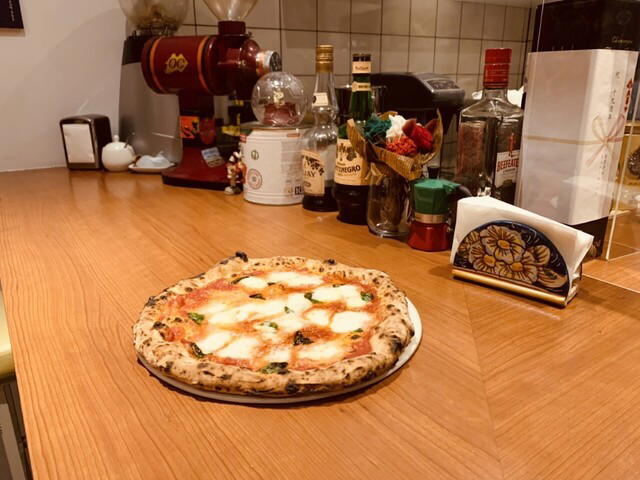
Porta Nuova places wood-fired pizza inside Osaka’s broader appetite for precise, specialist dining rather than spectacle. The Hommachi-area room carries Tabelog Pizza 100 selection in 2025, with Italian cooking, wine and cocktails, and a compact 20-seat format that rewards planning over casual drifting.

Pearl is the En Primeur Club membership app, where members save venues, book tables and use the concierge.
The menu
What to order
- Neapolitan wood-fired pizza
- Pasta made with Voiello from Naples
- Seasonal Italian antipasti
Osaka gives Porta Nuova a setting beyond the city’s denser restaurant corridors: office blocks, apartments, small dining rooms, and a dining rhythm that is not limited to the most tourist-facing zones. Here, pizza reads less like North American quick-slice culture or a station-district late-night carb stop, and more like craft dining, where dough management, oven heat, reservation discipline, and beverage choice can shape the meal.
Porta Nuova sits in that specialist category. It is listed as pizza and Italian, but the stronger signal is format: a focused room built around pizza, with Tabelog Pizza 100 recognition for 2025. In Osaka terms, it occupies a narrow lane: casual enough for lunch or dinner budgets, serious enough that arriving without a plan can miss the point.
Osaka pizza with the discipline of a small craft kitchen
Japan’s pizza culture can be unusually exacting because it treats technique as a craft system, not imported comfort food. The serious end depends on fermentation timing, oven control, and a short service window when dough is at its intended condition. Reservations can matter because preparation follows expected demand, and same-day pizza demand is not infinitely elastic.
That separates a specialist pizzeria from a general Italian room. A kitchen serving a wide spread of dishes can usually stretch more easily for walk-ins; a pizza-focused room has less forgiveness. Porta Nuova’s appeal fits that operational logic without needing theatre. The reservation mindset is not a luxury affectation, but part of protecting consistency.
The award signal matters in context. Tabelog’s Pizza 100 is category-specific, saying more about peer recognition within Japanese pizza than broad fine-dining status. That is the right lens. Osaka is better known globally for takoyaki, okonomiyaki, kushikatsu, and counter dining, but its Italian cooking supports everything from neighborhood pasta rooms to craft pizzerias. Compared with broader Italian dining in Osaka or other pizza-focused rooms in the city, this room’s appeal is not breadth. It is the controlled, small-scale pizza dining Japan does particularly well.
Osaka gives the room a different rhythm from tourist Osaka
Osaka has a useful middle ground between business dining and the city’s more obvious leisure zones. Restaurants like this do not need neon as a dining credential; small rooms often serve regulars, office diners, families, and travelers beyond the first tourist circuit. That measured feel suits a specialist pizzeria better than a high-turnover storefront.
The practical implications are clear. Dinner is often the safer anchor for travelers, while lunch should be checked before planning around it. Closures, preparation days, and booking rules can make spontaneous scheduling risky in compact Japanese restaurants. For Porta Nuova, the known planning frame is simple: Tabelog lists dinner at JPY 4,000 - JPY 4,999 and lunch at JPY 1,000 - JPY 1,999.
The dress code and service tone should be approached as informal but considerate. In small Japanese dining rooms, scent, noise, and pacing affect others more directly than in larger Western restaurants. Family suitability, group size, and special requests are best confirmed directly rather than assumed from the category alone. It reads less like exclusion than capacity management in a compact room.
Where it fits in an Osaka eating itinerary
For travelers, the question is not whether Osaka needs another Italian stop, but whether a meal should show how the city absorbs foreign traditions and makes them precise. Serious pizza in Japan is not simply borrowed; it is reworked through Japanese service culture, controlled room size, and exact timing. Porta Nuova is strongest when treated not as a backup to local specialties, but as evidence of Osaka’s wider dining intelligence.
That makes it useful on a second or third night, after the city’s obvious dishes. A daytime route might pair coffee or bakery stops such as .cafe with a later Osaka dinner. For a faster local contrast, other Osaka dining can show another register: portable, crowded, and built around civic appetite rather than reservation choreography.
Within the immediate competitive frame, French dining at Différence, Japanese cooking at Utsubohommachi Gaku, and soba at Soba Kiri masa show how Osaka supports quieter specialist rooms rather than one cuisine identity. That is the city’s advantage: a pizzeria feels neither anomalous nor tourist-facing. The meal sits among focused formats, each asking the diner to choose a lane rather than graze through spectacle.
For broader planning, keep this as one stop in a city that rewards category-hopping. The wider restaurant map is covered in Our full Osaka restaurants guide, while sleep, drinking, cellar-oriented travel, and cultural planning sit separately in Our full Osaka hotels guide, Our full Osaka bars guide, Our full Osaka wineries guide, and Our full Osaka experiences guide. Readers comparing Japanese dining styles beyond Osaka can also look more generally at dining in other Japanese cities and international dining rooms with a Japanese point of view.
Frequently asked questions
Where is Porta Nuova located?
Osaka.
Is Porta Nuova more mid-range or high-end?
Pricing at Porta Nuova is listed as dinner: JPY 4,000 - JPY 4,999; lunch: JPY 1,000 - JPY 1,999.
When is Porta Nuova open?
Specific opening hours should be confirmed directly before visiting, especially when planning around lunch or a fixed itinerary.
What's the defining dish or idea at Porta Nuova?
The defining idea is pizza, supported by Porta Nuova’s selection for Tabelog Pizza 100 in 2025. The focus stays on the pizza and Italian format rather than treating the restaurant as a broad, all-purpose dining room. In Osaka, that puts it in the company of serious pizza addresses rather than casual neighborhood slices.
Price Lens
Comparable venues by price and recognition.
| Venue | Cuisine | Price | Awards | Notes |
|---|---|---|---|---|
| Porta NuovaThis venue (the venue you are viewing) | Traditional Neapolitan pizza & Italian | $30–50 | Tabelog 100 #12 | Not listed |
| anello | Casual Italian Trattoria & Wine Bar | $20–30 | Tabelog 100 #91 | Kita, Casual Italian Trattoria & Wine Bar |
| 99 Pizza Napoletana Gourmet | Authentic Neapolitan Pizza | $30–50 | Tabelog 100 #44 | Sakai Ward, Authentic Neapolitan Pizza |
| LA PIZZA NAPOLETANA REGALO | Neapolitan Pizza | $10–20 | Tabelog 100 #55 | Fukushima, Neapolitan Pizza |
| MAKIBI | Creative Italian | $30–50 | Tabelog 100 #59 | Kita, Creative Italian |
| Manryo Higobashi ten | Osaka Yakiniku & Wagyu Grill | $30–50 | Tabelog 100 #38 | Nishi, Osaka Yakiniku & Wagyu Grill |
Recognition history
Dated appearances from independent guides and award organizations, with the underlying list record or original source where available.
Tabelog 100 #12 · No. 12
Tabelog · Tabelog 100 - Pizza - 2025
Continue exploring
More in Osaka
Restaurants in Osaka
All restaurants in Osaka →




Bars in Osaka
All bars in Osaka →


Hotels in Osaka
All hotels in Osaka →



Wineries in Osaka
Browse all →
Details
- Cozy
- Classic
- Scenic
- Intimate
- Date Night
- Solo
- Casual Hangout
- After Work
- Celebration
- Garden
- Standalone
- Extensive Wine List
- Garden
- A La Carte
- Counter Dining
- Wine
Current opening hours
- Monday
- 11:30 AM–2 PM, 5:30–10 PM
- Tuesday
- Closed
- Wednesday
- 11:30 AM–2 PM, 5:30–10 PM
- Thursday
- 11:30 AM–2 PM, 5:30–10 PM
- Friday
- 11:30 AM–2 PM, 5:30–10 PM
- Saturday
- 11:30 AM–2 PM, 5:30–10 PM
- Sunday
- 11:30 AM–2 PM, 5:30–10 PM
Hours can change for holidays and private events. Hours as of .
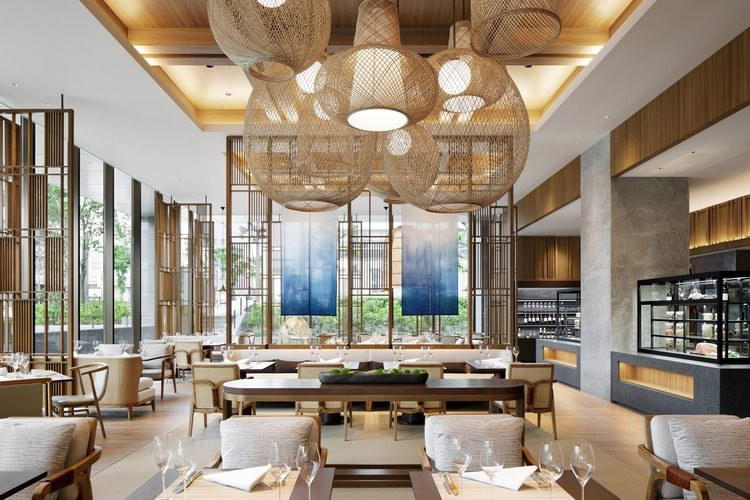
Relaxed and intimate, with a calm, greenery-filled outlook onto Utsubo Park; a small dining room with counter and table seating that feels quietly classic and welcoming for solo diners or a relaxed meal with someone special.