
Star Wine List
Our verdict
Set within the Nanoniwa complex near Osaka Castle Park, Raindrop brings together exceptional Japanese ingredients and Italian technique in a format that rewards the kind of patient, progressive eating the city does well. The location alone positions it at a remove from Osaka's densely packed central dining corridors, giving the experience a deliberate, unhurried tempo that distinguishes it from the surrounding scene.

Pearl is the En Primeur Club membership app, where members save venues, book tables and use the concierge.
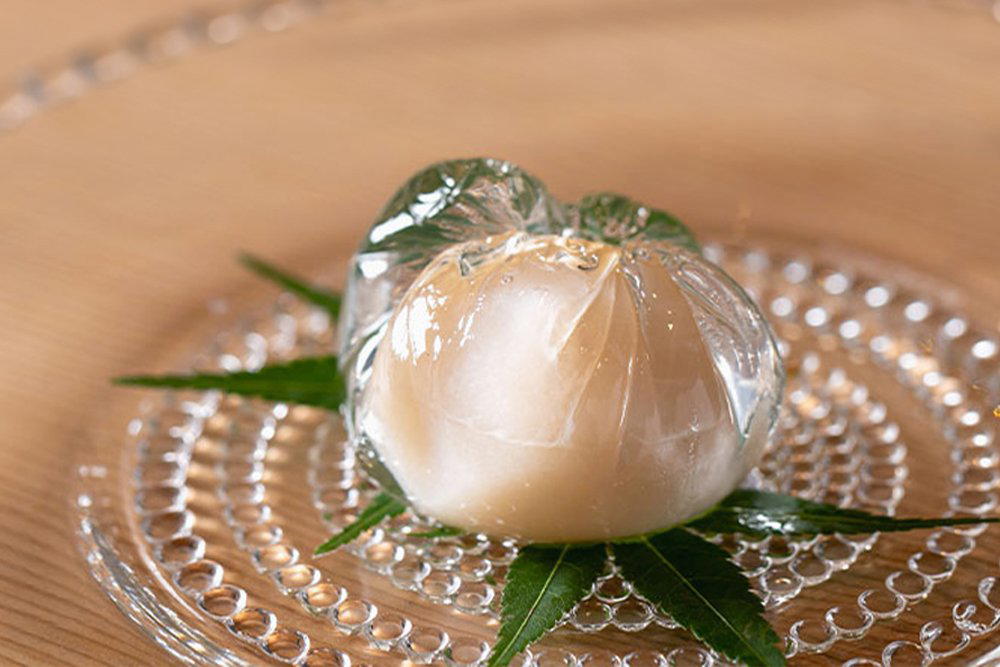
A Dining Room With a Different Orientation
Osaka's best-known restaurant corridors run through Namba, Shinsaibashi, and the canal-side blocks of Kitahorie. Raindrop occupies a different axis entirely. Situated within the Nanoniwa complex at 3-65 Banbacho in Chuo Ward, the restaurant sits within walking distance of Osaka Castle Park, a placement that already signals something about the experience waiting inside. The streets around Osaka Castle have a slower register than the entertainment districts to the southwest: fewer neon signs, more considered movement, the kind of neighbourhood that draws people with a purpose rather than a drift. Coming here is a deliberate act, and that tone carries through the meal itself.
The Italian-influenced, Japan-sourced format that defines Raindrop places it in a category that Osaka has been quietly developing for several years. While the city's most decorated tables remain rooted in Japanese tradition, kaiseki houses like Taian and Kashiwaya Osaka Senriyama hold the anchor positions in that tradition, a parallel tier of Western-technique restaurants has emerged, drawing on Osaka's historic openness to outside influence. HAJIME, La Cime, and Fujiya 1935 occupy the French-leaning and innovative end of that tier. Raindrop operates with an Italian frame, which gives it a distinct register: warmer in texture, more grounded in olive oil and cured preparations than butter and reduction, yet still dependent on the quality of the Japanese primary product to make its case.
The Italian-Japanese Format and What It Demands
Italian cuisine, unlike French, has historically built its identity around the ingredient rather than the technique applied to it. When that sensibility travels to Japan, arguably the country most committed to ingredient specificity anywhere in the world, the combination produces menus where every course is, in effect, a sourcing claim. For a restaurant like Raindrop, seeking out exceptional ingredients from across Japan is not incidental to the format; it is the format. The Italian framework provides structure and vocabulary: the progression from antipasto logic through pasta and secondo to something sweet at the close, the emphasis on preserved and fermented elements that mirror umami-rich Japanese pantry traditions, the use of acid and fat as primary balancing tools. But the argument of the meal depends entirely on what Japan's producers send to the kitchen each season.
This is precisely why the tasting progression at a restaurant of this type rewards attention course by course. Each plate is, in part, a geography lesson: which prefecture's seafood is at its peak, which mountain region's pork or mushroom has been selected, which coastal fishery is delivering something worth building a pasta around. The Italian-Japanese crossover format has antecedents elsewhere in Japan's dining culture, akordu in Nara works a comparable intersection with Basque technique, while Goh in Fukuoka draws on French and Japanese registers in its progression, but the Italian version carries its own character, one that tends to favour earthier, more fermented flavour profiles over delicate French-style refinement.
Reading the Season Through the Meal
Japan's culinary calendar is more compressed and codified than almost any other. In spring, bamboo shoots and cherry blossom-period seafood dominate the better sourcing networks; summer brings ayu sweetfish, sudachi citrus, and the first corn from Hokkaido; autumn arrives with matsutake mushrooms, Pacific saury, and the particular sweetness of root vegetables that have had a full growing season; winter centres on fugu, snow crab from the Sea of Japan, and buri yellowtail at its fattest. A restaurant drawing on Italian structure and Japanese ingredients must, in effect, rebuild its menu four or five times a year to stay honest to both sides of that equation. What arrives on the table in November bears little resemblance to what is served in April, which means a return visit in a different season is not a repetition but a different argument.
For visitors timing a trip to Osaka, this seasonality has practical implications. The late autumn and early winter window, roughly October through December, represents one of the strongest moments for Japanese ingredient quality across most categories: seafood at peak fat, the full autumn mushroom spectrum, the first cold-weather root vegetables, and the brisk outdoor temperatures that suit a longer, multi-course meal. Spring is equally compelling for a different set of reasons. Summer, while less celebrated in the Japanese ingredient calendar, has its own logic for those who know what to ask for. The key, across all seasons, is arriving with enough prior knowledge to understand what the menu is saying.
Where Raindrop Sits in the Osaka Scene
Osaka's dining identity has traditionally been shaped by the concept of kuidaore, eating until you drop, which values abundance, accessibility, and democratic pleasure over ceremony and connoisseurship. The city's premium restaurant scene sits in productive tension with that reputation. While Tokyo's high-end dining cluster operates in a denser, more competitive field, see the capital's omakase hierarchy, typified by counters like Harutaka, Osaka's premium tier is smaller and, arguably, more idiosyncratic. Kyoto's formal kaiseki tradition, represented at its most accomplished by venues like Gion Sasaki, sits an hour away by train and exerts a certain gravitational pull on the region's dining conversation. Osaka's own fine dining has responded by developing a more experimental, cross-cultural character, which is the tradition Raindrop operates within.
That said, Raindrop's position within the Nanoniwa complex, near Osaka Castle, is not a central location by Osaka dining standards. Getting there from the main tourist and business corridors requires intention. From Osaka Castle Park station on the Osaka Loop Line, the walk is direct. For those staying in the central hotel belt around Shinsaibashi or Namba, a taxi or short train ride is the practical approach. The hotel options nearest to the castle area tend to be business-oriented rather than the luxury properties closer to the waterfront, so most visitors will be arriving from elsewhere in the city. For those who want to anchor a broader Osaka evening around this meal, the Osaka Castle area and its surrounding blocks offer an atmospheric evening walk before sitting down to a longer progression. For the full scope of what Osaka's food and drink scene offers, the EP Club Osaka restaurants guide, bars guide, and experiences guide provide a wider map of the city's options across formats and price points.
The Italian-meets-Japan format has gained traction in several Japanese cities beyond Osaka. Bleston Court Yukawatan in Nagano works a comparable cross-cultural synthesis in a completely different environmental context, drawing on the alpine produce of the Nagano region. giueme in Akita represents a further regional iteration of the idea, built around the agricultural specificity of the Tohoku northeast. In the global context, Italian restaurants that have built their identity on product sourcing, Le Bernardin in New York City represents an analogous commitment to primary ingredient quality within a European fine-dining framework, even if the cuisine is French, and ingredient-driven American institutions like Emeril's in New Orleans show how place-specific sourcing can define a restaurant's identity within a Western culinary tradition. Raindrop belongs to that broader conversation about what happens when a European culinary structure is genuinely rebuilt around local supply chains rather than imported assumptions.
Planning Your Visit
Reservations at ingredient-focused, multi-course restaurants in Osaka's premium tier typically require advance planning of at least several weeks, with the most sought-after windows filling faster during peak autumn and spring seasons. Given that Raindrop's own website and phone details are not publicly indexed in major travel platforms at the time of writing, booking through the Nanoniwa complex directly or through a hotel concierge service is the recommended approach for international visitors. For the wider Osaka region's wine and drinks scene, pairing planning is worth considering ahead of the meal: Italian-Japanese kitchens of this type often work with natural and low-intervention wine lists that complement the ingredient-forward approach of the food.
Frequently asked questions
Where is Raindrop located?
Raindrop is located at 3-65 Banbacho, Chuo Ward, Osaka, 540-0007, Japan, Osaka.
Is Raindrop Michelin-listed?
Raindrop has received recognition including: Raindrop is located within the Nanoniwa complex, a very short distance from Osaka Castle Park. This dining experience seeks out exceptional ingredients from across Japan and fuses them with Italian-in....
What do regulars order at Raindrop?
Raindrop runs a multi-course format built around Italian structure and Japanese seasonal sourcing, which means the menu shifts with the calendar rather than staying fixed. There is no à la carte selection to anchor a standing order, the kitchen's direction is defined by what ingredients are at peak across Japan at any given time. Regulars return for the progression itself, knowing each visit will differ from the last.
Do I need a reservation for Raindrop?
For a multi-course, ingredient-driven restaurant of this format in Osaka, booking ahead is strongly advisable. Osaka's premium dining tier operates on advance reservations, often weeks out for first-time guests. Raindrop is located within the Nanoniwa complex near Osaka Castle Park at 3-65 Banbacho, Chuo Ward, contact details are best confirmed through the complex directly or via current booking platforms.
What makes Raindrop worth seeking out?
Raindrop occupies a position away from Osaka's main dining corridors in Namba and Shinsaibashi, operating within the Nanoniwa complex near Osaka Castle Park. The Italian-Japanese format, applying Italian compositional logic to ingredients sourced from across Japan, remains a less crowded category in Osaka's scene compared to kaiseki or pure Italian. That specificity of approach, grounded in seasonal Japanese sourcing, is the reason to make the journey to Banbacho.
Is Raindrop good for vegetarians?
Italian-Japanese tasting menus built around seasonal Japanese sourcing typically feature seafood and meat as central components, the ingredient-first philosophy tends to follow what Japanese producers and fisheries are delivering at peak. Vegetarian accommodation at this format level is possible at some restaurants but requires advance notice. Guests with dietary requirements should confirm directly with Raindrop before booking.
Peers Worth Knowing
Comparable venues nearby, for context on price, style, and recognition.
| Venue | Cuisine | Price | Awards | Notes |
|---|---|---|---|---|
| RaindropThis venue (the venue you are viewing) | Modern Italian-Japanese Wine Bar | $20–30 | Star Wine List | Not listed |
| PIZZERIA NAPOLETANA ASSO DA YAMAGUCHI at Nakazaki-cho | Authentic Neapolitan Pizzeria | $20–30 | Tabelog 100 #23 | Kita |
| Porta Nuova | Traditional Neapolitan pizza & Italian | $30–50 | Tabelog 100 #12 | Nishi |
| anello | Casual Italian Trattoria & Wine Bar | $20–30 | Tabelog 100 #91 | Kita |
| Pebble | Modern Italian with Wine Pairings | Not listed | Michelin Plate · Star Wine List | Kita |
| RUGGERI | Authentic Italian Gelato & Sweets | $1–10 | Tabelog 100 #66 | Naniwa |
Recognition history
Dated appearances from independent guides and award organizations, with the underlying list record or original source where available.
Star Wine List
Star Wine List
Continue exploring
More in Osaka
Restaurants in Osaka
All restaurants in Osaka →


Bars in Osaka
All bars in Osaka →

Hotels in Osaka
All hotels in Osaka →



Wineries in Osaka
Browse all →
Raindrop
The wine
- Wine program
- Deep wine list
- Extensive wine list
- Natural wine
- Sake program
Details
- Modern
- Cozy
- Scenic
- Date Night
- Casual Hangout
- Special Occasion
- Open Kitchen
- Extensive Wine List
- Natural Wine
- Sake Program
- Local Sourcing
- Garden
- A La Carte
- Small Plates
- Wine
Current opening hours
- Monday
- 11:30 AM–11 PM
- Tuesday
- 11:30 AM–11 PM
- Wednesday
- 11:30 AM–11 PM
- Thursday
- 11:30 AM–11 PM
- Friday
- 11:30 AM–11 PM
- Saturday
- 11:30 AM–11 PM
- Sunday
- 11:30 AM–11 PM
Hours can change for holidays and private events. Hours as of .
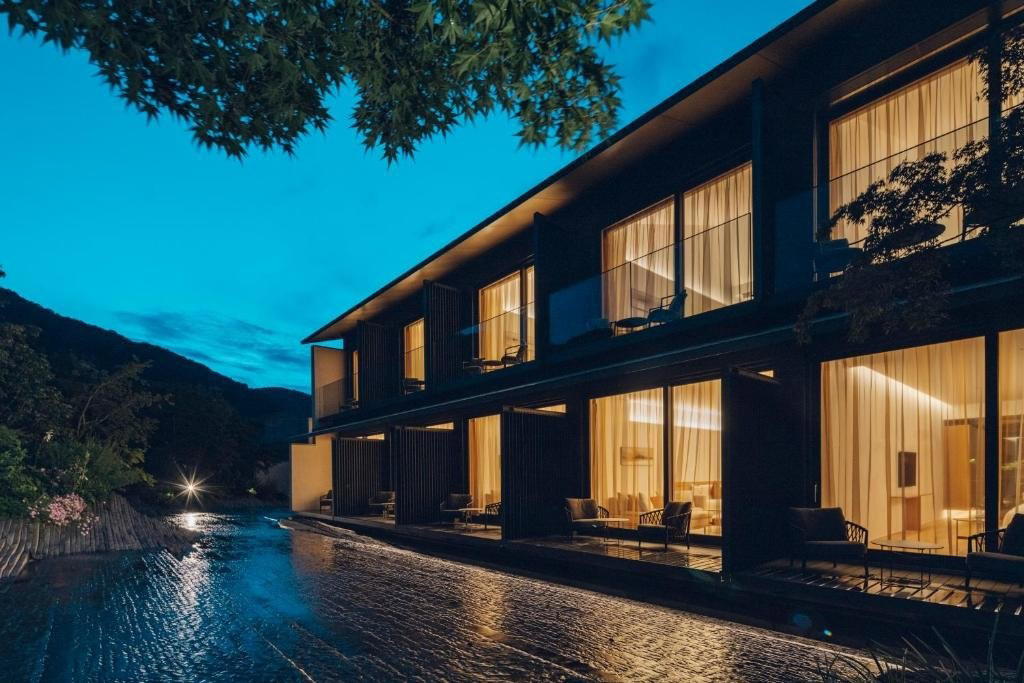
Relaxed open space with pleasant sunlight and vast greenery views.