Our verdict
Cotton Tree Drive and the Case for Ingredient-Led Dining in Central Central Hong Kong has long operated as the city's most demanding dining district. The addresses along and around Cotton Tree Drive sit at an elevation, literally and figuratively, that filters for a particular kind of seriousness. This is a corridor where restaurants either anchor themselves in provenance and craft or cycle out quickly in the face of an audience that has eaten at Amber, benchmarked against Caprice, and regularly crosses to Kowloon for a bowl of tofu at King Of Soybeans with the same curiosity they bring to a tasting menu. That audience context shapes what 7 Paintings, at number 22, has to work within. Central diners have grown increasingly attentive to where ingredients originate. The shift, visible across the district over the past decade, tracks a broader global pattern: kitchens that once leaned on technique as the lead story have repositioned sourcing as the argument. What arrives on the plate matters less than what that arrival says about the kitchen's supply relationships, its seasonal commitments, and its willingness to let the ingredient speak before the sauce does. In Hong Kong's premium tier, that shift has been particularly sharp because the city's import infrastructure is so capable, making provenance claims easier to verify and harder to fake. Where 7 Paintings Sits in the Hong Kong Dining Map The address at 22 Cotton Tree Drive places 7 Paintings in direct proximity to some of the city's most consistently decorated kitchens. 8 1/2 Otto e Mezzo Bombana has held three Michelin stars for years, setting an Italian benchmark that extends the conversation about European sourcing standards to Hong Kong's table. Ta Vie, operating at the Japanese-French intersection with two Michelin stars, has demonstrated that the city's appetite for precise, produce-forward cooking crosses cultural categories without friction. These comparisons matter not because 7 Paintings competes directly with either, but because the dining public that frequents Cotton Tree Drive carries those reference points into every room it enters. Across Hong Kong more broadly, ingredient sourcing has become a credentialing mechanism. A kitchen that traces its produce to specific farms or fishing communities in the Pearl River Delta, or that maintains direct relationships with Japanese morning markets, signals something to the city's regulars that no rating shorthand can fully replace. Forum built its Cantonese reputation in part on the sourcing of specific dried seafood and aged ingredients that few kitchens would invest in. The lesson transfers: in this city, the supply chain is part of the story. The Broader Context: Hong Kong's Ingredient Culture Hong Kong's food culture has always been anchored in ingredient quality, but the terms of the conversation have changed. A generation ago, freshness in Cantonese cooking meant the fish tank at the front of the restaurant, the live prawns dispatched to order, the morning market run at dawn. Those standards have not disappeared; if anything, venues like Sai Kung Sing Kee and Hoi Tin Garden in Tuen Mun carry that tradition at the grassroots level. What has shifted in the premium tier is the vocabulary: sourcing now involves articulating geographical specificity, seasonality, and supply ethics in ways that connect Hong Kong kitchens to an international conversation happening simultaneously in New York at Le Bernardin and in San Francisco at Lazy Bear. That internationalization of sourcing discourse is not purely cosmetic. Hong Kong's position as a transit hub means ingredients can move through it with unusual efficiency, and kitchens that invest in those logistics can build menus around produce that would be logistically difficult in less connected cities. The practical result is that a well-resourced Central restaurant can operate a sourcing program that rivals its counterparts in Paris or Tokyo in terms of ingredient provenance, if the commitment is there. Planning a Visit: Practical Notes 7 Paintings is located at 22 Cotton Tree Drive in Central, a neighborhood that remains one of the most accessible in Hong Kong for visitors arriving from the MTR's Central or Admiralty stations. Cotton Tree Drive itself runs between the Zoological and Botanical Gardens and the refined Admiralty interchange, making it a direct walk from either stop. For those building a broader Central itinerary, the address sits within easy reach of Gaia and the cluster of dining options across Central and Western. Given the limited public information currently available about 7 Paintings, including hours, booking method, and price range, contacting the venue directly before visiting is the practical approach. For a fuller picture of what Central and the rest of Hong Kong offer at every tier and cuisine, the full Hong Kong restaurants guide covers the breadth of the city's options, from the multicultural energy of Habib's in Kwun Tong to the Turkish flavors at I Love Istanbul in Tsuen Wan, and further out to farm-to-table formats like One-ThirtyOne in Tai Po and the Dim Sum heritage at Lei Garden in Sha Tin. For visitors whose Hong Kong itinerary extends to the outer islands, Gangstas in Islands and the soup-focused Coconut Soup in Yau Tsim Mong represent the kind of category diversity that makes Hong Kong worth mapping carefully rather than defaulting to the obvious Central addresses alone. Frequently Asked Questions Does 7 Paintings work for a family meal?Central Hong Kong's dining options span a wide price and format range, and Cotton Tree Drive in particular skews toward the kind of considered, sit-down experience that suits adults or older children with an interest in the food. If flexibility matters, the broader Central and Western district offers alternatives at multiple price points, and confirming format directly with the venue before booking is advisable.Is 7 Paintings formal or casual?Hong Kong's Central dining scene covers a spectrum from jacket-required French rooms to relaxed modern kitchens where the formality lives in the plate rather than the dress code. Venues in the Cotton Tree Drive area tend toward the considered end of that range, though the city's conventions have loosened considerably over the past few years.What should I eat at 7 Paintings? What is clear from the Central context is that kitchens in this part of Hong Kong are under pressure to demonstrate sourcing credentials, so arriving with questions about where the produce comes from is as useful as asking about the signature dish. For a confirmed sense of what the kitchen prioritizes, the venue itself is the right source.What kind of dining experience does 7 Paintings offer compared to other Central Hong Kong addresses?Central Hong Kong hosts some of the city's most decorated rooms, including multi-Michelin-starred counters and long-standing institutions with deep sourcing programs. 7 Paintings at 22 Cotton Tree Drive enters a district where the reference points are high and the dining public is well-traveled., it occupies a position in the neighbourhood that warrants direct investigation, particularly for visitors whose itinerary already includes addresses like Ta Vie or Amber and who are looking to round out their understanding of what Central's broader dining tier offers beyond the starred circuit.

Pearl is the En Primeur Club membership app — saves, bookings, and concierge access live there. Same editors, same standards.
The menu
What to order
- Alaskan Crab Tart with Ikura
- Blue-Fin Tuna Carpaccio
- Braised Wagyu Short Rib
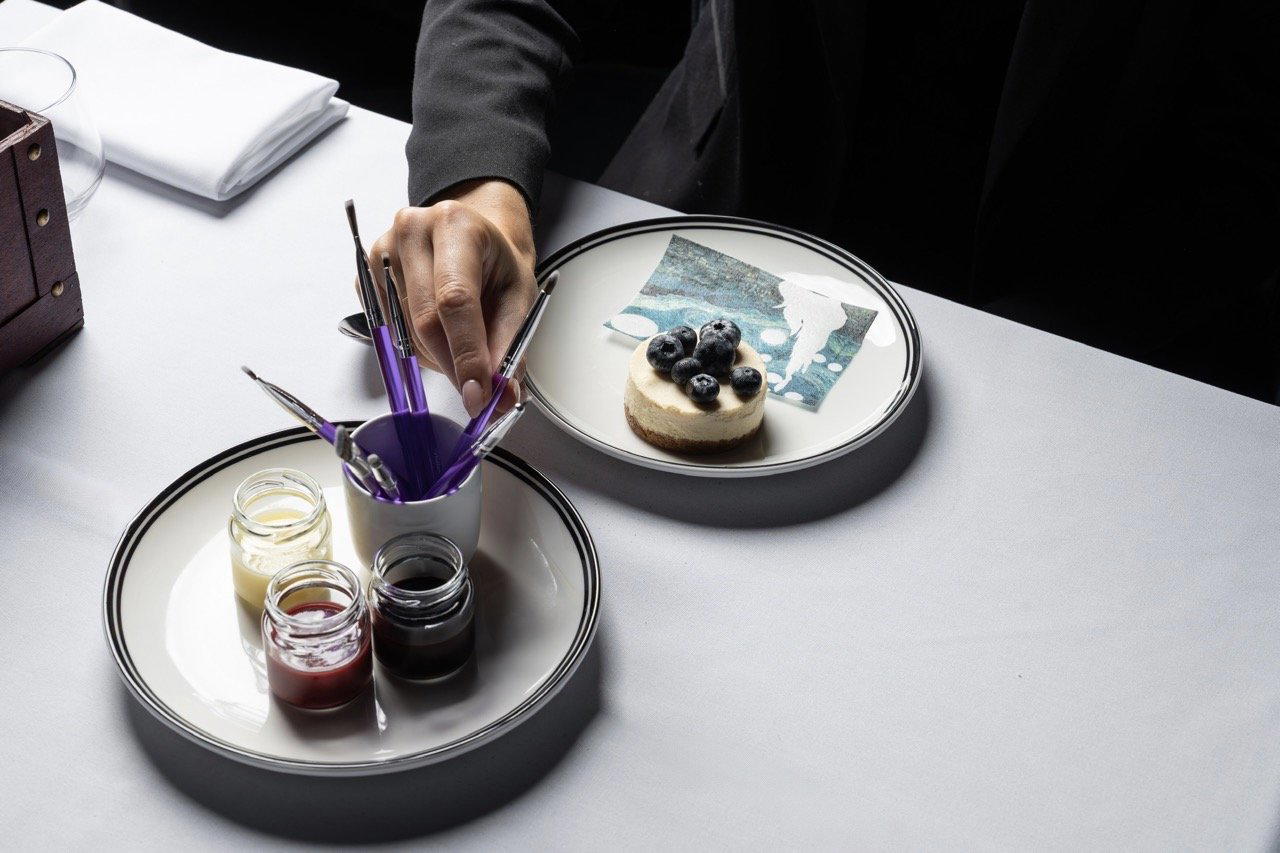
- Chocolate Painting
Cotton Tree Drive and the Case for Ingredient-Led Dining in Central
Central Hong Kong has long operated as the city's most demanding dining district. The addresses along and around Cotton Tree Drive sit at an elevation, literally and figuratively, that filters for a particular kind of seriousness. This is a corridor where restaurants either anchor themselves in provenance and craft or cycle out quickly in the face of an audience that has eaten at Amber, benchmarked against Caprice, and regularly crosses to Kowloon for a bowl of tofu at King Of Soybeans with the same curiosity they bring to a tasting menu. That audience context shapes what 7 Paintings, at number 22, has to work within.
Central diners have grown increasingly attentive to where ingredients originate. The shift, visible across the district over the past decade, tracks a broader global pattern: kitchens that once leaned on technique as the lead story have repositioned sourcing as the argument. What arrives on the plate matters less than what that arrival says about the kitchen's supply relationships, its seasonal commitments, and its willingness to let the ingredient speak before the sauce does. In Hong Kong's premium tier, that shift has been particularly sharp because the city's import infrastructure is so capable, making provenance claims easier to verify and harder to fake.
Where 7 Paintings Sits in the Hong Kong Dining Map
The address at 22 Cotton Tree Drive places 7 Paintings in direct proximity to some of the city's most consistently decorated kitchens. 8 1/2 Otto e Mezzo Bombana has held three Michelin stars for years, setting an Italian benchmark that extends the conversation about European sourcing standards to Hong Kong's table. Ta Vie, operating at the Japanese-French intersection with two Michelin stars, has demonstrated that the city's appetite for precise, produce-forward cooking crosses cultural categories without friction. These comparisons matter not because 7 Paintings competes directly with either, but because the dining public that frequents Cotton Tree Drive carries those reference points into every room it enters.
Across Hong Kong more broadly, ingredient sourcing has become a credentialing mechanism. A kitchen that traces its produce to specific farms or fishing communities in the Pearl River Delta, or that maintains direct relationships with Japanese morning markets, signals something to the city's regulars that no rating shorthand can fully replace. Forum built its Cantonese reputation in part on the sourcing of specific dried seafood and aged ingredients that few kitchens would invest in. The lesson transfers: in this city, the supply chain is part of the story.
The Broader Context: Hong Kong's Ingredient Culture
Hong Kong's food culture has always been anchored in ingredient quality, but the terms of the conversation have changed. A generation ago, freshness in Cantonese cooking meant the fish tank at the front of the restaurant, the live prawns dispatched to order, the morning market run at dawn. Those standards have not disappeared; if anything, venues like Sai Kung Sing Kee and Hoi Tin Garden in Tuen Mun carry that tradition at the grassroots level. What has shifted in the premium tier is the vocabulary: sourcing now involves articulating geographical specificity, seasonality, and supply ethics in ways that connect Hong Kong kitchens to an international conversation happening simultaneously in New York at Le Bernardin and in San Francisco at Lazy Bear.
That internationalization of sourcing discourse is not purely cosmetic. Hong Kong's position as a transit hub means ingredients can move through it with unusual efficiency, and kitchens that invest in those logistics can build menus around produce that would be logistically difficult in less connected cities. The practical result is that a well-resourced Central restaurant can operate a sourcing program that rivals its counterparts in Paris or Tokyo in terms of ingredient provenance, if the commitment is there.
Planning a Visit: Practical Notes
7 Paintings is located at 22 Cotton Tree Drive in Central, a neighborhood that remains one of the most accessible in Hong Kong for visitors arriving from the MTR's Central or Admiralty stations. Cotton Tree Drive itself runs between the Zoological and Botanical Gardens and the refined Admiralty interchange, making it a direct walk from either stop. For those building a broader Central itinerary, the address sits within easy reach of Gaia and the cluster of dining options across Central and Western. Given the limited public information currently available about 7 Paintings, including hours, booking method, and price range, contacting the venue directly before visiting is the practical approach. For a fuller picture of what Central and the rest of Hong Kong offer at every tier and cuisine, the full Hong Kong restaurants guide covers the breadth of the city's options, from the multicultural energy of Habib's in Kwun Tong to the Turkish flavors at I Love Istanbul in Tsuen Wan, and further out to farm-to-table formats like One-ThirtyOne in Tai Po and the Dim Sum heritage at Lei Garden in Sha Tin.
For visitors whose Hong Kong itinerary extends to the outer islands, Gangstas in Islands and the soup-focused Coconut Soup in Yau Tsim Mong represent the kind of category diversity that makes Hong Kong worth mapping carefully rather than defaulting to the obvious Central addresses alone.
Frequently asked questions
Does 7 Paintings work for a family meal?
Is 7 Paintings formal or casual?
What should I eat at 7 Paintings?
What kind of dining experience does 7 Paintings offer compared to other Central Hong Kong addresses?
Continue exploring
More in Hong Kong
Restaurants in Hong Kong
All restaurants in Hong Kong →
Bars in Hong Kong
All bars in Hong Kong →
Hotels in Hong Kong
All hotels in Hong Kong →
Wineries in Hong Kong
All wineries in Hong Kong →
Details
- Whimsical
- Sophisticated
- Intimate
- Modern
- Special Occasion
- Celebration
- Date Night
- Family
- Hotel Restaurant
- Design Destination
- Skyline
- Tasting Menu
- Set Menu
- Vegetarian Friendly
- Gluten Free Options
- Allergy Accommodating
Intimate and captivating with live projections, music, and interactive elements creating a magical, theatrical atmosphere.