1300 on Fillmore
Our verdict
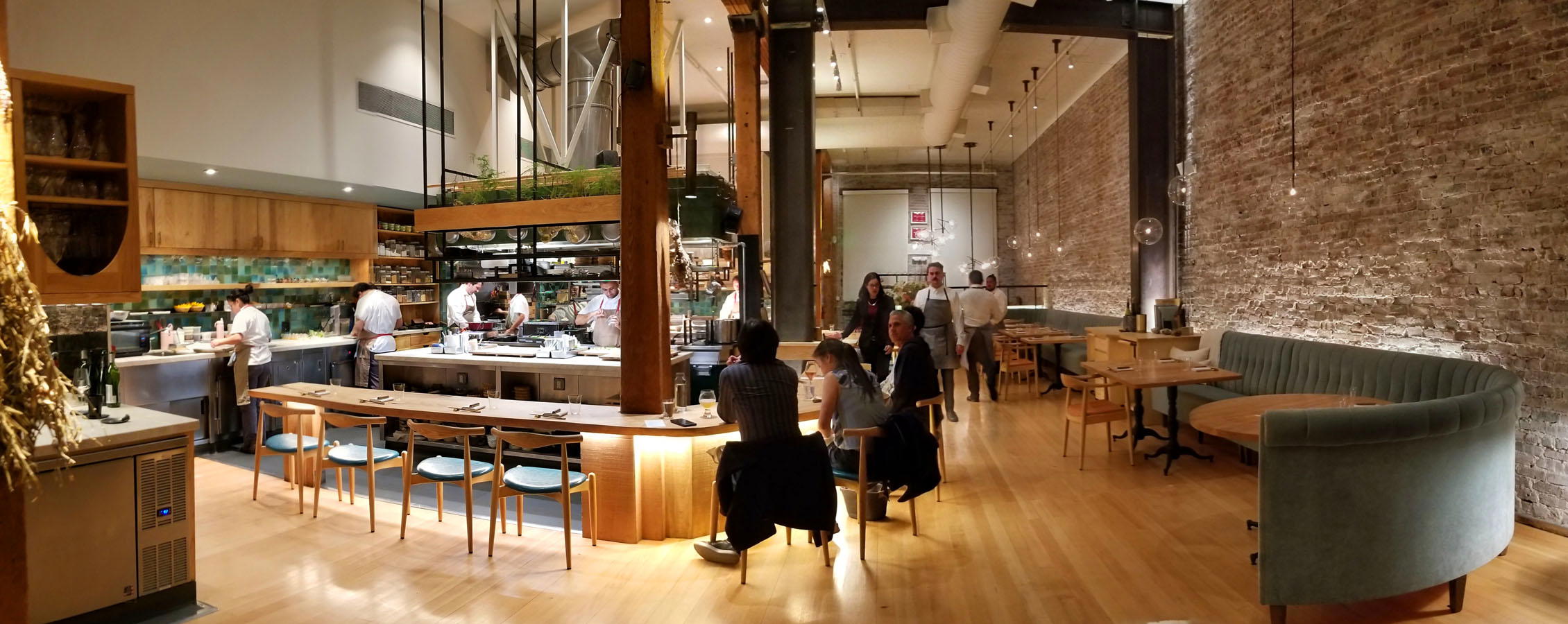
Located in San Francisco's airport terminal, 1300 on Fillmore brings the soul food and Southern American cooking tradition of the Fillmore District to one of the Bay Area's busiest transit hubs. The format suits travellers seeking something more considered than standard airport fare, with a wine program that references California's broader regional depth. Confirm current hours and availability at the terminal directly before visiting.

Pearl is the En Primeur Club membership app, where members save venues, book tables and use the concierge.

The menu
What to order
- BBQ Shrimp N' Grits
- Black Skillet Fried Chicken
Southern Cooking at the Airport Threshold
San Francisco International's terminal dining has followed the same trajectory visible at major airports across the United States: a slow shift away from anonymous chains toward regional concepts with a traceable culinary identity. The presence of 1300 on Fillmore in Terminal G places a Fillmore District reference point inside that transit environment, connecting the cultural and culinary history of one of San Francisco's most significant African American neighbourhoods to a moment most travellers spend looking for something, anything, worth eating before a flight.
The original 1300 on Fillmore, on the street that gives it its name, established itself as a serious address for Southern-inflected cooking in a city where that tradition has historically been underrepresented at the table. The Fillmore's history as a hub of Black cultural life in the mid-twentieth century, when the neighbourhood earned the name "Harlem of the West" for its jazz scene and community density, provides the backdrop against which the restaurant's identity was constructed. An airport outpost inevitably compresses that context, but it carries the reference forward into a setting where provenance tends to matter less and throughput matters more.
The Wine Question in a Transit Format
Airport restaurants face a specific constraint around wine programming: the cellar depth and pacing that defines a great list in a destination setting is difficult to replicate when most guests have a departure board running in the back of their mind. Across the United States, the airport restaurants that have managed serious wine programs tend to anchor them to regional identity rather than attempting encyclopedic coverage. California's position as one of the country's most diverse wine-producing states makes that regional anchor particularly defensible here.
San Francisco's top-tier restaurant scene, represented by addresses like Saison, Benu, and Atelier Crenn, maintains wine programs of considerable depth and curation sophistication. At the other end of the format spectrum, an airport Southern concept would be expected to orient its list toward accessibility and regional breadth rather than deep verticals or rare allocations. Napa Cabernet, Sonoma Pinot Noir, and Central Coast Chardonnay form the logical core of any California-leaning airport list, with the better examples using those categories to tell a coherent story about the state's wine geography rather than simply filing the obvious options by varietal.
For comparison, the wine programs at destination-level California restaurants such as Single Thread Farm in Healdsburg and The French Laundry in Napa set the benchmark for what cellar depth and sommelier-led curation looks like in the state's premium tier. The airport format operates in a fundamentally different register, but understanding what that benchmark looks like helps calibrate expectations for what a well-run transit list can realistically deliver.
Southern Cooking in a California Context
Soul food and Southern American cooking occupy an interesting position in San Francisco's dining culture. The city's market-driven, Californian approach to cooking, visible across the range of progressive American restaurants from Lazy Bear to Quince, tends to foreground produce and technique in a way that sometimes sits at a distance from the fat-forward, deeply seasoned tradition of Southern American cooking. That tradition has its own rigour, its own canon of techniques around frying, braising, and smoking, and its own relationship to seasonality through preserving, curing, and long-cooked preparations.
Across the United States, Southern cooking has attracted increasing critical attention over the past decade. Restaurants in New Orleans, Atlanta, and other Southern cities have reframed what the cuisine can look like in a premium dining context. Emeril's in New Orleans and Bacchanalia in Atlanta represent different expressions of how regional American cooking traditions can operate at a serious level. In San Francisco, the Fillmore's historical identity as a Black cultural hub gives the 1300 on Fillmore concept a specific neighbourhood anchoring that most California restaurants of this type lack.
The Airport Format and What It Can Deliver
Setting expectations correctly is the most useful thing any restaurant guide can do for a transit venue. Airport restaurants operate under cost structures, supply chain constraints, and staffing conditions that differ materially from street-level operations. The better ones, and there are more of them now than there were fifteen years ago, use those constraints as a design brief rather than an excuse. They narrow the menu to what travels well through service, source locally where logistics allow, and build the wine list around a legible regional thesis.
Travellers who have spent time at serious restaurants elsewhere in the United States, whether at Alinea in Chicago, Providence in Los Angeles, Addison in San Diego, or Atomix in New York City, will arrive at an airport concept with a calibrated sense of what that format can and cannot do. The comparison points that matter most in this context are other airport Southern concepts rather than the city's destination dining tier. On that narrower comparison, the Fillmore identity and the neighbourhood history it draws on provide a more considered frame of reference than most transit alternatives.
Frequently asked questions
Where do I go for 1300 on Fillmore?
1300 on Fillmore is located at 780 S. AIRPORT BLVD TERMINAL G, San Francisco, CA 94128, San Francisco.
Is 1300 on Fillmore at SFO connected to the original Fillmore Street restaurant in San Francisco?
The SFO location at Terminal G, 780 S. Airport Blvd, carries the same name and Southern cooking identity as the original 1300 on Fillmore, which operated in the Western Addition neighborhood on Fillmore Street, a corridor historically central to San Francisco's African American cultural life.
What's the must-try dish at 1300 on Fillmore?
What is on record is the Southern American cooking orientation, which at comparable airport outposts of the brand centers on soul food staples. Check the menu board on arrival at Terminal G, where the Southern catalogue tends to be the stronger section relative to any crossover California items.
What's the best way to book 1300 on Fillmore?
As a Terminal G airport restaurant at 780 S. Airport Blvd, San Francisco, 1300 on Fillmore operates as a walk-in transit venue rather than a reservations-driven destination. Arrive with enough time pre-flight to seat comfortably, airport kitchens operate on compressed service windows, and Southern cooking formats like this rarely benefit from being rushed.
What's 1300 on Fillmore best at?
The strongest case for 1300 on Fillmore is its positioning: Southern American cooking in a California airport context where the default offer skews toward Pacific Rim or generic American. Soul food and Southern standards occupy a gap in SFO's terminal dining lineup, making this the clearest choice for a passenger who wants something regionally specific rather than airport-neutral.
Is 1300 on Fillmore allergy-friendly?
Southern cooking as a tradition relies heavily on dairy, wheat, and pork derivatives across its core dishes, so guests with specific allergens should ask staff directly upon arrival at Terminal G. Airport operations typically have staff trained to answer allergen questions to comply with California food service regulations.
City Peers
| Venue | Cuisine | Price | Awards | Notes |
|---|---|---|---|---|
| 1300 on FillmoreThis venue (the venue you are viewing) | Modern Southern-Inspired American | $50–100 | Not listed | Not listed |
| Lazy Bear | Modern American Tasting Menu | Not listed | 2 Michelin Stars · World's 50 Best #25 | Progressive American, Contemporary |
| Atelier Crenn | Contemporary French Fine Dining | $300–500 | 3 Michelin Stars · World's 50 Best #44 | Modern French, Contemporary |
| Benu | Modern Asian Fusion Fine Dining | $150–200 | 3 Michelin Stars · World's 50 Best #33 | French - Chinese, Asian |
| Quince | Contemporary Californian | $300–500 | 3 Michelin Stars · World's 50 Best #48 | Italian, Contemporary |
| Saison | Modern Fire-Forward Fine Dining | $300–500 | 2 Michelin Stars · World's 50 Best #22 | Progressive American, Californian |