The Rotunda
Perched on the fourth floor of Neiman Marcus Union Square, The Rotunda is San Francisco's most architecturally distinctive lunch destination, anchored by the building's original 1906-era rotunda skylight. The room connects department-store tradition to California hospitality in a way few dining rooms in the city replicate, drawing a clientele that ranges from Union Square regulars to out-of-town visitors seeking a midday table with genuine architectural presence.
Pearl is the En Primeur Club membership app — saves, bookings, and concierge access live there. Same editors, same standards.
- Address
- Level Four, 150 Stockton St, San Francisco, CA 94108
- Phone
- +14152492720
- Website
- stores.neimanmarcus.com
- Directions
- Get directions
 Saves & bookings on Pearl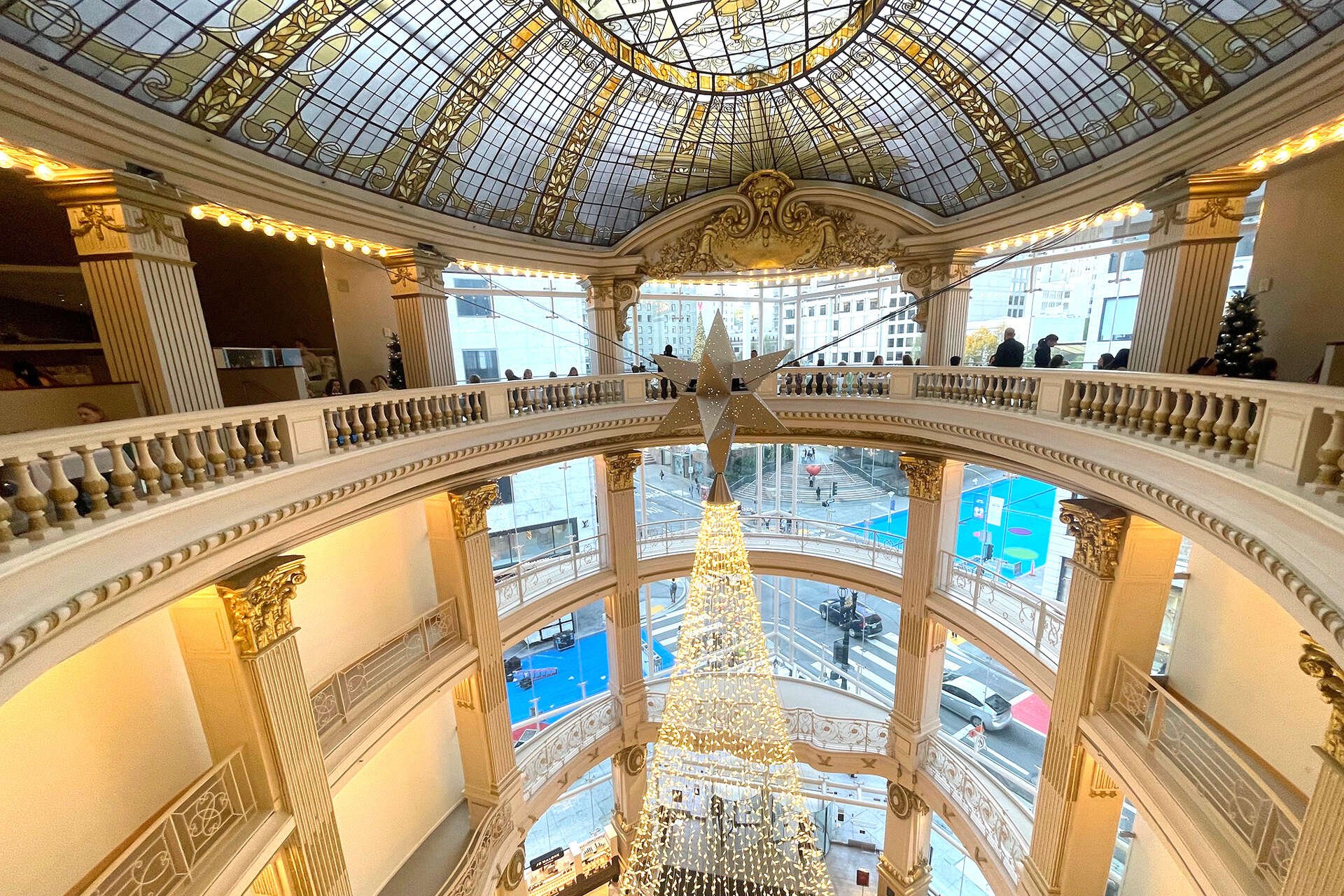
A Room Built Before the Earthquake
San Francisco's dining culture tends to reward novelty, which makes The Rotunda's endurance worth examining. The room sits on the fourth floor of Neiman Marcus Union Square at 150 Stockton Street, and the building's history precedes nearly every celebrated restaurant in the city. The original City of Paris department store occupied this corner from the mid-nineteenth century, and when Neiman Marcus rebuilt and opened the current structure in 1982, the preservation of the Belle Époque stained-glass rotunda dome became the architectural centerpiece of the project. That dome, dating in its origins to the 1890s, filters light into the dining room below in a way that no contemporary interior replication could reproduce. The Rotunda, as a result, occupies a category of its own among San Francisco lunch venues: it is a room that carries genuine historical weight rather than constructed atmosphere.
Atelier Crenn pursues conceptual French cuisine, Benu synthesizes French and Chinese traditions into something distinctly its own, and Lazy Bear operates as a progressive American counter built around chef-driven storytelling. The Rotunda runs against that current. Its value proposition is continuity, a sense that certain rituals of the midday meal deserve preservation as much as innovation.
The Department Store Dining Tradition
To understand the restaurant's cultural position, it helps to place it within the American department store restaurant tradition. From the mid-twentieth century onward, flagship department stores in major American cities maintained dining rooms that served a specific social function: a place for shoppers, business lunches, and afternoon tea that carried the standards of a formal restaurant without the occasion-weight of a dinner reservation. That tradition has contracted sharply. Most department stores have either eliminated their dining rooms or converted them into casual cafés with no architectural or culinary ambition. The rooms that survive in their original form, with preserved interiors and a commitment to composed plate cooking, number few across the country.
The restaurant belongs to that smaller group. In this sense, a comparison to peer venues elsewhere in American dining is instructive. Le Bernardin in New York City and Alinea in Chicago represent the innovation end of the American dining continuum; the restaurant represents the preservation end, where the room itself is the primary credential. Internationally, the department-store dining tradition survives in a handful of European houses; in California, the restaurant is among the clearest examples of the format functioning at a consistent standard.
Situating the Room in San Francisco's Lunch Market
San Francisco's lunch market at the premium end is thinner than its dinner equivalent. The city's celebrated tasting-menu restaurants, including Quince, Saison, and Single Thread Farm in Healdsburg, are oriented primarily toward evening service. Midday options that combine architectural seriousness with composed cooking are relatively scarce in Union Square specifically, a neighborhood that otherwise functions more as a retail and hotel district than a dining destination in its own right.
This creates a gap that restaurant fills with some precision. The room's location within Neiman Marcus means its lunch service draws from a specific demographic mix: shoppers taking a mid-afternoon break, business meetings with a less formal register than a dinner tasting menu, and visitors to San Francisco who want a midday meal with a strong sense of place. That is a different reader from the one booking a counter seat at Lazy Bear or planning a weekend dinner at Atelier Crenn. The restaurant does not compete in the same tier as San Francisco's Michelin-recognized restaurants; it occupies a different register entirely, where the architectural experience and the ritual of a composed lunch are the point.
For comparison, consider how American fine dining institutions in other cities have developed their own midday identities. The Inn at Little Washington and Blue Hill at Stone Barns in Tarrytown each draw on a strong sense of place to anchor their dining experience. Addison in San Diego, Providence in Los Angeles, and Bacchanalia in Atlanta each hold their regional positions through a combination of consistent execution and identifiable character. The restaurant's equivalent identity marker is the dome itself, and the room's ability to sustain a sense of occasion through architecture rather than chef-driven narrative.
California Hospitality in a Formal Frame
The California dining tradition has long operated at the intersection of formality and ease. The state's most serious restaurants, from The French Laundry in Napa to Saison, carry technical ambition without the rigidity that characterizes comparably credentialed rooms in Paris or Tokyo. The restaurant fits that template at a different price and occasion tier: the room is formal by virtue of its architecture but the lunch service operates with the relative informality that Union Square's retail-adjacent clientele expects. That calibration, serious room, relaxed register, is a specifically Californian mode of hospitality that the restaurant executes with consistency.
For international context, 8 1/2 Otto e Mezzo Bombana in Hong Kong and Atomix in New York City each demonstrate how a room's visual identity can carry significant weight in a diner's overall experience. The restaurant's stained-glass dome functions in a similar way: it sets a tone that the service and kitchen are then asked to match, rather than exceed.
Planning a Visit
The restaurant occupies the fourth floor of the Neiman Marcus building at 150 Stockton Street, in the heart of Union Square. Access is through the department store, and the lunch service format means timing aligns with retail hours rather than the evening rhythm of San Francisco's dinner-focused restaurant scene. Given the room's architectural reputation and its relatively contained capacity under the dome, reservations are advisable, particularly on weekends and during the holiday retail season when Union Square foot traffic is at its highest. The restaurant's position within a department store rather than a freestanding building means check-in and access follow Neiman Marcus's operational calendar. Visitors combining Union Square shopping with lunch will find the fourth-floor location practical; those making a dedicated trip solely for the dining room should plan the visit around the store's opening hours.
The Essentials
Comparable venues nearby, for context on price, style, and recognition.
| Venue | Cuisine | Price | Notes |
|---|---|---|---|
| The RotundaThis venue — the venue you are viewing | Not listed | $$$ | Not listed |
| Prelude at the Opera House | Hayes Valley, Contemporary American | $$$ | Not listed |
| Breadwinner | Not listed | $$ | Presidio, American Deli / Sandwiches |
| Darwin Cafe | Not listed | $$ | South of Market, American Sandwiches & Salads |
| Duboce Park Cafe | Not listed | $$ | Castro/Upper Market, Fresh California Cafe |
| Bi-Rite Catering | Not listed | $$ | Bayview Hunters Point, Seasonal American Catering |
Continue exploring
More in San Francisco
Restaurants in San Francisco
Browse all →
Bars in San Francisco
Browse all →
Hotels in San Francisco
Browse all →
At a Glance
- Elegant
- Classic
- Well Known
- Sophisticated
- Special Occasion
- Brunch
- Celebration
- Historic Building
- Hotel Restaurant
- Extensive Wine List
- Craft Cocktails
- Street Scene
- Skyline
Current opening hours
- Monday
- 11 AM-4 PM
- Tuesday
- 11 AM-4 PM
- Wednesday
- 11 AM-4 PM
- Thursday
- 11 AM-5 PM
- Friday
- 11 AM-5 PM
- Saturday
- 11 AM-5 PM
- Sunday
- 11 AM-4 PM
Hours can change for holidays and private events. Last verified .
Elegant light-filled circular dining room under a stained-glass dome with polished service and celebratory atmosphere.