

1 Michelin Key · World Travel Awards
Winner of the 2025 World Travel Awards for Gujarat's Leading Boutique Hotel, Woods at Sasan sits inside Gir Forest — the last refuge of the Asiatic lion. The property positions itself within a small tier of design-led wildlife lodges where spatial intimacy and environmental setting carry more weight than brand scale. For travellers routing through Gujarat's western safari corridor, it holds the strongest regional award credential currently on record.

Pearl is the En Primeur Club membership app — saves, bookings, and concierge access live there. Same editors, same standards.
- Address
- Gir Forest,India, Sasan-Talala Hwy, Sasan, Borvav, Gujarat 362135, India
- Phone
- 02877281000
- Website
- woodsatsasan.com
- Directions
- Get directions
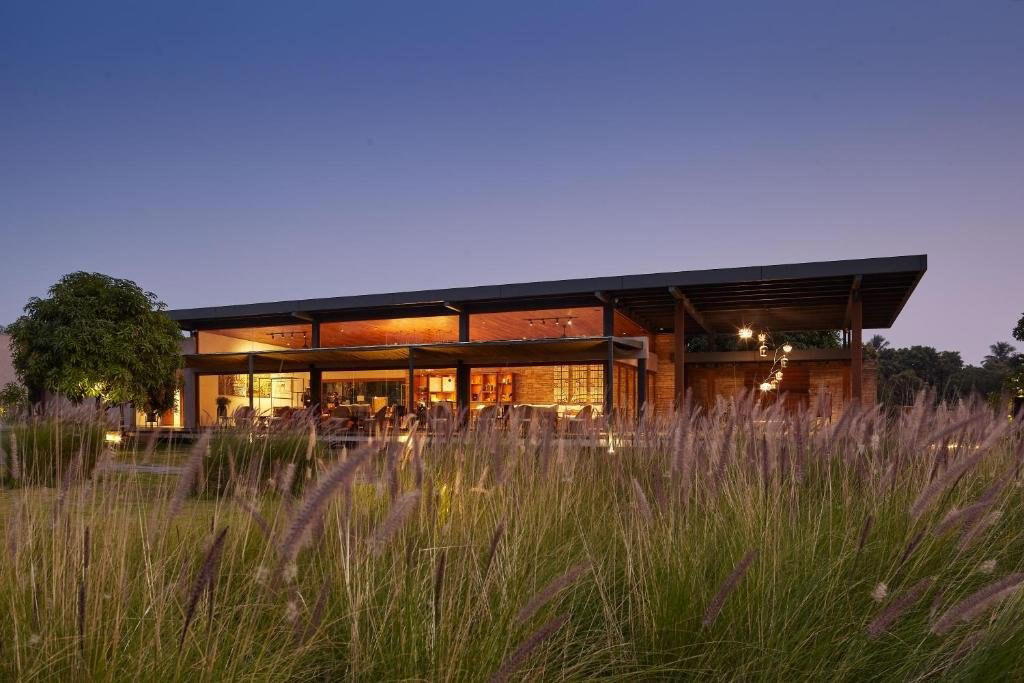
Where the Forest Becomes the Architecture
The approach to Sasan Gir resets your sense of what a building is supposed to do. Along the Sasan-Talala Highway, the vegetation thickens before the settlement appears, and the lodges that perform leading here are those that treat the surrounding teak and dry deciduous scrub as load-bearing elements of the design rather than backdrop. Woods at Sasan operates on that principle. The property sits within Gir Forest, the only place on earth where the Asiatic lion survives in the wild, and the physical setting imposes a discipline on any construction that hopes to feel coherent: absorb the environment or fight it. The choice made here is clearly the former.
Gujarat's boutique hotel category has grown sharply in the last decade, tracking a broader national pattern in which travellers routing through wildlife corridors increasingly expect considered spatial design rather than the resort-block aesthetic that dominated Indian wildlife tourism through the 1990s and 2000s. Properties in this category now compete less on room count and more on site integration, material selection, and the quality of the transition between interior and exterior space. Within that competitive set, Woods at Sasan carries the defining regional credential: it holds the 2025 World Travel Awards recognition as Gujarat's Leading Boutique Hotel, which places it at the top of the state-level peer group at the time of writing.
Design Logic in a Protected Landscape
Building inside or adjacent to a protected forest reserve is a constraint that sharpens design thinking. Material palette tends toward local stone, reclaimed timber, and muted earth tones because high-contrast finishes and imported materials read as intrusions rather than inclusions. The architectural priority at properties like this shifts from statement-making to calibration: how much light enters, how sound moves, how the threshold between an interior room and an outdoor space is handled. A well-executed jungle lodge makes that threshold nearly imperceptible.
For the broader category of Indian wildlife lodges, the design conversation has moved from simple rustic vernacular toward a more considered regionalism that draws on local craft traditions without becoming decorative pastiche. Properties adjacent to Gir face specific site conditions that differ from, say, the Rajasthan camps reviewed by Suján Jawai in Pali or the heritage fort conversions such as Alila Fort Bishangarh in Manoharpur: the humidity and forest light in Gujarat's Saurashtra region require different material choices and a different relationship to shade and ventilation than Rajasthan's arid palette demands.
The comparison with wilderness-adjacent Aman properties is instructive as a benchmark. Aman-i-Khas in Ranthambore works at a price point and material specification that sits above most regional boutique competitors, but the spatial logic — low-impact footprint, tent or pavilion structures that read lightly against the landscape — informs the direction the wider category has taken. Woods at Sasan operates in the boutique rather than ultra-luxury tier, which means the design ambition has to work harder per square metre and per rupee of build cost.
The Gir Safari Context
Sasan Gir is one of the more logistically specific destinations in Indian wildlife tourism. Safari access inside Gir National Park and Wildlife Sanctuary is regulated by the Forest Department, with permit quotas that limit daily visitor numbers across the designated zones. This is not a destination where you can extend a stay by a day and assume an additional safari slot will materialise. Permit availability varies by season, and the park operates a defined open season that excludes the monsoon months, roughly June through mid-October, when the terrain is inaccessible and lion tracking unreliable. Travellers who treat this as a last-minute booking will encounter availability constraints on both the safari side and, increasingly, on the lodge side as Gujarat wildlife tourism has grown as a category.
For reference against the wider Gujarat travel context, Garner Kutch Gujarat in Kutch covers the state's western extreme, and a combined Gujarat itinerary pairing Rann of Kutch with Gir is increasingly common among travellers who want the state's two signature wildlife and landscape environments in a single trip. The logistics of that routing favour flying into Rajkot or Ahmedabad and driving to each destination rather than attempting rail connections.
Positioning Within India's Boutique Wildlife Lodge Tier
The Indian boutique wildlife lodge category spans an enormous range of price, design ambition, and site quality. At the upper reference points, you have properties like Amanbagh in Ajabgarh in Rajasthan and Ananda in the Himalayas in Narendra Nagar, both of which operate with international brand overhead and corresponding price levels. At the other end, the category includes a long tail of smaller independent properties with variable service consistency. Woods at Sasan, as the named leading boutique property in its state according to the 2025 World Travel Awards, sits above the independent mid-market but does not carry the overhead of an international group affiliation.
That positioning tends to be where design-led boutique properties deliver the most interesting offer: close enough to the site and the wildlife experience to feel genuinely integrated, but operating with a degree of design intent that the purely functional budget camp cannot match. It is the tier where a considered room layout, a thought-through connection between sleeping space and landscape view, and a kitchen that sources within the region rather than defaulting to standardised hotel catering make a measurable difference to the stay.
Those combining city and wildlife stops will find that The Taj Mahal Palace, Mumbai in Mumbai and The Leela Palace New Delhi in New Delhi anchor the urban end of the circuit, while the Gir property anchors the wildlife segment in a way that no other Gujarat lodge currently matches on award credentials.
Our full context on the Sasan Gir hotel and dining scene is covered in our full Sasan Gir restaurants guide, which maps the wider destination for those planning the full visit.
Planning Your Stay
The property is located on the Sasan-Talala Highway, the primary access road into the Gir core area, making it direct to reach from either Veraval (the nearest railhead, roughly 40 kilometres) or Junagadh. The nearest commercial airport with regular connections is Rajkot, approximately 160 kilometres north, though Diu Airport serves some routes and sits closer to the southern edge of the forest region. Booking through the property directly is the expected method for a boutique lodge of this type, though specific reservation contacts were not available at time of publication, the World Travel Awards listing and general accommodation search platforms are the most reliable starting points for current availability and pricing. Safari permits for Gir National Park should be arranged in parallel with lodge booking, as the two elements are independent and permit slots can fill ahead of accommodation availability, particularly in the peak November-to-March window.
In Context: Similar Options
Comparable venues nearby, for context on price, style, and recognition.
| Venue | Cuisine | Price | Awards | Notes |
|---|---|---|---|---|
| Woods at SasanThis venue — the venue you are viewing | Modern biophilic luxury resort harmonizing architecture with nature | Not listed | 1 Michelin Key · World Travel Awards | Not listed |
| Taj Santacruz Mumbai | Art Deco-inspired luxury with spacious rooms | Not listed | Michelin Selected | Santacruz East |
| The Ritz-Carlton, Pune | Well-known luxury urban retreat reflecting classic glamour. | Not listed | 1 Michelin Key | downtown |
| Taj Exotica Resort & Spa, Goa | Luxurious beachfront resort with colonial-inspired architecture sprawled across 56 acres of lush greenery | $200–300 | Michelin Selected | Benaulim |
| Taj Surajkund Resort & Spa, Delhi NCR | Luxury resort blending 1920s graceful design with modern architecture inspired by Mughal heritage. | $100–200 | Michelin Selected | Surajkund |
| Taj Madikeri Resort and Spa, Coorg | Inspired by traditional Kodagu architecture with contemporary luxury cottages and villas set in rainforest. | $200–300 | Michelin Selected | Monnangeri |
Recognition history
Dated appearances from independent guides and award organizations, with the underlying list record or original source where available.
Michelin 1 Key
Michelin
World Travel Awards
World Travel Awards
Full recognition history (3 entries)
Michelin Selected
Michelin
Continue exploring
More in Sasan Gir
Bars in Sasan Gir
Browse all →
Details
- Scenic
- Quiet
- Elegant
- Rustic
- Cozy
- Wellness Retreat
- Romantic Getaway
- Family Vacation
- Weekend Escape
- Panoramic View
- Private Villa
- Garden
- Pool
- Spa
- Wi Fi
- Room Service
- Concierge
- Fitness Center
- Garden
- Mountain
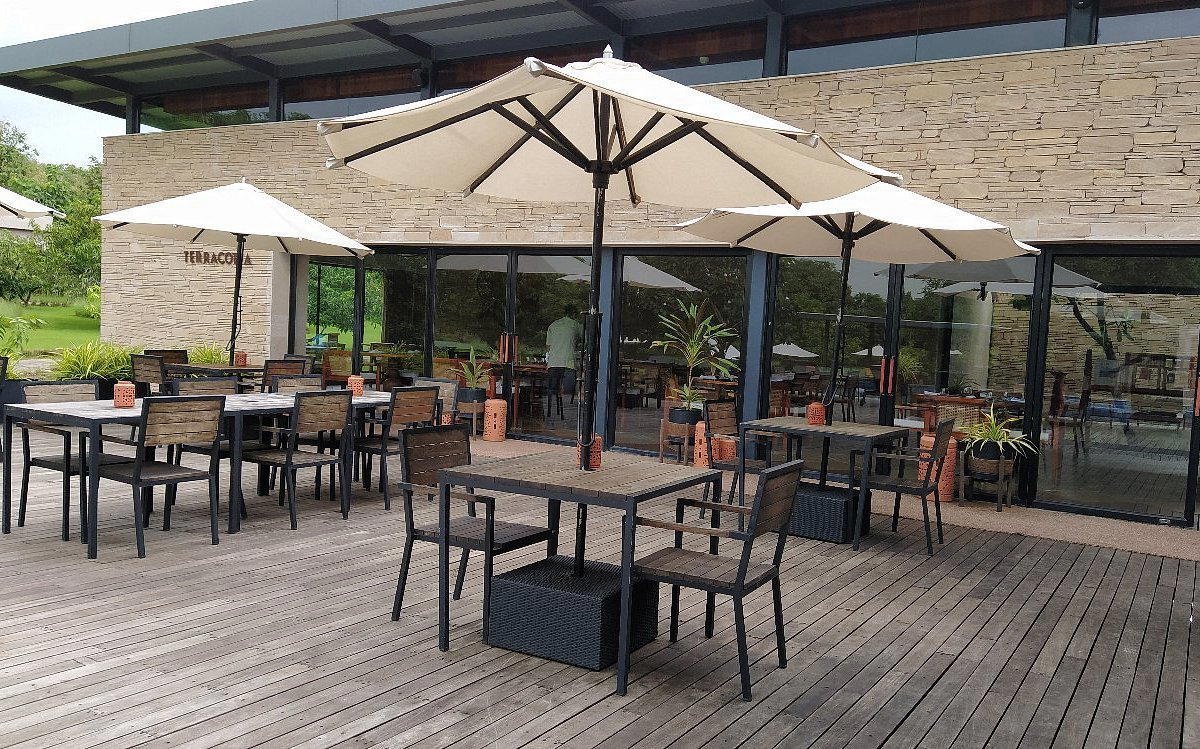
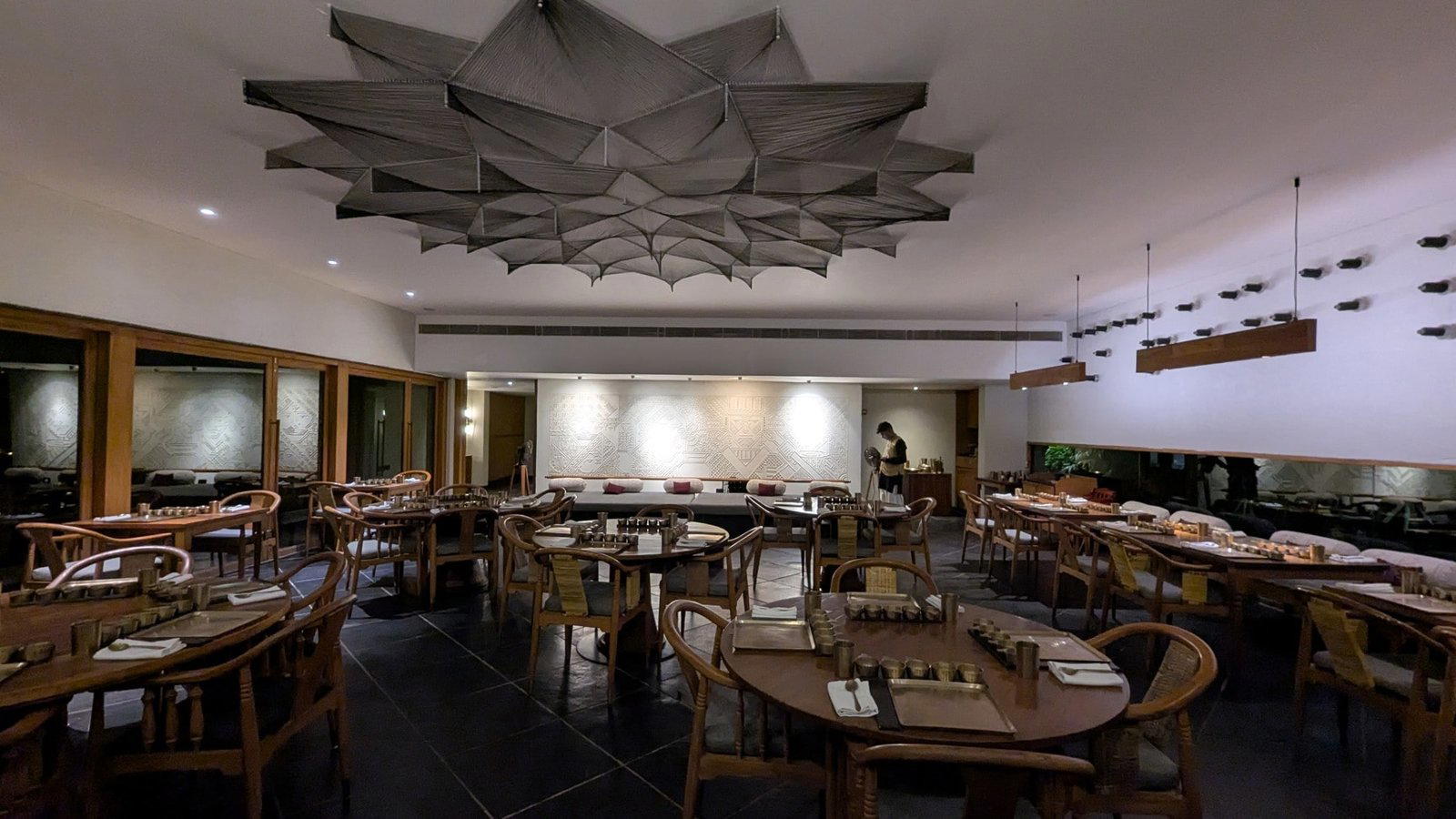
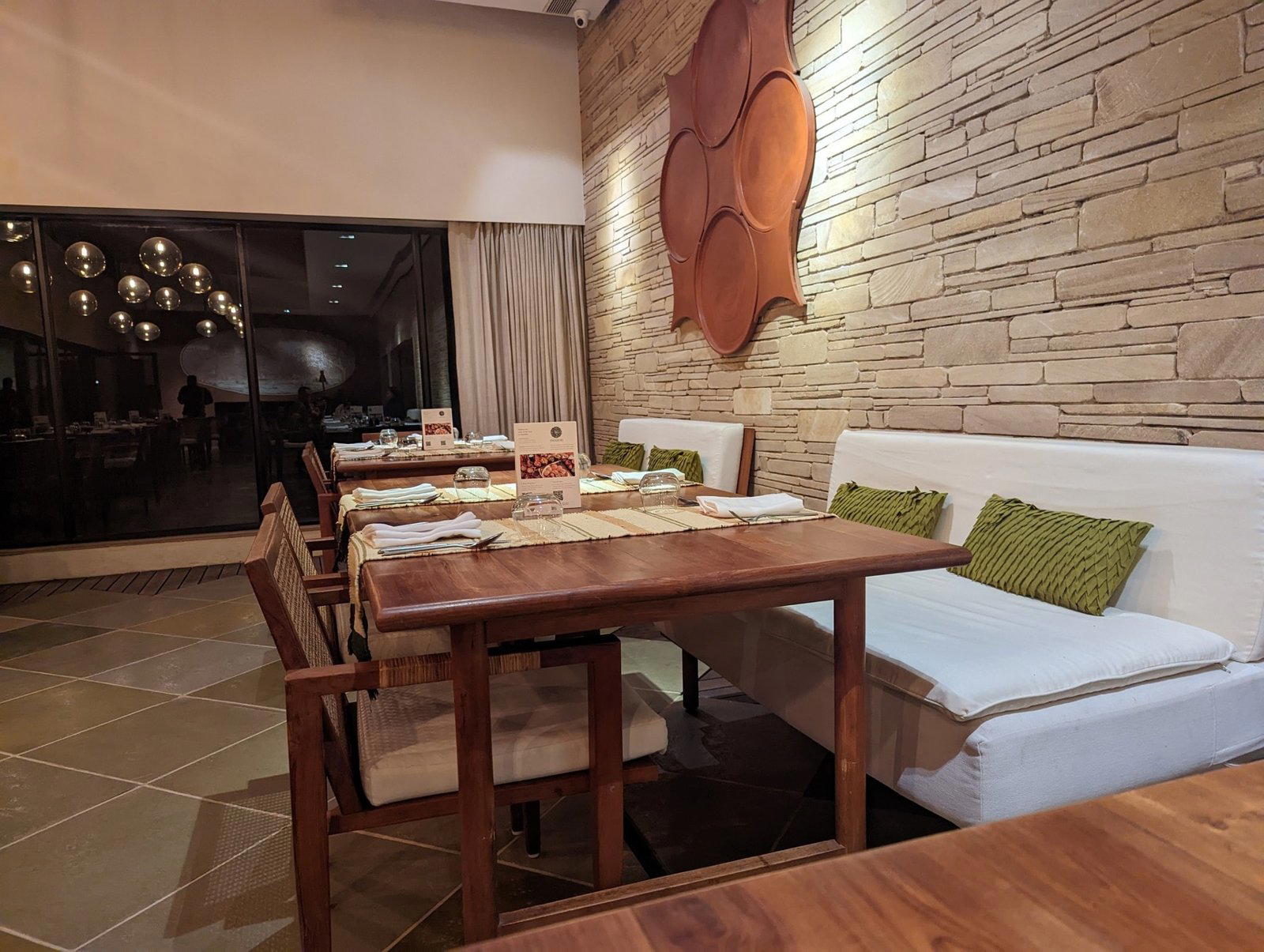
Warm contemporary interiors with floor-to-ceiling windows blending indoor spaces with lush gardens and forest views, creating a soothing, nature-immersed atmosphere.