
Michelin Selected
A Michelin Selected resort in Teshikaga, Hokkaido, Wakkanupuri sits at the edge of Akan-Mashu National Park, where the physical environment shapes the entire stay. The property belongs to a tier of Japanese retreats that treat landscape access as architecture, placing it alongside the country's most geographically committed rural properties.

Pearl is the En Primeur Club membership app — saves, bookings, and concierge access live there. Same editors, same standards.
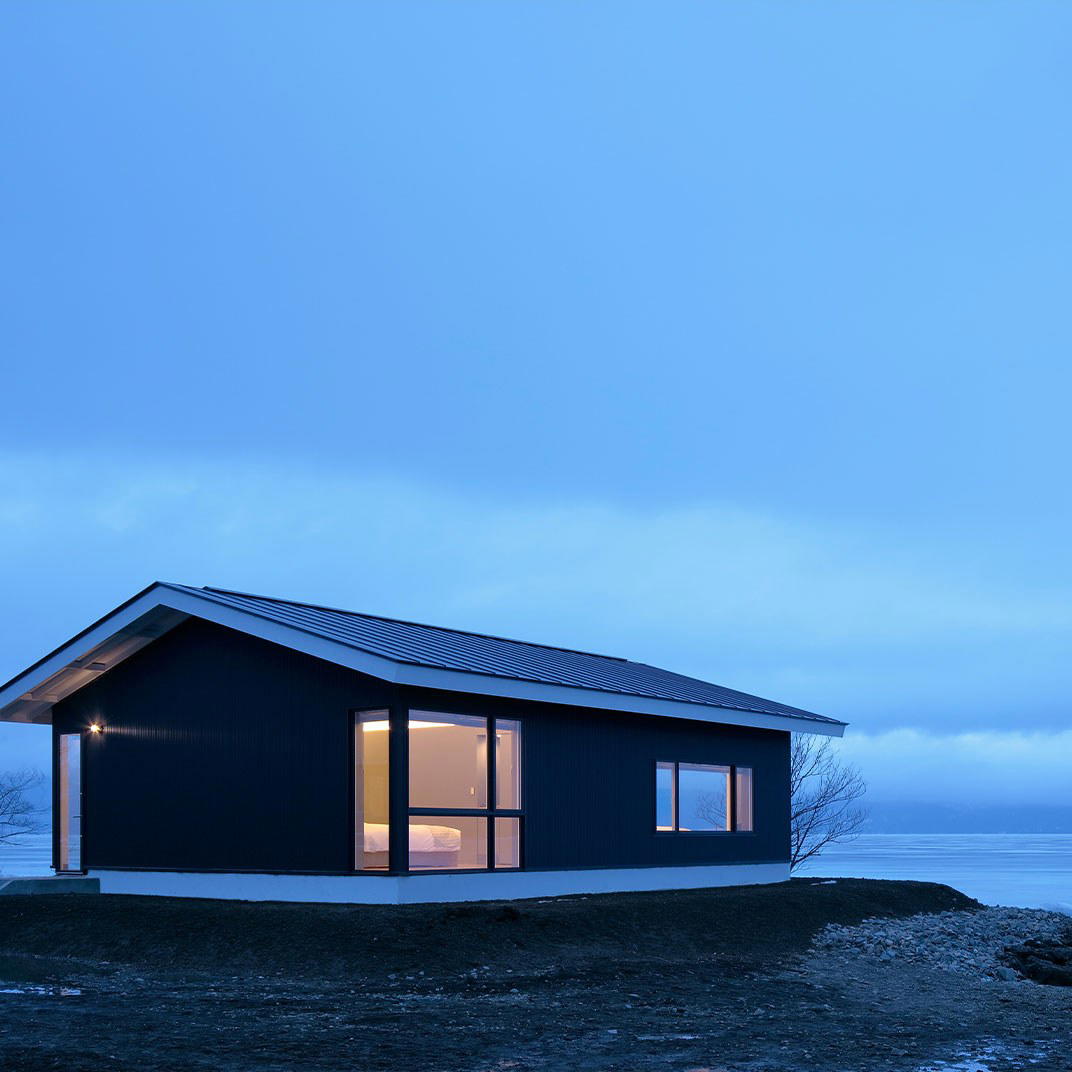
Where Hokkaido's Caldera Country Sets the Terms
Eastern Hokkaido has a way of shrinking human ambition to appropriate scale. The plateau around Teshikaga sits inside Akan-Mashu National Park, a protected zone of volcanic lakes, thermal vents, and sub-alpine forest that has been largely off-limits to mass development. Properties that operate here do so on the landscape's terms, not the other way around. What unites that cohort is not style uniformity but a shared logic: the site is the primary design decision.
The Architecture of Restraint
Japanese resort design in volcanic regions has developed its own grammar over decades. The most disciplined examples treat built form as a frame rather than a spectacle, orienting windows, corridors, and communal spaces to maximize uninterrupted engagement with whatever geological event sits outside. In Teshikaga, that event is the calderas — Lake Mashu, Lake Kussharo, and Mount Io, a concentrated cluster of volcanic formations that are among the most dramatic in Hokkaido. Properties working in this register tend toward low horizontal profiles, natural materials that weather into the surrounding palette, and minimal internal ornamentation that would compete with what is visible through the glass.
This approach places WAKKANUPURI in a distinct design category within Japanese hospitality. Compare it to Zaborin in Kutchan, which applies a similarly pared-back material logic to the Niseko ski zone, or Benesse House in Naoshima, where the relationship between architecture and natural setting is the explicit curatorial program. At the other end of the spectrum, urban properties like Bvlgari Hotel Tokyo or HOTEL THE MITSUI KYOTO derive their design identity from city context and materials heritage rather than site geology. The distinction matters when choosing where to stay: one mode asks you to read the room, the other asks you to read the land.
The Landscape as the Program
Teshikaga's appeal as a destination rests on a relatively concentrated menu of natural phenomena accessible within a short radius. Lake Mashu, consistently ranked among the clearest lakes on the planet by water transparency measurements, sits roughly 20 kilometres from the town centre. Lake Kussharo, the largest caldera lake in Japan by surface area, is closer. Mount Io (Iozan) is an actively sulphurous stratovolcano where thermal activity is visible at ground level without hiking. This density of geological features in a small geographic area is unusual even by Hokkaido standards, and it shapes the rhythm of stays at any property in the zone.
The region sits firmly in Hokkaido's cooler climate band. Summers are mild and short, with July and August offering the most reliable conditions for outdoor exploration and the widest range of active itineraries. Autumn accelerates into strong foliage colour by mid-October, and the national park's elevation means that first snow can arrive before November. Winter stays are feasible and carry their own intensity, though access logistics require more planning than a summer or autumn visit. Spring arrives late by mainland Japanese standards, with snowmelt continuing into May at higher elevations. For visitors prioritising landscape visibility and outdoor activity range, late July through mid-October represents the most productive window.
Placing Wakkanupuri Within the Japanese Rural Resort Tier
The Michelin Selected designation situates WAKKANUPURI within a quality band that operates below Michelin Key status but above unrecognised accommodation. Across Japan, this tier includes a wide range of ryokan-style and resort properties that have cleared the guide's quality threshold without necessarily attracting the editorial spotlight of major city hotels. Properties like Fufu Nikko in Nikko, Nishimuraya Honkan in Kinosaki-cho, and Satoyama-Jujo in Niigata occupy similar positions in their respective regional contexts, each operating as the considered choice within a destination where the surroundings carry more editorial weight than the property alone.
Within Hokkaido specifically, the resort segment has developed two identifiable clusters. The Niseko-adjacent tier, represented by Higashiyama Niseko Village, a Ritz-Carlton Reserve, draws international ski tourism and has aligned itself with global luxury branding. Eastern Hokkaido, by contrast, attracts a different traveller profile, one oriented toward wildlife, hot springs, and national park access rather than resort amenity stacking. WAKKANUPURI's positioning in Teshikaga rather than the western ski corridor is itself an editorial statement about what kind of Hokkaido experience the property is selling.
For reference points further afield in Japan's thermal resort tradition, Asaba in Izu and Kamenoi Besso in Yufu represent the more established end of the onsen resort spectrum, with longer operating histories and stronger name recognition. Properties like Fufu Kawaguchiko and Fufu Kyu-Karuizawa Restful Forest operate in more accessible landscapes but share the emphasis on natural setting as the primary draw. Wakkanupuri's relative remoteness within this peer group is both its constraint and its distinction.
Getting There and Planning the Stay
Teshikaga is accessible from Memanbetsu Airport (the nearest major airport, serving Hokkaido's eastern region) or from Kushiro Airport, both of which receive direct flights from Sapporo's New Chitose Airport and, seasonally, from Tokyo. Road travel from either airport takes approximately one to two hours depending on the specific point of origin and route. The town is not on Hokkaido's main rail spine, which means a hire car or arranged transfer is practical rather than optional for guests who want to reach the national park's viewing points independently. The address, Biruwa 1-202, Kawakami-gun, Teshikaga, places the property within the administrative district that covers much of the caldera zone, and the Biruwa area sits on refined ground with proximity to the national park boundary.
For guests building a broader Japan itinerary around a stay here, eastern Hokkaido functions most efficiently as a standalone segment rather than a casual add-on to a city-focused trip. The distances between Tokyo or Kyoto and Teshikaga are substantial, and the property's value compounds with at least three nights rather than a single overnight. Those travelling from international gateway cities might consider Nasu Mukunone in Nasu or Atami Izusan Karaku in Atami as domestic counterparts that share the thermal landscape logic but sit much closer to Tokyo. See our full Teshikaga restaurants and travel guide for broader context on the destination.
Comparison Snapshot
Comparable venues nearby, for context on price, style, and recognition.
| Venue | Cuisine | Price | Awards | Notes |
|---|---|---|---|---|
| WAKKANUPURI RESORTSThis venue (the venue you are viewing) | Modern minimalist design complementing natural surroundings with Nordic-style décor and contemporary Japanese aesthetics. | Not listed | Michelin Selected | Not listed |
| Monjuso Shorotei | Traditional Japanese ryokan blending heritage architecture with modern luxury. | $300–500 | Michelin Selected | Amanohashidate |
| Yamanoo | Traditional luxury ryokan blending Japanese heritage with serene luxury. | $500–750 | Not listed | Higashiyama Higashi Chaya District |
| Bed and Craft | craft-focused renovated historic buildings | $100–200 | Michelin Selected | Inami |
| 果実の森〜世界遺産の隠れ宿〜 | Hidden hot spring retreat in fruit forest | Not listed | 3-Star | 赤荻 |
| Arimasansoh Goshobessho | Traditional Japanese ryokan villa with Western influences | $500–750 | Michelin Selected · Mr & Mrs Smith Seal of Approval | Kita |
Recognition history
Dated appearances from independent guides and award organizations, with the underlying list record or original source where available.
Michelin Selected
Michelin
Continue exploring
More in Teshikaga
Restaurants in Teshikaga
All restaurants in Teshikaga →
Details
- Minimalist
- Scenic
- Quiet
- Romantic
- Intimate
- Romantic Getaway
- Wellness Retreat
- Weekend Escape
- Private Villa
- Waterfront
- Panoramic View
- Destination Spa
- Wi Fi
- Air Conditioning
- Restaurant
- Garden
- Spa
- Waterfront
- Garden
Serene and tranquil with natural light from expansive picture windows overlooking the lake, warmed by wood-burning fireplaces, designed to immerse guests in the natural landscape.