Thompson Zihuatanejo


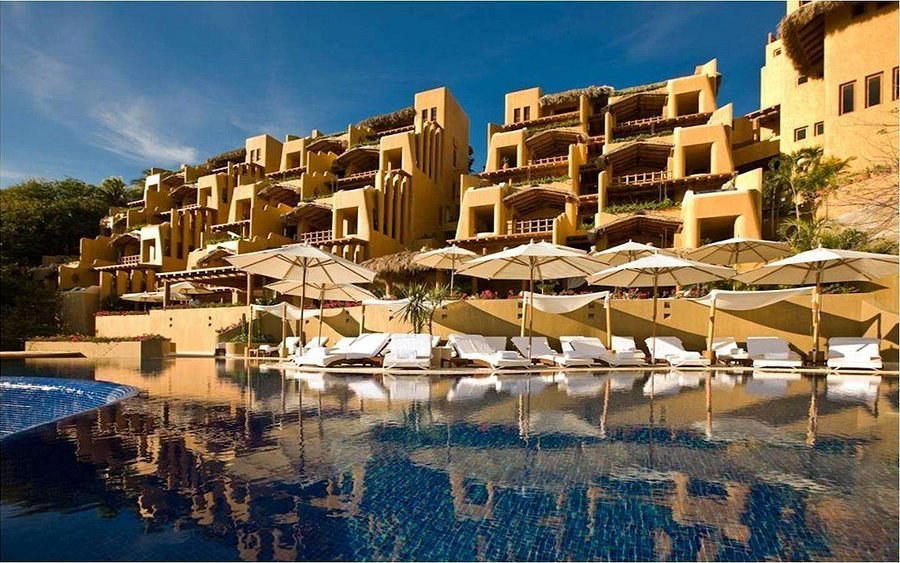
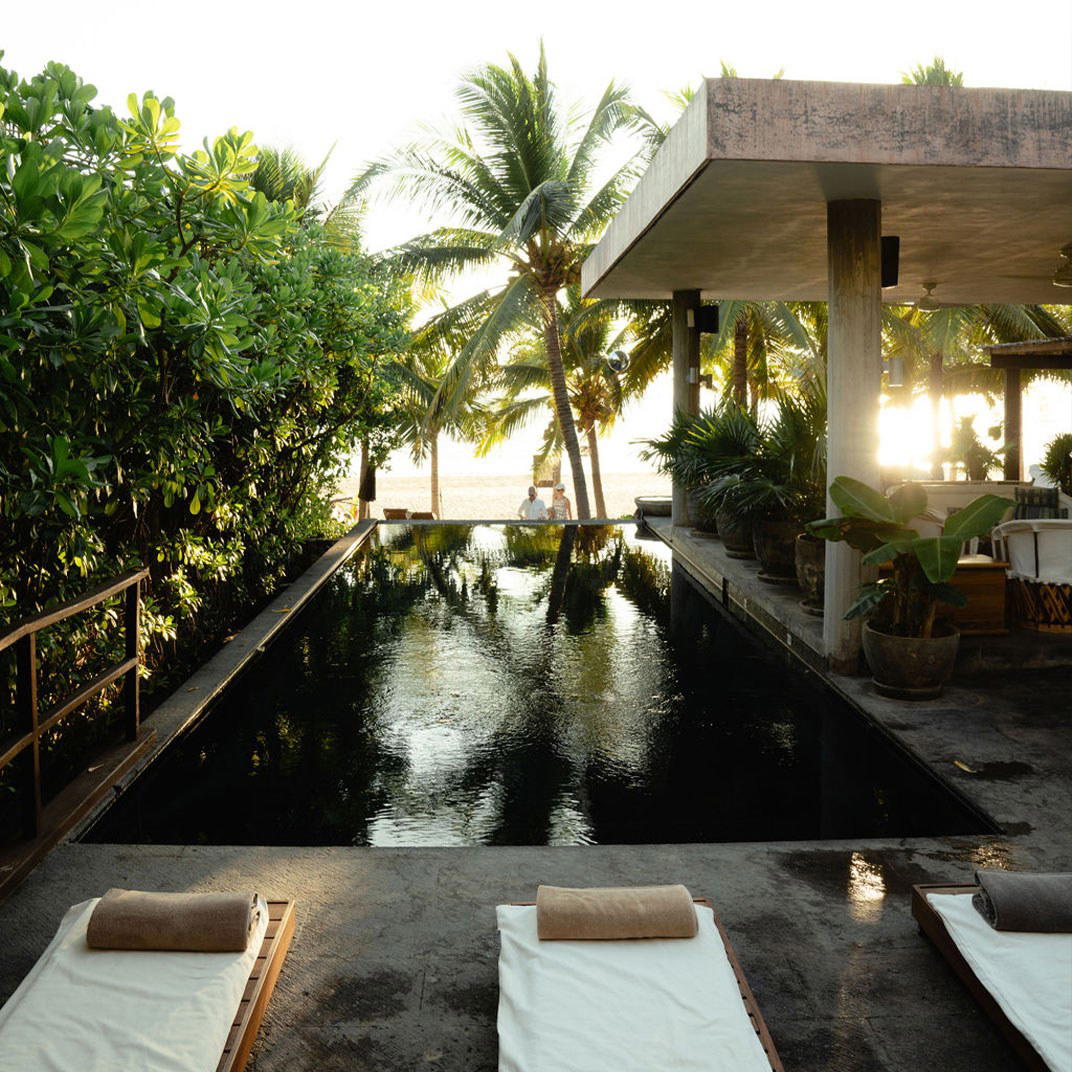
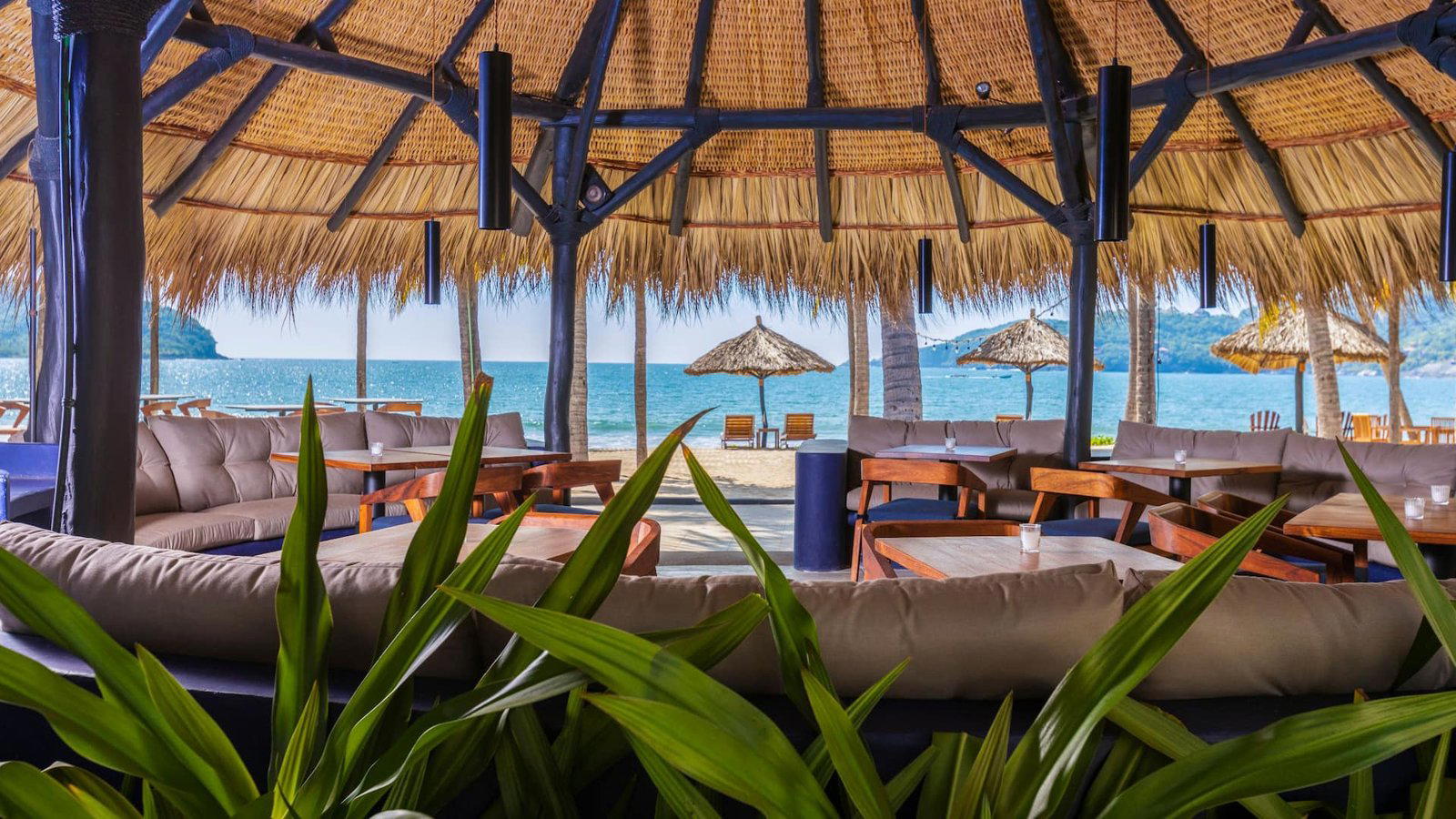
On Playa La Ropa, one of Zihuatanejo's most sheltered and swimmable stretches of Pacific coastline, Thompson Zihuatanejo positions itself in the upper tier of Guerrero coast resorts — a beachfront property where direct sand access, water sport programming, and spa facilities are woven into a single address. It sits closer to the bay's calm centre than the Ixtapa hotel corridor, which changes the character of a stay considerably.
Pearl is the En Primeur Club membership app — saves, bookings, and concierge access live there. Same editors, same standards.
- Address
- Playa La Ropa
- Phone
- +52 755 555 5500
- Directions
- Get directions
 Saves & bookings on Pearl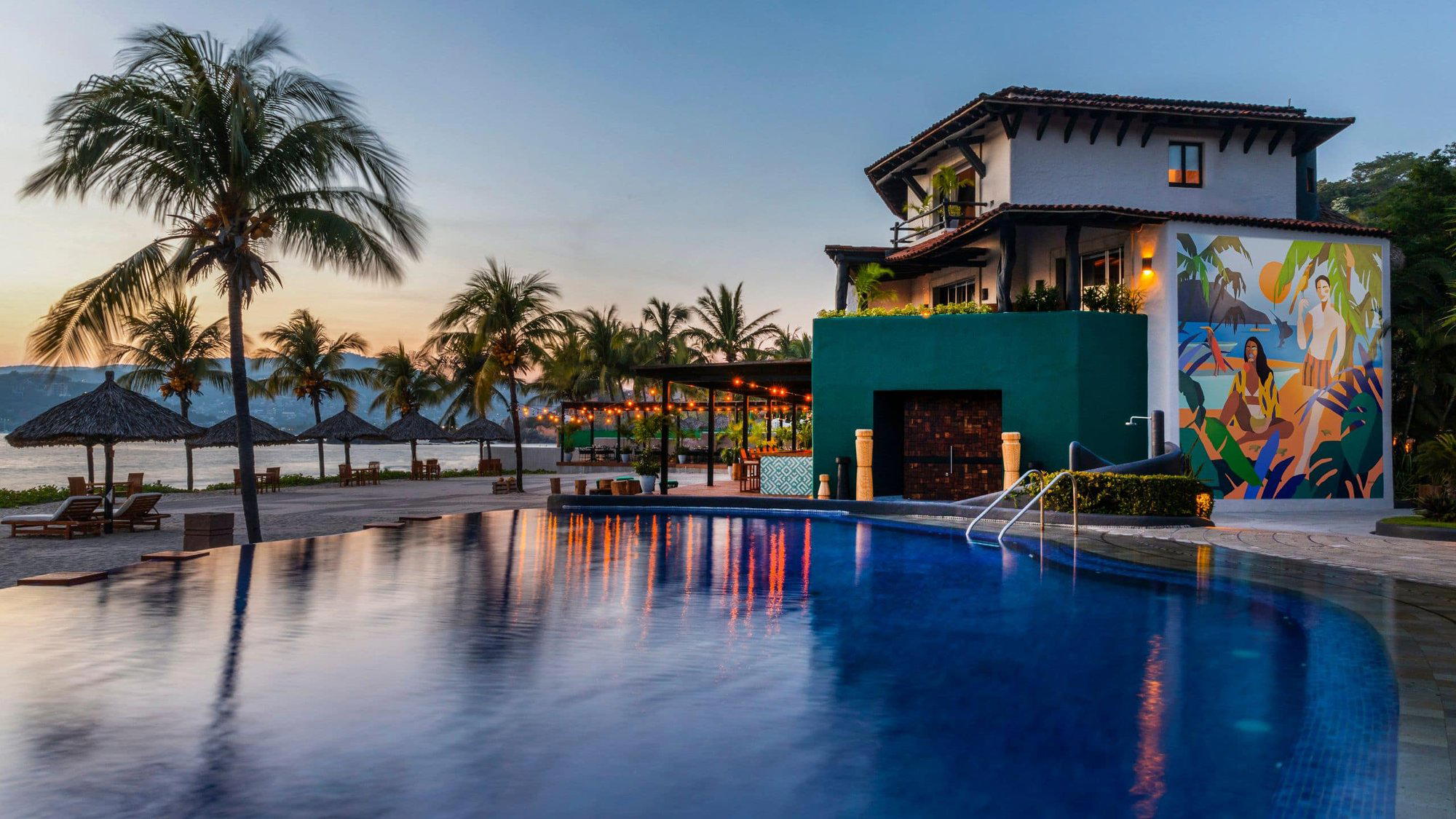
What the Address Actually Provides
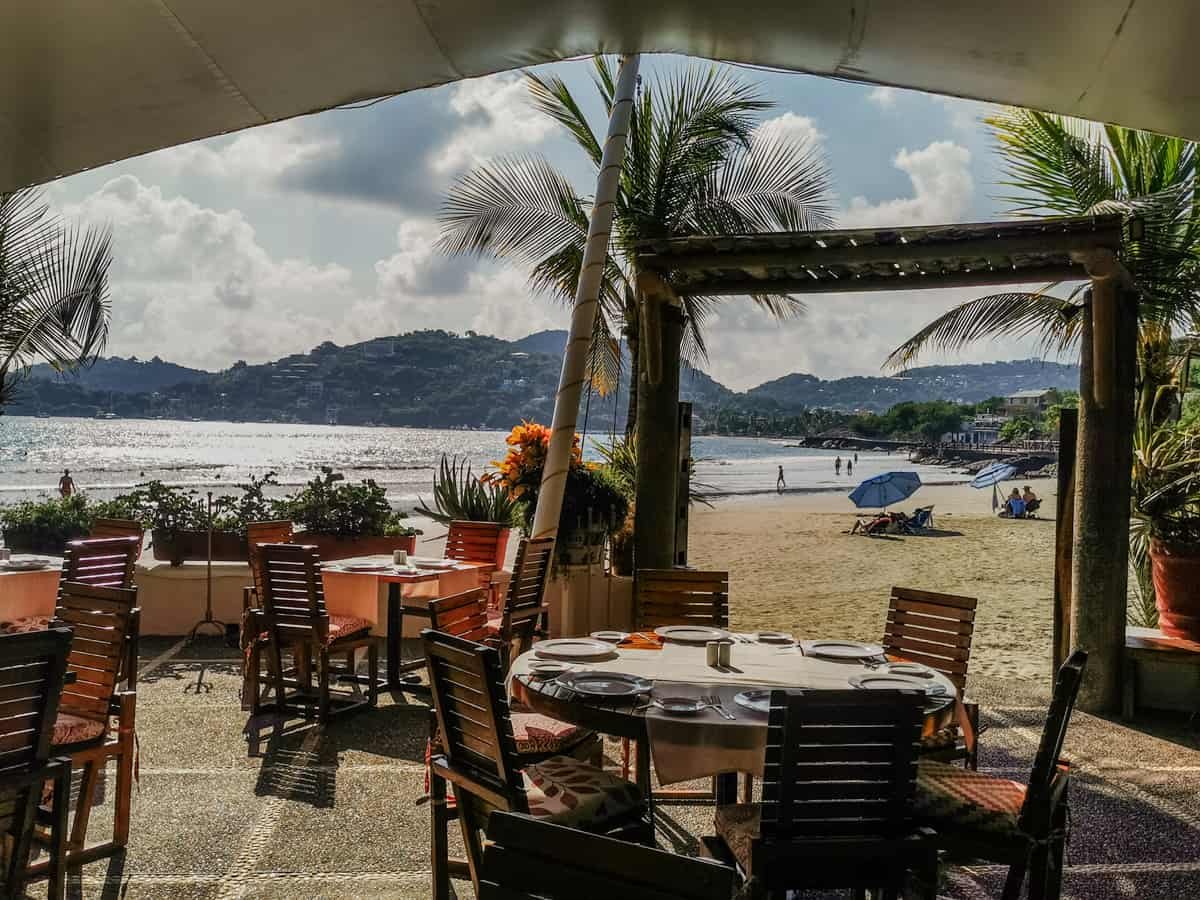
Playa La Ropa is not an arbitrary location choice. Of the several beaches within Bahía de Zihuatanejo, it consistently draws the distinction of being the bay's most swimmable stretch — a wide, gently curved arc of sand where the protected bay geometry keeps the surf calm enough for daily ocean entry without conditions that require monitoring. Resorts positioned here benefit from something that beachfront properties on Mexico's more exposed Pacific-facing coastlines cannot reliably offer: water you can walk into every morning without reading the forecast first.
Thompson Zihuatanejo sits directly on this stretch. The bay's horseshoe shape means the property faces inward toward the water rather than outward toward open ocean, so the views are layered — fishing boats at anchor in the middle distance, the low green hills of the opposite shore, the Zihuatanejo town pier visible in the far corner of the bay. This is materially different from a resort positioned on an ocean-exposed beach, where the horizon is unbroken but the foreground is often rougher. Here, the foreground is part of the experience.
The town of Zihuatanejo itself is reachable by water taxi from the municipal pier, placing the property at the intersection of resort seclusion and access to a functioning Mexican fishing town with its own markets, seafood restaurants, and street-level activity. That proximity matters for guests who want resort infrastructure without the sealed-off quality that can define large all-inclusive corridors. The nearby Ixtapa hotel zone, a planned development roughly six kilometres to the north, operates on a different logic entirely, higher capacity, less integration with the local economy, more international-chain density. Thompson's Playa La Ropa address places it in contrast to that model, closer in character to the boutique tier represented by properties like La Casa que Canta, which occupies the clifftop above the bay, and Punta Ixtapa, which takes a different position in the corridor between the two towns.
Positioning Within the Guerrero Coast
Mexico's Pacific resort market has continued to differentiate between high-volume destination complexes and properties that trade on address specificity and contained programming. Zihuatanejo sits outside the main circuits, it lacks the airport infrastructure of Los Cabos and the brand density of the Riviera Nayarit, which means the travellers who arrive have generally made a deliberate choice. That self-selection shapes the character of the destination more than any single property's branding effort can.
Along the broader Mexican Pacific coast, premium options have multiplied in concentrated zones. One&Only; Mandarina in Riviera Nayarit and Four Seasons Resort Punta Mita anchor the north; Las Ventanas al Paraíso, Montage Los Cabos, and Zadun, A Ritz-Carlton Reserve dominate the Baja peninsula. Zihuatanejo occupies a quieter band of that spectrum, with fewer properties competing for the same guest and a bay geography that concentrates the leading options within a contained radius. Cala de Mar Resort & Spa Ixtapa represents the Ixtapa-side alternative for guests who prefer the corridor's infrastructure. Thompson's Playa La Ropa position keeps it anchored to the bay rather than the planned zone.
For context on how Pacific coast properties at this tier compare more broadly, the Hotel Esencia in Tulum, Maroma in Riviera Maya, and Etéreo, Auberge Resorts Collection on the Caribbean side demonstrate how the market has moved toward design-led, address-specific properties rather than volume-based resort models. Zihuatanejo is the Pacific equivalent of that shift, operating with lower profile but comparable address logic. Further down the Guerrero coast, Playa Viva in Juluchuca takes an ecological approach to a similar coastline, while Hotel Punta Caliza in Lazaro Cardenas represents the region's more stripped-back end of the spectrum.
What the Programming Covers
The activity range at Thompson Zihuatanejo spans the full breadth of what the bay geography enables, parasailing and jet-skiing at the water activity end, alfresco spa treatments at the slower end. This breadth reflects Playa La Ropa's specific advantage: the calm bay water makes motorised water sports viable and comfortable, which is not a given on more exposed Pacific beaches where conditions fluctuate. Properties that can genuinely offer both active water programming and resort-pace wellness without either feeling compromised are less common than the category implies.
The wedding and event capacity noted in the property's positioning, ceremonies under coconut palms on the beach, reflects a broader trend in Mexico's premium beachfront market, where the ceremony-on-the-sand format has migrated from a niche offering to a primary revenue driver for properties in this tier. Zihuatanejo's relative quiet compared to Cancún or Los Cabos works in the property's favour for couples seeking that format without the production-line scale of the larger resort zones.
Planning a Stay
Zihuatanejo is served by Ixtapa-Zihuatanejo International Airport (ZIH), which receives direct connections from several US gateway cities, making access more direct than the destination's relative obscurity might suggest. The dry season runs roughly November through April, when Pacific-side humidity drops and afternoon cloud cover is minimal, the conditions that produce the clear bay views and reliable outdoor programming that define the property's offer. The shoulder months of May and October carry lower occupancy and more variable weather but remain workable for guests whose schedules allow flexibility.
Guests interested in exploring the broader Zihuatanejo dining and activity scene beyond the property can consult our full Zihuatanejo restaurants guide for current editorial recommendations across price tiers. The town's mercado de pescados and the malecón restaurants adjacent to the municipal pier represent the quickest route into the local food economy for those who make the water taxi crossing from Playa La Ropa.
Travellers building a wider Mexico itinerary might pair a Zihuatanejo stay with interior destinations: Casa de Sierra Nevada in San Miguel de Allende, Chablé Yucatán near Merida, or Casa Antonieta in Oaxaca City each offer a different register of Mexican hospitality that contrasts usefully with the Pacific coast beach format. For those drawn to other Pacific-facing properties with a comparable design-forward orientation, Xinalani in Quimixto and Las Alamandas in Costalegre both operate on the logic of address specificity over brand scale.
Recognition history
Dated appearances from independent guides and award organizations, with the underlying list record or original source where available.
Virtuoso Luxury Hotel Partner
Virtuoso
Michelin Selected
Michelin
Continue exploring
More in Zihuatanejo
Hotels in Zihuatanejo
Browse all →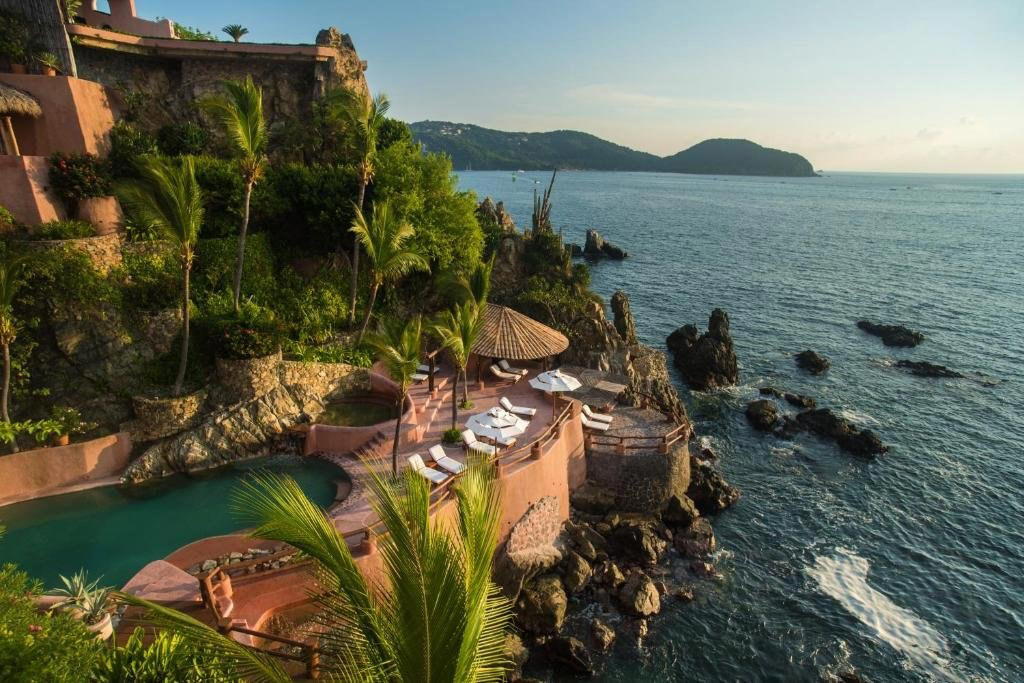
At a Glance
- Elegant
- Sophisticated
- Scenic
- Modern
- Honeymoon
- Romantic Getaway
- Family Vacation
- Wellness Retreat
- Beachfront
- Infinity Pool
- Rooftop Pool
- Wi Fi
- Pool
- Spa
- Fitness Center
- Room Service
- Concierge
- Valet Parking
- Beach Access
- Waterfront
- Wi Fi
- Pool
- Spa
- Fitness Center
- Room Service
- Concierge
- Valet Parking
- Beach Access
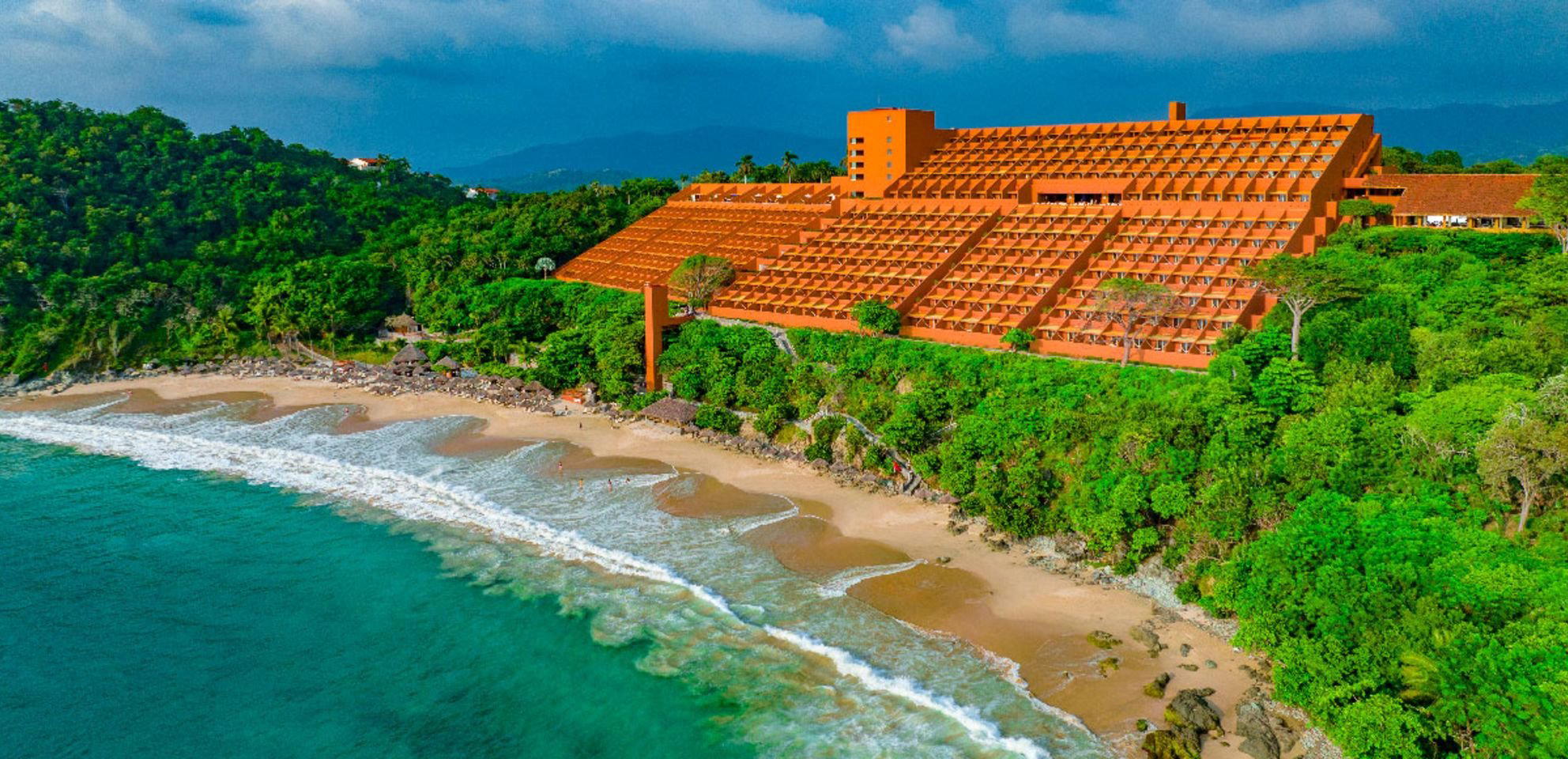
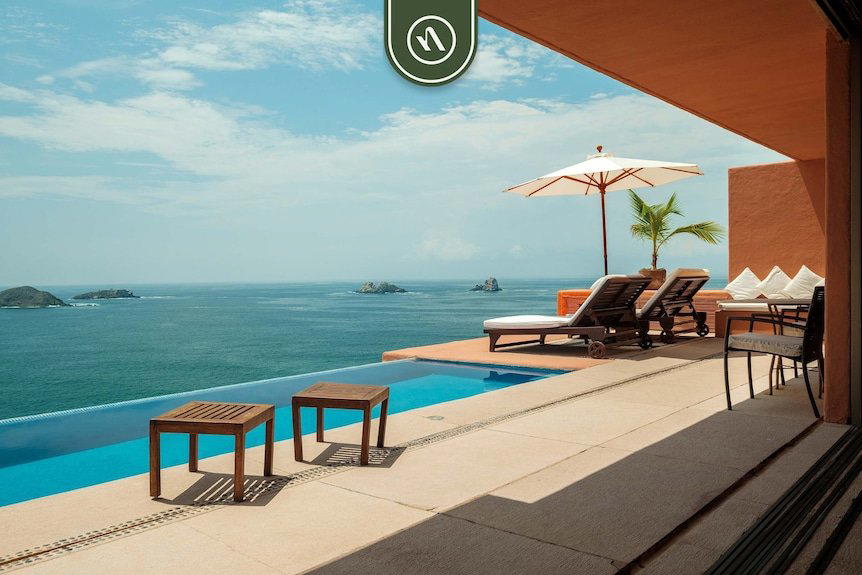
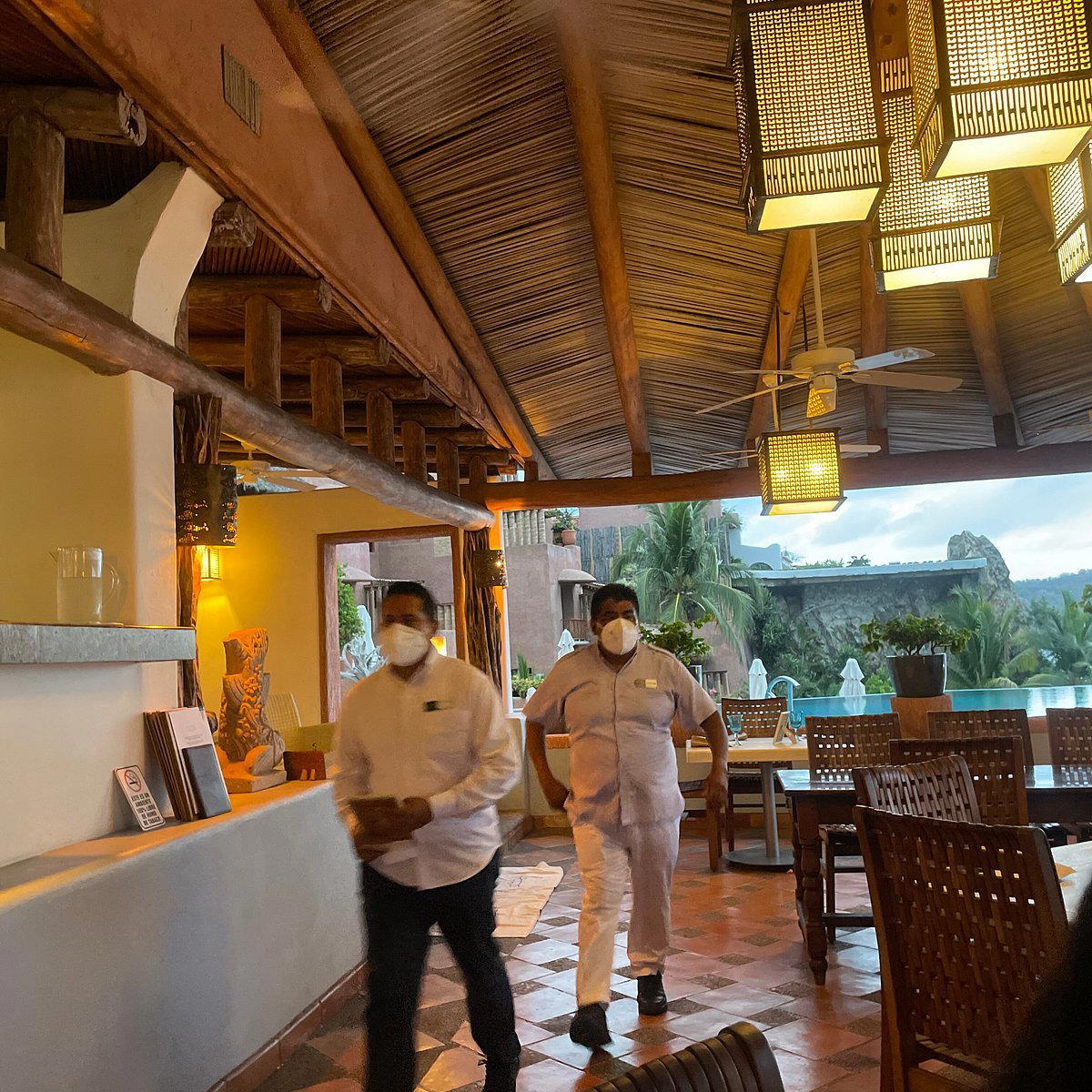
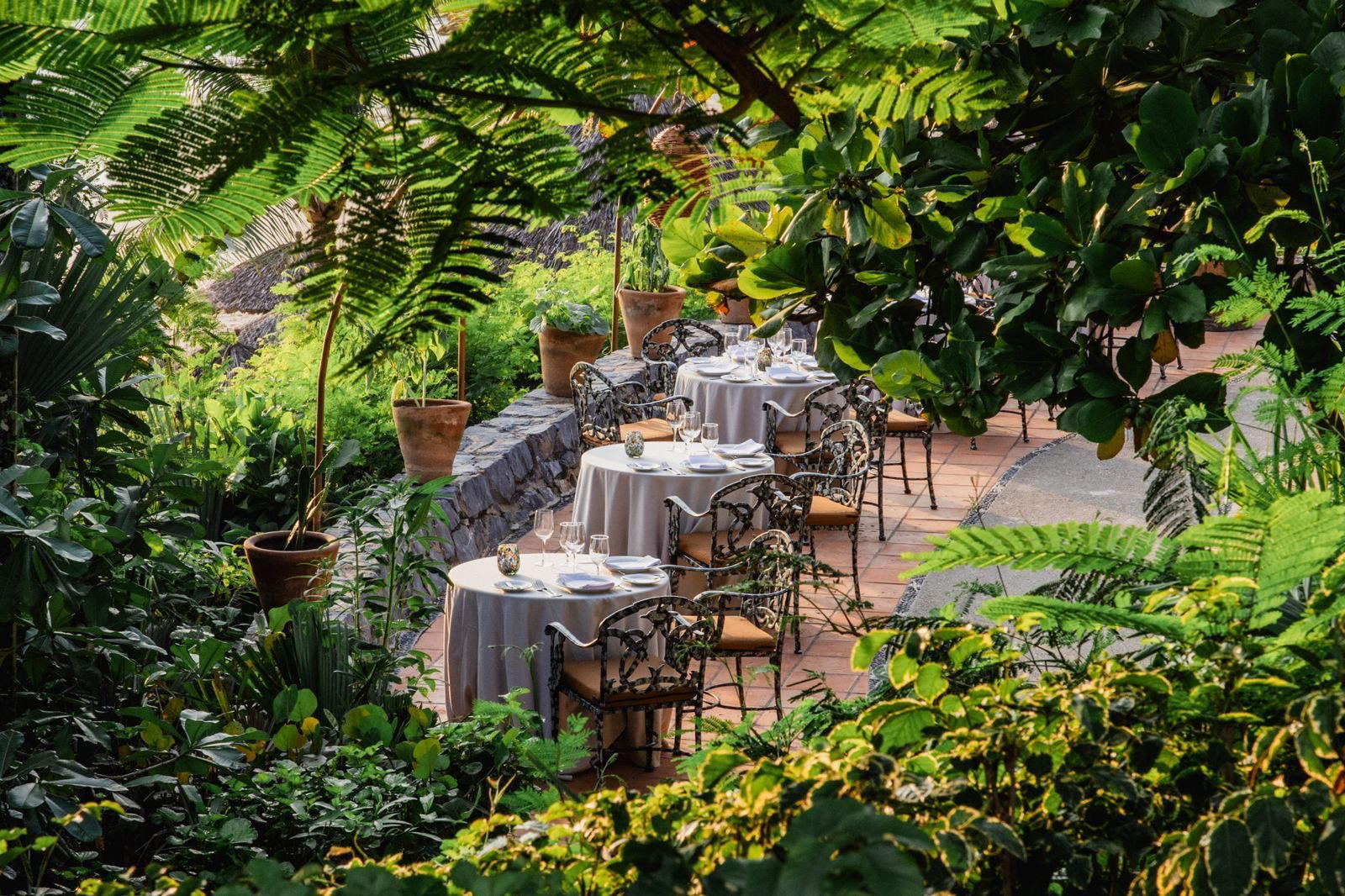
Sophisticated mid-century aesthetic with ocean views, tropical gardens, and relaxed beachfront atmosphere.
Know Before You Go
- Getting there
- Playa La Ropa