Punta Ixtapa
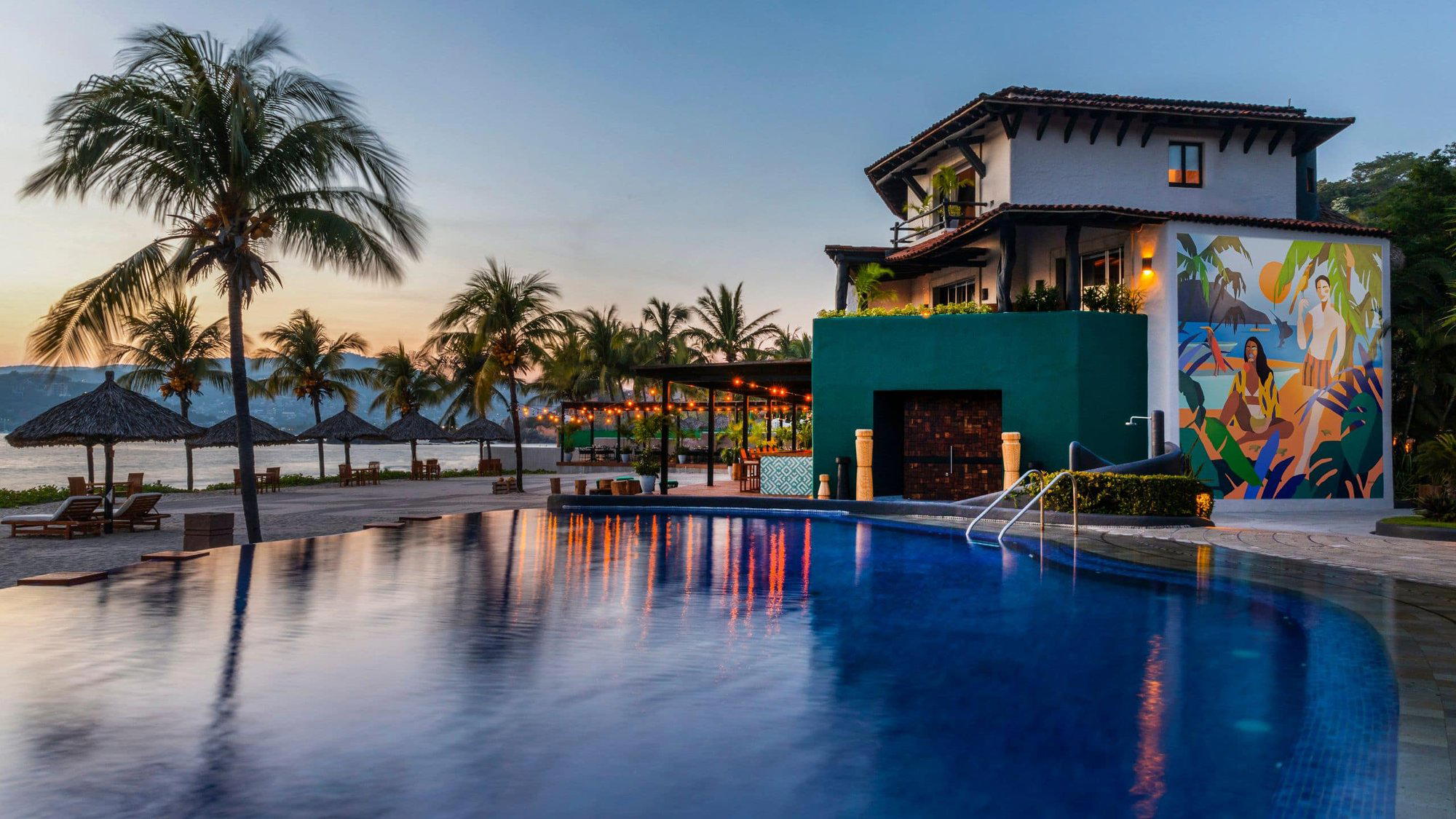
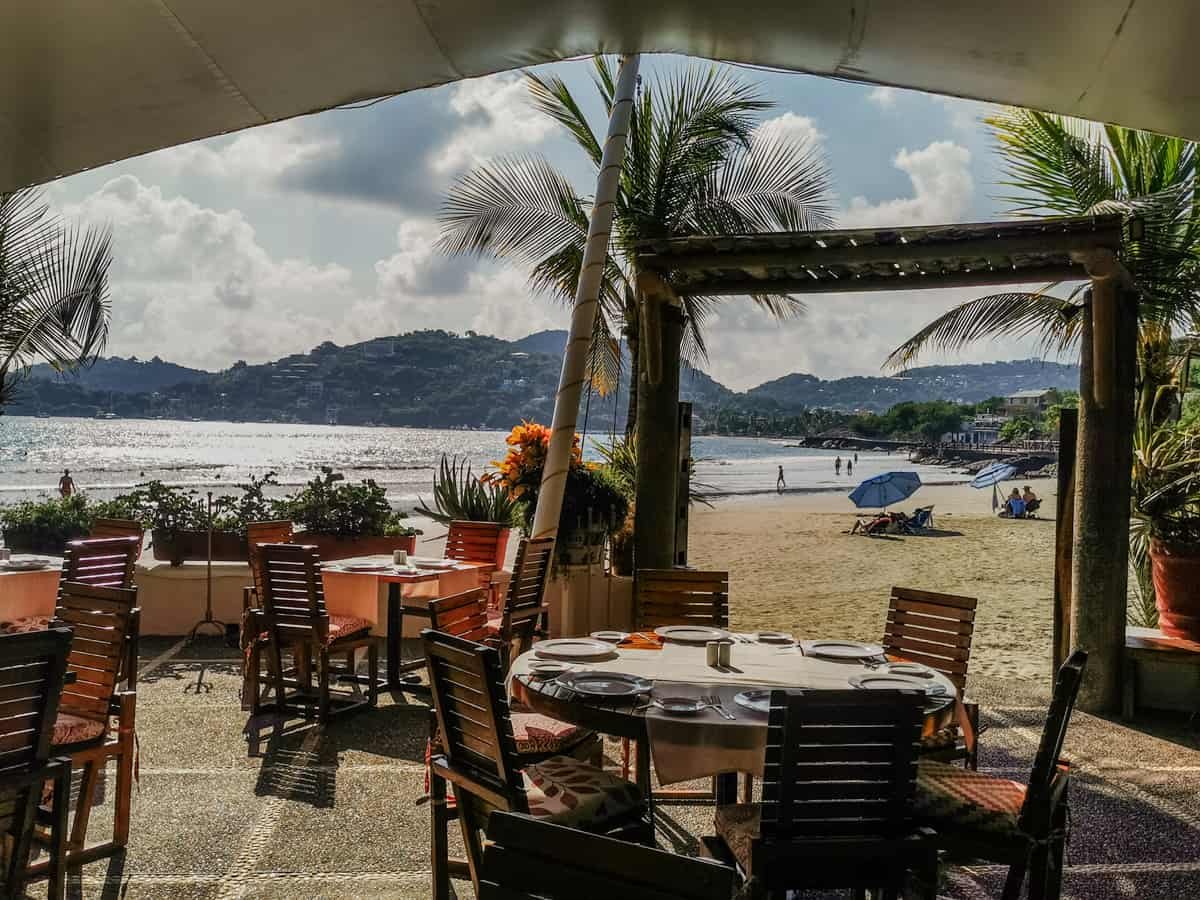
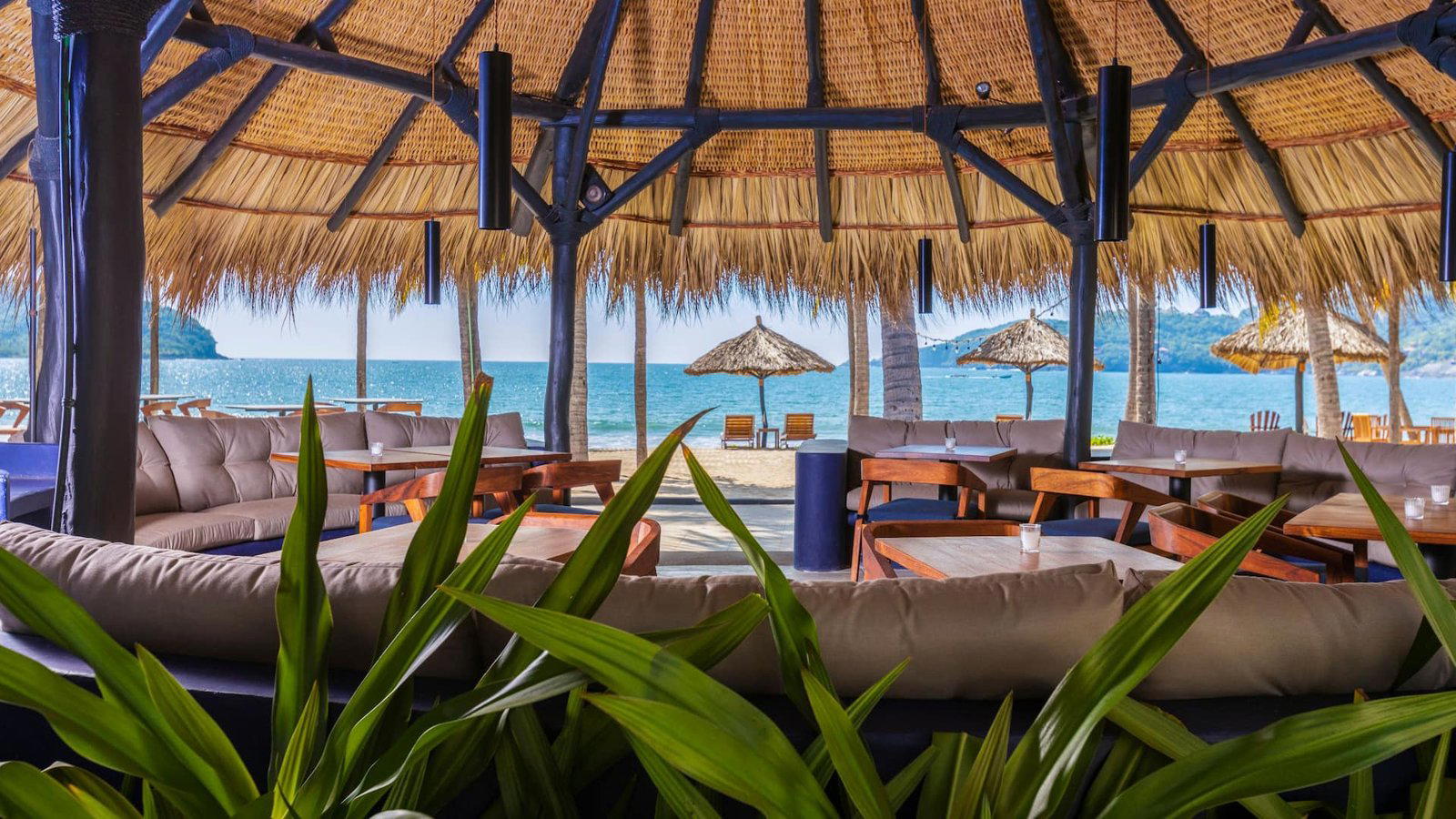
Punta Ixtapa sits on the Pacific coast of Guerrero, where the Ixtapa resort corridor meets the raw headland geography that shaped the region's architectural identity. The property occupies a position in Zihuatanejo's premium accommodation tier, drawing visitors who want direct engagement with the coastal landscape rather than insulation from it. It represents a distinct approach to Pacific Mexico lodging in a bay that has quietly maintained its character.
Pearl is the En Primeur Club membership app — saves, bookings, and concierge access live there. Same editors, same standards.
- Address
- 40880 Ixtapa, Guerrero, Mexico
- Directions
- Get directions
 Saves & bookings on Pearl
Where the Headland Meets the Resort Corridor
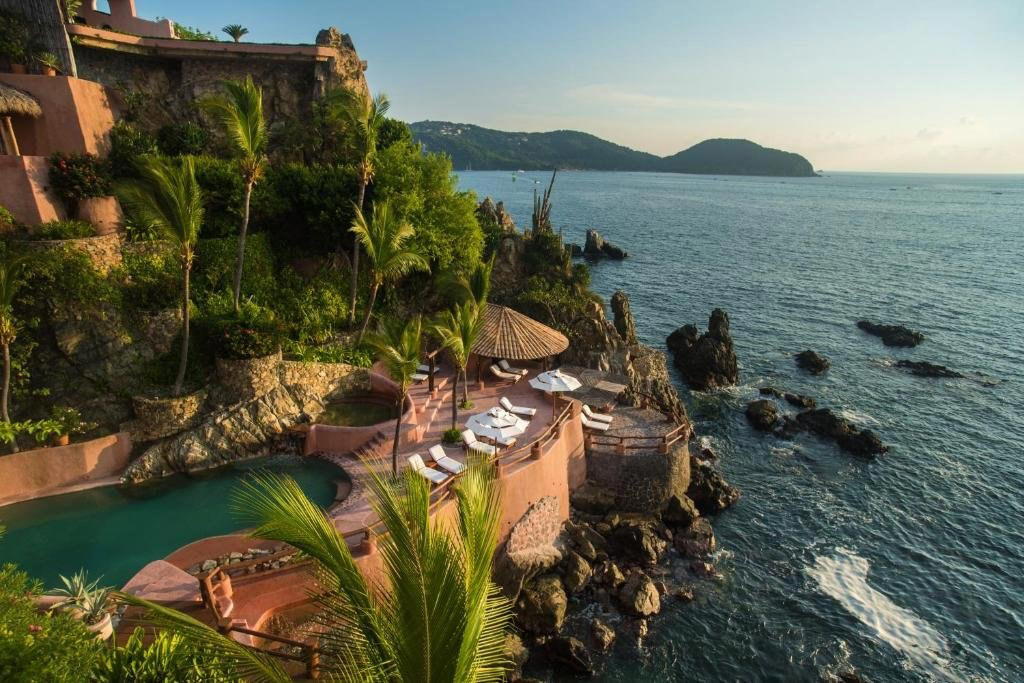
The Ixtapa coast has a particular relationship with its own geography. Unlike the flat, reclaimed strips of Cancún or the desert bluffs of Los Cabos, the Guerrero coastline around Zihuatanejo is defined by rocky promontories, cove-to-cove transitions, and a Pacific horizon that sits lower and more immediate than almost anywhere else on Mexico's western seaboard. Properties that occupy the actual headlands, rather than the flat resort belt of Boulevard Ixtapa, work with a fundamentally different spatial logic, one where elevation, cliff-face orientation, and wind direction shape every design decision before architects touch a pencil. Punta Ixtapa occupies this headland category, positioned in the 40880 postal zone of Ixtapa, Guerrero, at a point where the resort corridor gives way to the rawer topography that defines the cape itself.
This coastal geography has produced an accommodation tier in Zihuatanejo that splits meaningfully along one axis: properties that buffer guests from the environment and those that treat the landscape as load-bearing infrastructure. The headland approach belongs to the latter tradition. You feel it in how rooms are angled, how terraces cantilever over drop-offs, and how natural ventilation replaces mechanical systems during the drier months between November and April, when the region operates at its most agreeable. That seasonal window is worth noting: the Guerrero coast receives concentrated rainfall from June through October, and the properties that perform leading architecturally tend to be those designed with the dry-season visitor in mind, maximising the prolonged afternoon light that falls across the Pacific at this latitude.
The Architectural Logic of Cliff-Positioned Properties
Across Pacific Mexico's premium tier, the most considered properties share a design discipline that prioritises sightline management over floor-area maximisation. At Four Seasons Resort Punta Mita in Nayarit, the casita layout follows a low-profile arc that keeps ocean views unobstructed from multiple vantage points simultaneously. At One&Only; Mandarina in Riviera Nayarit, the clifftop treehouse concept takes this further by treating vertical distance from the water as an amenity rather than an obstacle. The Ixtapa headland presents a similar challenge: how to build into a landscape that already has a strong formal identity without flattening it into something generic.
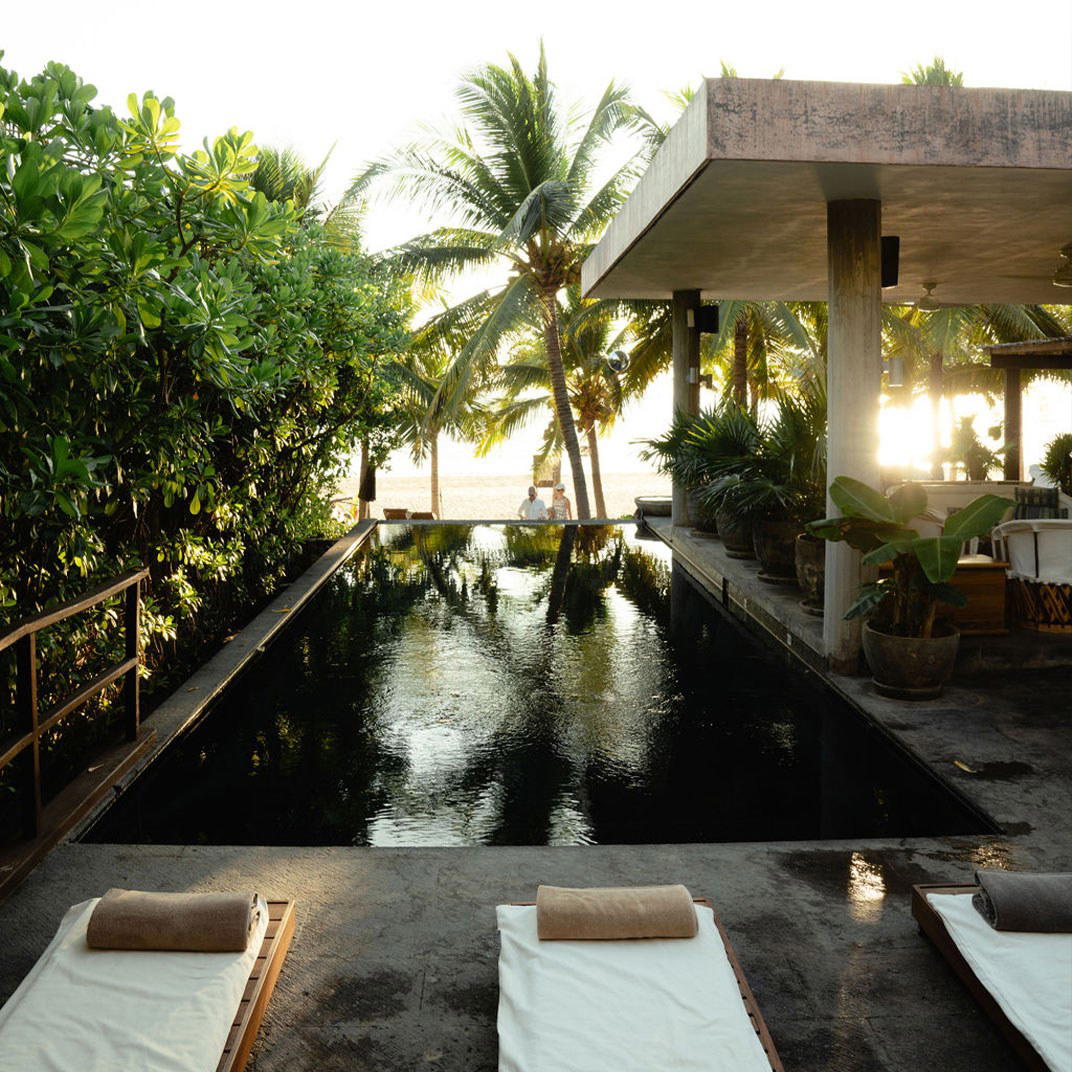
The better headland properties in this part of Guerrero tend to resolve that tension through material restraint and structural honesty, using concrete, local stone, and hardwoods in combinations that read as regionally grounded rather than internationally portable. This is an approach visible across Mexico's more architecturally serious coastal properties. Hotel Esencia in Tulum deploys a similar language on the Caribbean side, where the hacienda bones of the original structure set a tonal register that newer elements follow rather than override. Maroma in Riviera Maya operates on comparable principles. On the Pacific, where the light is more directional and the vegetation more arid in appearance, the material palette typically shifts toward rougher textures and stronger shadows, which gives even modest structures a solidity that lighter Caribbean builds lack.
Zihuatanejo's Position in the Pacific Mexico Premium Set
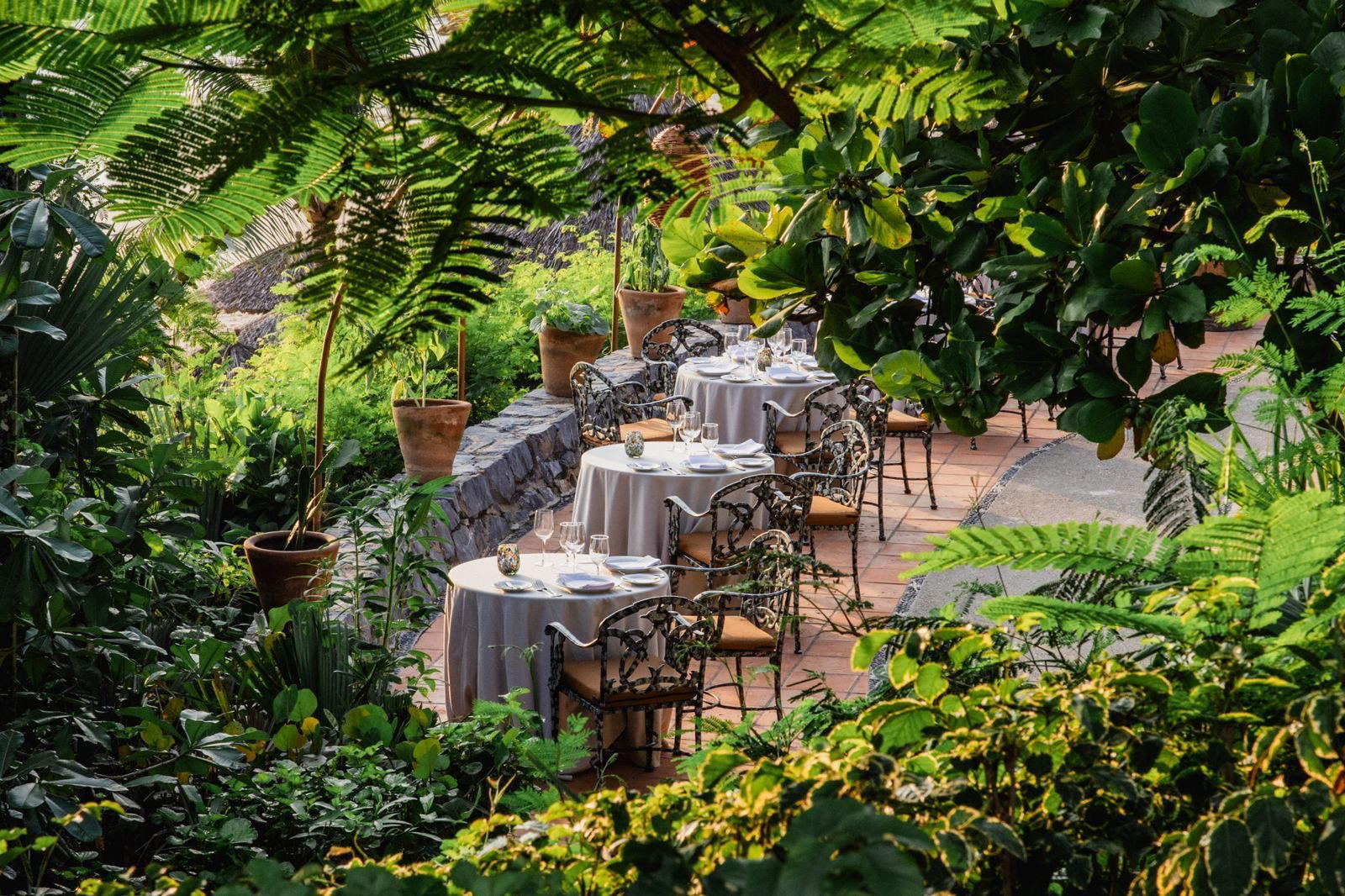
Within Mexico's premium coastal circuit, Zihuatanejo occupies a specific register. It is not Cabo, with its infrastructure for high-volume luxury and its proximity to US direct flights. It is not the Riviera Nayarit, where international groups have systematically built out a new tier of large-footprint resorts. Zihuatanejo is a smaller, more self-contained bay town that has maintained a local fishing-village identity in its downtown core, while the adjacent Ixtapa corridor developed as a planned resort zone in the 1970s. That dual character gives the area an uncommon range: visitors can move between the resort infrastructure of Ixtapa and the fresh seafood markets and open-air restaurants of Zihuatanejo's waterfront within a short transfer.
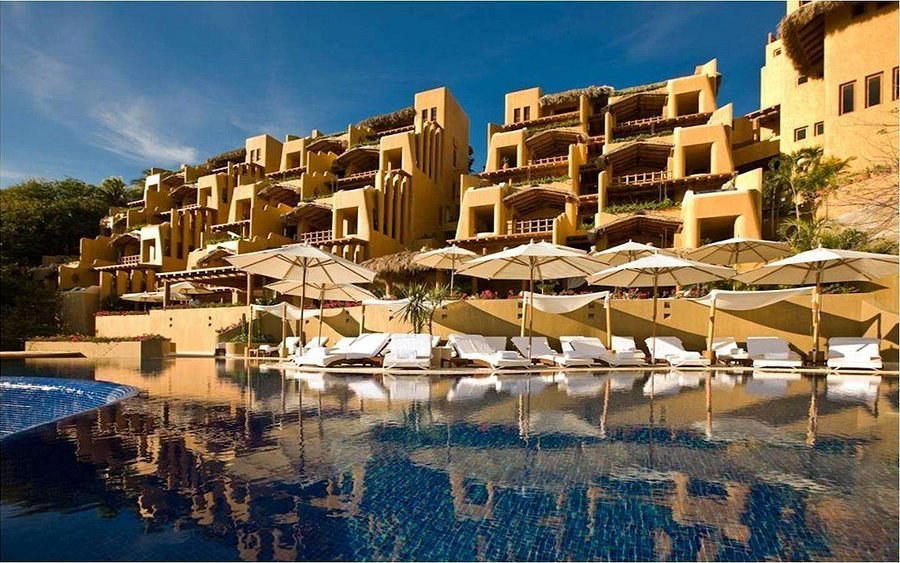
The premium properties clustered in and around this bay, including Cala de Mar Resort & Spa Ixtapa, La Casa que Canta, and Thompson Zihuatanejo, represent different points on a spectrum between resort-scale amenity and boutique intimacy. La Casa que Canta, for instance, has long anchored the cliff-position niche with a small room count and a design identity rooted in Mexican craftsmanship. Thompson Zihuatanejo operates at a different frequency, with a more design-forward contemporary language and a bar program calibrated for an internationally mobile guest. Cala de Mar sits closer to the full-service resort model. Punta Ixtapa occupies the headland geography of the Ixtapa end of this corridor, which places it in conversation with a different set of spatial conditions than the properties directly on Zihuatanejo Bay.
For travellers building a broader Pacific Mexico itinerary, this region sits in productive contrast to the more developed alternatives. Las Alamandas in Costalegre and Playa Viva in Juluchuca represent the more isolated, low-density end of the Pacific coast spectrum. Las Ventanas al Paraíso, A Rosewood Resort in San José del Cabo and Zadun, A Ritz-Carlton Reserve in Los Cabos operate in an entirely different infrastructure and price bracket. Zihuatanejo and the Ixtapa corridor offer a middle register: accessible enough to reach without complex logistics, but not yet homogenised by the volume of international development that has reshaped Cabo or the Riviera Maya.
For those extending a Mexico itinerary inland, Chablé Yucatán in Merida, Casa de Sierra Nevada, A Belmond Hotel, San Miguel de Allende, and Casa Polanco in Mexico City each represent a distinct architectural and cultural register that pairs well with a Pacific coast stay. Mexico City to Ixtapa/Zihuatanejo is served by domestic connections that make the combination practical within a ten-to-fourteen-day window.
Planning a Stay
The coastal Guerrero region receives the majority of its leisure visitors between late November and early April, when rainfall is minimal and the Pacific swell is most consistent. Visitors arriving outside this window should account for higher humidity, the possibility of tropical weather events in September and October, and reduced programming at some properties. The nearest commercial airport is Ixtapa-Zihuatanejo International (ZIH), served by domestic routes from Mexico City and Guadalajara, as well as seasonal US connections. Ground transfer from the airport to the Ixtapa resort zone takes approximately fifteen to twenty minutes. The full Zihuatanejo restaurants and hotels guide on EP Club covers the wider options across both the Ixtapa corridor and the Zihuatanejo Bay side.
A Quick Peer Check
| Venue | Cuisine |
|---|---|
| Punta IxtapaThis venue — the venue you are viewing | This venue |
Continue exploring
More in Zihuatanejo
Hotels in Zihuatanejo
Browse all →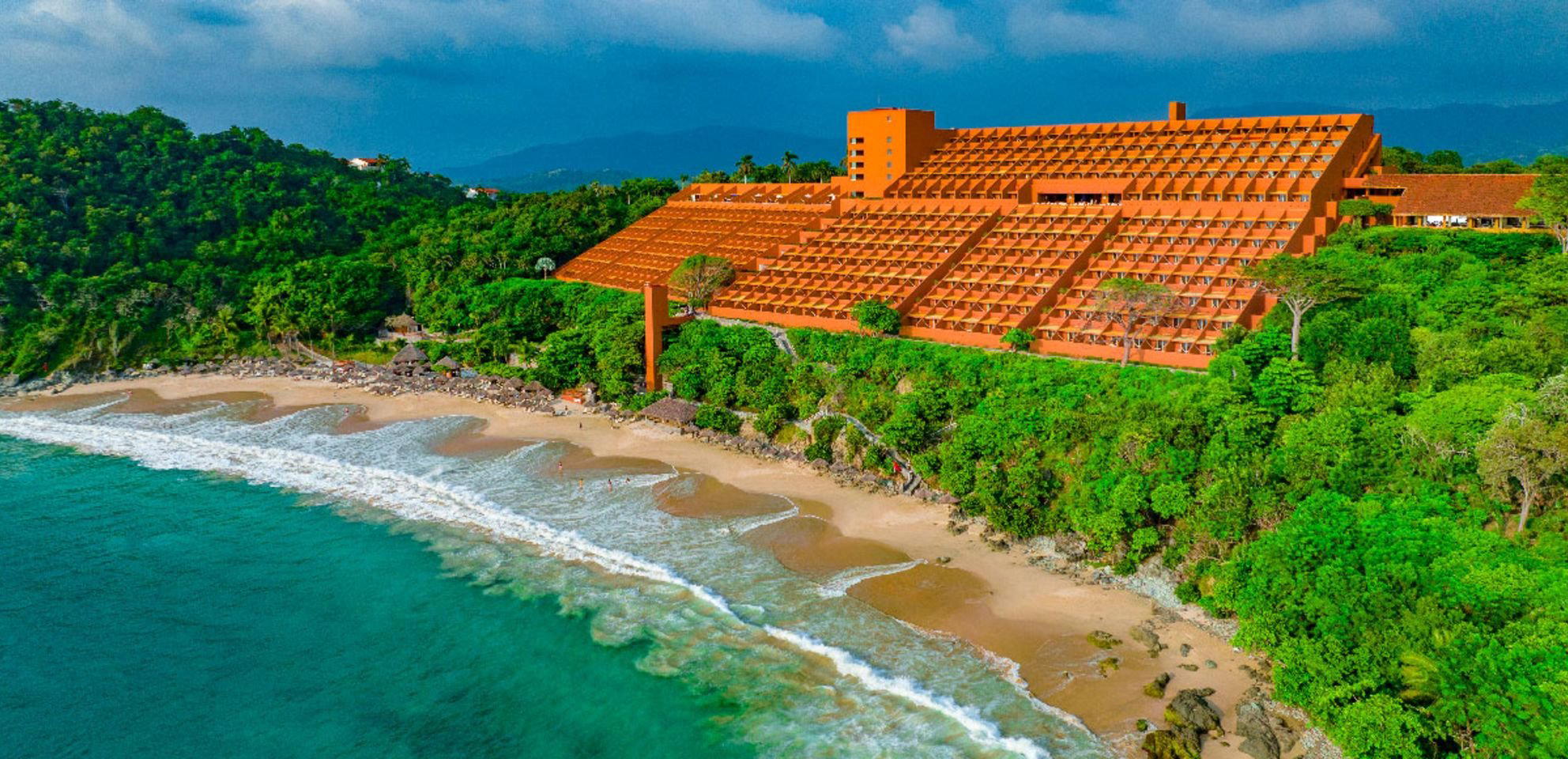

At a Glance
- Scenic
- Elegant
- Modern
- Family Vacation
- Romantic Getaway
- Group Retreat
- Beachfront
- Panoramic View
- Private Villa
- Garden
- Terrace
- Pool
- Beach Access
- Wi Fi
- Fitness Center
- Kids Club
- Waterfront
- Mountain
- Pool
- Beach Access
- Wi Fi
- Fitness Center
- Kids Club
Serene and sophisticated with emphasis on natural light and ocean vistas; designed to maximize views from south/southwest-facing towers.
Know Before You Go
- Getting there
- 40880 Ixtapa, Guerrero, Mexico