The High Line Hotel
Set inside a landmarked 1895 seminary building on West Chelsea's 10th Avenue, The High Line Hotel translates the neighbourhood's industrial-to-cultural arc into a design-led hospitality format. Gothic Revival architecture, a landscaped courtyard, and proximity to the refined park place it in New York's smaller, character-property tier rather than the conventional full-service hotel market.
Pearl is the En Primeur Club membership app — saves, bookings, and concierge access live there. Same editors, same standards.
- Address
- 180 10th Ave, New York, NY 10011
- Phone
- +1 212 929 3888
- Website
- thehighlinehotel.com
- Directions
- Get directions
 Saves & bookings on Pearl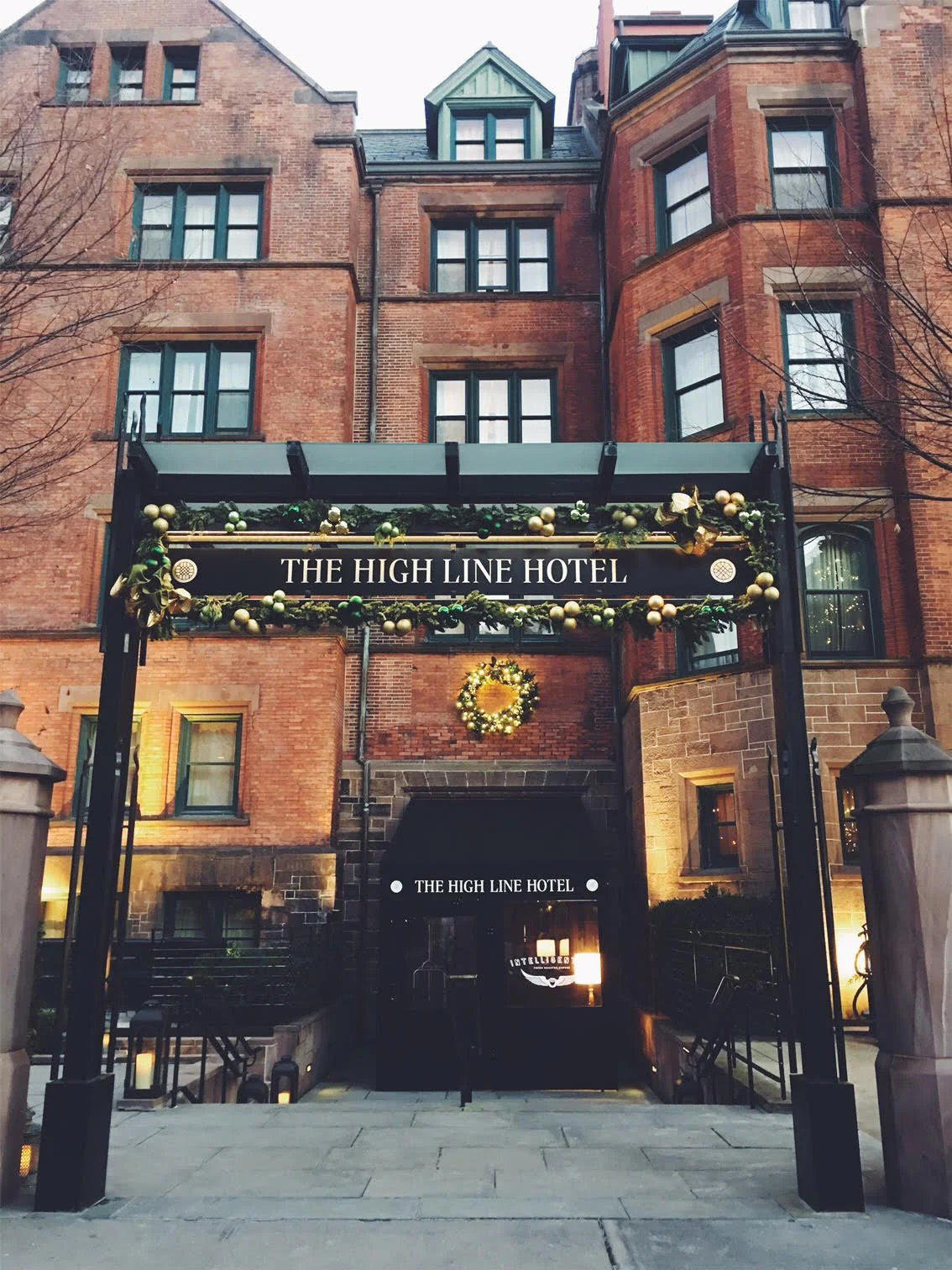
Where a Gothic Seminary Meets the West Chelsea Art District
There is a particular quality of light that enters through Gothic Revival arched windows in the late afternoon, and at 180 Tenth Avenue it arrives at an angle that most Manhattan hotels, built vertically and glass-faced, cannot replicate. The High Line Hotel occupies a nineteenth-century seminary building on the western edge of Chelsea, a neighbourhood that spent the past two decades repositioning itself around gallery culture, the refined park one block east, and a steady accumulation of design-forward hotels that have made this corridor one of the more contested addresses in New York hospitality.
The broader category this property sits in, adaptive-reuse hotels in converted historic structures, has grown considerably across American cities. What separates the stronger examples from the weaker ones is whether the original architecture does actual work, shaping room proportions, dictating ceiling heights, influencing how corridors feel at night, or whether the historic shell is merely decorative. At The High Line Hotel, the 1895 building sets hard constraints that the interiors have to answer to rather than override.
The Architecture as Room Design
The room experience here is inseparable from the building's bones. Ceilings in many of the hotel's accommodations run considerably higher than the compressed dimensions typical of Manhattan new-builds, and the masonry walls carry a thermal mass that affects how the rooms feel even before any consideration of HVAC or bedding. This is not a minor atmospheric point. Rooms in converted institutional buildings tend toward either grandeur or austerity depending on how the fit-out resolves the tension between original structure and contemporary comfort, and the Chelsea seminary leans deliberately toward the former.
Room categories at The High Line Hotel are differentiated partly by floor and orientation, with courtyard-facing rooms offering a quieter relationship to the property's garden than street-facing rooms along Tenth Avenue. For guests arriving specifically for the architecture rather than the neighborhood access, interior rooms that look onto the courtyard tend to deliver a more coherent spatial experience, one where the surrounding masonry and plantings reinforce the hotel's departure from standard Manhattan accommodation. This is the room category that repeatedly draws reference in guest commentary, and it aligns with what design-led adaptive-reuse properties across the country, from Troutbeck in Amenia to SingleThread Farm Inn in Healdsburg, have found: travelers who seek out converted historic buildings prioritize spatial coherence over amenity count.
Chelsea's Hospitality Tier and Where This Property Sits
New York's hotel market has segmented sharply across the past decade. At the upper end, flagship addresses like Aman New York and The Carlyle, A Rosewood Hotel compete on spa infrastructure, in-house dining pedigree, and institutional brand weight. A second tier of design-oriented independents and boutique operators, which includes Crosby Street Hotel, The Whitby Hotel, and The Greenwich Hotel, competes on character, neighborhood credibility, and the quality of the room itself rather than the breadth of ancillary offerings.
The High Line Hotel operates in that second tier and prices against it. It does not offer the full-service luxury infrastructure of The Fifth Avenue Hotel or the membership-club weight of Casa Cipriani New York, but it is not attempting to. The competitive proposition here is the building itself, its location one block from the High Line park, and a room experience shaped by architectural constraints that newer properties simply cannot manufacture.
Chelsea's gallery district runs primarily along West 20th through 26th Streets, with the densest concentration of serious commercial galleries within a ten-minute walk of the hotel. The High Line refined park connects directly to Hudson Yards to the south and extends north toward the West 30s, making this address functional for guests whose itineraries combine art, the park, and the broader west side, rather than Midtown or the Upper East Side corridors that suit The Mark or properties further uptown.
The Courtyard and Communal Spaces
Seminary buildings were designed around communal rhythm, and the courtyard at The High Line Hotel reflects that logic. In warmer months the garden functions as one of the more genuinely calm outdoor spaces available to hotel guests in lower Manhattan, which is not a small claim in a city where outdoor hotel space is either nonexistent, exposed to significant street noise, or styled to a degree that undermines its restfulness. The masonry perimeter of the former seminary creates an acoustic break that most open hotel courtyards in New York cannot achieve.
The on-site café has become a meeting point for the surrounding neighborhood as much as for hotel guests, a pattern common to design-led boutique hotels that read as neighborhood institutions rather than visitor infrastructure. This crossover between hotel guest and local regular is a reliable indicator of a property's genuine integration into its surroundings, and it is one of the harder things to manufacture after the fact.
Comparing the Adaptive-Reuse Category Across the Country
The argument for historic-building hotels rests on what new construction cannot provide: accumulated material character, room proportions governed by a different era's spatial logic, and a relationship to the street that predates the hospitality use entirely. Properties like Post Ranch Inn in Big Sur, Amangiri in Canyon Point, and Hotel Bel-Air in Los Angeles make their case through landscape and siting. In a dense urban context, the equivalent argument is architectural pedigree and the spatial relief that a mid-rise nineteenth-century building provides against the compressed geometry of contemporary Manhattan development.
Among New York's boutique tier, The High Line Hotel is one of relatively few properties where the case for staying is the building itself. That is a narrower proposition than a full-service hotel makes, and it suits a specific type of traveler: someone arriving with gallery itineraries, High Line access on the agenda, and a preference for a room that does not feel like every other well-appointed Manhattan hotel room they have stayed in before. For a broader survey of where this hotel sits within the city's full hospitality range, see our full New York City restaurants guide.
Travelers comparing design-led boutique options beyond New York should also consider Raffles Boston in Boston for another adaptive-reuse conversion in an East Coast urban context, or further afield, Aman Venice in Venice and Badrutt's Palace Hotel in St. Moritz for the European equivalent of historic building hospitality done at high investment levels. Domestically, Four Seasons at The Surf Club in Surfside and Kona Village, A Rosewood Resort in Kailua Kona offer resort-format alternatives for travelers whose priorities shift toward amenity depth over architectural character. For the wellness-focused traveler, Canyon Ranch Tucson in Tucson and Little Palm Island Resort & Spa in Little Torch Key operate in a different tier entirely. Rural escapes such as Sage Lodge in Pray and 1 Hotel San Francisco in San Francisco round out a picture of where the boutique-with-character category is operating across North America. Bvlgari Hotel Tokyo in Tokyo represents a useful international comparison point for brand-new construction that attempts to manufacture the kind of material seriousness that converted buildings acquire over time.
Know Before You Go
- Address: 180 10th Ave, New York, NY 10011
- Neighbourhood: West Chelsea, one block from the High Line refined park
- Room preference: Courtyard-facing rooms are consistently noted for their quieter orientation and stronger architectural coherence
- Nearby: Chelsea gallery district (West 20th to 26th Streets), Hudson Yards to the south via the High Line
- Context: Independent boutique hotel in a converted 1895 Gothic Revival seminary building
- Leading for: Travelers prioritizing architectural character, gallery access, and proximity to the High Line over full-service luxury amenities
Continue exploring
More in New York City
Hotels in New York City
Browse all →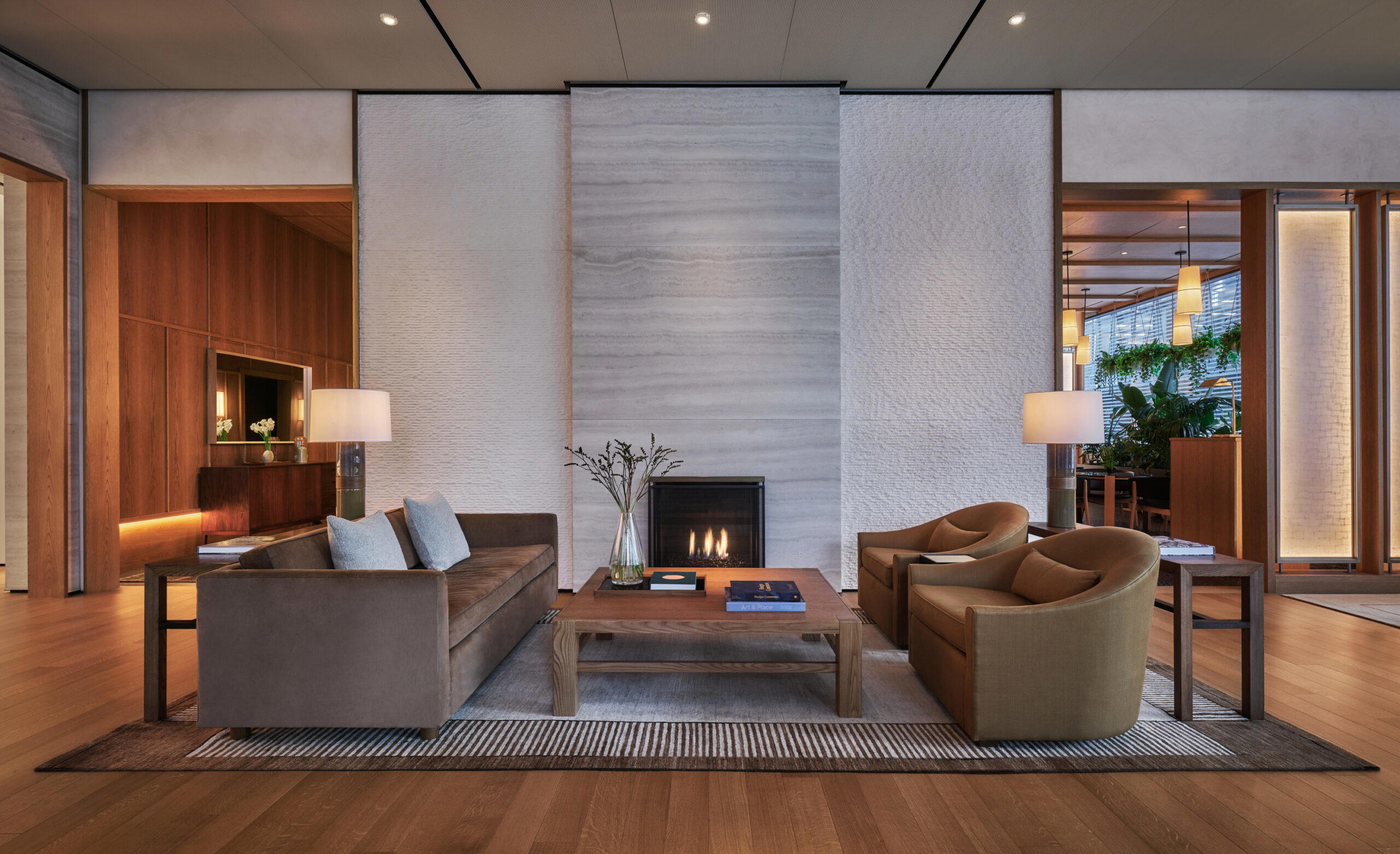

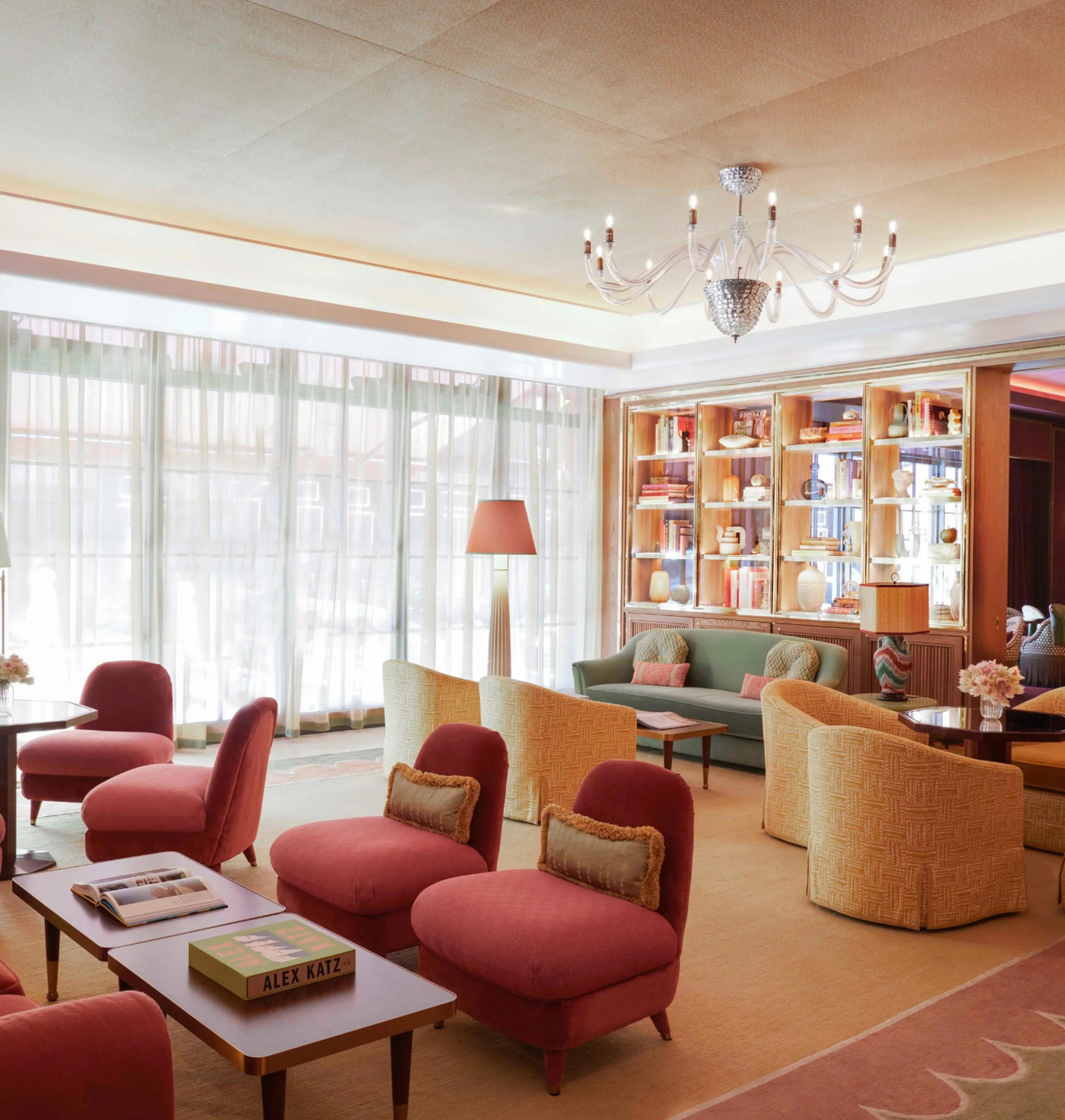


Bars in New York City
Browse all →

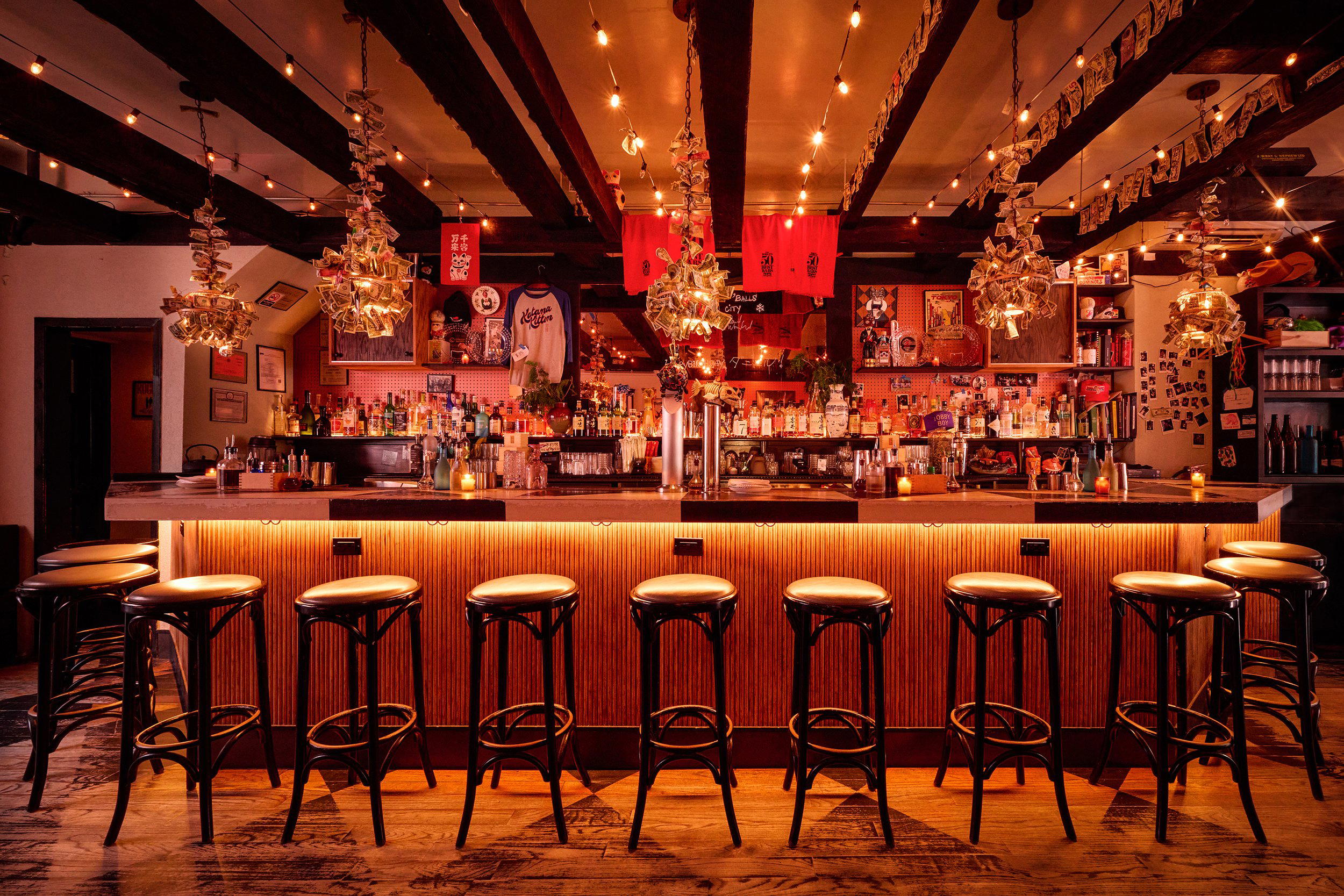
Restaurants in New York City
Browse all →





At a Glance
- Quiet
- Elegant
- Historic
- Intimate
- Sophisticated
- Romantic Getaway
- Weekend Escape
- Garden
- Historic Building
- Terrace
- Wi Fi
- Concierge
- Garden
- Street Scene
- Wi Fi
- Concierge
Timeless eclectic Americana with vintage furnishings, antique rugs, stained glass windows, and original fireplaces creating a cozy, contemplative historic atmosphere.
Know Before You Go
- Getting there
- 180 10th Ave, New York, NY 10011