The Hay-Adams


Facing Lafayette Square directly across from the White House, The Hay-Adams occupies among the more historically charged addresses in Washington, D.C. Named for two of America's foremost nineteenth-century statesmen, the hotel carries a Star Wine List recognition (2026) and a location that places it at the center of the capital's most significant ceremonial quarter. For milestone dining and occasion stays, few addresses in the city carry comparable historic weight.
Pearl is the En Primeur Club membership app — saves, bookings, and concierge access live there. Same editors, same standards.
- Address
- 800 16th Street Northwest
- Phone
- 800-424-5054
- Website
- hayadams.com
- Directions
- Get directions
 Saves & bookings on Pearl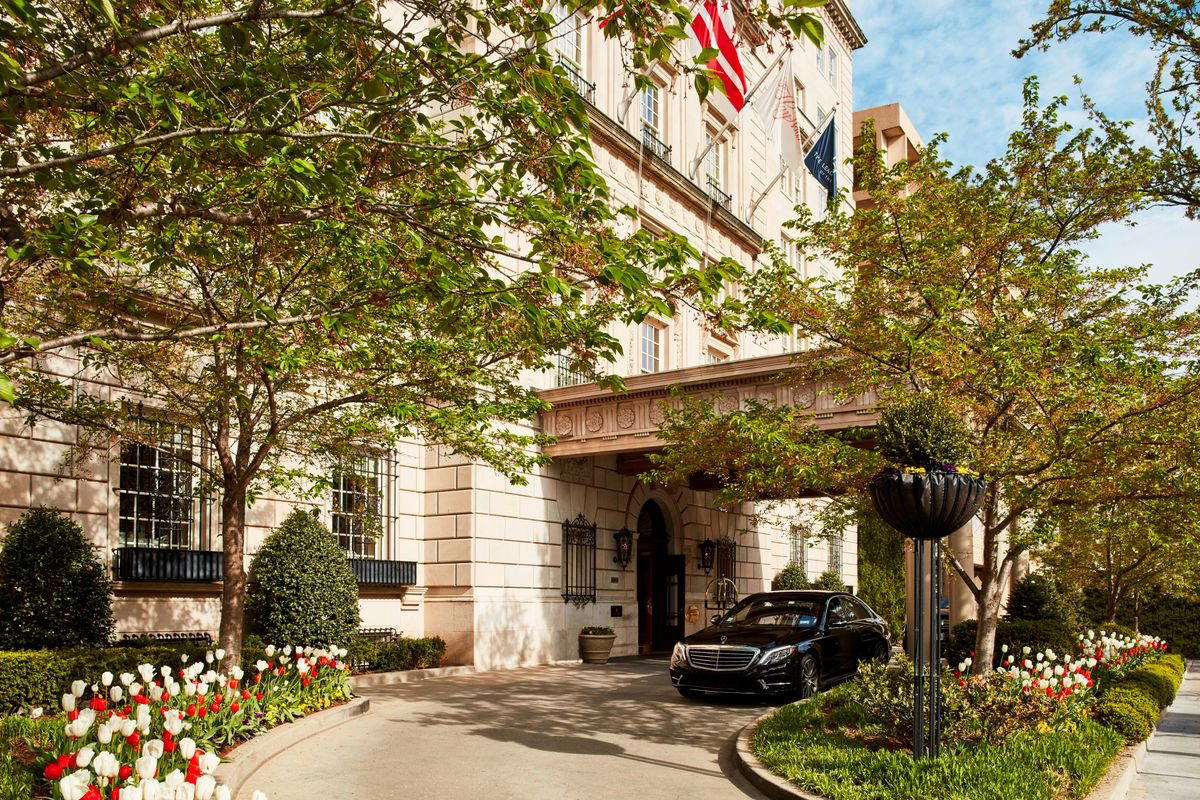
A View That Defines the Occasion
The Hay-Adams is a 5-star hotel in Washington, D.C. at 800 16th Street Northwest. Lafayette Square, the park that frames this block, is bounded by particularly historically significant structures in American public life: the White House sits directly to the south, the Old Executive Office Building to the west, and The Hay-Adams anchoring the northern edge. This setting shapes occasion stays and milestone meals in ways that are difficult to replicate elsewhere in the capital.
For travellers whose primary reason to visit Washington involves a special occasion, the setting does a great deal of the work before anyone arrives at the table. The hotel's position on Lafayette Square means that the view from upper-floor rooms looking south across the park toward the White House is especially resonant. That view is not incidental, for anniversary stays, political milestone dinners, or reunion gatherings with historical significance in mind, it is frequently the entire point.
History as Architecture and Identity
The hotel takes its name from two figures whose careers bracket the Civil War and Gilded Age: John Milton Hay, who served as Abraham Lincoln's private secretary before becoming Secretary of State under Presidents McKinley and Roosevelt, and Henry Adams, the historian and great-grandson of John Adams. Both men had homes on this site in the late nineteenth century, and that lineage shapes the hotel's identity in ways that go beyond decoration. Washington has several luxury hotels that invoke historical association loosely; The Hay-Adams carries its history as a structural fact, embedded in its address, its name, and the public record of what happened on and around this land.
That historical depth matters particularly for occasion dining in a city where ceremony and significance are primary currencies. Washington attracts a different kind of special-occasion traveller than, say, New York or Los Angeles, one often oriented toward institutional milestones, diplomatic events, or moments where the setting's civic weight is part of the meaning. The hotel is positioned to serve exactly that traveller, in exactly this context. Properties like Rosewood Washington, D.C. and The Jefferson offer high-calibre occasion dining in the capital, but neither carries the same site-specific historical freight as the Lafayette Square address.
The Wine Program and Its Recognition
In 2026, the hotel received recognition from Star Wine List, a publication that evaluates wine programs at hospitality venues across a global comparable set. The award places the hotel's cellar within a recognized tier of serious wine programs, relevant for guests planning celebratory meals where the bottle matters as much as the food. Among Washington hotels, that level of wine list recognition is not uniform, it signals that the program has been reviewed against specific criteria for breadth, sourcing, and value rather than simply assembled for volume. For milestone dinners where a bottle of consequence is part of the occasion, that credential is worth noting before booking.
Washington's hotel dining has grown more competitive over the past decade. Properties including Pendry Washington DC at The Wharf and Riggs Washington DC have invested in food and beverage programs that draw guests who are not hotel residents. Within that context, a formally recognised wine program at the hotel reinforces its position as an occasion destination.
Occasion Dining in Washington's Luxury Tier
Washington's luxury hotel tier has expanded, with properties such as Mayflower Inn, Eaton D.C., and The Dupont Circle Hotel each occupying distinct corners of the market. What separates occasion venues within that tier is less often the food alone and more often the combination of setting, service density, and the symbolic weight the address adds to the meal. In a city where dinner reservations are sometimes made around the meaning of the location rather than the menu alone, the hotel operates at the apex of that dynamic.
Comparable premium occasion hotels in other American cities tend to anchor around similar logic: The Fifth Avenue Hotel in New York City and Hotel Bel-Air in Los Angeles draw guests whose occasion needs are as much about where they are as what they eat. The hotel fits that profile precisely, except that its version of symbolic weight is rooted in American civic history rather than cultural celebrity.
For guests seeking occasion stays that are oriented around landscape and seclusion rather than urban history, properties like Amangiri in Canyon Point, Post Ranch Inn in Big Sur, or Troutbeck in Amenia represent an entirely different register. The hotel is the choice for occasions where the city itself, and its particular history, is the reason for the gathering.
Planning Your Stay
The hotel sits at 800 16th Street Northwest, directly on Lafayette Square. Guests planning around a specific occasion should book well ahead of politically significant calendar dates in Washington. The 2026 Star Wine List recognition makes the dining room a reasonable anchor for a milestone meal even for non-resident guests.
Travellers whose occasion travel extends beyond Washington might consider Raffles Boston for the Northeast corridor, Four Seasons at The Surf Club in Surfside for a Florida milestone, Auberge du Soleil in Napa for wine-country occasions, or SingleThread Farm Inn in Healdsburg for a tightly curated farm-to-table occasion stay. For international occasion travel, Aman Venice, Badrutt's Palace Hotel in St. Moritz, and Aman New York occupy a comparable prestige register in their respective cities. Other notable American occasion properties worth knowing include Kona Village, A Rosewood Resort in Kailua Kona, Little Palm Island Resort and Spa in Little Torch Key, Sage Lodge in Pray, and Canyon Ranch Tucson.
A Credentials Check
Comparable venues nearby, for context on price, style, and recognition.
| Venue | Cuisine | Price | Awards | Notes |
|---|---|---|---|---|
| The Hay-AdamsThis venue — the venue you are viewing | Historic residential-style luxury hotel | $$$$ | 5-Star | Not listed |
| The Jefferson, Washington, DC | Italian Renaissance landmark hotel with Old World atmosphere and contemporary luxury details; positioned as a magnet for demanding travelers, politicians, and cultural cognoscenti. | $$$$ | 5-Star | Dupont Circle |
| InterContinental Washington D.C. - The Wharf | Contemporary luxury waterfront hotel blending sophistication and sustainable design | $$$$ | 5-Star | Southwest Waterfront |
| The Ritz-Carlton, Washington, D.C. | Classic luxury hotel in DC's West End with Club Level exclusivity. | $$$$ | 5-Star | West End |
| Conrad Washington, DC | contemporary urban oasis | $$$$ | 5-Star | East End |
| Park Hyatt Washington D.C. | Luxury urban retreat blending American heritage with modern Zen spa aesthetics. | $$$$ | 5-Star | West End |
Recognition history
Dated appearances from independent guides and award organizations, with the underlying list record or original source where available.
Forbes 4-Star
Forbes
Star Wine List
Star Wine List
Continue exploring
More in Washington DC
Hotels in Washington DC
Browse all →
Bars in Washington DC
Browse all →
Restaurants in Washington DC
Browse all →
At a Glance
- Elegant
- Classic
- Sophisticated
- Ornate
- Well Known
- Romantic Getaway
- Business Trip
- Anniversary
- Historic Building
- Panoramic View
- Terrace
- Wi Fi
- Fitness Center
- Room Service
- Concierge
- Business Center
- Valet Parking
- Skyline
- Street Scene
- Wi Fi
- Fitness Center
- Room Service
- Concierge
- Business Center
- Valet Parking
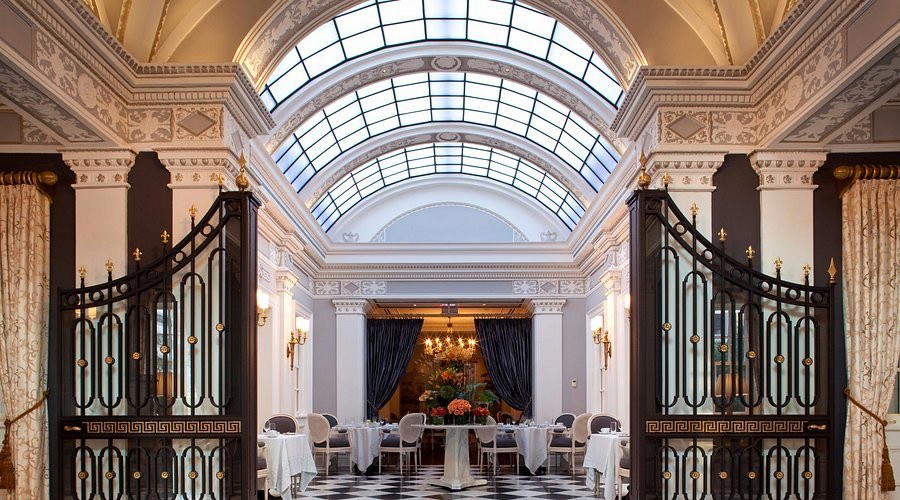
Refined classical grandeur with elegant lighting, crystal chandeliers, and a serene, sophisticated atmosphere.