
Michelin Selected
The address trades urban density for lake views and landscaped grounds, making it a considered choice for travellers seeking distance from the city centre without sacrificing international service standards.

Pearl is the En Primeur Club membership app, where members save venues, book tables and use the concierge.
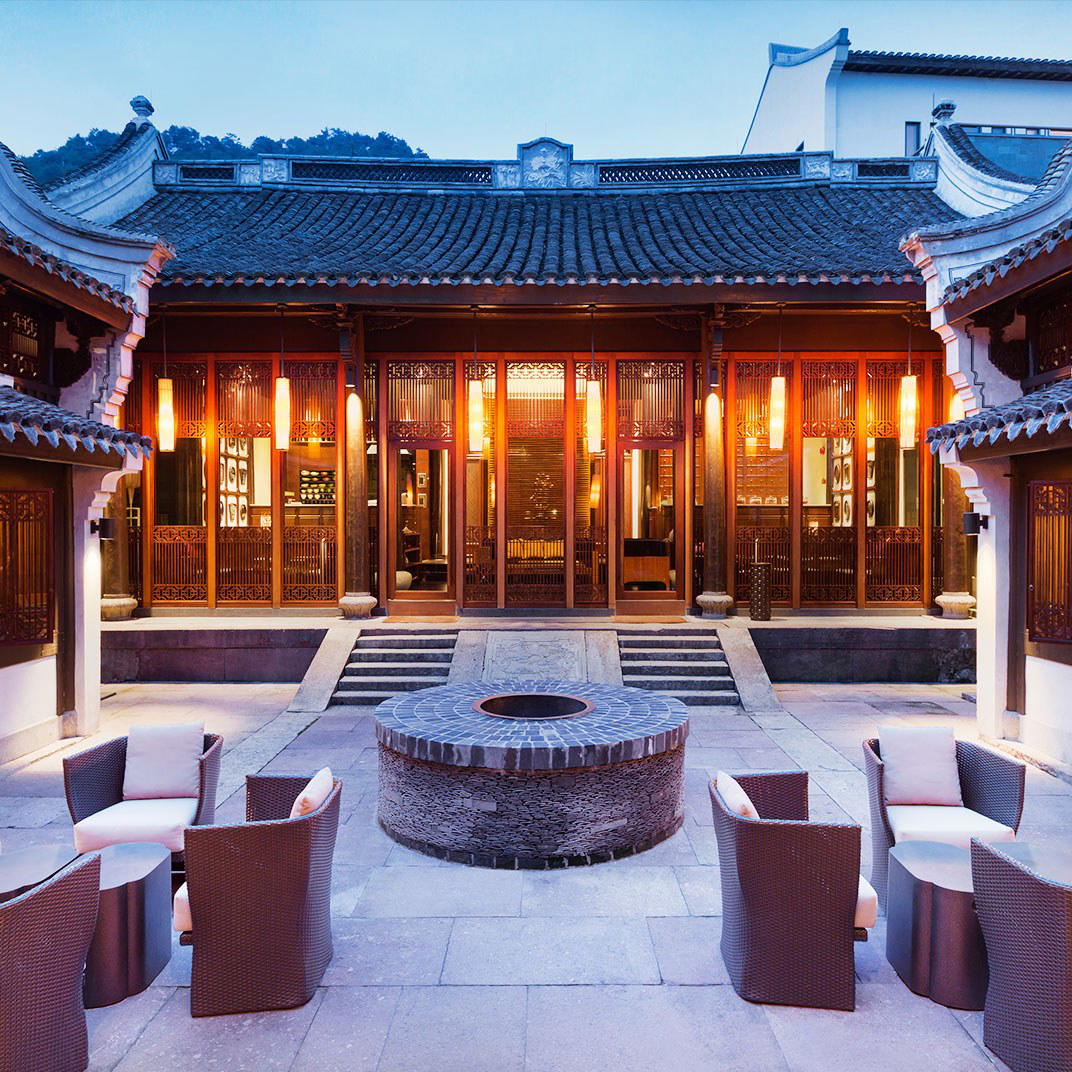
Water, Stone, and Structured Calm: The Architecture of Dong Qian Lake
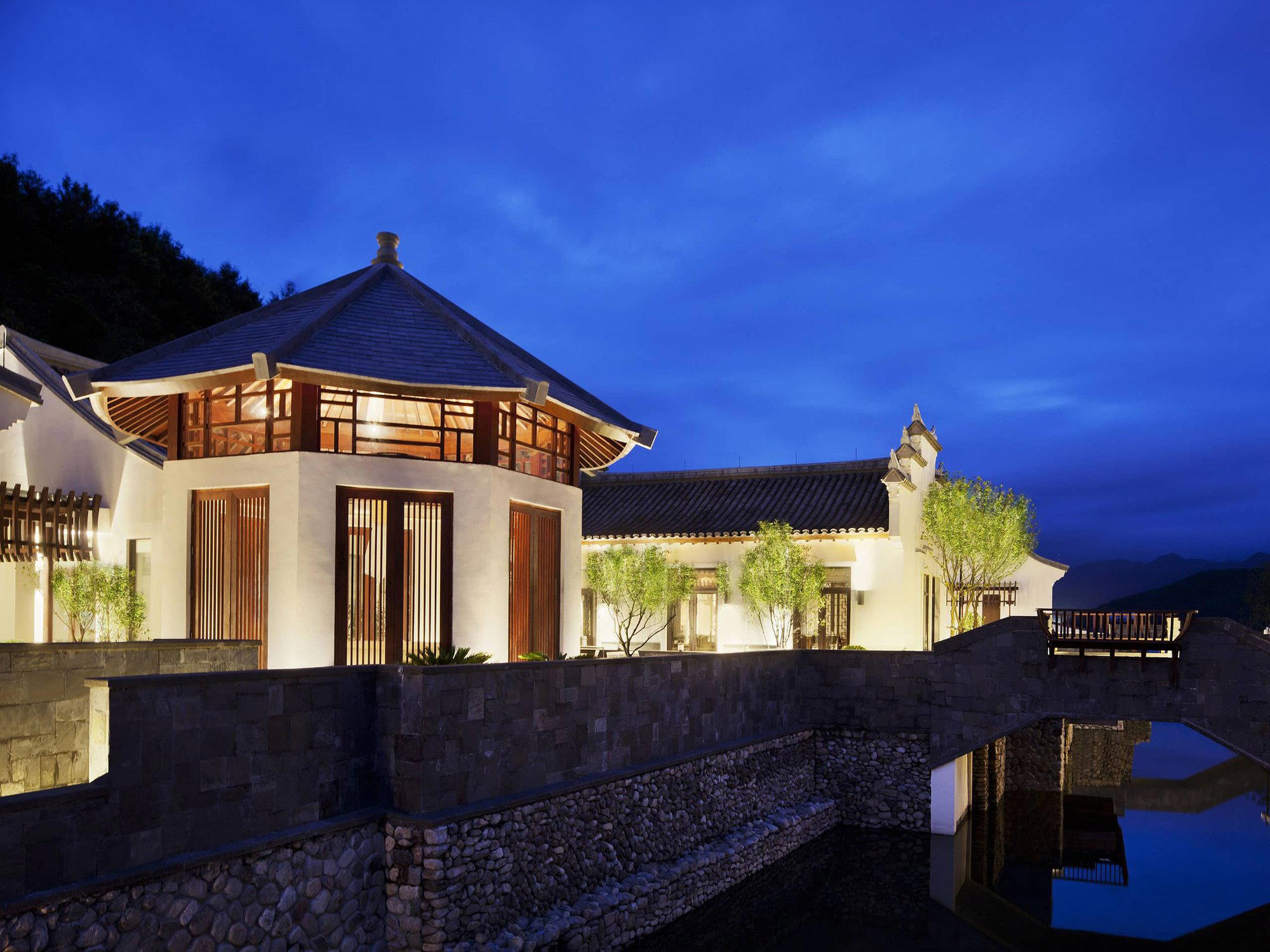
Dong Qian Lake sits roughly 20 kilometres southeast of central Ningbo, a freshwater expanse that has shaped the character of this part of Zhejiang Province for centuries. The lake is not a scenic backdrop bolted onto a hotel site as an afterthought; it is the organising principle around which Park Hyatt Ningbo Resort and Spa was conceived. Arriving at 188 Dayan Road, visitors encounter a property that reads more like a private compound than a conventional hotel check-in, with low-slung structures arranged to frame water views rather than compete with them. This horizontal vocabulary, common to the better resort developments in China's eastern provinces, keeps visual mass close to ground level and lets the lake's surface do the work that a skyline might do elsewhere.
The design language at properties in this category typically draws from one of two schools: international modernism imported wholesale, or a synthesis of regional material culture with contemporary form. Park Hyatt Ningbo belongs to the latter approach. Stone, timber, and water features appear throughout the public spaces in arrangements that reference the scholar gardens of the broader Yangtze Delta without reproducing them literally. This is an important distinction. Literal reproduction of classical garden motifs tends to read as theme-park pastiche; a more restrained interpretation, where the spatial logic of enclosure and reveal is retained but the detailing is pared back, produces environments that feel grounded rather than performative. The effect, at its finest, is a resort that seems to belong to its specific geography rather than a generic luxury template that could be transplanted anywhere in Asia.
Michelin Selection and What It Signals in the Chinese Hotel Market
Park Hyatt Ningbo Resort and Spa carries Michelin Selected status in the 2025 Michelin Hotels guide, a designation that places it within a curated cohort of properties across China assessed for quality of accommodation, service consistency, and overall guest experience. Michelin's hotel selection programme, which operates separately from its restaurant star system, does not rank properties against each other numerically; inclusion is a threshold statement rather than a position on a league table. That threshold, however, is meaningful. In Ningbo specifically, where international hotel coverage is thinner than in adjacent Shanghai or Hangzhou, Michelin recognition carries additional weight because the peer group is smaller and the editorial bar therefore more visible.
For context, the Yangtze Delta region has accumulated a concentration of recognised properties, from city-centre towers in Shanghai to design-led retreats in Hangzhou's West Lake district. The Hangzhou Muh Shoou Xixi Hotel operates in a comparable lake-adjacent format to the west; The Hanyu Garden Reserve Suzhou pursues a similar regional-materials aesthetic in Suzhou.
The Resort Format in Eastern China: Context and Competitive Position
Resort hotels in eastern China's secondary cities occupy a particular niche. They are not the urban business hotels that dominate city cores, nor are they the remote wilderness lodges found in Yunnan or Tibet, such as Songtsam Linka Retreat Lhasa or Songtsam Meili Lodge. Instead, they occupy a middle register: close enough to a major city to draw weekend visitors and corporate retreats, sufficiently removed to offer genuine spatial decompression. Dong Qian Lake has historically attracted this kind of development, and the Park Hyatt flag here signals a deliberate positioning at the upper end of the lake's hospitality options.
The Park Hyatt brand globally operates on a different axis than its sibling brands within the Hyatt portfolio. Where Grand Hyatt properties tend toward scale and urban spectacle, and Hyatt Regency targets business travellers with efficient layouts, Park Hyatt positions around art, design, and a quieter register of luxury. This makes the brand a reasonable fit for a lake resort context, where volume and conventional hotel grandeur would work against the site. Comparable brand-led moves in China include properties like Yihe Mansions in Nanjing and Mandarin Oriental Qianmen in Beijing, both of which use architectural restraint to separate themselves from high-volume competitors in their respective cities.
Spa, Landscape, and the Argument for a Longer Stay
Resort properties carrying the Park Hyatt name are conventionally built around a wellness proposition that goes beyond a hotel gym and a treatment menu. The spa at a property of this type in China typically incorporates both international treatment protocols and elements drawn from traditional Chinese medicine, a combination that has become standard at the upper end of the market. The Dong Qian Lake site, with its water proximity and landscape depth, supports the kind of extended-stay logic that a city-centre hotel cannot. A two-night minimum is worth considering; arriving and departing the same day defeats the spatial argument for being here at all.
For travellers assembling a broader circuit of eastern China, Ningbo functions as a legitimate stopping point rather than a footnote. The city's old port history, its Tianyige library complex (one of the oldest surviving private libraries in the world), and its proximity to Zhoushan's island chain give it content that stands independently of the hotel. Our full Ningbo restaurants guide covers the city's dining options in more detail, from Ningbo cuisine's characteristic emphasis on seafood and fermented preparations to the newer restaurants operating in the city's redeveloped waterfront districts.
Planning Your Stay
Park Hyatt Ningbo Resort and Spa is located at 188 Dayan Road, Dong Qian Lake, approximately 20 kilometres from Ningbo Lishe International Airport and a comparable distance from Ningbo Railway Station, which connects the city to Shanghai in under two hours by high-speed rail. The lake setting makes spring and autumn the most rewarding periods to visit; summer brings warmth and longer days but also higher regional humidity, while winter stays offer a quieter resort with clearer air. Room and suite categories align with standard Park Hyatt configurations, with lake-facing orientations commanding the clearest views of Dong Qian's open water. Booking through the Hyatt loyalty programme or direct channels typically provides access to the broadest range of room types and any available upgrade paths.
For travellers comparing resort options across China's eastern and southern regions, reference points include Banyan Tree Sanya in Hainan for a tropical coastal register, Conrad Xiamen for a Fujian coastal city format, and InterContinental Chongqing Raffles City for a river-city urban-resort hybrid. Those looking further afield within China's luxury hotel circuit can also consult our coverage of The Ritz-Carlton, Xi'an, InterContinental Chengdu Global Center, LN Hotel Five in Guangzhou, Le Meridien Zhengzhou, InterContinental Quanzhou, and Conrad Urumqi for a sense of how the upper tier of Chinese hospitality distributes across the country's diverse regions. International comparisons in the same design-led resort category can be found at Badrutt's Palace Hotel in St. Moritz and Hôtel de Paris Monte-Carlo.
Comparison Snapshot
Comparable venues nearby, for context on price, style, and recognition.
| Venue | Cuisine | Price | Awards | Notes |
|---|---|---|---|---|
| Park Hyatt Ningbo Resort and SpaThis venue (the venue you are viewing) | Lakeside Chinese water village resort with pavilions and villas | Not listed | Michelin Selected | Not listed |
| Vaperse Hotel | condo design style fashion elegant refined and comfortable | $1–100 | Michelin Selected | Zhujiang New Town |
| Songtsam Tacheng Lodge (松赞塔城山居) | Traditional Tibetan architectural marvel blending heritage with modern comforts. | $200–300 | Not listed | Tacheng |
| Regent Chongqing | Blends modern elegance with traditional Chinese elements inspired by courtyards and cultural heritage. | Not listed | 1 Michelin Key | Jiangbeizui |
| DongFengYun Hotel Mi’Le - MGallery | Artistic luxury boutique in vineyard setting with post-modern red brick architecture | $100–200 | Michelin Selected | Dongfengyun Art Town |
| Park Hyatt Xi'an | Luxury urban Park Hyatt positioned as a sophisticated home-away-from-home for informed global travelers in a major mixed-use commercial district. | Not listed | Not listed | Qujiang District |
Recognition history
Dated appearances from independent guides and award organizations, with the underlying list record or original source where available.
Michelin Selected
Michelin
Details
- Elegant
- Scenic
- Sophisticated
- Quiet
- Ornate
- Romantic Getaway
- Wellness Retreat
- Weekend Escape
- Honeymoon
- Infinity Pool
- Destination Spa
- Panoramic View
- Private Villa
- Spa
- Pool
- Fitness Center
- Room Service
- Concierge
- Garden
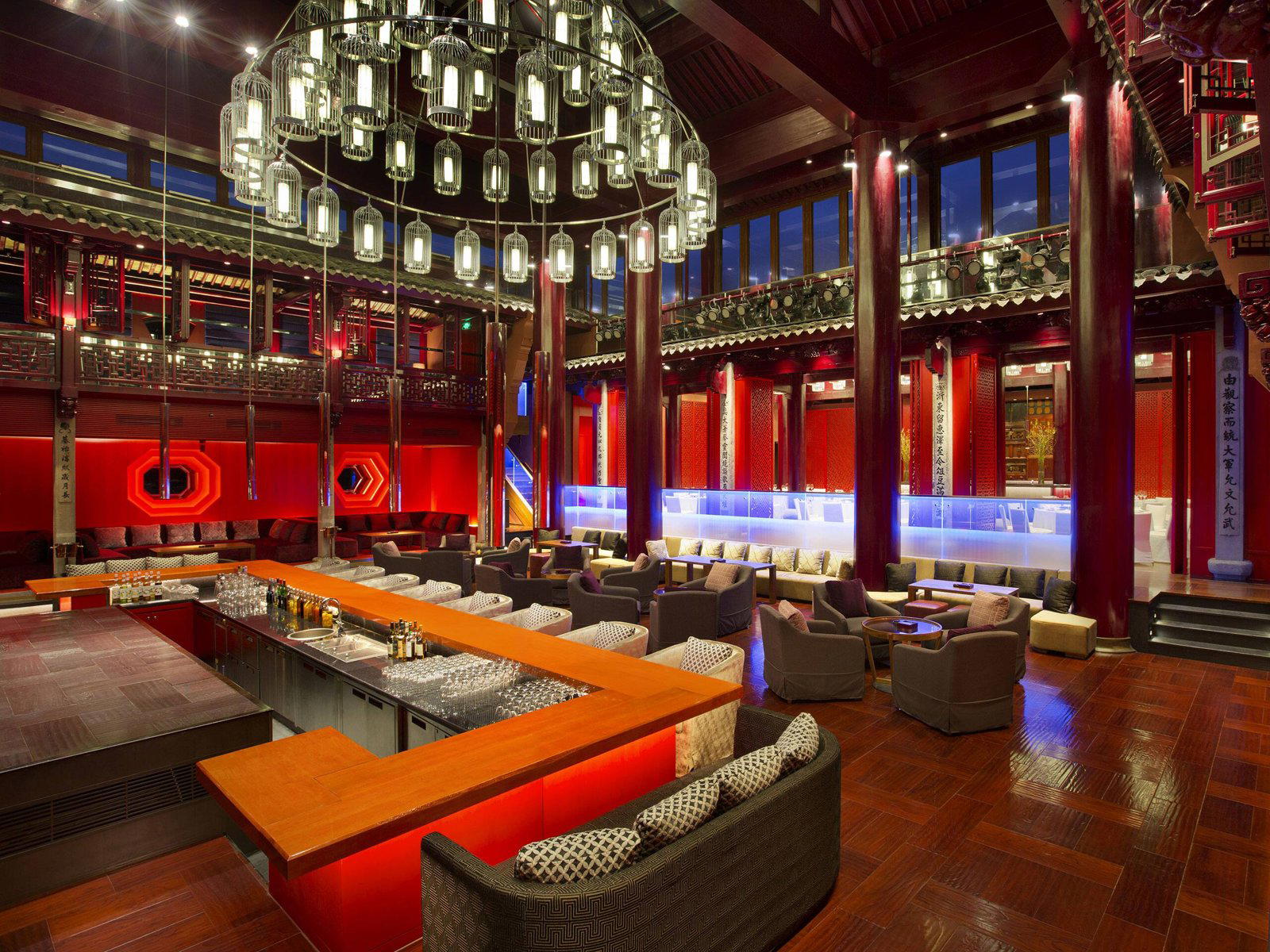
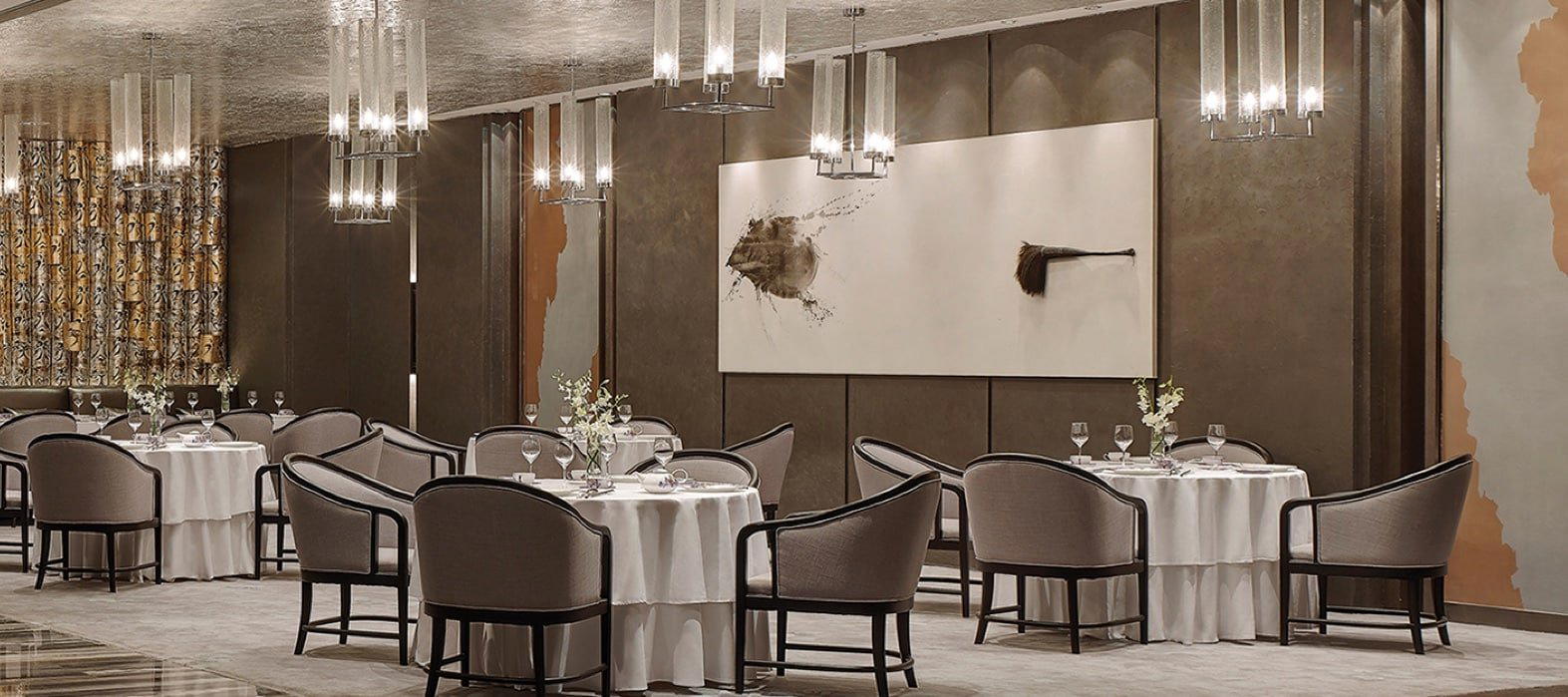
Serene and elegant with panoramic lake views, gentle landscaping, and a tranquil atmosphere blending contemporary luxury with classical Chinese elements.