Soho Grand Hotel


Opened in 1996 as Manhattan's first luxury Downtown boutique hotel, Soho Grand at 310 W Broadway occupies a SoHo that was already mid-transformation from loft district to design capital. The hotel's industrial-Gilded Age interior, anchored by a bottle-glass staircase and masonry columns, places it in a specific tier of New York lodging: independently spirited, neighbourhood-rooted, and deliberately distinct from Midtown's flag-carrier luxury.
Pearl is the En Primeur Club membership app — saves, bookings, and concierge access live there. Same editors, same standards.
- Address
- 310 W Broadway
- Phone
- +1 212 965 3000
- Website
- sohogrand.com
- Directions
- Get directions
 Saves & bookings on Pearl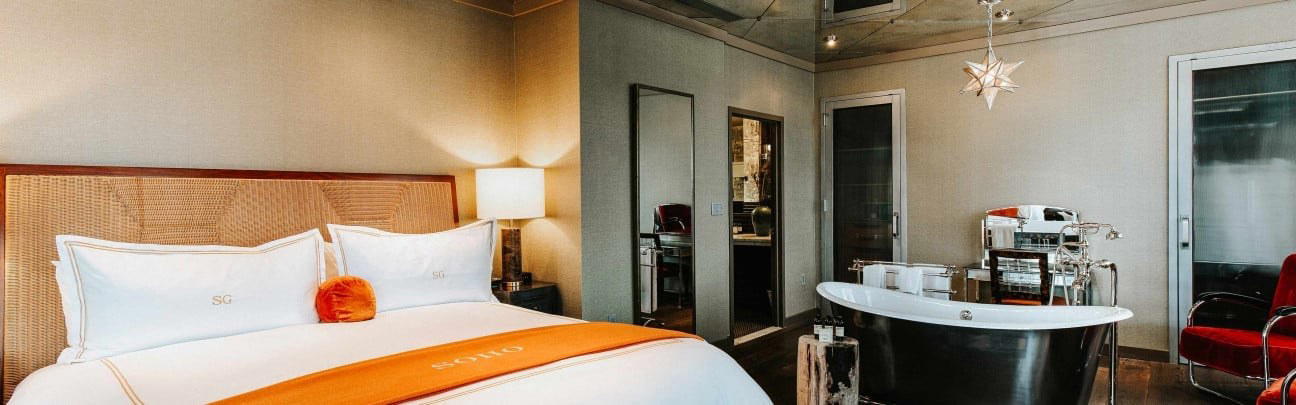
The Architecture of a Neighbourhood Bet
In 1996, when Leonard and Emanuel Stern of Hartz Mountain Industries moved to open a hotel in SoHo, the neighbourhood was already generating significant cultural momentum, art galleries displacing factories, loft conversions attracting designers, boutiques arriving where manufacturing once operated. What the area lacked, the Sterns argued, was a hotel scaled to match the ambition of the address. The result was Soho Grand, positioned at 310 W Broadway and opened in 1996 as Manhattan's first downtown luxury boutique hotel. That claim holds historical weight: it arrived before the wave of Tribeca, Lower East Side, and NoHo properties that now give Downtown New York its depth of lodging options.
The design brief, handled by Bill Sofield, a Cooper Hewitt Interior Design Award recipient who has since collaborated on retail environments for Tom Ford, Bottega Veneta, Yves Saint Laurent, and Gucci, drew directly from SoHo's architectural timeline. The result is a space that reads as a deliberate collage: the bottle-glass staircase and cast-iron masonry columns reference the neighbourhood's 1870s Gilded Age industrial stock, while the overall register tracks the creative loft culture that took hold in the 1970s. It is a hotel that treats its own building as an argument about place rather than as a backdrop.
Where It Sits in New York's Downtown Hotel Tier
New York's luxury hotel market has long organised itself along a rough geographic fault line. Uptown properties, from The Carlyle, A Rosewood Hotel to The Mark, trade on Upper East Side institution status, proximity to the park, and a particular kind of inherited formality. Midtown entries like Aman New York or The Fifth Avenue Hotel anchor themselves to Fifth Avenue's retail and cultural gravity. Downtown is a different proposition entirely, and Soho Grand predates much of the category it helped define.
Its closest downtown peers in terms of neighbourhood character and independent positioning include Crosby Street Hotel and The Whitby Hotel, both Firmdale properties that operate with a similar emphasis on design specificity and neighbourhood embeddedness. The Greenwich Hotel in Tribeca and Casa Cipriani New York occupy adjacent but tonally distinct niches. What separates Soho Grand from most of these is the duration of its commitment to the neighbourhood: nearly three decades at the same address, in a district that has cycled through multiple identities since 1996.
The Permanent Collection as Spatial Argument
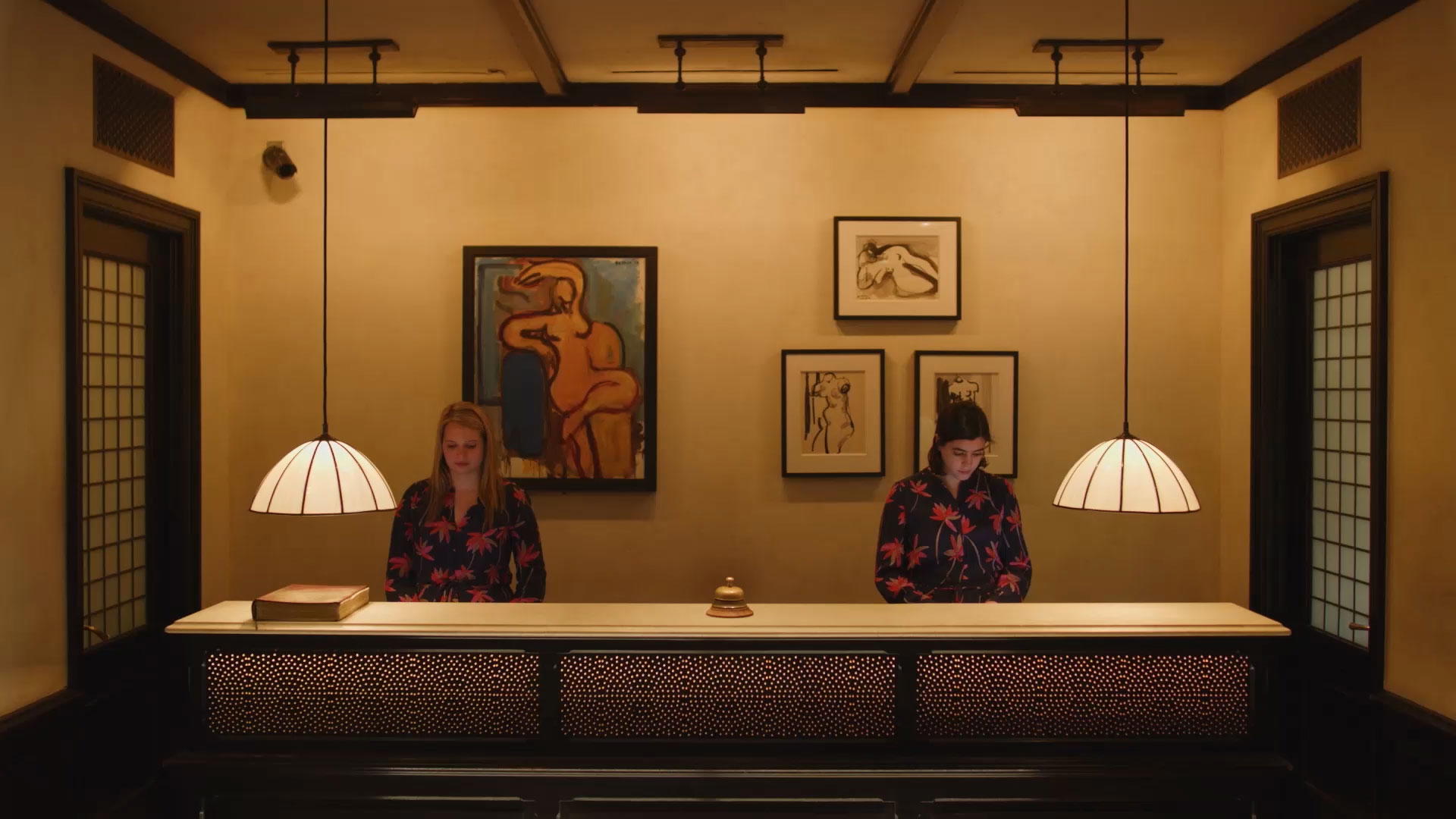
SoHo's identity was shaped as much by its art community as by its architecture, and the hotel's approach to its interior reflects that history rather than merely decorating around it. The permanent art collection spanning photographs and sculptures, contributed by figures from across the contemporary art world, functions less as hotel amenity and more as an ongoing assertion that the building belongs to the neighbourhood's creative lineage. Hotels in cities with strong gallery cultures frequently deploy art as branding; here the scale and sourcing of the collection read as something with more deliberate civic intent.
For guests arriving from properties like Amangiri in Canyon Point or Post Ranch Inn in Big Sur, where design derives from landscape, Soho Grand represents the urban counterpart: a hotel whose design vocabulary is entirely place-specific, legible only in the context of this particular city block and its particular history.
Booking, Planning, and What to Know Before You Arrive
Soho Grand's position at the intersection of Spring Street-area dining, West Broadway retail, and the gallery district means that proximity is one of its most practical assets. Guests walking out of 310 W Broadway have immediate access to a neighbourhood that concentrates some of New York's most closely watched restaurants and art spaces within a few blocks in any direction.
The physical address, W Broadway below Canal, places the hotel within walking range of Tribeca to the south and NoHo to the north, making it a practical base for guests whose itineraries cover Downtown broadly rather than a single neighbourhood.
The Atmosphere in Practice
Downtown New York hotel atmospheres tend to stratify quickly between properties that perform neighbourhood authenticity and those that actually embed within it. Soho Grand's near-thirty-year residency places it firmly in the latter category. The lobby registers differently from a new-build luxury arrival: the industrial material palette, the column scale, and the permanent art presence create a space that feels accumulated rather than assembled. Guests attuned to that distinction, the difference between a hotel that references a neighbourhood and one that has become part of it, will find the atmosphere coherent.
For travellers calibrating their New York stay against alternatives at contrasting scales, properties like Bvlgari Hotel Tokyo, Badrutt's Palace Hotel in St. Moritz, or Aman Venice offer instructive contrast: those operate as self-contained luxury environments where the building's identity eclipses its surroundings. Soho Grand's relationship with its neighbourhood runs in the opposite direction, the hotel's value proposition is substantially dependent on SoHo itself, which means guests who want Downtown New York as their context, rather than an insulated luxury environment that happens to be located there, are the natural constituency.
Other US properties with a comparable philosophy of place-rootedness include Troutbeck in Amenia, SingleThread Farm Inn in Healdsburg, and Sage Lodge in Pray, though their rootedness is rural and landscape-driven. The urban equivalent of that sensibility, a hotel whose identity is inseparable from its specific city block, is harder to sustain across decades in a neighbourhood as commercially pressured as SoHo. That Soho Grand has maintained its original design commitment and community positioning since 1996 is, at minimum, a useful data point when assessing where it sits relative to newer Downtown entrants.
Pricing, Compared
Comparable venues nearby, for context on price, style, and recognition.
| Venue | Price | Awards | Notes |
|---|---|---|---|
| Soho Grand HotelThis venue — the venue you are viewing | $$$$ | 4-Star | Not listed |
| The Moore | $$$$ | 4-Star | Chelsea-Hudson Yards, residential urban retreat |
| The Towers at Lotte New York Palace | $$$$ | 4-Star | Midtown-Times Square, Ultra-luxurious all-suite tower with five-star personalized service |
| The Standard, High Line | $$$$ | 4-Star | West Village, Bold architectural statement perched on stilts above the High Line park |
| The Michelangelo New York - Starhotels Collezione | $$$$ | 4-Star | Midtown-Times Square, Italian-inspired luxury boutique in historic building |
| 33 Hotel New York City Seaport | $$$$ | 4-Star | Financial District-Battery Park City, contemporary yet classic retreat with personalized service |
Recognition history
Dated appearances from independent guides and award organizations, with the underlying list record or original source where available.
Mr & Mrs Smith Smith Seal of Approval
Mr & Mrs Smith
Virtuoso Luxury Hotel Partner
Virtuoso
Michelin Selected
Michelin
Continue exploring
More in New York City
Hotels in New York City
Browse all →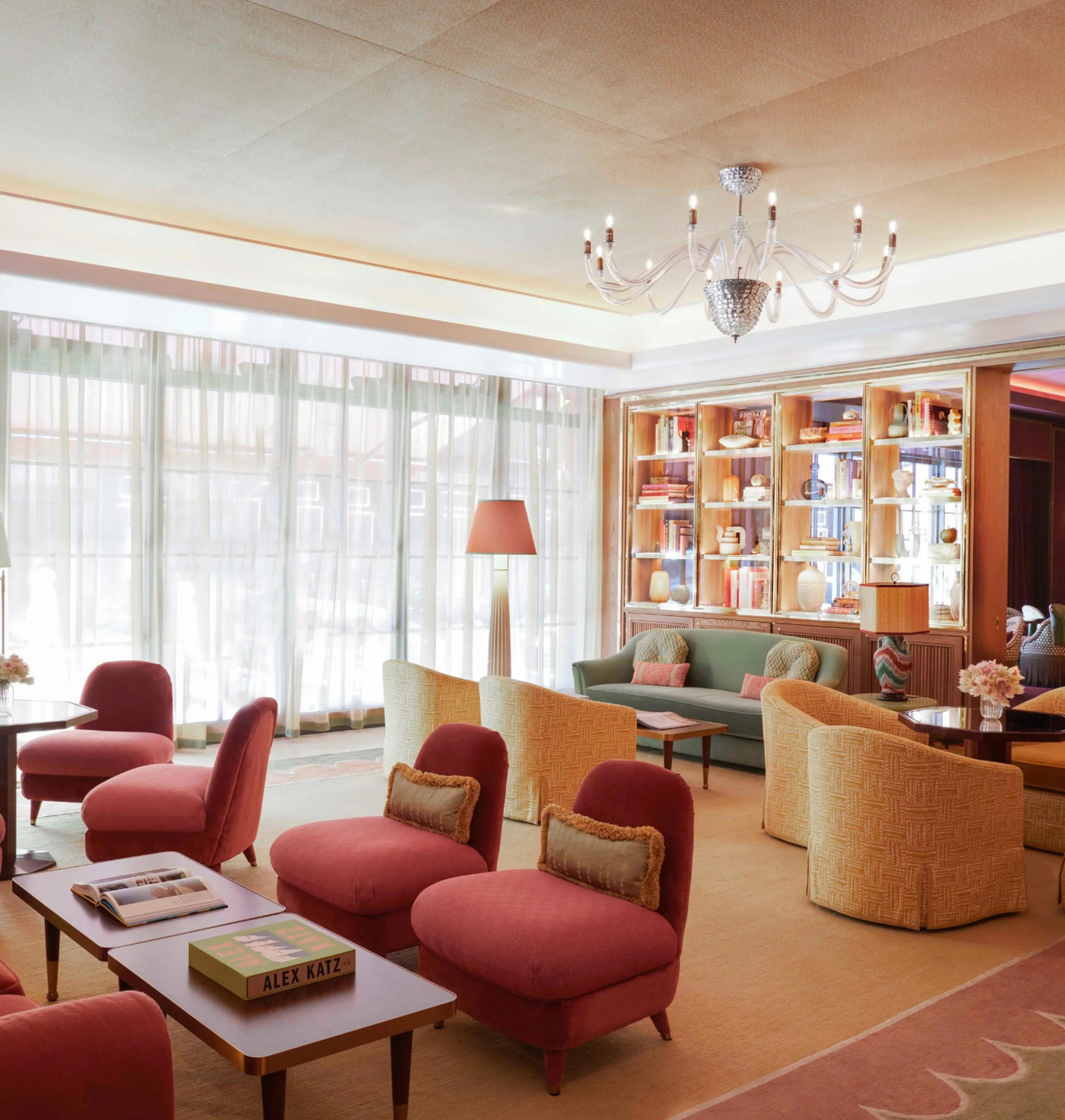
Bars in New York City
Browse all →
Restaurants in New York City
Browse all →
Wineries in New York City
Browse all →


At a Glance
- Trendy
- Modern
- Sophisticated
- Elegant
- Business Trip
- Weekend Escape
- Historic Building
- Design Destination
- Wi Fi
- Fitness Center
- Room Service
- Concierge
- Restaurant
- Street Scene
- Skyline
- Wi Fi
- Fitness Center
- Room Service
- Concierge
- Restaurant
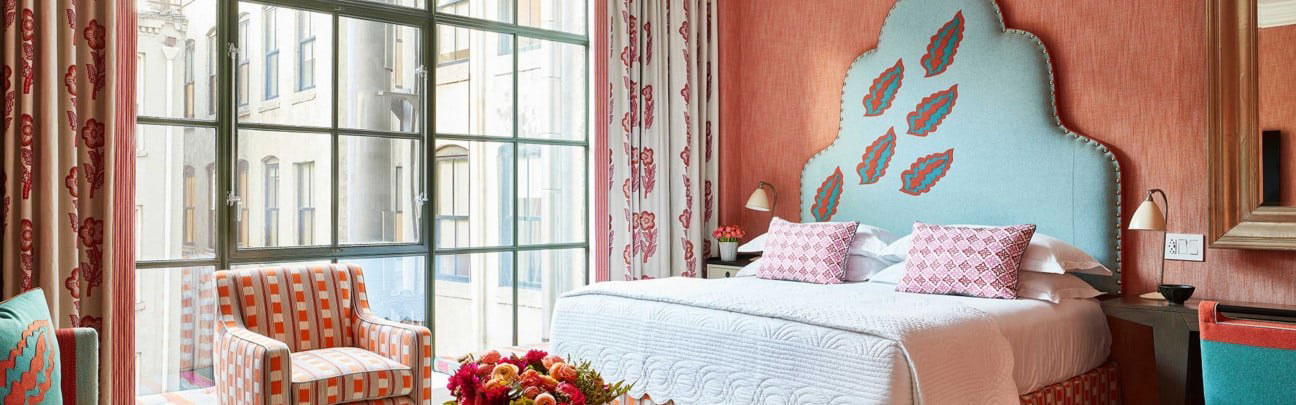
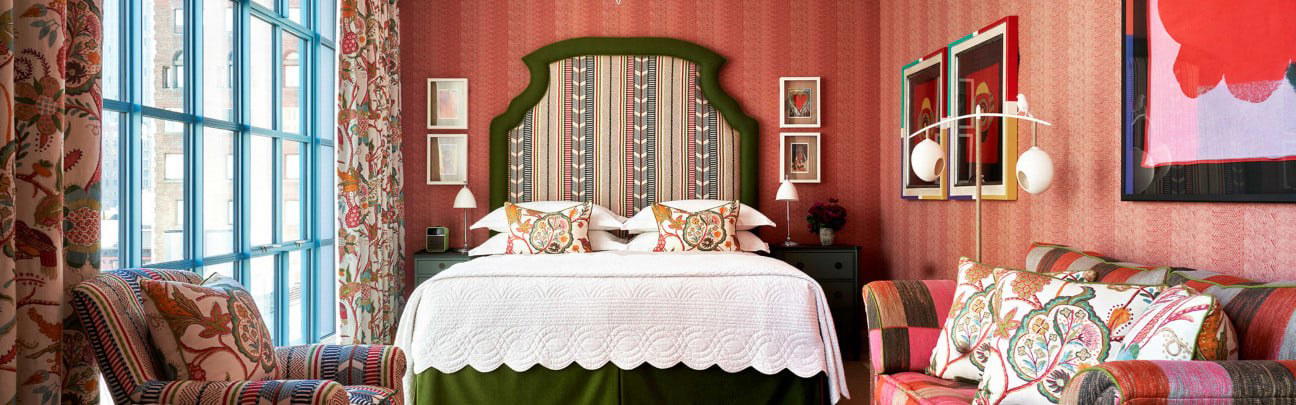
Stylish and layered with light, featuring dimmable lighting, weave-textured walls, vintage crystal sconces, and a lively yet comfortable atmosphere praised for quiet, comfortable rooms amid lively surroundings.