
Among Siem Reap's large-format luxury hotels, Sofitel Angkor Phokeethra occupies a distinct tier: 238 rooms across colonial-style low-rise buildings, open since 2000, with a French-Khmer cultural identity that shapes everything from the greeting at the front desk to the lakeside dining at Mouhot's Dream. Its northern-outskirts position makes Angkor Wat access direct, while the grounds and bar give it a lived-in Old World atmosphere that newer properties rarely replicate.
Pearl is the En Primeur Club membership app — saves, bookings, and concierge access live there. Same editors, same standards.
- Address
- Khum, Vithei Preah Sihanouk Ave, Krong Siem Reap 17259
- Phone
- +855 63 964 600
- Website
- sofitel.accor.com
- Directions
- Get directions
 Saves & bookings on Pearl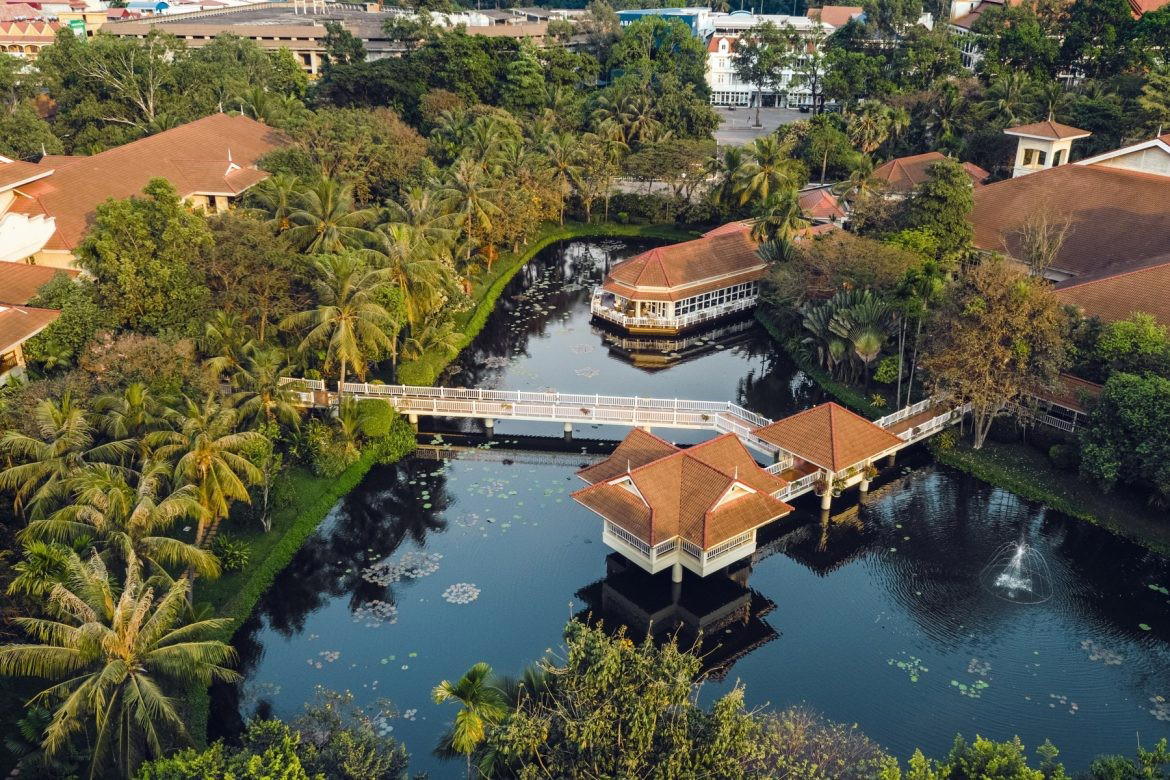
Colonial Scale, Khmer Roots: Siem Reap's French-Inflected Resort Tradition
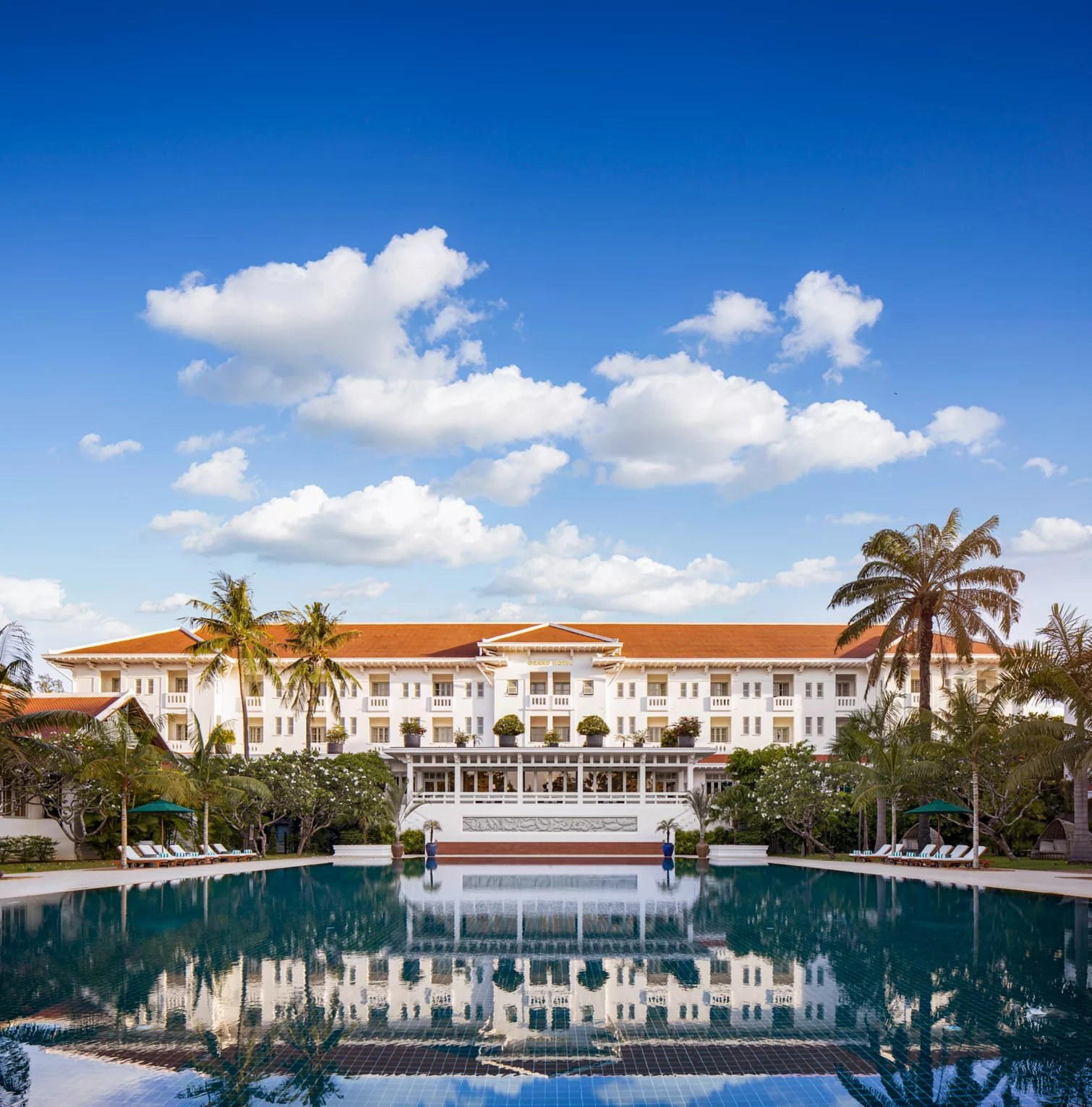
Siem Reap's luxury hotel market divides broadly into two camps: the intimate, design-led properties of 20 to 50 keys, such as Amansara and Sala Lodges, which trade on seclusion and curation; and the larger resort formats that can absorb a full programme of golf, spa, dining, and temple excursions under one address. Sofitel Angkor Phokeethra Golf and Spa Resort is a 5-star Accor hotel in Siem Reap with 238 rooms and suites, part of Sofitel's banner, and it operates firmly in that second category. With 238 rooms and suites distributed across low-rise, colonial-style buildings within palm-filled gardens, it functions more like a self-contained compound than a corridor hotel, a format that suits the rhythms of a destination where guests typically arrive for several nights of temple touring rather than a single-night stopover.
The French colonial register is not purely aesthetic. Sofitel's house philosophy here, described internally as "French Zest," reads in practice as a deliberate bridging exercise between French and Cambodian cultural traditions. Staff greet guests with a warm "Bonjour" alongside the Cambodian gesture of hospitality, a combination that, two decades in, feels less like a brand positioning exercise and more like an institutional habit. That kind of cultural layering is something the French colonial-era architecture of Siem Reap itself has always carried, and the resort's approach sits within that longer history rather than against it.
The Grounds as Orientation Device
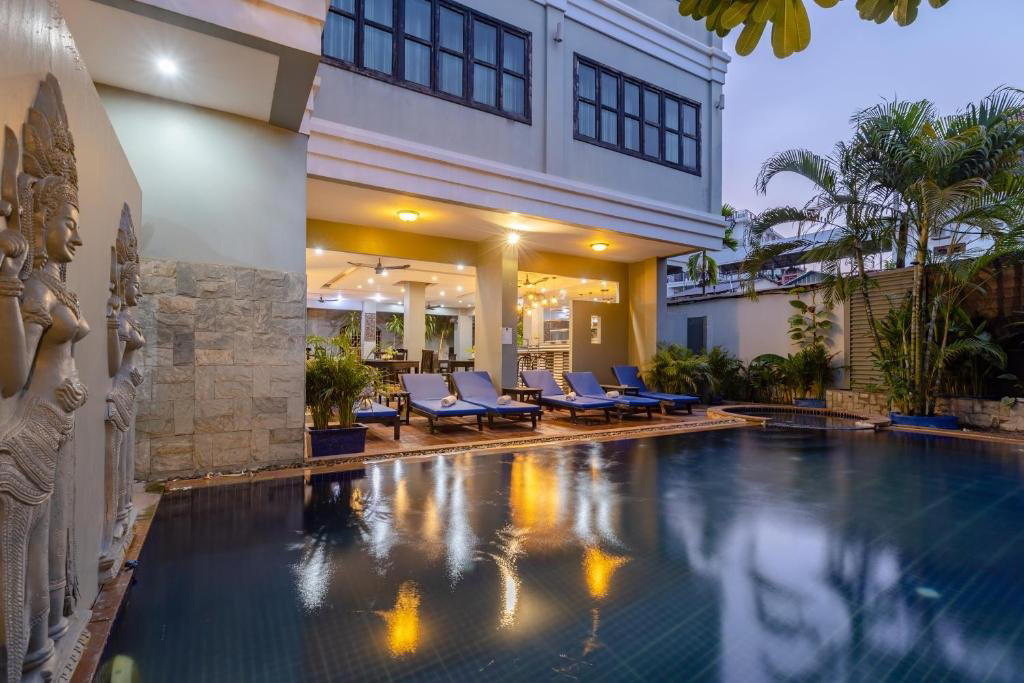
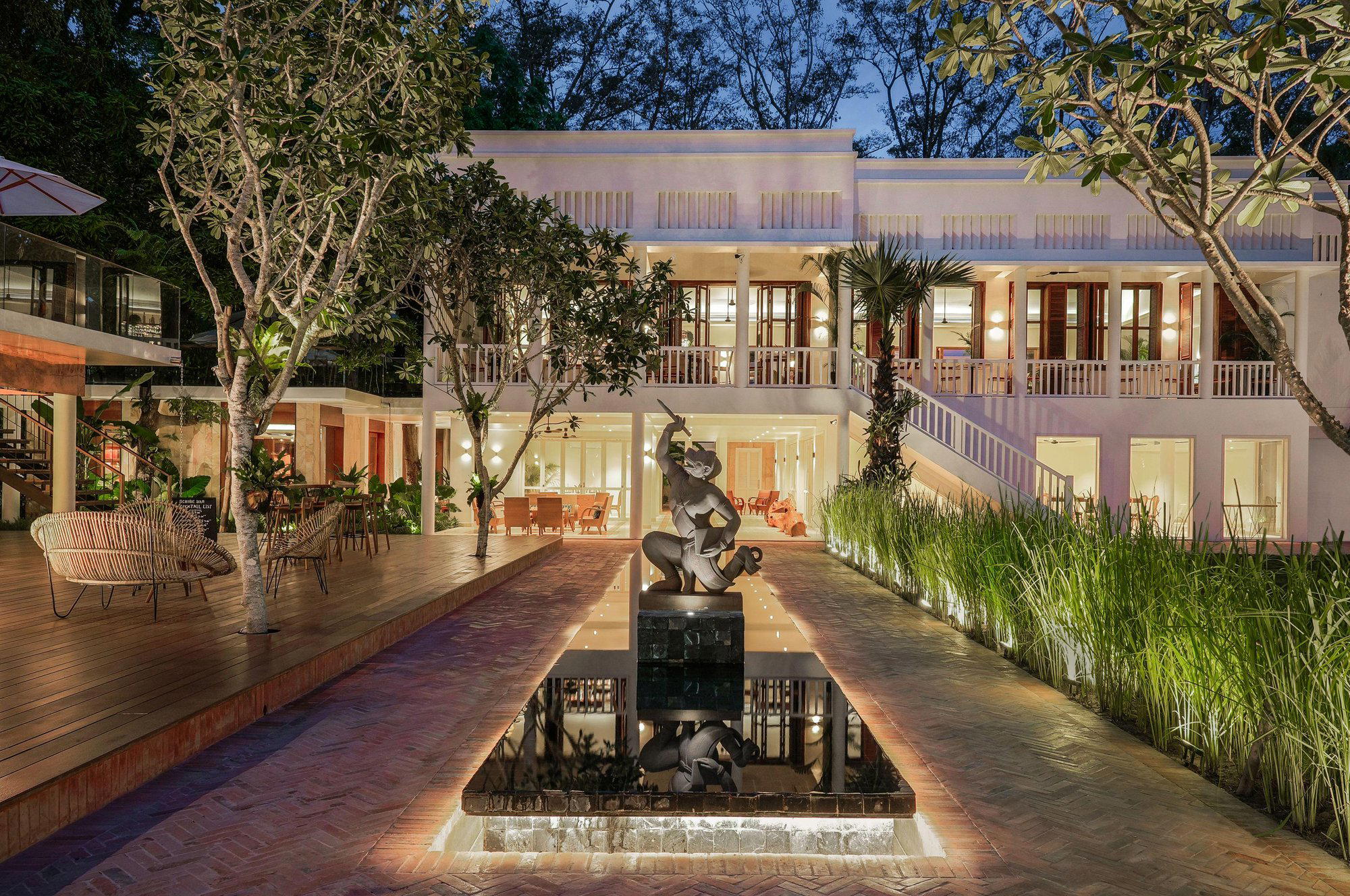
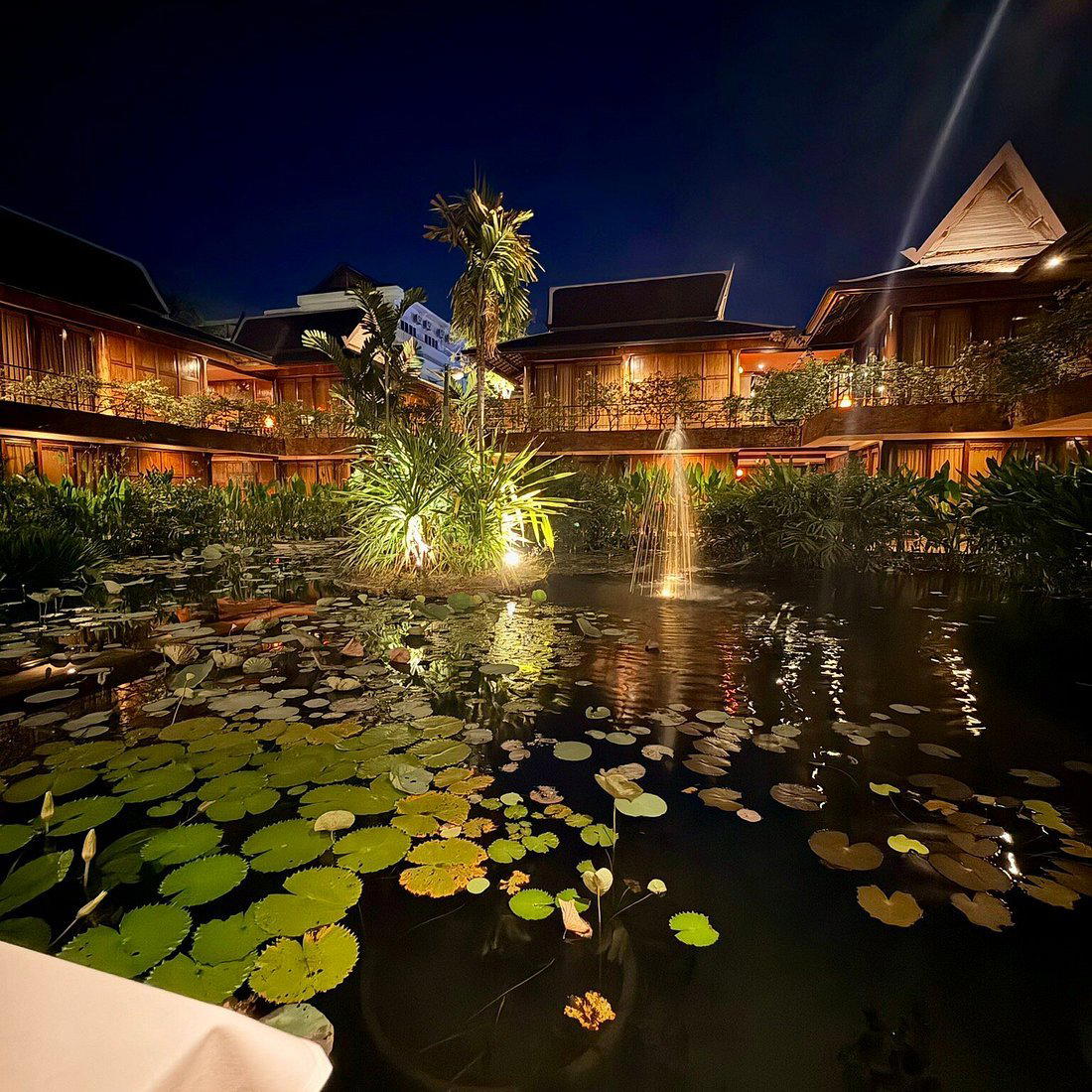
Arriving at the property along Vithei Preah Sihanouk Avenue on the northern outskirts of the city, the grounds read immediately as the resort's primary amenity. Tropical foliage is dense enough that walking the pathways between buildings becomes an activity in itself, one the property actively encourages. Along those walkways, small plaques mark props donated by film crews who have stayed here over the years, a detail that accumulates into something like an informal archive of the property's place in the regional imagination. The resort's age is visible in the maturity of its planting in a way that properties opened in the last decade cannot replicate.
The northern-outskirts location, occasionally cited as a drawback compared to city-centre addresses, is in practice an asset for Angkor-focused visits. The temple complex sits close enough that excursion logistics are direct, a factor that matters when early-morning departures for sunrise at Angkor Wat are part of the plan. Guests travelling for the temples rather than for Siem Reap's developing restaurant and bar scene will find the position more useful than limiting. For those who want to spend time in the city itself, FCC Angkor by Avani or Park Hyatt Siem Reap offer more central positioning; the trade-off is the absence of resort-scale grounds and a golf facility.
Mouhot's Dream and the Chef's Table: Dining as Cultural Argument
Khmer cuisine occupies a complicated position in international food culture: significant in its own right, with a flavour grammar built around fermented fish paste, fresh herbs, coconut-based curries, and the sour-salty balance of dishes like amok, yet consistently overshadowed by the tourist economy that surrounds Angkor. Hotels in Siem Reap have historically defaulted to international menus with token Cambodian additions, a pattern that the better properties have been moving away from as the city's independent dining scene becomes more confident.
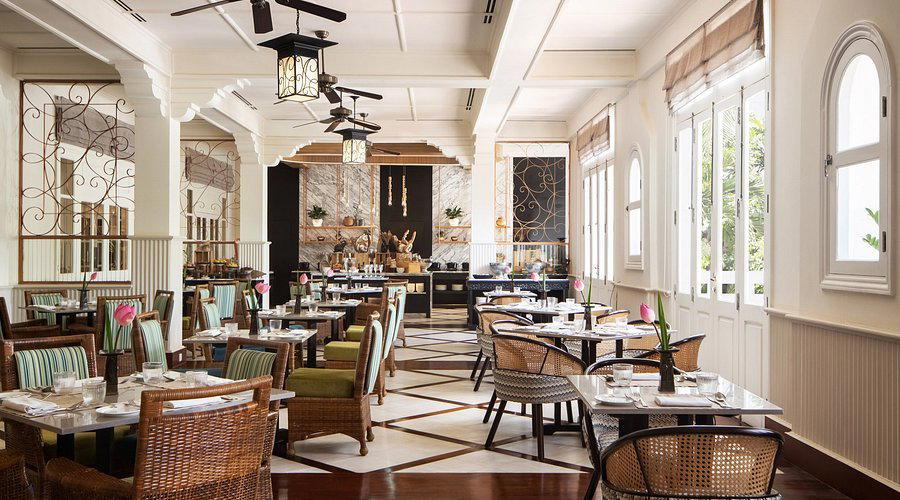
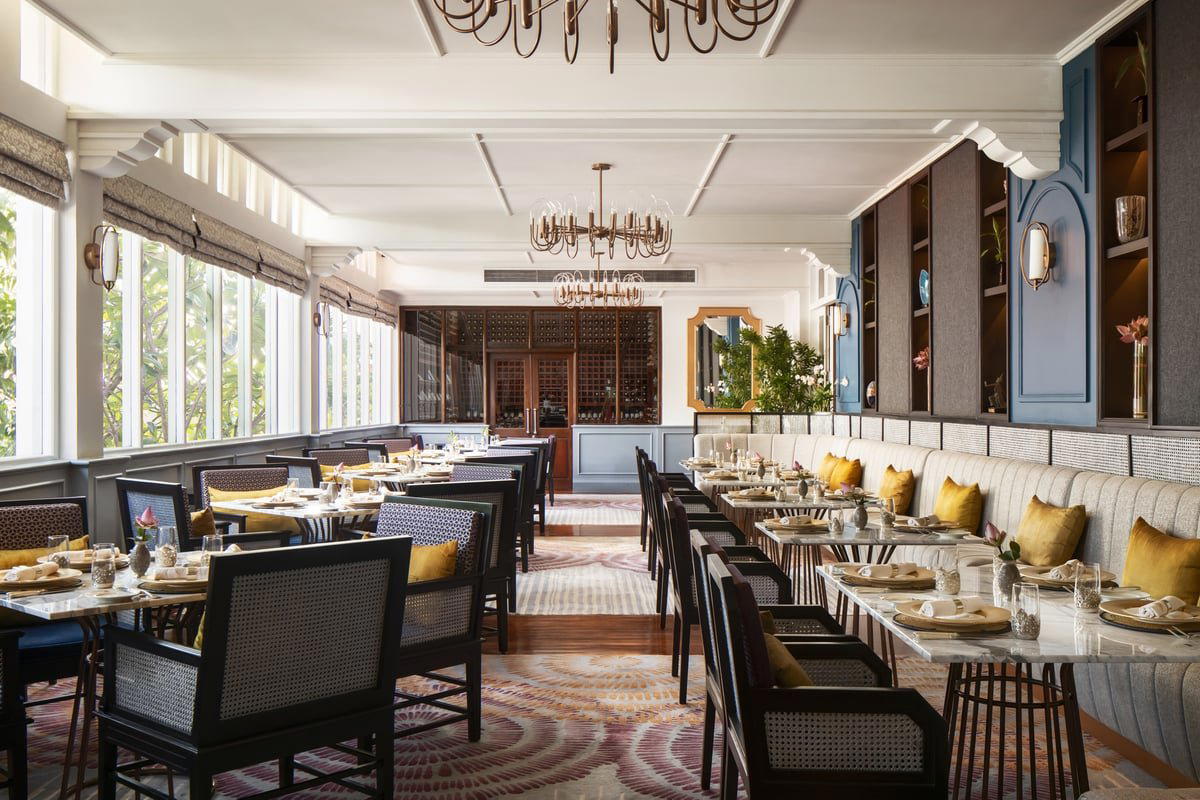
At Sofitel Angkor Phokeethra, the main dining room, Mouhot's Dream, takes its name from Henri Mouhot, the nineteenth-century French naturalist whose accounts of Angkor brought the temples to wider Western attention, a reference that frames the restaurant's French-Khmer position explicitly. The room includes a Chef's Table format with a direct view onto the kitchen and lakeside views beyond, a configuration that the property's inspector singled out as worth reserving specifically. The combination of kitchen transparency and outdoor orientation makes it one of the more atmospheric dining settings in this tier of Siem Reap hotel, a point worth noting given that the resort's scale might otherwise suggest banquet-hall dining over something more considered.
Explorer's Tales Bar and the Value of Accumulated Time
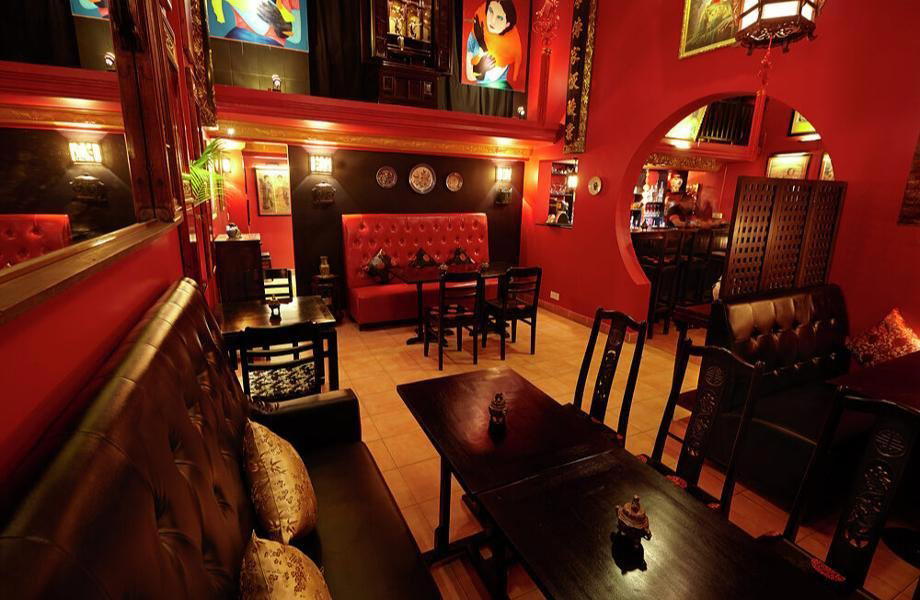
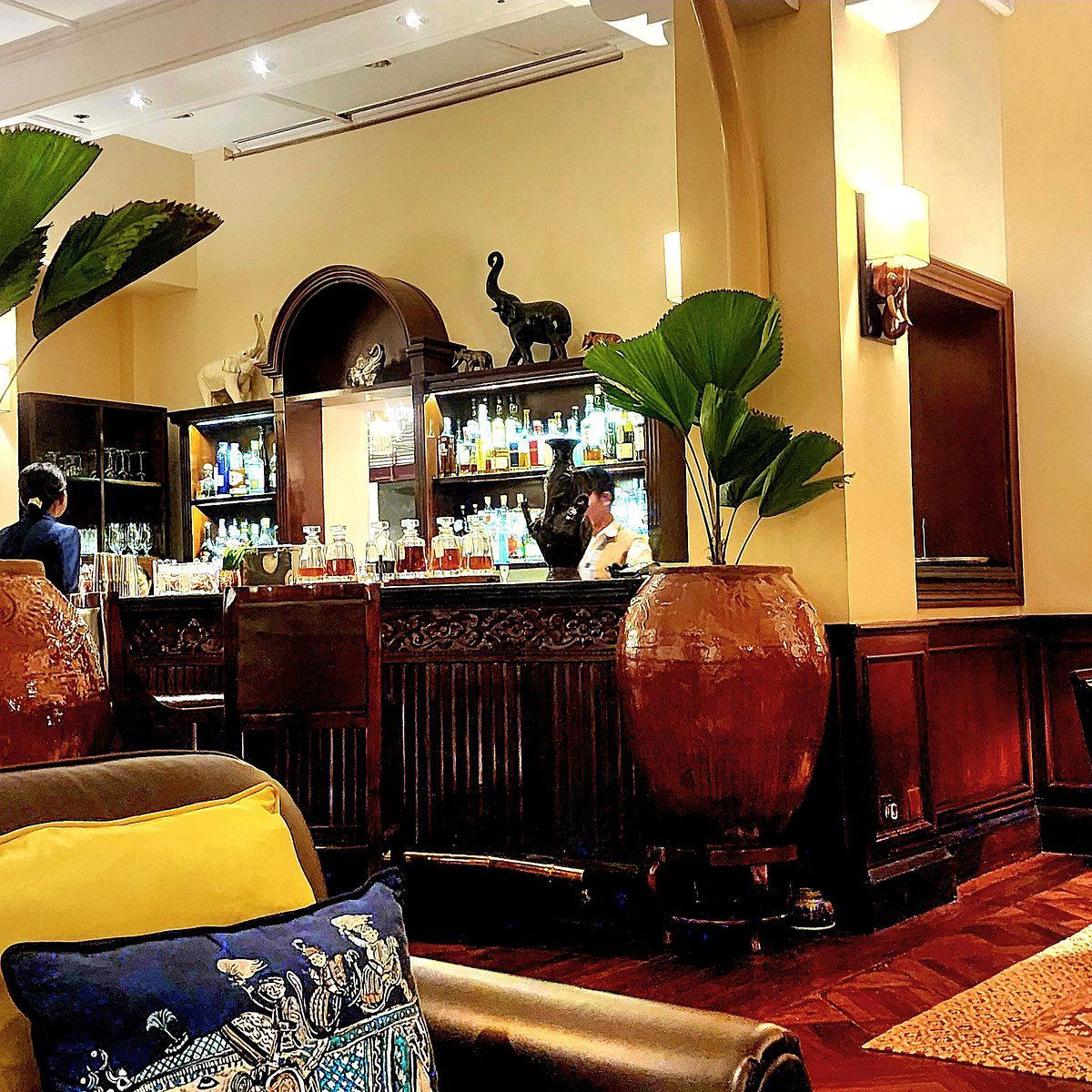
Among the resort's individual spaces, the Explorer's Tales bar carries distinctive character. The Old World atmosphere, a reference point that comes up repeatedly in assessments of the property, reflects the accumulated patina of a hotel that has been operating since 2000, when Siem Reap's international hotel infrastructure was still finding its shape. Newer properties in the city, including the design-led boutique addresses like Angkor Village Hotel or Heritage Suites Hotel, bring their own aesthetic arguments, but the particular texture of a bar that has been hosting travellers for over two decades is not something that can be designed in from the outset.
Golf, Spa, and the Dry-Season Advantage
The resort's golf and spa credentials are part of what separates it from the boutique tier. For guests combining temple visits with golf, packages are available through the property directly, the golf infrastructure being a differentiator that few Siem Reap luxury addresses can match. On the spa side, the facility operates within the resort compound, accessible without leaving the property.
Timing the visit matters. The dry season, November through March, is when Siem Reap functions at its atmospheric peak: cooler temperatures, clear skies, and the conditions for the apsara dance performance at the Royal Court, which the property offers under the stars during that window. The apsara dance is one of the few performing art forms in Southeast Asia with UNESCO Intangible Cultural Heritage status, and watching it in an outdoor setting at the right time of year is qualitatively different from a theatre performance in less cooperative weather. That seasonal specificity is worth building a travel date around.
Rooms: French Meets Khmer in Practice
The 238 rooms and suites follow an interior logic that applies the same French-Khmer bridging principle as the broader property: traditional French stylistic references combined with Khmer artistic details, pitched as a contemporary colonial aesthetic. Entry-level rooms carry pool access as a baseline, which broadens the effective usable space considerably in a warm-weather destination. Guests prioritising privacy or garden views should request accommodations with balconies facing the grounds, the difference between a room that reads as a hotel room and one that reads as a base inside a tropical garden is meaningful at a resort of this type.
For context within the Siem Reap luxury field: Anantara Angkor Resort and Jaya House River Park Hotel operate at lower key counts and a more boutique pitch; Raffles Grand Hotel d'Angkor is the closest comparable in terms of heritage-inflected large-format colonial luxury, with its own deep history in the city. Sofitel Angkor Phokeethra's 238-room scale and golf facility place it in a specific niche: guests who want resort completeness alongside the Angkor experience, with a French cultural thread running through both the physical fabric and the service ethos.
Beyond Cambodia, Accor's Sofitel network spans properties that occupy a similar cultural-bridge position in their respective cities, a useful frame for understanding what the brand attempts globally. Elsewhere in the region, properties like PEARL BEACH RESORT and SPA in Sihanoukville, Song Saa Private Island, The Last Point, and The Secret Garden at Otres Beach represent different points on the Cambodia luxury spectrum, from private island to beach boutique. For those calibrating Siem Reap against international luxury benchmarks, the Accor group also operates at the level of Cheval Blanc Paris, which gives a sense of the broader network's range.
Planning a Stay
The property sits on Vithei Preah Sihanouk Avenue on Siem Reap's northern edge. The Chef's Table at Mouhot's Dream should be reserved in advance. Early-morning temple departures are logistically simple from this address, which is the central practical argument for this location over city-centre alternatives.
Frequently Asked Questions
Is Sofitel Angkor Phokeethra Golf and Spa Resort more low-key or high-energy?
The resort operates at a pace that reflects its setting: a large-format property in a destination where guests tend to arrive for multi-night temple visits rather than urban socialising. The grounds and bar have a relaxed, almost colonial-club tempo. The Explorer's Tales bar draws on Old World atmosphere rather than nightlife energy. By comparison with more compact city-centre addresses like Park Hyatt Siem Reap or Hotel Vellita Siem Reap, the Sofitel skews more self-contained resort than urban base. Its,507 reviews suggests consistent delivery on that promise.
What is the leading suite at Sofitel Angkor Phokeethra Golf and Spa Resort?
Guests seeking one private configuration should contact the property directly to confirm current suite categories and availability. For an alternative scale of suite product in Siem Reap, Amansara operates at 24 suites with a fully different service model. Globally, the suite standard in Accor's highest-tier addresses, such as Aman New York or Badrutt's Palace Hotel, provides a reference point for what the luxury suite category means at international scale.
What is Sofitel Angkor Phokeethra Golf and Spa Resort leading at?
The property's strongest arguments are its grounds, its French-Khmer cultural coherence, and its position for Angkor access. The golf facility separates it from most Siem Reap luxury alternatives. The Chef's Table at Mouhot's Dream offers atmospherically distinct dining in the resort. And the dry-season apsara dance programme, held outdoors at the Royal Court, represents an experience tied directly to the Cambodian performing arts tradition that UNESCO has formally recognised. For travellers who want resort completeness, golf, spa, multiple dining formats, mature tropical grounds, without sacrificing proximity to Angkor, this address covers more bases than most at this scale. Comparable large-format alternatives in Cambodia include Shinta Mani Wild, though it operates in a wholly different ecological and experiential register.
A Lean Comparison
Comparable venues nearby, for context on price, style, and recognition.
| Venue | Cuisine | Price | Notes |
|---|---|---|---|
| Sofitel Angkor Phokeethra Golf & Spa ResortThis venue — the venue you are viewing | Siem Reap, colonial Khmer fusion resort | $$$$ | Not listed |
| Angkor Village Hotel | Not listed | $$$ | Wat Bo, Traditional Cambodian boutique resort with contemporary comfort, built in 1994-1995 and designed around tropical gardens and water features. |
| Anantara Angkor Resort | Not listed | $$$$ | Siem Reap, Contemporary Khmer-inspired luxury boutique resort with colonial influences and traditional Cambodian design elements throughout. |
| Raffles Grand Hotel d'Angkor | Not listed | $$$$ | French Quarter, Historic French colonial landmark with Art Deco architecture, authentically preserved yet modernized with contemporary comfort. |
| Heritage Suites Hotel | Not listed | $$$ | Wat Polanka, French colonial townhouse transformed into chic boutique retreat |
| Shinta Mani Angkor and Bensley Collection Pool Villas | Not listed | $$$$ | French Quarter, Khmer-inspired luxury resort with playful Angkor elements. |
Recognition history
Dated appearances from independent guides and award organizations, with the underlying list record or original source where available.
Forbes Recommended
Forbes
Forbes Recommended
Forbes
At a Glance
- Elegant
- Quiet
- Scenic
- Sophisticated
- Ornate
- Honeymoon
- Romantic Getaway
- Family Vacation
- Wellness Retreat
- Infinity Pool
- Golf Course
- Destination Spa
- Garden
- Wi Fi
- Pool
- Spa
- Fitness Center
- Room Service
- Concierge
- Business Center
- Valet Parking
- Kids Club
- Garden
- Wi Fi
- Pool
- Spa
- Fitness Center
- Room Service
- Concierge
- Business Center
- Valet Parking
- Kids Club
Calm, elegant, and serene with lush gardens, tranquil poolside atmosphere, and peaceful lagoons as described in guest reviews.