Song Saa Private Island


Song Saa Private Island occupies its own coral-fringed islet in Cambodia's Koh Rong Archipelago, reached by speedboat from Sihanoukville. The property operates as a fully closed resort, with overwater and jungle villas set against a marine protected area that the resort helped establish. For travellers seeking genuine seclusion in Southeast Asia, it represents one of the region's more committed private-island formats.
Pearl is the En Primeur Club membership app — saves, bookings, and concierge access live there. Same editors, same standards.
- Address
- Koh Ouen Private Island, Koh Rong Archipelago, Near Sihanoukville, Cambodia
- Phone
- +855 92 609 488
- Website
- songsaa-privateisland.com
- Directions
- Get directions
 Saves & bookings on Pearl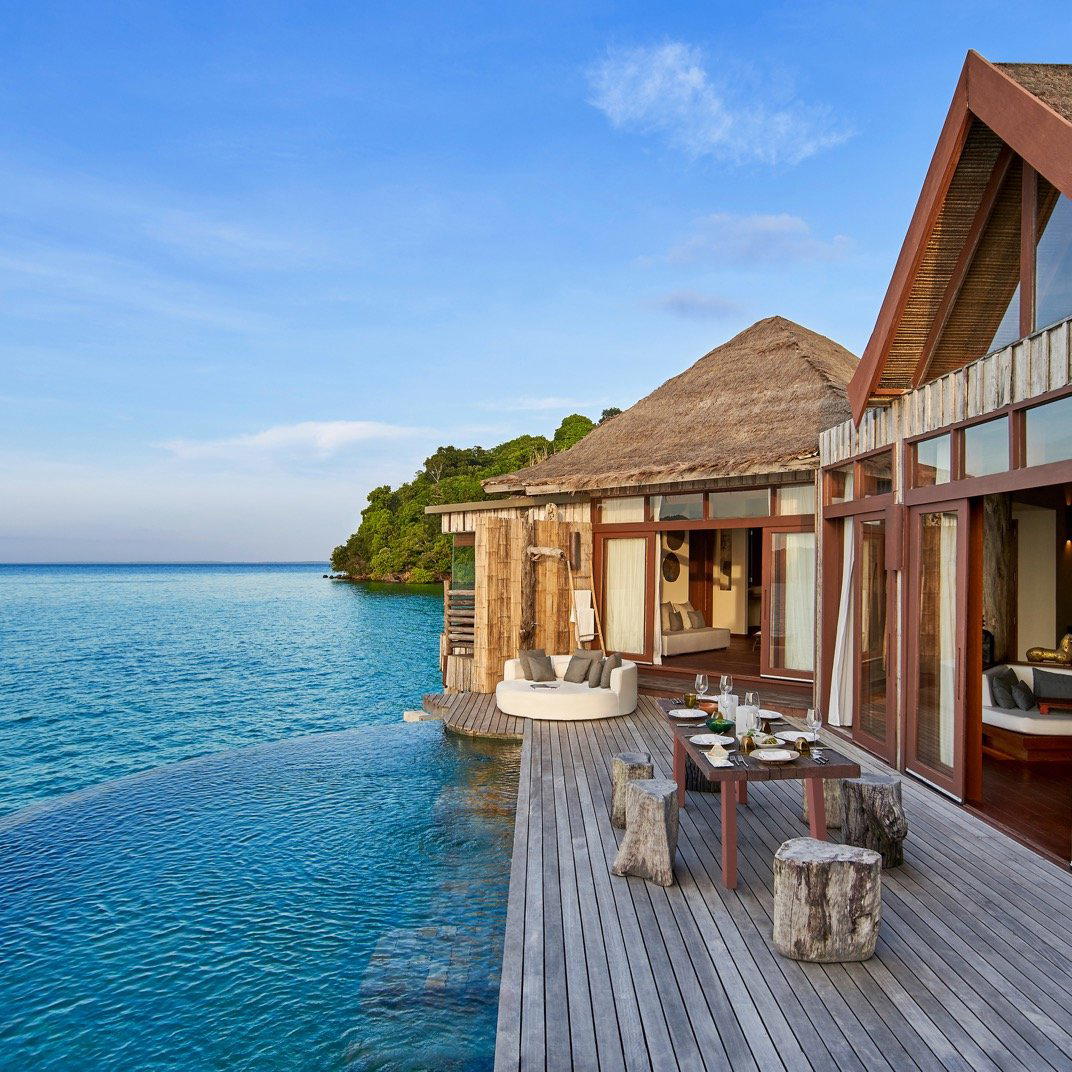
Arriving at the Edge of Cambodia's Coast
The approach to Song Saa Private Island does something that few resort arrivals manage: it resets the guest's sense of time before they've checked in. The speedboat transfer from Sihanoukville takes roughly 45 minutes across open water, threading through the islands of the Koh Rong Archipelago until the resort appears as a cluster of overwater structures and jungle-canopied villas straddling two small islets connected by a footbridge. The Gulf of Thailand stretches in every direction. There is no town, no road access, no competing property in sight. This is not an amenity, it is the foundational premise of the experience.
Southeast Asian private-island hospitality has split into broadly two models: large-scale resort operations that replicate urban hotel amenity stacks in a remote setting, and smaller properties where the island itself is the programme. Song Saa belongs firmly to the second category. The resort operates across a limited number of villas, and the marine protected area surrounding the island, an initiative the property helped establish, functions as a living boundary that defines what guests can and cannot do here. That constraint is also a feature: snorkelling directly off villa decks, kayaking through protected reef systems, and watching bioluminescence from overwater platforms are experiences that require no additional booking or logistics.
What Anticipatory Service Looks Like at This Scale
At the price tier occupied by full private-island resorts in Southeast Asia, the service proposition is rarely about ratio of staff to guest, that number is almost always high. The more meaningful question is whether the service model is reactive or anticipatory, and whether it feels calibrated to the specific guest in front of it or delivered from a script.
Song Saa's format, a small villa count, a closed island, no day visitors, creates structural conditions for the latter. Staff can build genuine familiarity with guests across a multi-night stay in a way that large beachfront resorts cannot. Preferences registered on arrival inform how meals are staged, when boats are prepared, and how excursions are timed around tides and light. The personalisation is less about elaborate gestures and more about the absence of friction: the kayak appears when conditions are right, the meal timing shifts without requiring a call, the children's programme adjusts to temperament rather than age bracket.
This model of anticipatory service is increasingly how particularly credible private-island operators differentiate themselves from mid-tier competitors. Six Senses Krabey Island, operating in similar Cambodian waters near Kep, applies a comparable philosophy but through Six Senses' wellness infrastructure. Song Saa's approach is less programmatic, the focus sits on environmental immersion and responsiveness to individual guest rhythm rather than structured wellness sequences.
The Marine Reserve as Programme
The Koh Rong Archipelago sits within a region of the Gulf of Thailand that has seen significant ecological pressure from rapid coastal development around Sihanoukville over the past decade. Song Saa's investment in the surrounding marine protected area gives the resort a conservation credential that functions both ethically and experientially. Guests snorkel reefs that are actively managed rather than incidentally adjacent to a hotel. The distinction, for anyone who has compared a managed marine reserve to an unprotected reef under tourist pressure, is visible in the water.
This positions the property differently from mainland coastal competitors. Pearl Beach Resort and Spa in Sihanoukville proper offers a coast-based alternative, but without the island seclusion or the conservation context. The Last Point, also accessible from the Sihanoukville coastline, operates at a different scale and price tier. For travellers whose interest in a coastal Cambodian stay extends to the ecological integrity of the environment around them, Song Saa occupies a position that has few direct competitors in the country.
Song Saa in the Context of Cambodian Luxury
Cambodia's premium hospitality tier has historically concentrated in Siem Reap, where Angkor draws a clientele willing to spend considerably on proximity to temple access. Properties like Amansara and Heritage Suites Hotel in Siem Reap, or Jaya House River Park Hotel in Krong Siem Reap, built their reputations around cultural access and intimate scale in a city context. In Phnom Penh, Raffles Hotel Le Royal holds the colonial-era legacy position. Shinta Mani Wild occupies an adventure-conservation niche in the Southern Cardamom wilderness.
Song Saa introduced something distinct to Cambodia's luxury map: a private-island format that made the Koh Rong Archipelago a credible destination rather than an overflow from Sihanoukville's backpacker circuit. The opening positioned Cambodia's coastline in a competitive conversation with the Maldives and remote Thai island properties, at a time when that comparison would not have occurred to most travellers. For the international traveller comparing full private-island experiences across the Asia-Pacific region, Song Saa sits in a comparable set that includes properties well beyond Cambodia's borders, places like Amangiri in its mode of total environmental immersion, or Hotel Esencia in Tulum in its model of design-led seclusion.
Planning Your Stay
The dry season, running from November through April, represents one reliable window for visiting the Koh Rong Archipelago. Seas are calmer during this period and visibility for snorkelling and diving is at its highest. The wet season from May through October brings heavier rain and rougher transfers, though rates are lower and the island is quieter for those who accept the weather trade-off. Bookings at this tier require advance planning, particularly for peak dry-season dates when villa availability across the archipelago tightens across all properties.
Cuisine and Awards Snapshot
Comparable venues nearby, for context on price, style, and recognition.
| Venue | Cuisine | Price | Awards | Notes |
|---|---|---|---|---|
| Song Saa Private IslandThis venue — the venue you are viewing | Sustainable luxury eco-resort inspired by local fishing villages. | $$$$ | 5-Star | Not listed |
| PEARL BEACH RESORT & SPA | Beachfront luxury resort with private villas blending into tropical foliage | $$$ | 4-Star | Saracen Bay |
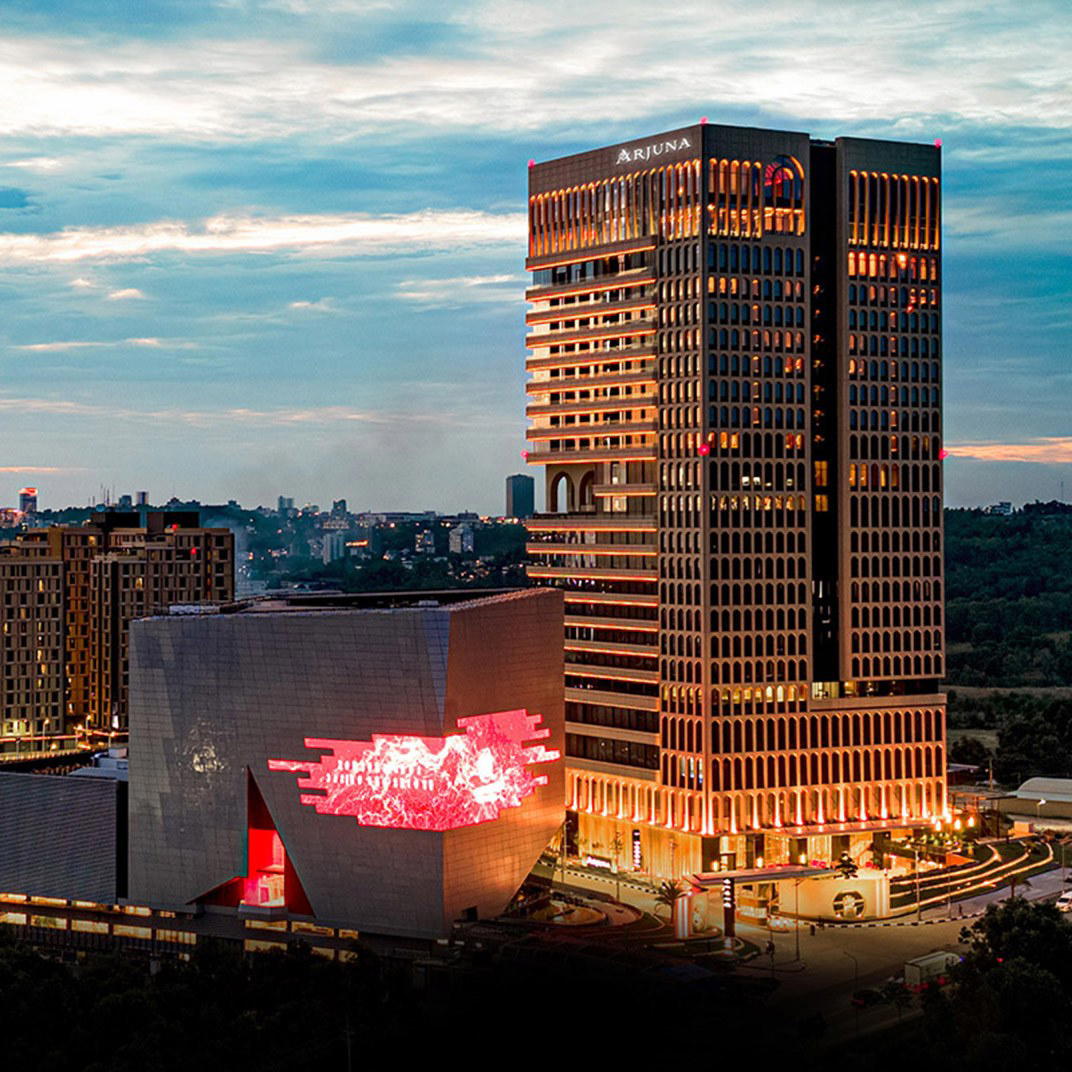
| Arjuna Solitaire Hotel | Contemporary luxury resort with Indonesian and Khmer cultural influences, positioned as Cambodia's hospitality renaissance symbol. | $$$$ | 5-Star | Kampong Dewa |
| Six Senses Krabey Island | Hotel | Not listed | Michelin 2 Key | Sihanoukville |
| The Balé Phnom Penh | luxury boutique resort on Mekong River | $$$$ | 5-Star | Sangkat Bak Khaeng |
| Sofitel Phnom Penh Phokeethra | French colonial luxury with Khmer influences set in a historic garden compound | $$$$ | 5-Star | Chamkar Mon |
Recognition history
Dated appearances from independent guides and award organizations, with the underlying list record or original source where available.
Virtuoso Luxury Hotel Partner
Virtuoso
Michelin Selected
Michelin
Continue exploring
More in Sihanoukville
Hotels in Sihanoukville
Browse all →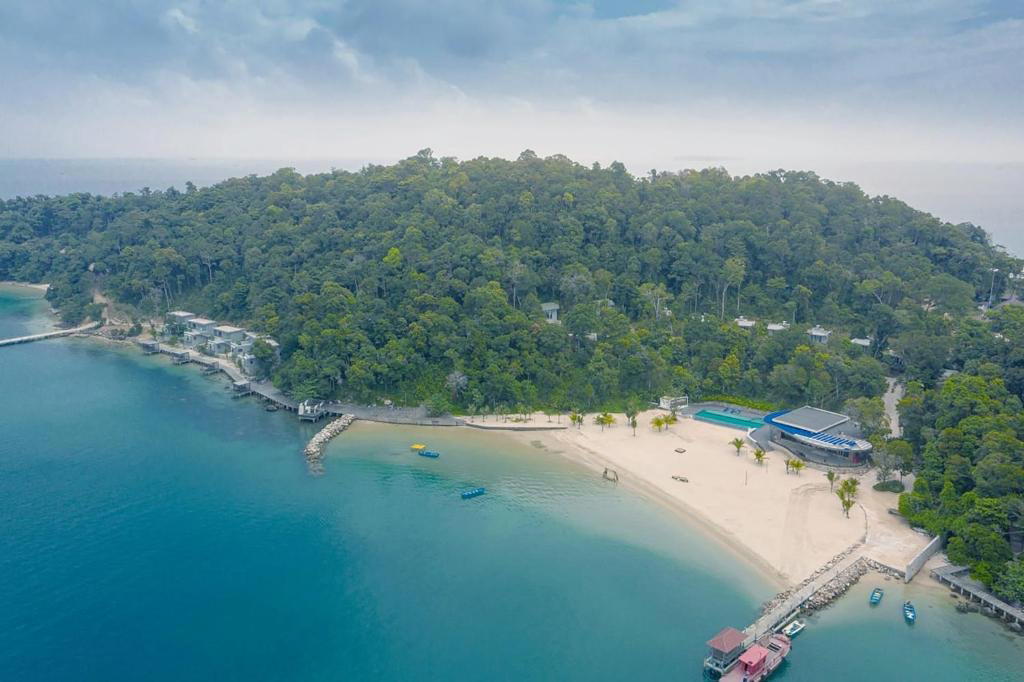
Bars in Sihanoukville
Browse all →
At a Glance
- Romantic
- Quiet
- Elegant
- Scenic
- Intimate
- Sophisticated
- Ornate
- Honeymoon
- Romantic Getaway
- Wellness Retreat
- Anniversary
- Weekend Escape
- Beachfront
- Private Villa
- Infinity Pool
- Waterfront
- Pool
- Spa
- Wi Fi
- Concierge
- Room Service
- Waterfront
- Garden
- Pool
- Spa
- Wi Fi
- Concierge
- Room Service
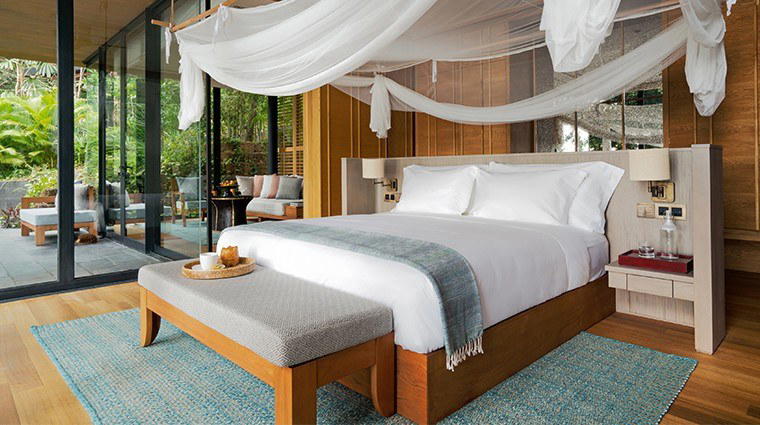
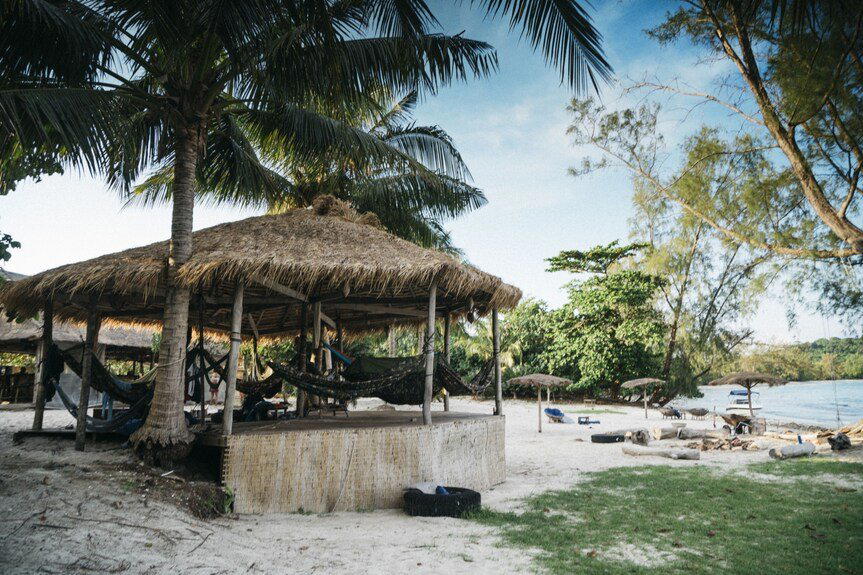
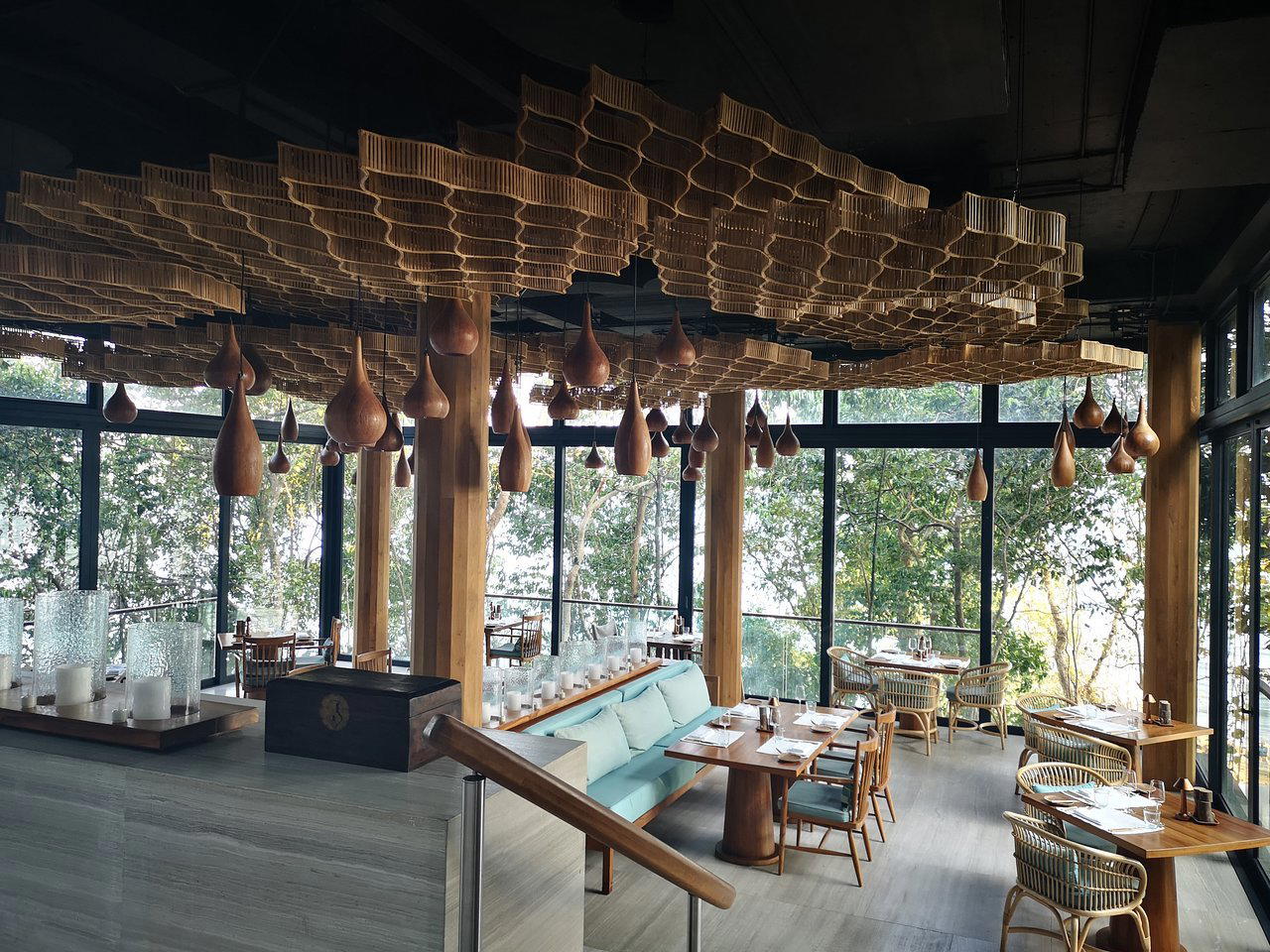
Calm and cooling natural textures with driftwood, thatch, and expansive terraces blurring indoor-outdoor lines amid jungle and ocean serenity.