Shinta Mani Wild



2 Michelin Keys · La Liste Top Hotels · Tatler Listed in Best Hotels Asia-Pacific
Shinta Mani Wild occupies a stretch of protected Cambodian jungle in Kampong Seila, where the design responds directly to the forest rather than imposing on it. Recognised by La Liste Top Hotels 2026 with 94.5 points and named to the Tatler Best Hotels Asia-Pacific 2025 list, it operates as a low-capacity wilderness property in a category that prizes remoteness and ecological integration over resort scale.

Pearl is the En Primeur Club membership app — saves, bookings, and concierge access live there. Same editors, same standards.
- Address
- Prey Praseth Village, Kampong Seila
- Phone
- +855 96 919 0000
- Website
- shintamani.com
- Directions
- Get directions
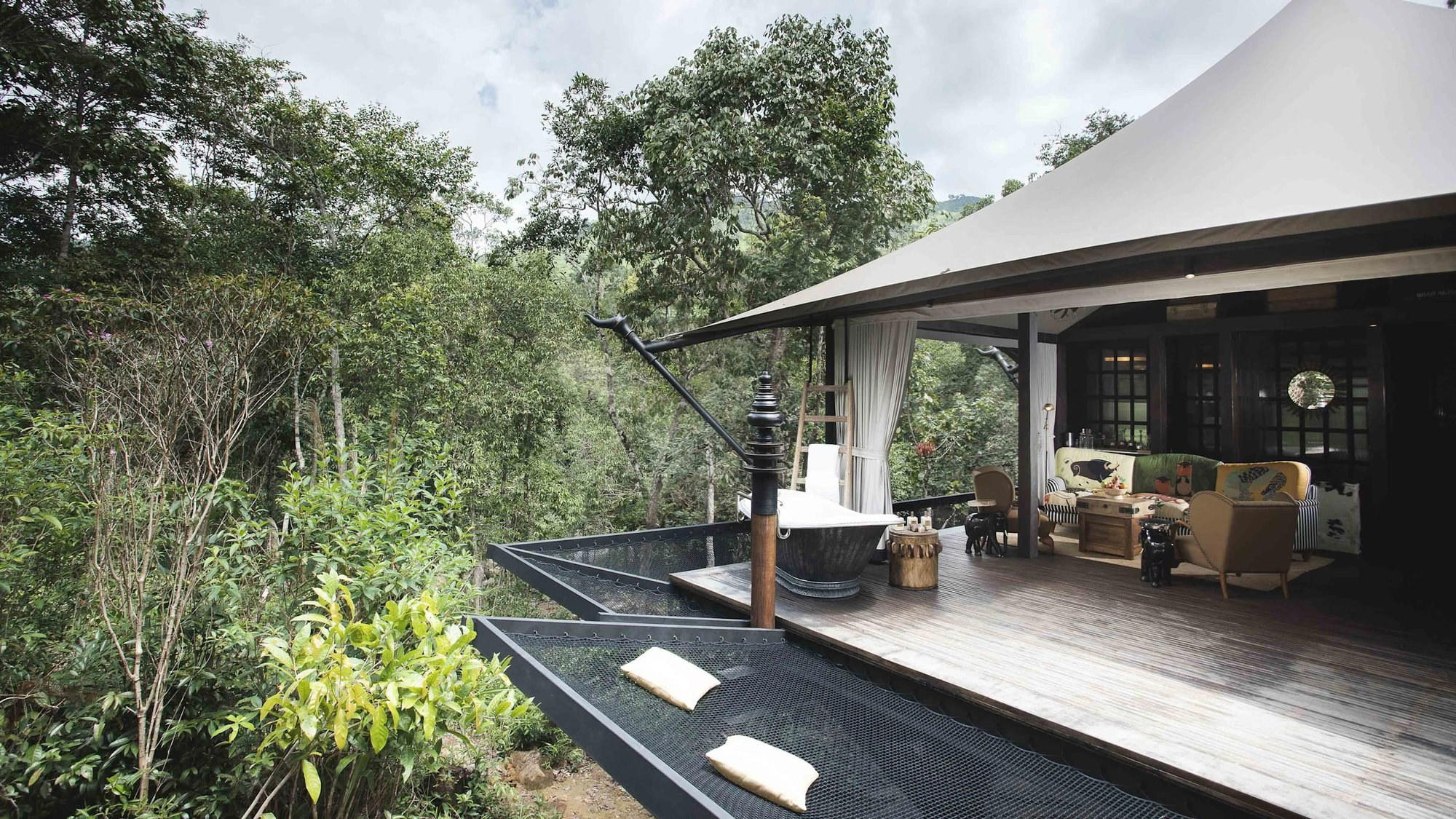
Where the Architecture Answers to the Forest
Luxury hospitality in Southeast Asia has increasingly divided into two distinct tracks: large-footprint international properties that deliver a consistent branded experience, and smaller, site-specific operations where the physical environment shapes every structural and spatial decision. Shinta Mani Wild, positioned inside a protected wildlife corridor in Kampong Seila in southern Cambodia, belongs firmly to the second category. The design here is not decorative; it is functional within an ecological argument. Accommodation units are suspended or refined to reduce ground disturbance, connected by raised walkways that move guests through the forest canopy rather than across cleared ground.
That spatial grammar is worth pausing on. When a property builds upward rather than outward, the consequence is not just aesthetic. The guest's relationship with the surrounding environment shifts entirely. At canopy level, what you encounter is not a curated view of nature but immersion in it — the forest moves around you, the light filters differently through the hours, and sound carries from the valley floor below. This is the architectural logic that separates genuinely site-responsive wilderness properties from those that simply place tented structures near a treeline.
The Jungle Lodge Tier in Cambodia
Cambodia's premium accommodation scene has historically concentrated in two corridors: Siem Reap, anchored by Angkor Wat visitation, and the islands of the Gulf of Thailand and Koh Rong Archipelago. Properties like Amansara in Siem Reap and Heritage Suites Hotel in Siem Reap anchor the temple-circuit tier, while coastal options such as Song Saa Private Island and Pearl Beach Resort and Spa in Sihanoukville represent the island-and-beach bracket. Shinta Mani Wild occupies a third niche that sits outside both: the protected-forest lodge, where access is deliberately difficult, capacity is deliberately low, and the surrounding ecosystem is the primary reason to visit.
This niche operates by different signals than coastal or heritage-circuit properties. Awards recognition matters here not as a measure of service polish or food program, but as third-party validation of the ecological integration, the physical design, and the rare-access proposition. La Liste's 94.5-point score in its Leading Hotels 2026 ranking and inclusion on Tatler's Leading Hotels Asia-Pacific 2025 list position Shinta Mani Wild within the Asian wilderness lodge tier alongside properties that typically operate with limited keys and all-inclusive formats. For comparable positioning in Southeast Asia's coastal premium segment, The Last Point in Prey Nob and The Secret Garden at Otres Beach illustrate how Cambodian boutique hospitality has developed outside the major city circuits.
Design Logic: Suspension, Materiality, and Scale
The suspended-tent format that characterises properties in this category carries specific design consequences. Structure must work with existing topography: existing trees become structural anchors, gradients that would be levelled on a conventional site are preserved and incorporated, and drainage and water systems must function without altering the forest floor. The material palette at this kind of property typically draws on locally sourced hardwoods, woven natural fibres, and open-sided architecture that maintains airflow without full enclosure — design decisions that serve both ecological constraints and aesthetic coherence.
What this produces, at the level of the guest experience, is a spatial intimacy that air-conditioned concrete structures cannot approximate. The gap between interior and exterior is narrow or non-existent. Rain sounds close. The forest edge is not viewed through a picture window but entered directly from the sleeping platform. This is a fundamentally different accommodation grammar from the international luxury tier, where properties like Amangiri in Canyon Point or Castello di Reschio in Lisciano Niccone bring their own dominant architectural presence to a landscape rather than deferring to it.
The Protected Corridor: Why Location Matters Here
Kampong Seila sits within a wildlife corridor in the Cardamom Mountains, one of Southeast Asia's largest remaining areas of lowland forest. The ecological specificity of that location is not incidental to the property's positioning. Wilderness lodge hospitality in this tier operates on the logic that what the guest gains access to is genuinely irreplaceable: old-growth forest, species that exist nowhere else in the region, river systems that are not accessible by road. The remoteness is the amenity, and the design of the property exists to facilitate that access rather than to provide an alternative to it.
Access to Shinta Mani Wild typically requires a combination of road transfer and a zipline arrival sequence across the river canyon, which functions simultaneously as a logistical solution and an architectural threshold, the physical experience of crossing into a different environment. This arrival format is unusual enough in the Asia-Pacific luxury segment that it has become an identifying element of the property's reputation.
Planning Your Stay
For those considering the property, the dry season months between November and April offer the most reliable access conditions, as Cambodia's monsoon season can affect jungle road passability from May through October. The property operates on an all-inclusive basis, which is standard in this tier of low-capacity wilderness lodge: individual pricing and booking availability are best confirmed directly through the property's official channels. Tatler's 2025 Asia-Pacific recognition gives the property a place in a shortlist that typically includes fewer than a handful of Cambodia properties, which makes it a useful benchmark when evaluating the regional wilderness lodge tier against international alternatives like Hotel Esencia in Tulum.
For a broader picture of Cambodia's premium hospitality, Raffles Hotel Le Royal in Phnom Penh and Jaya House River Park Hotel in Siem Reap anchor the city and heritage circuits respectively, while our full Prey Praseth Village guide covers the immediate regional context. For further global reference points in the premium wilderness and design-led categories, see Hotel Bel-Air in Los Angeles, Bvlgari Hotel Tokyo, Cheval Blanc Paris, Hotel The Mitsui Kyoto, La Réserve Paris, Aman New York, Aman Venice, Badrutt's Palace Hotel in St. Moritz, Hôtel de Paris Monte-Carlo, Hotel Du Cap-Eden-Roc in Cap d'Antibes, Hotel Plaza Athénée in Paris, Hotel Sacher Wien in Vienna, and The Fifth Avenue Hotel in New York City.
Comparable Venues
Comparable venues nearby, for context on price, style, and recognition.
| Venue | Cuisine | Price | Awards | Notes |
|---|---|---|---|---|
| Shinta Mani WildThis venue — the venue you are viewing | luxury tented camp blending safari elegance with jungle conservation | Not listed | 2 Michelin Keys · La Liste Top Hotels | Not listed |
| The Balé Phnom Penh | luxury boutique resort on Mekong River | Not listed | Michelin Selected · Mr & Mrs Smith Seal of Approval | Sangkat Bak Khaeng |
| Zannier Hotels Phum Baitang | Traditional Cambodian village resort blending vernacular architecture with modern luxury villas. | Not listed | 2 Michelin Keys · La Liste Top Hotels | Krong Siem Reap |
| Anantara Angkor Resort | Contemporary Khmer-inspired luxury boutique resort with colonial influences and traditional Cambodian design elements throughout. | $300–500 | Michelin Selected · Forbes 4-Star | Siem Reap |
| Shinta Mani Angkor and Bensley Collection Pool Villas | Khmer-inspired luxury resort with playful Angkor elements. | Not listed | 1 Michelin Key · La Liste Top Hotels | French Quarter |
| Raffles Grand Hotel d'Angkor | Historic French colonial landmark with Art Deco architecture, authentically preserved yet modernized with contemporary comfort. | $300–500 | 1 Michelin Key · La Liste Top Hotels | French Quarter |
Recognition history
Dated appearances from independent guides and award organizations, with the underlying list record or original source where available.
Michelin 2 Keys
Michelin
La Liste Top Hotels
La Liste
Tatler Listed in Best Hotels Asia-Pacific
Tatler
Full recognition history (4 entries)
Michelin Selected
Michelin
Continue exploring
More in Kampong Seila
Bars in Kampong Seila
Browse all →
Restaurants in Kampong Seila
Browse all →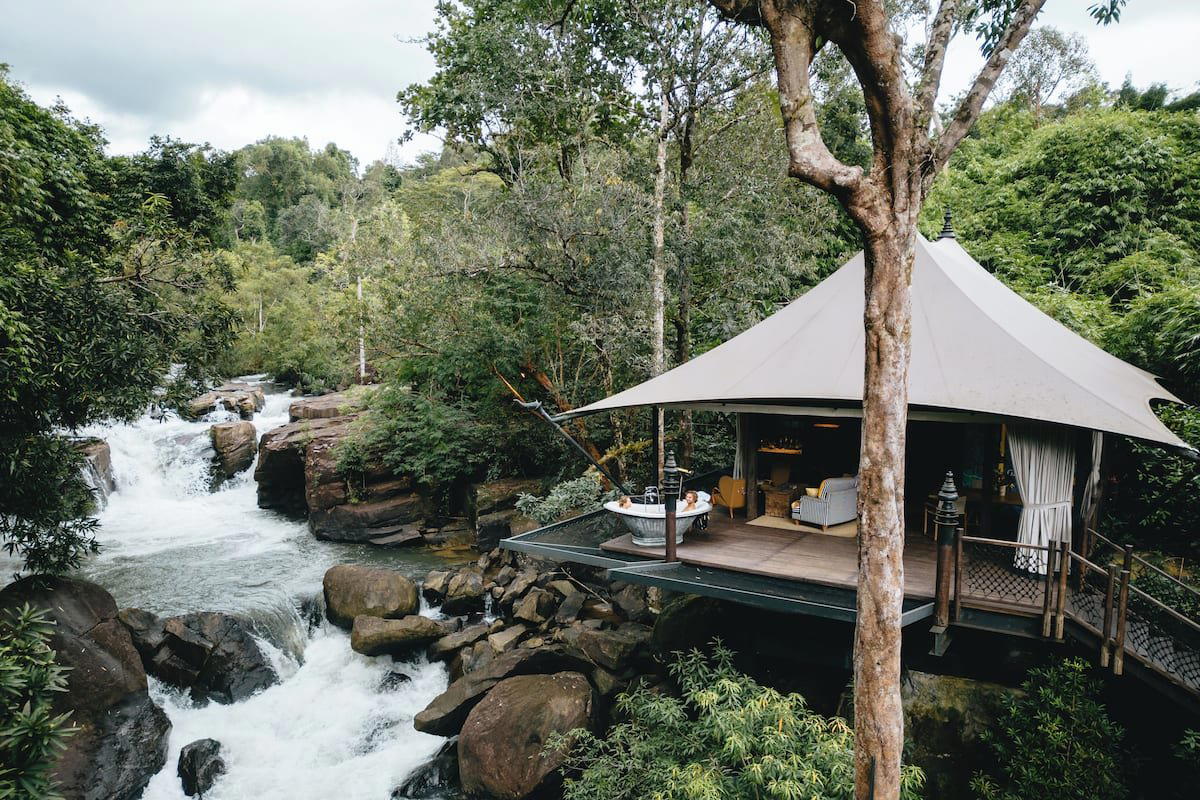
Details
- Romantic
- Scenic
- Elegant
- Intimate
- Ornate
- Whimsical
- Honeymoon
- Romantic Getaway
- Wellness Retreat
- Anniversary
- Weekend Escape
- Infinity Pool
- Private Villa
- Butler Service
- Panoramic View
- Private Dining
- Wi Fi
- Pool
- Spa
- Room Service
- Concierge
- Airport Transfer
- Waterfront
- Mountain
- Garden
- Step Free Entrance
Intimate jungle atmosphere with natural sounds of waterfalls and rainforest, enhanced by vintage glamour interiors and outdoor decks.