


1 Michelin Key · Virtuoso Luxury Hotel Partner · Forbes Recommended
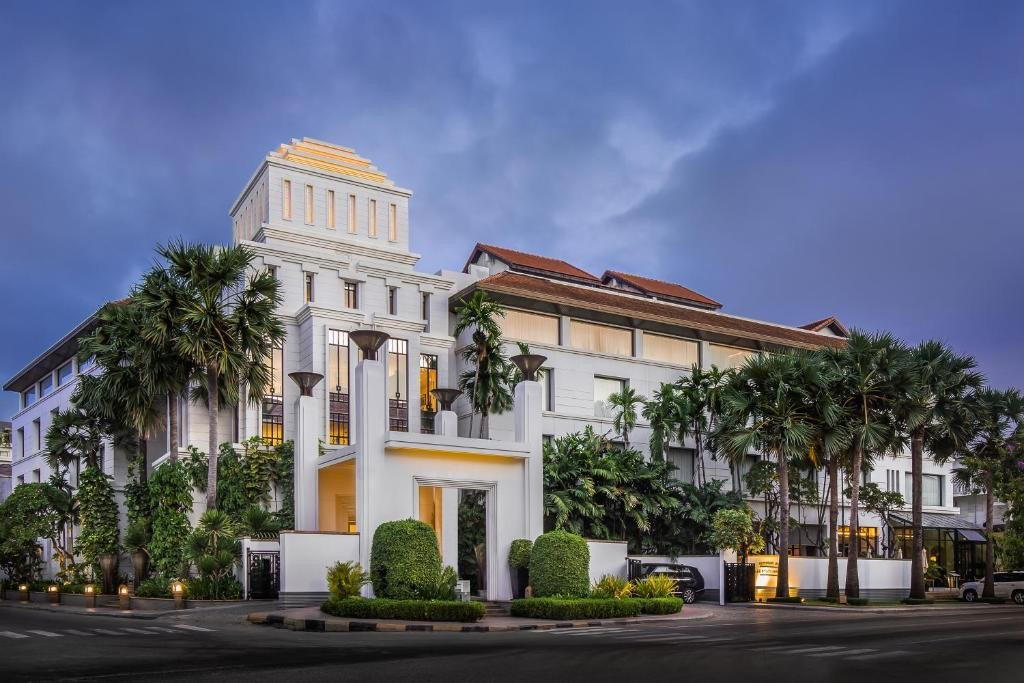
Built on the bones of the former Hotel de la Paix, the Park Hyatt Siem Reap occupies a central position on Sivutha Boulevard with 104 rooms and suites drawing on Khmer design and colonial-era detail. French and Cambodian dining, two pools, and a courtyard performance programme make it a self-contained property within easy walking distance of the Old Market and Pub Street, with Angkor Wat a short drive beyond.

Pearl is the En Primeur Club membership app — saves, bookings, and concierge access live there. Same editors, same standards.
- Address
- Sivutha Blvd, Krong Siem Reap 17252
- Phone
- +855 63 211 234
- Website
- hyatt.com
- Directions
- Get directions
A Hotel Built on Siem Reap's Colonial Memory
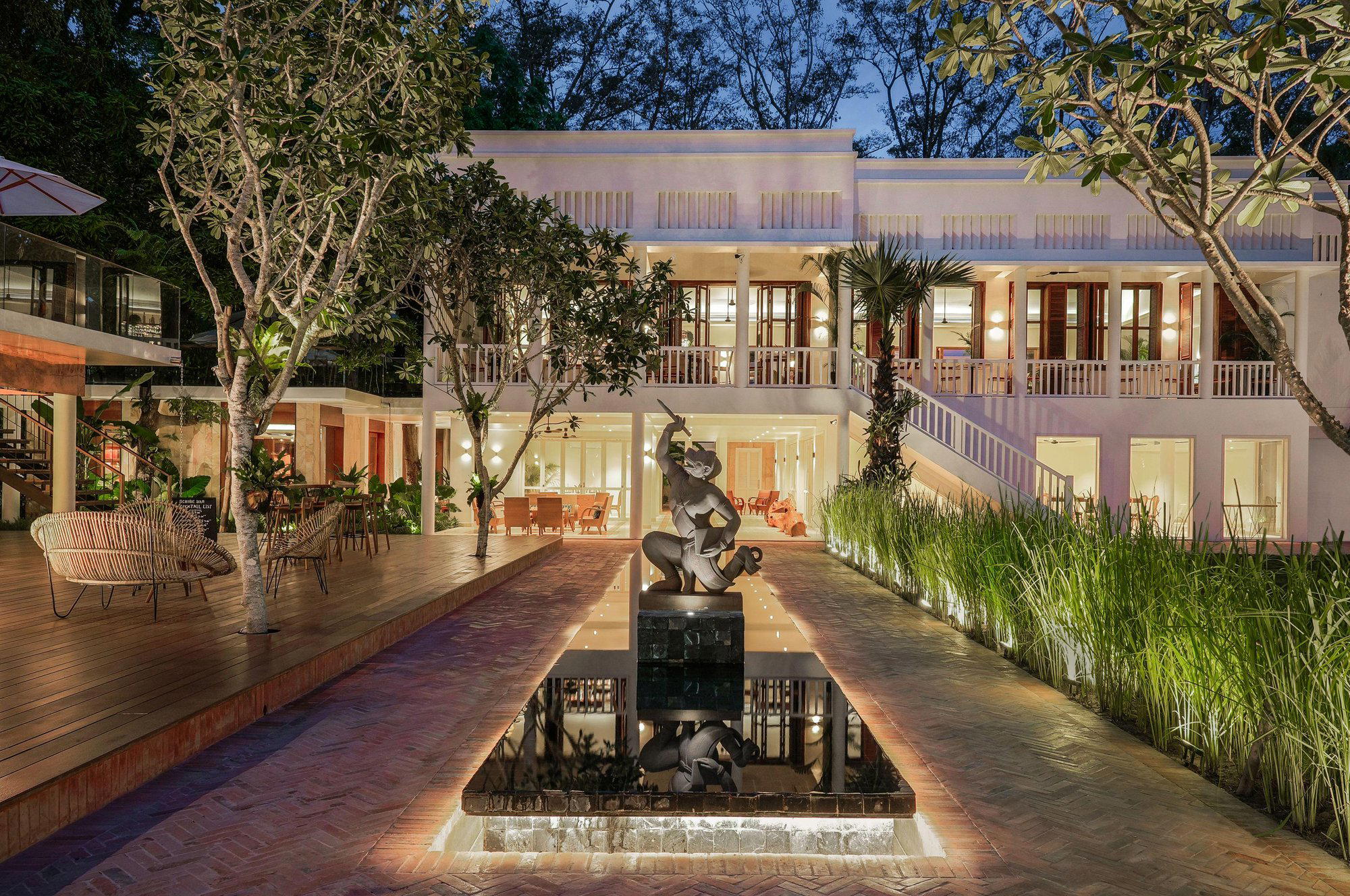
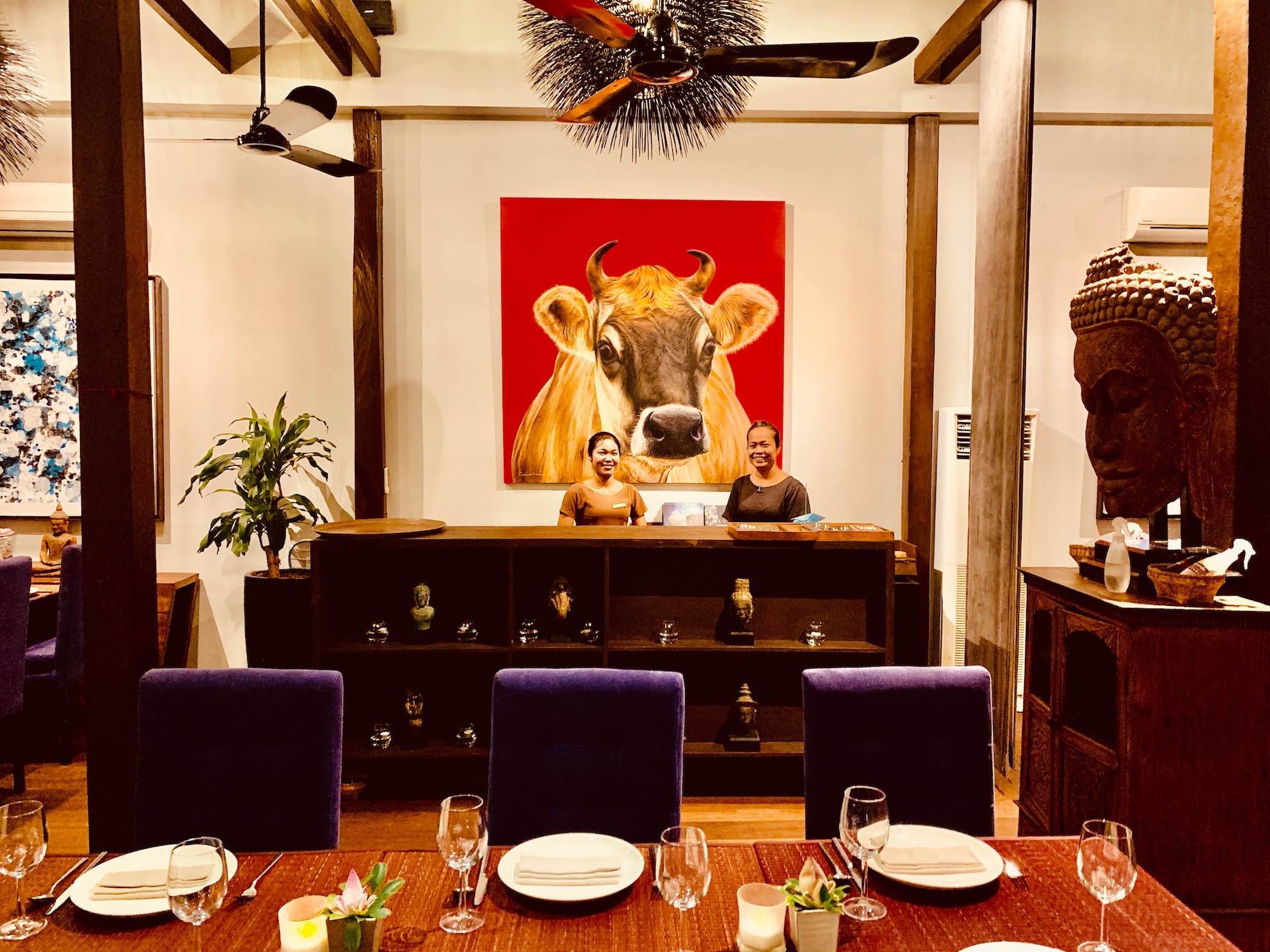
The luxury hotel tier in Siem Reap divides roughly into two camps: riverside properties that trade on romantic seclusion, and centrally located properties that prioritise walkability and urban engagement. Park Hyatt Siem Reap belongs firmly to the second group. Positioned on Sivutha Boulevard in the heart of the city, it occupies the site of the former Hotel de la Paix, a mid-century property whose Art Deco heritage shaped the architectural brief for what replaced it. The rebuild retained that lineage while layering in references to Angkor itself: framed French blueprints for the 12th-century temple complex line the walls, colonial-style ceiling fans move the air above dark wood furnishings, and Khmer-inspired art grounds each room in its geography in ways that more generic luxury hotels in the region rarely attempt.
What results is a property that reads as a contemporary homage rather than a pastiche. The white multi-tiered ceilings and warm yellow and sea-blue accents across the 104 rooms and suites feel deliberately composed rather than decorated. This is a common challenge across Southeast Asian luxury hospitality: the question of how much local visual culture to incorporate before it becomes theme-park shorthand. Here, the calibration leans toward restraint. The Art Deco bones remain legible, the Cambodian references are specific rather than generic, and the overall atmosphere is quieter than the city just outside the lobby suggests.
The Courtyard at the Centre of Everything
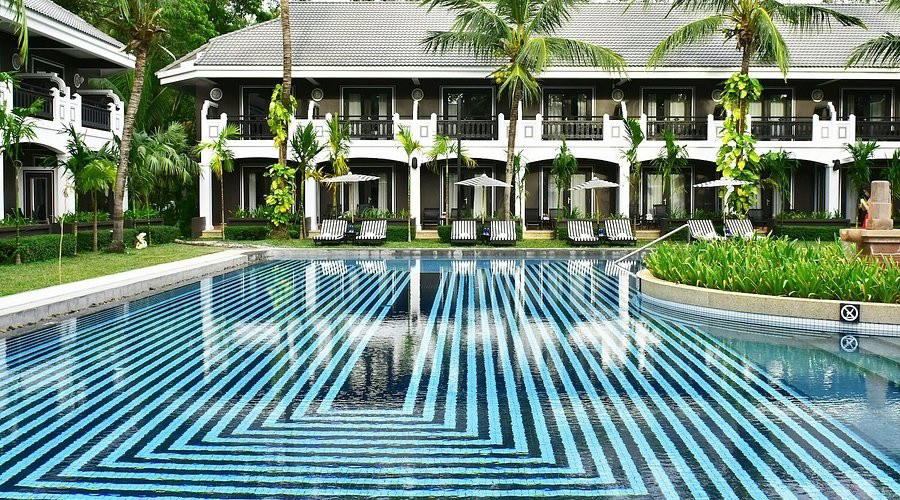
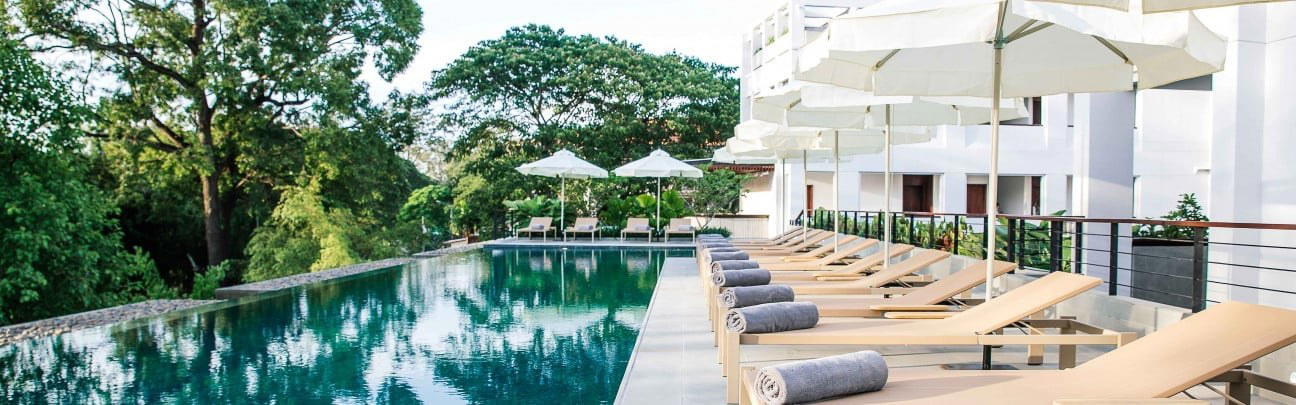
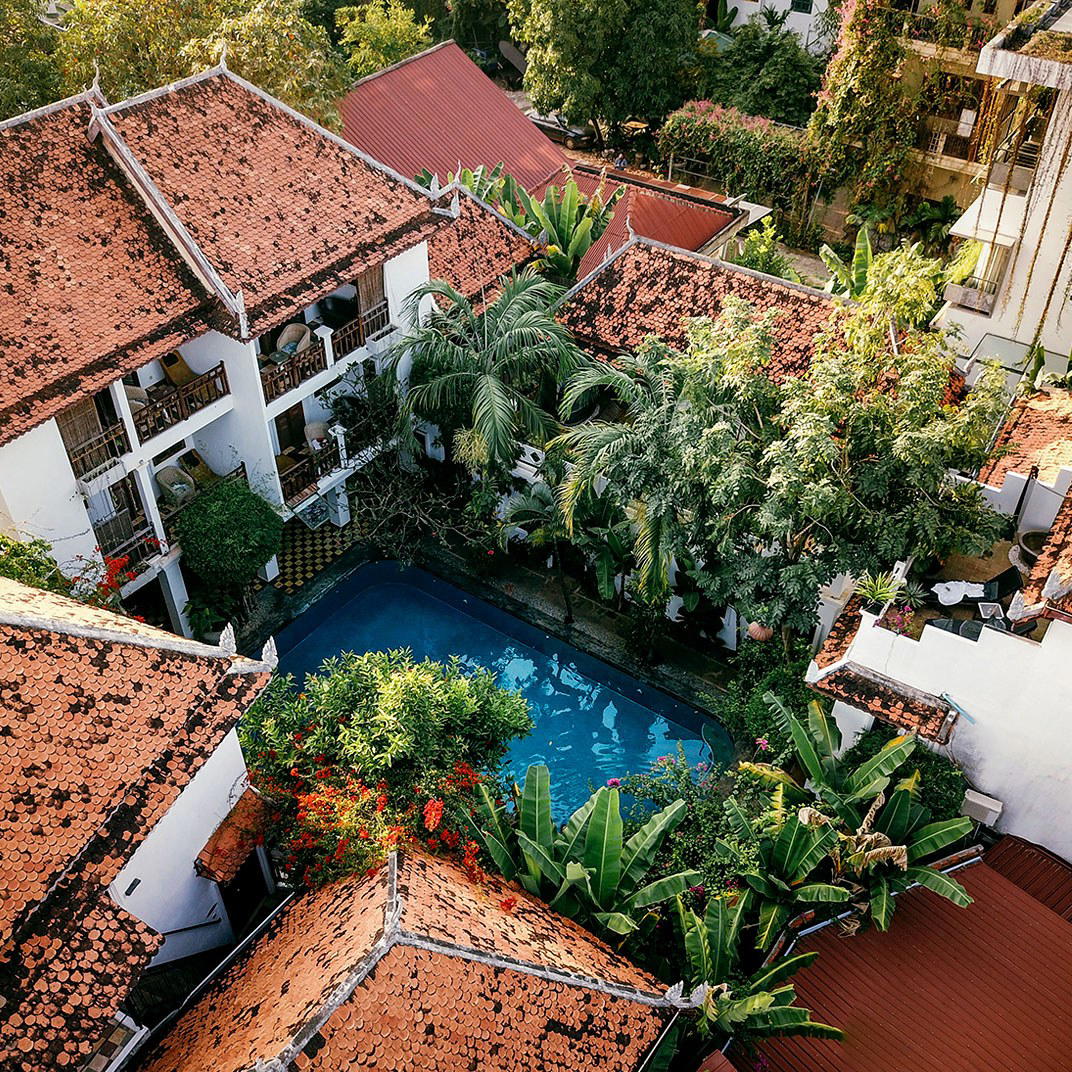
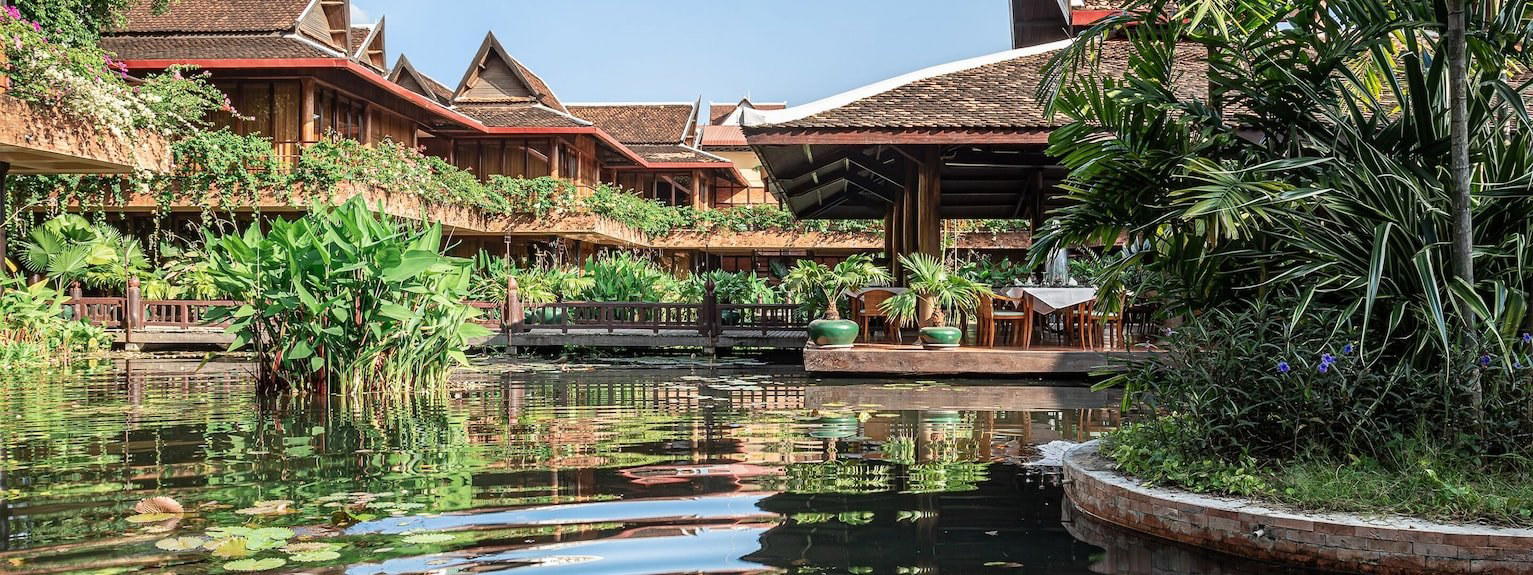
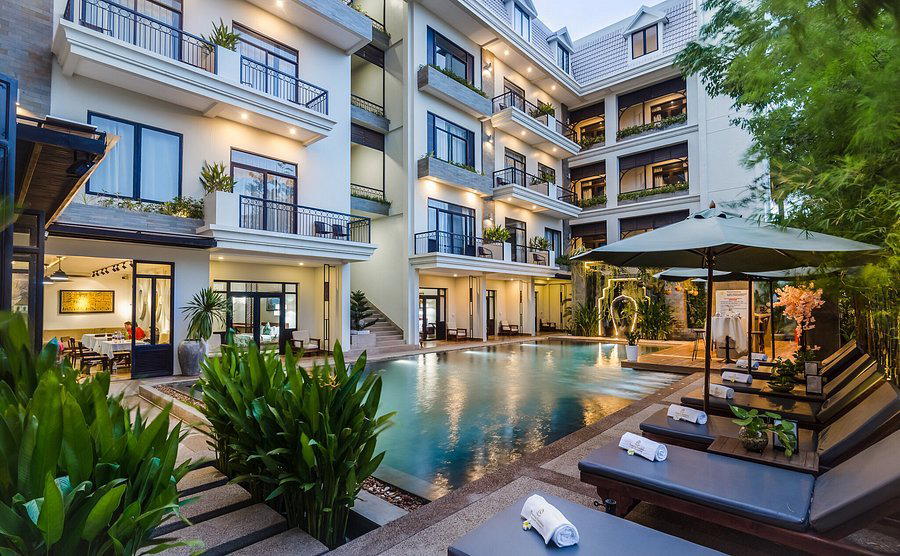
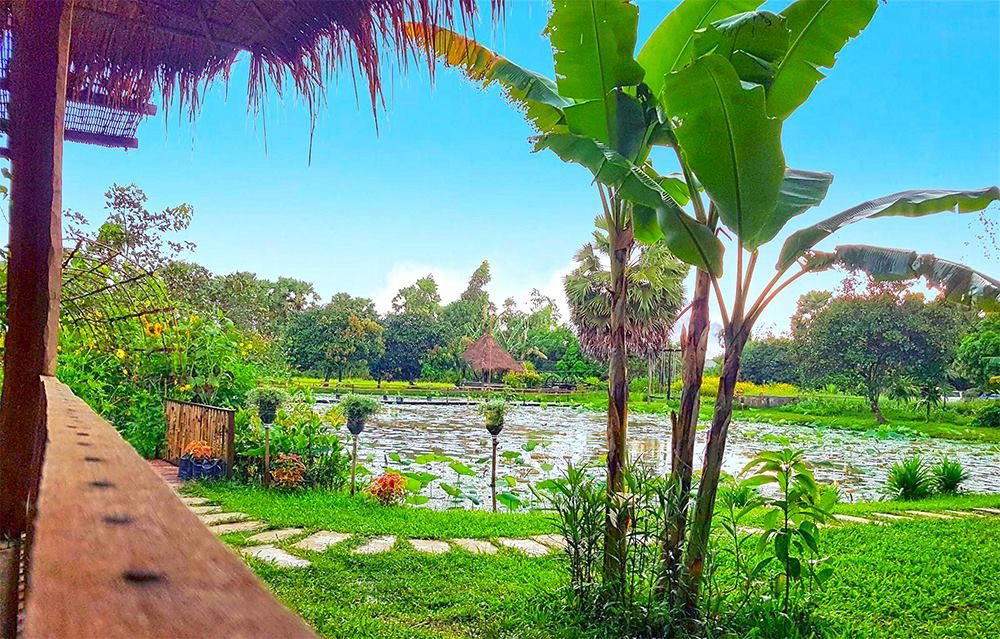
The architectural focal point is the central courtyard, where the main swimming pool and water garden anchor the property's internal life. This format, a hotel organised around an interior water space rather than its street presence, is well-suited to Siem Reap's climate and to the logic of a property that wants guests to move between the poolside and the surrounding city on their own terms. The saltwater pool, distinguished by its series of white angular arches and green tile detailing, sits at ground level. A quieter first-floor lagoon pool offers more privacy, with corners that favour late-morning reading over social poolside activity. Complimentary cold water and sunscreen are available at both, a practical gesture that matters more than it sounds in a city where midday humidity can be significant.
The pricier suites open directly onto the courtyard through glass doors, with private plunge pools and, in some configurations, rooftop gardens. The 1,859-square-foot Pool Suite, the largest configuration available, includes two bedrooms each with its own bathroom, two living areas, and private outdoor access. For guests planning an extended stay around the Angkor temple circuit, which realistically requires several days to cover properly, having that internal space is a genuine operational consideration rather than a luxury indulgence.
Rooms Facing In, Not Out
104 accommodations divide between courtyard-facing and city-facing orientations. Inspector notes from multiple sources consistently direct guests toward courtyard-facing rooms, and the reasoning is practical: city-facing rooms look out over Sivutha Boulevard traffic, while the interior views offer greenery and the quieter rhythms of the water garden. The room interiors share the same Khmer-inflected design language throughout: Italian marble bathrooms with both a tub and a separate shower, colonial ceiling fans, dark wood furniture, and the framed Angkor blueprints that give the property its most specific historical gesture. Room rates have been noted at approximately $367, positioning the property at the upper end of Siem Reap's luxury tier, in the same competitive bracket as properties like Anantara Angkor Resort and Shinta Mani Angkor and Bensley Collection Pool Villas, though below the ceiling set by Amansara, which operates at a different scale of exclusivity with fewer rooms and a higher nightly rate.
Dining at The Dining Room and Beyond
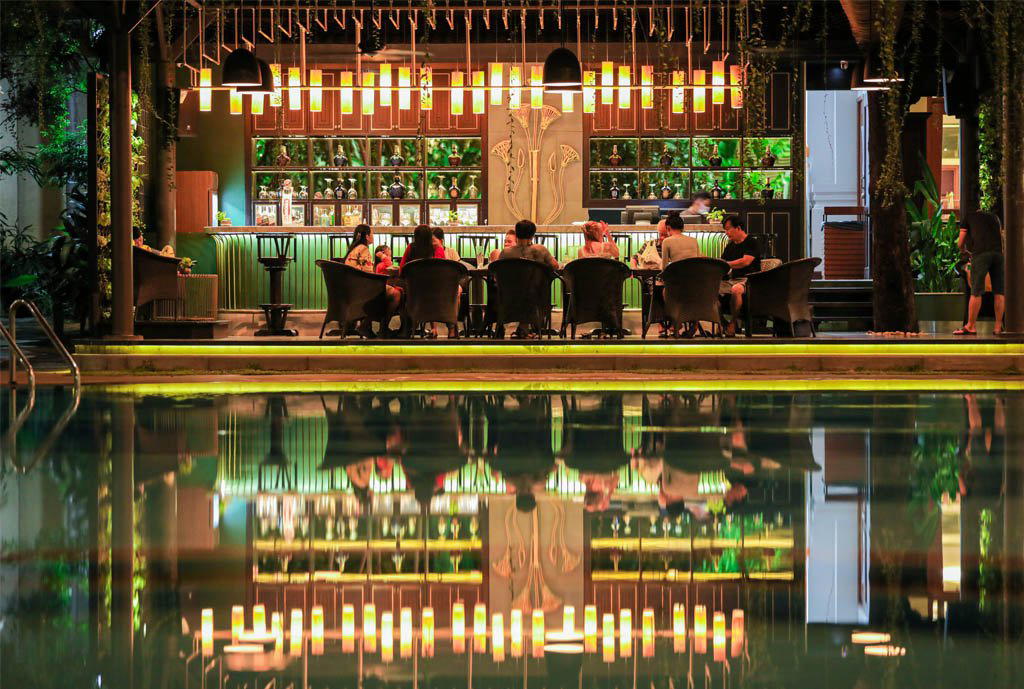
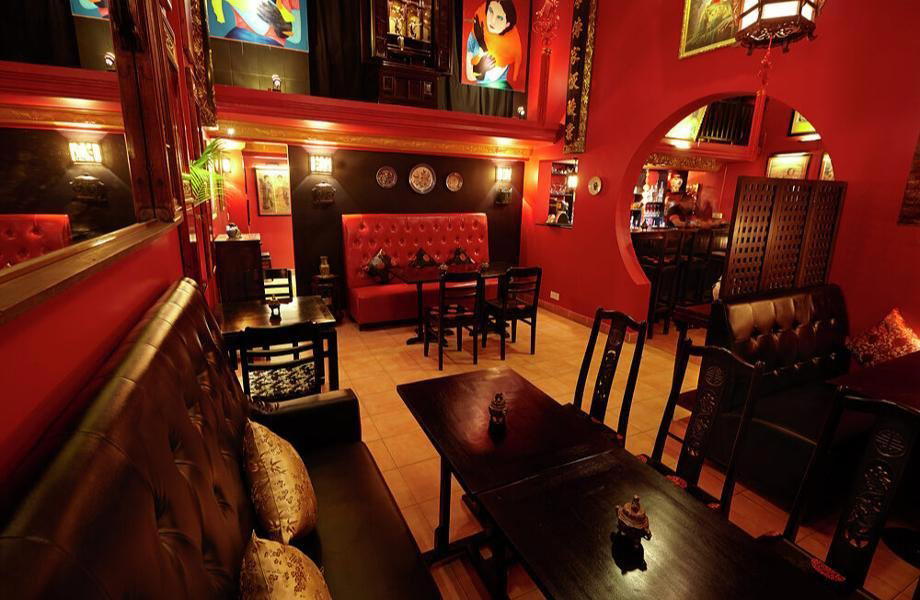
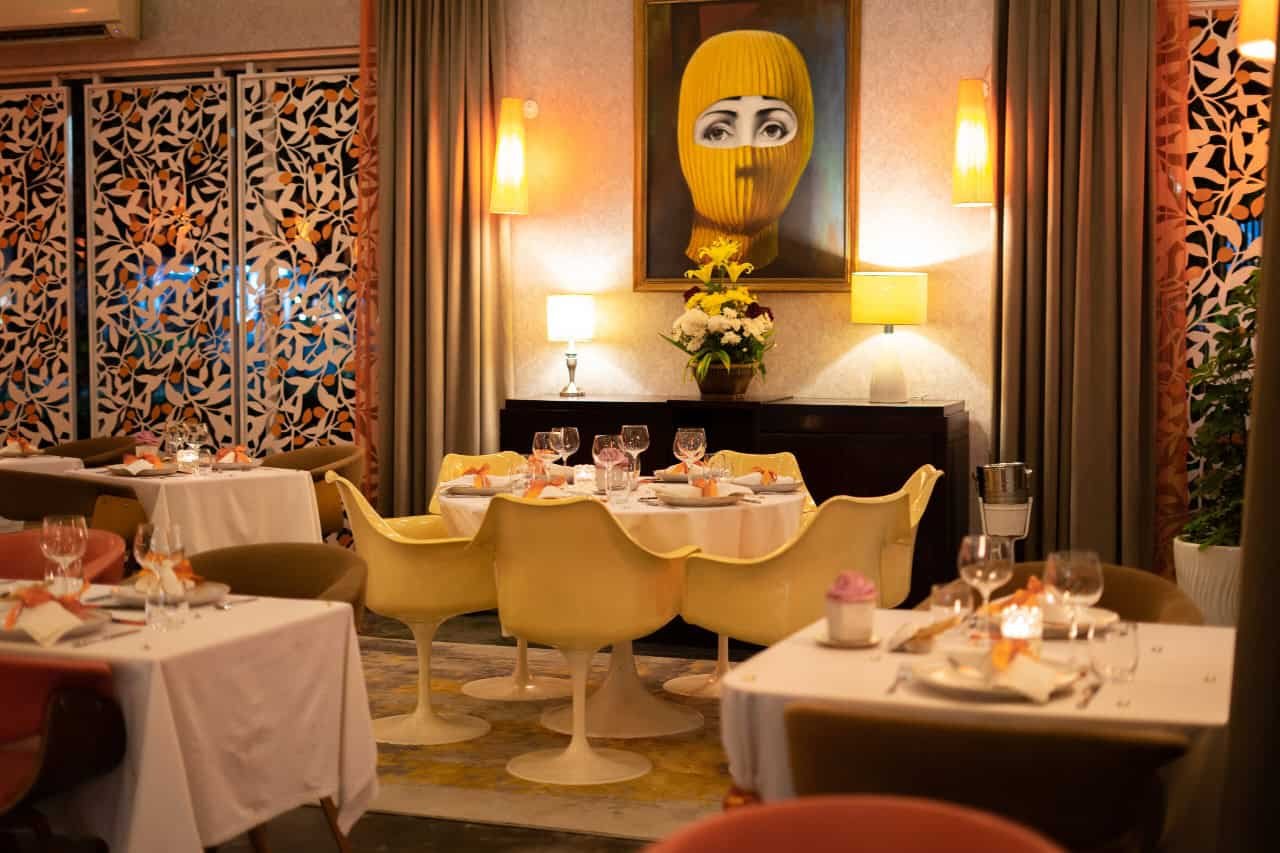
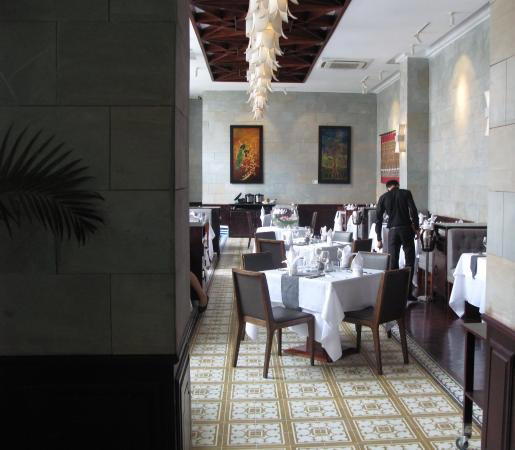
Siem Reap's restaurant scene has developed significantly over the past decade, with Khmer cuisine gaining serious critical attention and French colonial influences remaining a structural part of the city's food culture. The Park Hyatt's dining operation reflects both threads. The Dining Room serves both French and Cambodian menus, a pairing that makes geographic and historical sense given the city's colonial past. The Living Room functions as a bar and drinks space, while The Glasshouse operates as a deli-patisserie for lighter fare and pastries. For guests who want to engage with Cambodian food at a more granular level, the hotel offers a Num Bahn Chok Tour, in which a hotel chef leads guests through the preparation and sourcing of Cambodia's rice noodle dish, with a farm-to-table framework that traces the dish back toward its agricultural origins. This kind of structured food experience sits in a different category from restaurant dining but provides genuine educational depth for visitors spending time in the region. For broader context on where to eat in the city beyond the hotel, our full Siem Reap restaurants guide covers the wider scene.
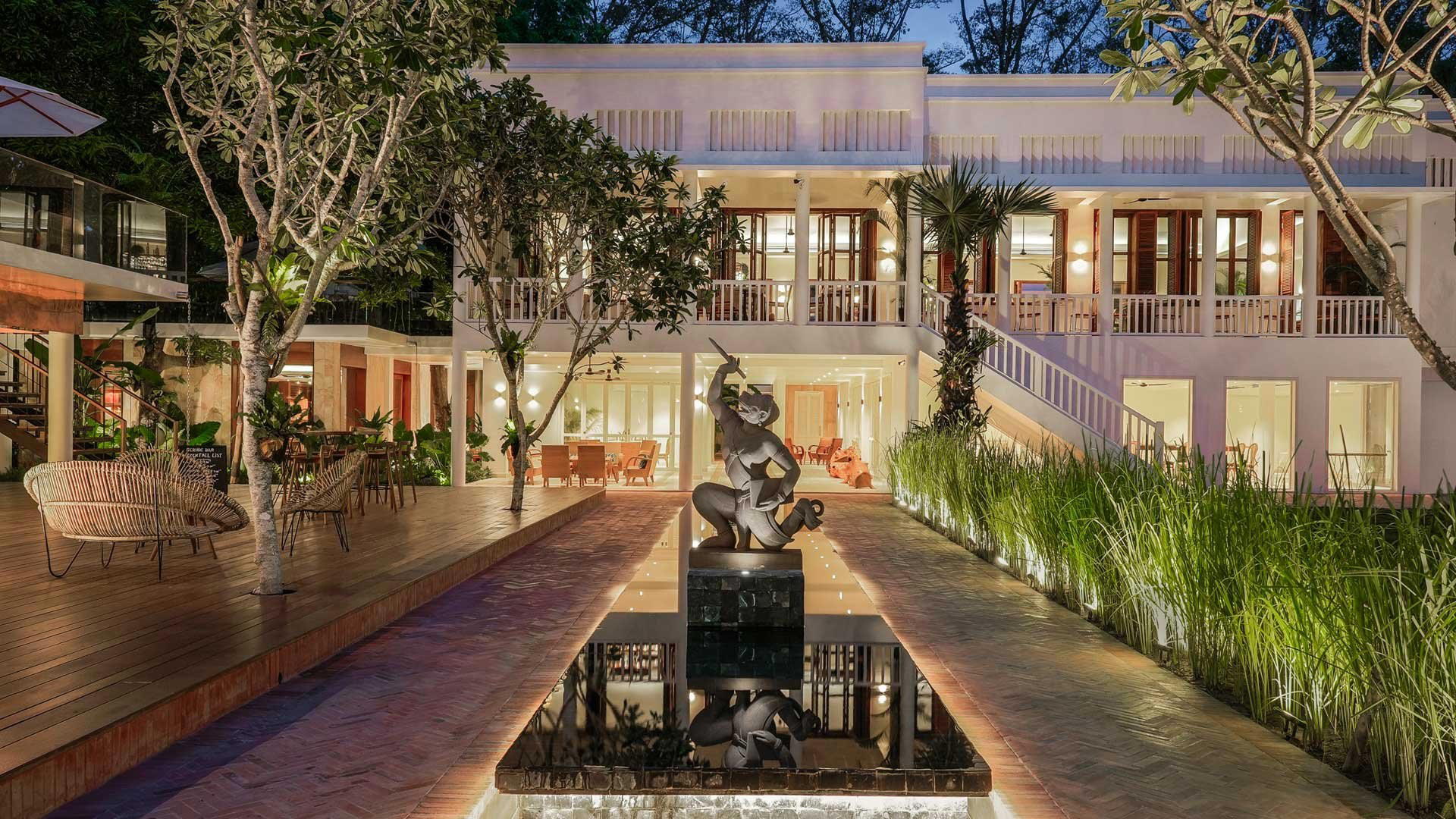
On Monday, Wednesday, Friday, and Sunday evenings, the hotel stages a dinner performance in The Dining Room courtyard. The programme combines apsara dancing, a classical Khmer art form with origins in the Angkor period, with bokator, one of Cambodia's oldest martial arts. This is not an uncommon format in the city's hotel sector, but the twice-weekly frequency and courtyard setting give it a more considered integration than the staged cultural shows that appear in some tourist-oriented restaurants. Whether guests engage with it as entertainment or as an introduction to Khmer performing arts will depend on their prior exposure to both traditions.
Location as a Strategic Advantage
The walkability argument for a central Siem Reap hotel is real, and it's worth being specific about what that means. The Old Market, Pub Street, and the royal residence are within a few hundred feet of the hotel. The airport is close enough that transfer times are short. Angkor Wat, the 12th-century complex that draws the majority of the city's visitors, is a short drive rather than a short walk, as it is from every property in the city centre, including riverside alternatives like FCC Angkor by Avani and Angkor Village Hotel. For guests who want more seclusion and a quieter setting, Sala Lodges and Raffles Grand Hotel d'Angkor offer different spatial relationships to the city. The Park Hyatt's position suits visitors who want to move freely through Siem Reap on foot during morning and evening hours, when temperatures drop to manageable levels, while using the hotel's interior spaces during the midday heat. That pattern is the practical logic behind this kind of centrally positioned property, and the hotel's design, with its pools, shaded courtyard, and multiple lounge options, supports it well.
For context, properties like Heritage Suites Hotel and Jaya House River Park Hotel occupy adjacent segments of the Siem Reap luxury market and offer useful comparisons for visitors deciding between property types. Travellers considering Cambodia more broadly will find different points of reference at Raffles Hotel Le Royal in Phnom Penh or coastal alternatives such as Song Saa Private Island and Shinta Mani Wild in the country's south and west.
Planning a Stay
The dry season, running from November through April, is the primary window for visiting Siem Reap and the Angkor complex. December and January bring the largest visitor volumes; February and March offer similar weather with somewhat lower crowds at the temples. The hotel's pools and shaded courtyard are most useful during the hot shoulder months of March and April, when midday temperatures reach their annual peak. For guests travelling during the wet season, June through October, room rates typically soften, temple crowds thin considerably, and the surrounding rice paddies reach their most photogenic state, though morning temple visits require planning around occasional heavy rain. Booking directly through Hyatt's network is the standard approach for rate and points considerations. The concierge programme, which includes the Num Bahn Chok Tour and cultural programming scheduling, is worth engaging early in the stay rather than as an afterthought on departure day.
Peers in This Market
Comparable venues nearby, for context on price, style, and recognition.
| Venue | Cuisine | Price | Awards | Notes |
|---|---|---|---|---|
| Park Hyatt Siem ReapThis venue — the venue you are viewing | Luxurious urban resort with lush tropical gardens | Not listed | 1 Michelin Key · Virtuoso Luxury Hotel Partner | Not listed |
| Raffles Grand Hotel d'Angkor | Historic French colonial resort with expansive gardens | $300–500 | 1 Michelin Key · La Liste Top Hotels | Khum Svay Dangkum |
| Sala Lodges | Authentic Cambodian heritage resort reimagined as luxury boutique property with preserved traditional architecture and contemporary design fusion. | $100–200 | 1 Michelin Key · World Luxury Hotel Awards WLHA Regional Winner | near city center |
| FCC Angkor by Avani | Historic French colonial governor's residence reimagined as a luxury heritage hotel with contemporary minimalist design and resort amenities. | $200–300 | 1 Michelin Key · World Luxury Hotel Awards WLHA Country Winner | Old French Quarter |
| Zannier Phum Baitang | Traditional Cambodian village recreation with stilted wooden villas | Not listed | 2 Michelin Keys · La Liste Top Hotels | near Siem Reap |
| Shinta Mani Angkor and Bensley Collection Pool Villas | Khmer-inspired luxury resort with playful Angkor elements. | Not listed | 1 Michelin Key · La Liste Top Hotels | French Quarter |
Recognition history
Dated appearances from independent guides and award organizations, with the underlying list record or original source where available.
Michelin 1 Key
Michelin
Forbes Recommended
Forbes
Virtuoso Luxury Hotel Partner
Virtuoso
Full recognition history (5 entries)
Forbes Recommended
Forbes
Michelin 1 Key
Michelin
Details
- Elegant
- Quiet
- Sophisticated
- Scenic
- Honeymoon
- Romantic Getaway
- Wellness Retreat
- Infinity Pool
- Private Villa
- Rooftop Pool
- Destination Spa
- Garden
- Wi Fi
- Pool
- Spa
- Fitness Center
- Room Service
- Concierge
- Garden
- Wheelchair Accessible
- Elevator
Tranquil and elegant with serene pool areas, soft lighting, and a calming spa atmosphere praised for deep relaxation.