Rissai Valley, a Ritz-Carlton Reserve



Set within a UNESCO World Heritage Site in Sichuan's Minshan mountains, Rissai Valley is a Ritz-Carlton Reserve property comprising 87 villas designed around Tibetan art and local materials. Three restaurants span Sichuan, Chinese, and Mediterranean cuisine. Named to Tatler Asia-Pacific Best Hotels 2025, it sits at the upper tier of destination lodging in remote southwest China, priced from $1,445 per night.
Pearl is the En Primeur Club membership app — saves, bookings, and concierge access live there. Same editors, same standards.
- Address
- 26 二组, Jiu Zhai Gou Xian, A Ba Zang Zu Qiang Zu Zi Zhi Zhou, Si Chuan Sheng, 623402
- Phone
- +86 837 819 9999
- Website
- ritzcarlton.com
- Directions
- Get directions
 Saves & bookings on Pearl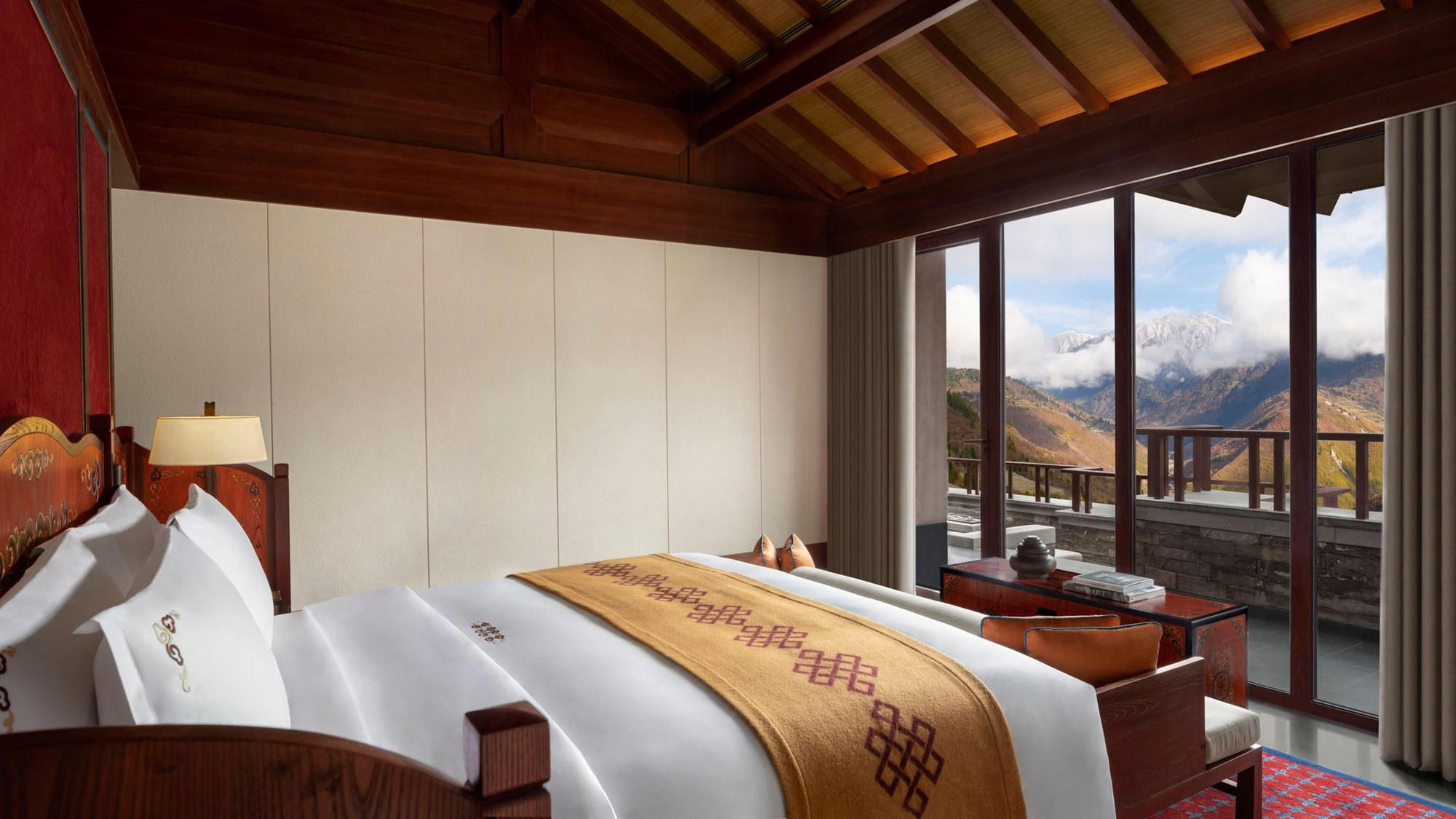
Where the Minshan Mountains Set the Agenda
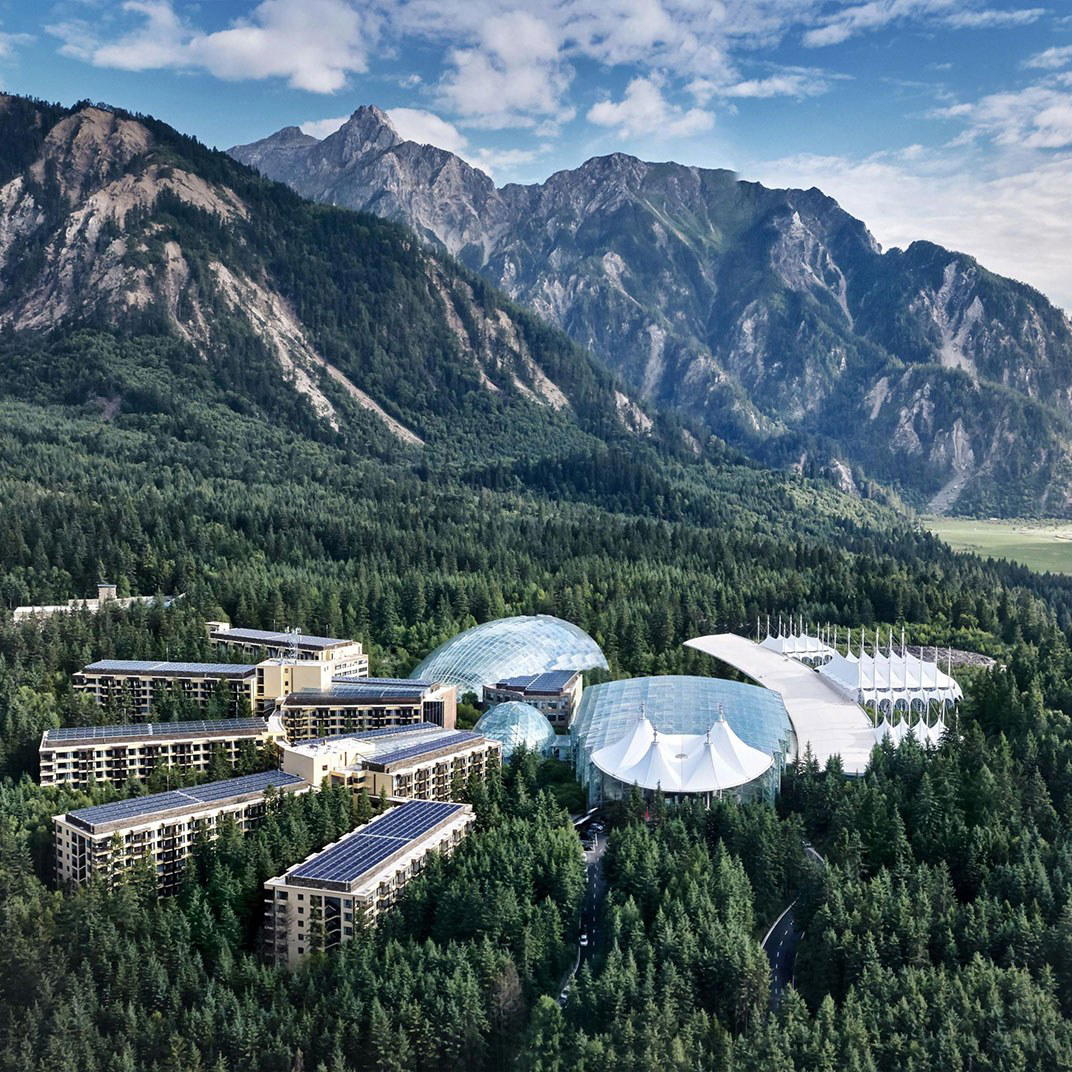
Approaching Zhangzha Town along the road that threads through Jiuzhaigou National Park, the scale of the terrain becomes apparent before any building does. The Minshan range frames every sight line, and the valley floor holds a quality of light that shifts across the day in ways that interior designers can reference but never fully replicate. This is the context in which Rissai Valley, a Ritz-Carlton Reserve, positions its 87 villas: a UNESCO World Heritage Site where the physical setting does much of the design work, and where a hotel's job is largely not to interrupt it.
Reserve properties operate at a smaller scale and higher price point than standard Ritz-Carlton addresses, with a mandate to respond to local cultural material rather than impose a universal luxury template. In the Asia-Pacific region, that distinction matters: the category sits alongside properties such as Amandayan in Lijiang and Amanfayun in Hangzhou in the tier of lodging that treats heritage as a structural ingredient rather than decorative detail. Rissai Valley's architecture and interiors draw on Tibetan art and vernacular dwelling forms, with the Minshan mountain views positioned as central to the accommodation experience rather than a bonus feature of corner rooms.
The Dining Programme: Three Restaurants, One Landscape
The expectation at this price point, rates open at $1,445 per night, is that food meets international standards, while the location argument is most compelling when local culinary identity is genuinely present rather than gestured at. Rissai Valley's three-restaurant model addresses this directly by splitting its offer across Sichuan, classic Chinese, and Mediterranean cuisines, all using local ingredients from the surrounding region.
The Sichuan strand is especially contextually grounded. Sichuan cuisine, anchored by the mala flavour profile of Sichuan peppercorn and dried chilli, is one of China's most internationally recognised regional traditions, and cooking it at source, in a county within Aba Tibetan and Qiang Autonomous Prefecture, Sichuan Province, carries different weight than producing it in a Shanghai hotel. The local ingredient base adds another layer: at altitude in the Minshan range, the produce calendar and the highland agricultural tradition shape what is available in ways that distinguish this kitchen from any urban Sichuan restaurant in the country.
The classic Chinese restaurant broadens the frame to accommodate the full geographic spread of Chinese culinary tradition, a category that in practice covers radically different techniques, ingredient palettes, and regional philosophies. At destination properties in remote locations, this format tends to serve guests who want legibility alongside locality, familiar reference points within an otherwise unfamiliar setting. The Mediterranean restaurant operates as the third pole of the offer, a format that at high-altitude mountain properties functions partly as a hedge against palate fatigue and partly as an acknowledgment that international guest profiles bring dietary expectations that regional cuisine alone may not address.
This is a more demanding editorial claim than it might appear: sourcing Mediterranean-inflected cooking from highland Sichuan ingredients requires a different kind of kitchen discipline than operating a standard import-driven international restaurant. It also anchors the dining programme to the property's broader argument about place, that Jiuzhaigou is not simply a backdrop but an active ingredient in the guest experience.
Rissai Valley in the Context of Remote Luxury in China
Properties like Banyan Tree Ringha in and Amandayan in Lijiang established that travellers would pay a significant premium to be within striking distance of UNESCO-listed scenery while sleeping in architecture that engages seriously with local cultural form. Rissai Valley extends that logic into Jiuzhaigou, a park whose multicoloured lakes and tiered waterfalls have made it one of Sichuan's most-visited natural sites, yet which had limited ultra-premium lodging options until relatively recently.
The comparison with Conrad Jiuzhaigou is instructive. Both properties occupy the premium end of the local accommodation market, but the Conrad operates within a larger international brand framework with correspondingly different scale assumptions. The Ritz-Carlton Reserve designation at Rissai Valley implies tighter capacity management and a more singular design identity, the 87-villa count is not small by Reserve standards, but the distributed villa format across rolling terrain reads differently in use than a conventional hotel footprint of equivalent room count.
That recognition matters as a trust signal in this tier: Tatler's Asia-Pacific list draws from editorial evaluation across the full region, and inclusion in the destination hotels category specifically speaks to how a property performs as a place-rooted experience rather than as an urban amenity delivery mechanism.
For context on the broader sweep of premium lodging across China, the range runs from urban flagship properties like Mandarin Oriental Qianmen in Beijing and JW Marriott Hotel Shanghai at Tomorrow Square to resort-format properties like 1 Hotel Haitang Bay in Sanya and Xiamen Yunding Resort. Rissai Valley occupies a distinct position within that spectrum: a mountain wilderness property where the UNESCO designation of the surrounding park creates both the primary draw and the significant logistical constraint.
Spa and Wellness as Landscape Response
The spa programme at Rissai Valley draws on local cultural references, including Tibetan wellness traditions. In this context, that gesture connects to Tibetan wellness traditions, which in the broader region encompass herbal medicine, massage techniques, and ritual practices that have a documented history considerably older than the modern wellness industry. How specifically and rigorously any given property engages with those traditions varies, but the Tibetan and local cultural reference is more grounded here than it would be at an urban spa claiming the same heritage from a distance of several hundred kilometres. The mountain setting at altitude also sets real physical parameters for wellness programming: the air quality, the temperature range, and the natural rhythm of the park all shape what the spa can credibly offer.
Planning a Stay: What to Know
Jiuzhaigou requires deliberate logistics. The park operates under a visitor management system that controls daily entry numbers, and peak season runs from late September through October when the foliage reaches its full colour range. Flights connect via Jiuzhai Huanglong Airport, which sits at altitude and is subject to weather closures; the road approach from Chengdu takes approximately six hours. Staying within the valley corridor, as Rissai Valley guests do, gives access to the park at times that day-tripping visitors cannot reach, which represents the primary practical argument for accommodation at this price tier.
Cost Snapshot
Comparable venues nearby, for context on price, style, and recognition.
| Venue | Price | Awards | Notes |
|---|---|---|---|
| Rissai Valley, a Ritz-Carlton ReserveThis venue — the venue you are viewing | $$$$ | Michelin 3 Key | Not listed |
| Conrad Jiuzhaigou | $$$$ | 5-Star | Zhangzha Town, Modern luxury resort inspired by Tibetan culture |
| InterContinental Resort Jiuzhai Paradise | $$$$ | 5-Star | Ganhaizi Scenic Zone, Modern resort with cultural fusion |
| Banyan Tree Chongqing Beibei | $$$$ | Michelin 1 Key | Beibei District, Eco-luxury contemporary resort set in nature with emphasis on wellness and cultural immersion |
| InterContinental Chongqing Raffles City | $$$$ | Michelin 1 Key | Yuzhong District, Well-known horizontal skyscraper with skybridge lobby at 250m height |
| Rosewood Beijing | $$$$ | Michelin 2 Key | Hujialou, Contemporary residential-style luxury blending heritage and modernity |
Recognition history
Dated appearances from independent guides and award organizations, with the underlying list record or original source where available.
World Spa Awards China's Best Wellness Retreat 2026 Nominee
World Spa Awards
Michelin 3 Keys
Michelin
Tatler Listed in Best Hotels Asia-Pacific
Tatler
World Spa Awards China's Best Wellness Retreat 2025 Nominee
World Spa Awards
Continue exploring
More in Jiuzhaigou
Hotels in Jiuzhaigou
Browse all →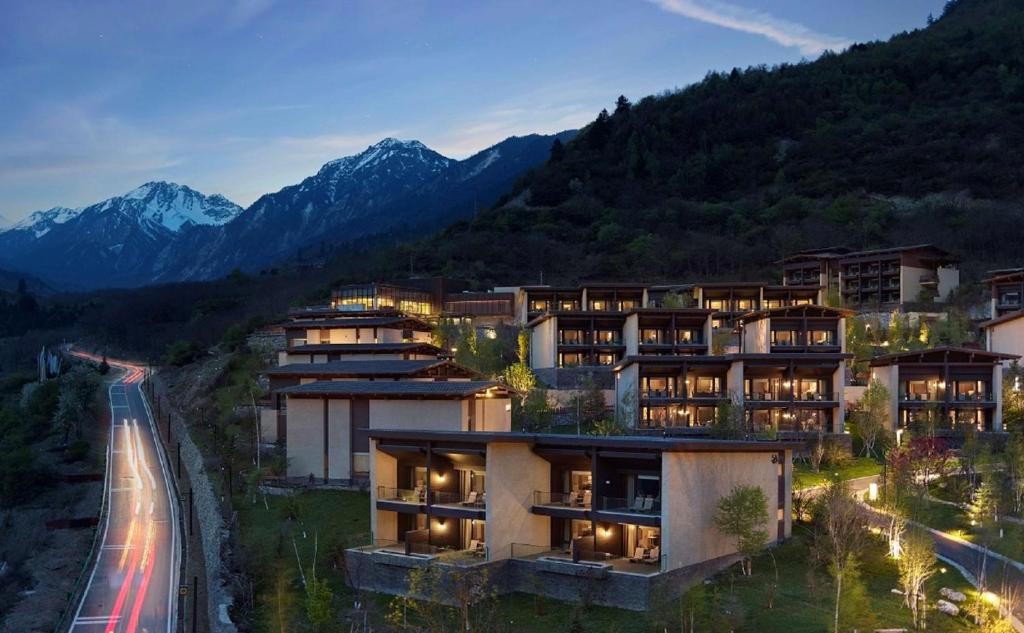
Restaurants in Jiuzhaigou
Browse all →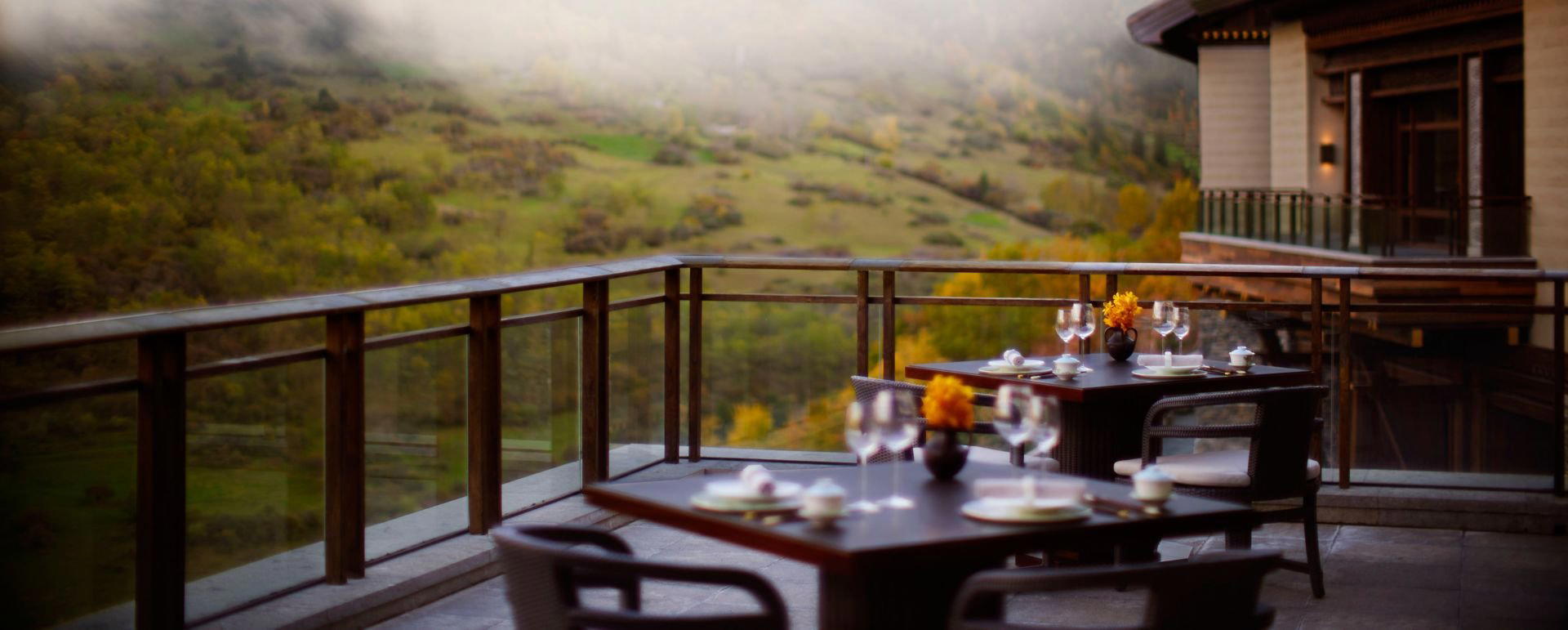
At a Glance
- Scenic
- Elegant
- Sophisticated
- Quiet
- Romantic
- Honeymoon
- Romantic Getaway
- Wellness Retreat
- Family Vacation
- Panoramic View
- Butler Service
- Private Villa
- Wi Fi
- Pool
- Spa
- Fitness Center
- Room Service
- Concierge
- Valet Parking
- EV Charging
- Kids Club
- Mountain
- Wi Fi
- Pool
- Spa
- Fitness Center
- Room Service
- Concierge
- Valet Parking
- EV Charging
- Kids Club
Tranquil and sophisticated with warm lighting, vintage aesthetic, fireplaces, and a relaxing atmosphere enhanced by dramatic snow-capped mountain views and stargazing.