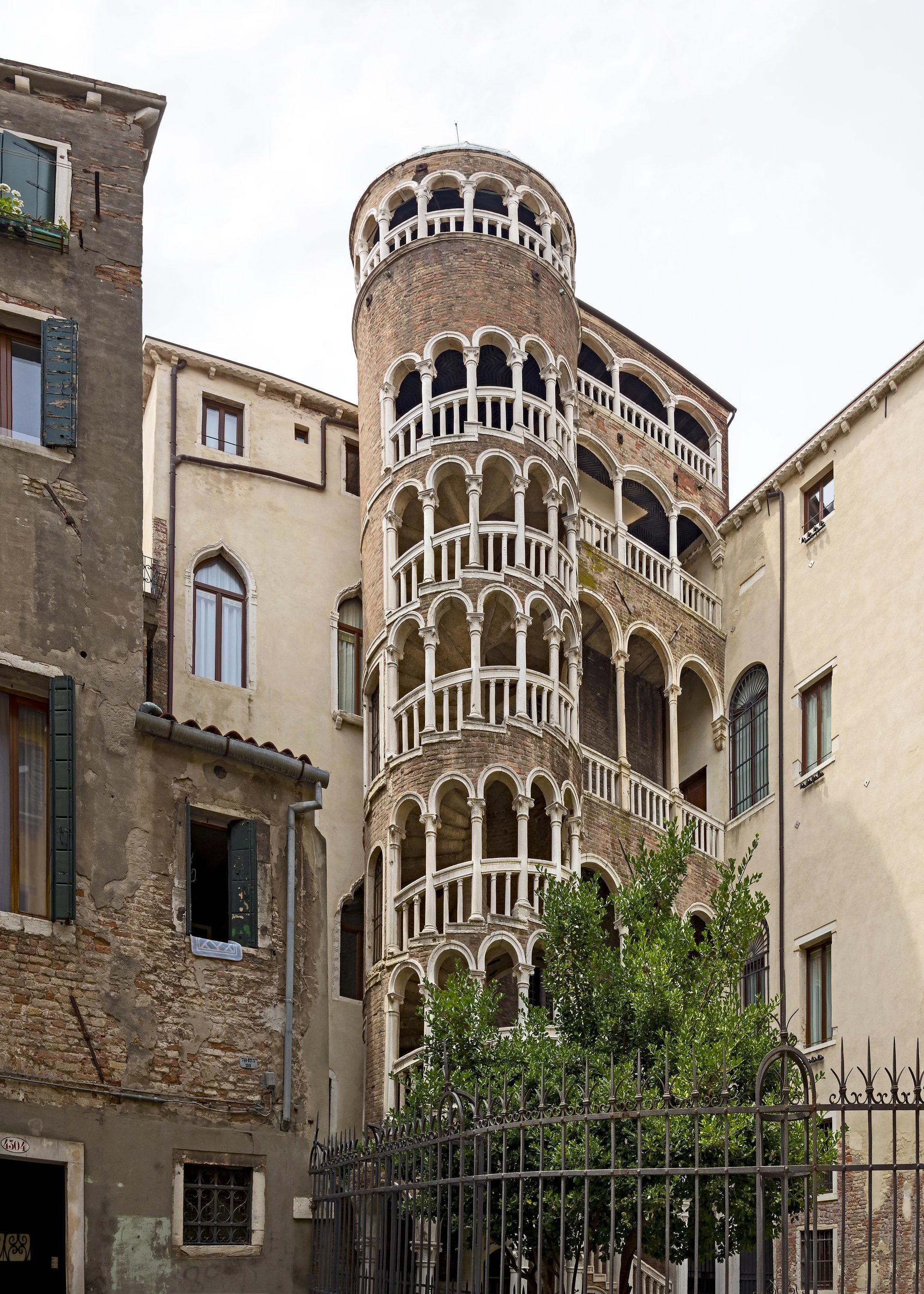
A late-fifteenth-century palace in the San Marco sestiere, Palazzo Contarini del Bovolo is known above all for its open-air Gothic-Renaissance spiral staircase, one of the most photographed architectural details in Venice. The courtyard visit offers a measured counterpoint to the city's busier circuits: quiet, contained, and historically layered. It belongs on any itinerary built around Venice's civic architecture rather than its museums.

Pearl is the En Primeur Club membership app — saves, bookings, and concierge access live there. Same editors, same standards.
The Staircase That Earns Its Reputation
Venice has trained visitors to expect beauty at every turn, which makes genuine surprise increasingly rare. The Palazzo Contarini del Bovolo delivers it anyway. Tucked into a narrow courtyard off Campo Manin in the San Marco sestiere, the palazzo is easy to walk past if you don't know the name of the calle leading to it — and that obscurity is part of what makes the visit feel different from the city's more trafficked sites. There are no queues stretching into the street, no amplified audio guides competing with each other, and no vaporetto crowds converging at a single dock. What you find instead is a courtyard of measured proportions and, rising from it, a spiral external staircase — the bovolo, Venetian dialect for snail, that winds upward through five open loggias in a combination of Gothic arching and Renaissance proportion that no later period quite managed to replicate.
The structure dates to the late fifteenth century, with documented construction attributed to the Contarini family, one of the major patrician houses that shaped the city's civic and architectural identity through several centuries of the Republic. The staircase is not a decorative afterthought; it was the primary circulation element of the palazzo and would have been visible from the canal network that ran closer to the property before Venice's topography shifted. Seen today from the courtyard floor, the loggias stack in diminishing perspective against whatever light the Venetian sky is offering, flat grey in winter, sharp gold in late afternoon from October through March.
What the Visit Actually Involves
The Bovolo operates on a ticket-entry model rather than a free walk-in format, which keeps the courtyard from reaching the saturation levels that affect the Doge's Palace or the Basilica di San Marco a few hundred metres away. The experience is architectural rather than experiential in any spa or wellness sense, there is no programming, no retreat format, no hospitality layer. What it offers instead is something rarer in Venice: the chance to stand inside a historically significant structure at your own pace, without crowds redefining the atmosphere around you.
Staircase itself is the primary draw, and the view from the upper loggia provides a rooftop-level perspective on the San Marco neighbourhood that is genuinely difficult to replicate from street level. Visitors who time their arrival for mid-morning on weekdays, before tour groups complete their Accademia or Rialto circuits and begin secondary stops, will find the courtyard close to empty. The pocket of calm that the Bovolo courtyard provides, walled in by the palazzo on one side and lower residential buildings on the others, works as an unscheduled decompression point in a city that otherwise keeps you moving.
Venice's Architecture as a Form of Slow Travel
Broader pattern in Venice is that its most instructive architectural moments are not always in its most-visited institutions. The city's Gothic-Byzantine-Renaissance layering is visible in a hundred contexts, but the Bovolo staircase is one of the few places where all three periods are legible in a single structural element, without glass cases or interpretive panels mediating the encounter. For travellers staying at properties like Aman Venice or Hotel Gritti Palace, both in the San Marco zone and both positioned to support this kind of neighbourhood-level architectural exploration, the Bovolo is a fifteen-minute walk at most, and a natural complement to a morning that doesn't need to be structured around a museum timetable.
Hotels like Cipriani, A Belmond Hotel, Venice on the Giudecca offer a different spatial logic, separated from the main island and more resort-oriented in format, but guests crossing to San Marco by hotel launch are well-placed to incorporate the Bovolo into an afternoon circuit through the sestiere without backtracking. Properties in the Castello and Cannaregio sestieri, including Ca' di Dio, Londra Palace Venezia, and Nolinski Venezia, are each within a twenty-five-minute walk through Venice's sestieri network, or a short water taxi to the San Marco landing.
The city's other boutique options, including Corte di Gabriela and Il Palazzo Experimental, attract a visitor more interested in neighbourhood character than landmark density, and the Bovolo maps well onto that sensibility: it rewards the traveller willing to follow a hand-drawn map into an unmarked courtyard rather than one who needs the validation of a major museum ticket.
Italy in Context: Where Venice Fits in a Longer Itinerary
For travellers combining Venice with the broader Italian itinerary, the Bovolo functions as a reference point for how different Italian cities handle the relationship between public access and private architectural heritage. The palazzo model in Venice is distinct from the villa tradition further south, or from the fortified estate logic of properties like Castello di Reschio in Lisciano Niccone and Rosewood Castiglion Del Bosco in Montalcino. In Venice, architectural heritage is compressed into an urban fabric without the breathing room of Tuscan countryside; what you get instead is density, and the Bovolo courtyard is one of the places where that density becomes a controlled, legible experience rather than an overwhelming one.
Further down the peninsula, the coastal registers shift entirely: Borgo Santandrea on the Amalfi Coast, Il San Pietro di Positano, and Il Pellicano in Porto Ercole operate in a landscape-first mode that has little overlap with Venice's interior, canal-threaded urbanism. The contrast is worth noting for itinerary planning: Venice's pleasures, including the Bovolo, are almost entirely architectural and social rather than scenic in the coastal sense.
For food and broader Venice planning, our full Venice restaurants guide covers the sestiere-by-sestiere dining picture, including which neighbourhoods retain a local-facing restaurant economy and which have converted almost entirely to tourist menus.
Planning the Visit
The Palazzo Contarini del Bovolo sits in Corte dei Risi, reached from Campo Manin by following signage into the surrounding calli. Ticketed entry keeps the site manageable; the visit itself takes between thirty and sixty minutes depending on how long you spend on the upper loggia. The palazzo is in the San Marco sestiere, meaning it falls within the zone most Venice hotels position themselves to cover. Afternoon light in the cooler months, October through March, hits the staircase from a lower angle and produces the clearest photographic geometry. Peak summer visits are possible but the surrounding neighbourhood carries more foot traffic, and the courtyard's intimacy is partially diluted. Visitors combining the Bovolo with a broader northern Italy circuit might also consider Four Seasons Hotel Firenze in Florence, Portrait Milano in Milan, or Passalacqua in Moltrasio as anchor bases for an itinerary that moves through different periods and registers of Italian heritage architecture.
Standing Among Peers
| Venue | Price | Awards |
|---|---|---|
| Palazzo Contarini del BovoloThis venue — the venue you are viewing | Not listed | Not listed |
| Aman Venice | $1,000–1,500 | 3 Michelin Keys · World's 50 Best #79 |
| Cipriani, A Belmond Hotel, Venice | $750–1,000 | 3 Michelin Keys · World's 50 Best #72 |
| JW Marriott Venice Resort & Spa | $500–750 | Michelin Selected · Forbes Recommended |
| The St. Regis Venice | Not listed | Michelin Guide New Hotels New Hotel · Michelin Selected |
| Hotel Gritti Palace | $750–1,000 | 2 Michelin Keys · La Liste Top Hotels |
Continue exploring
More in Venice
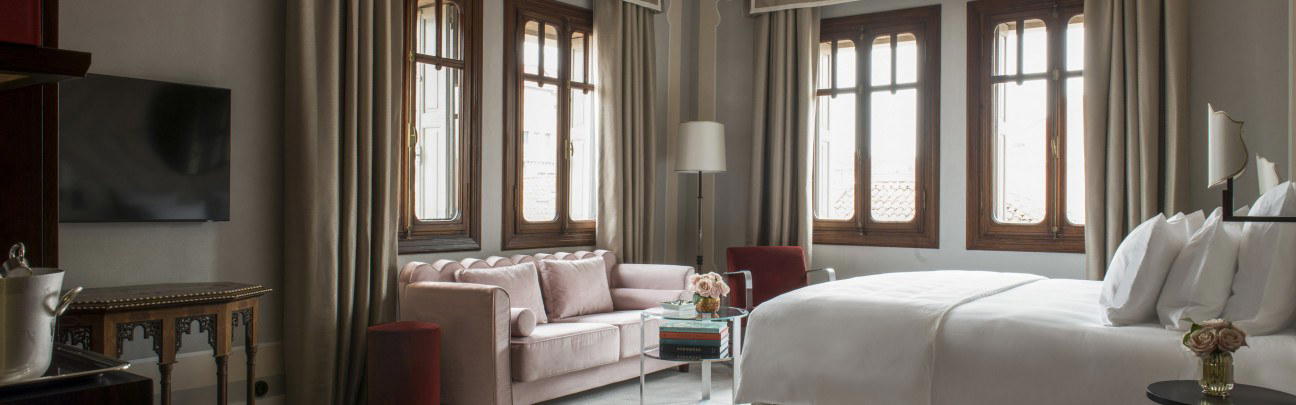
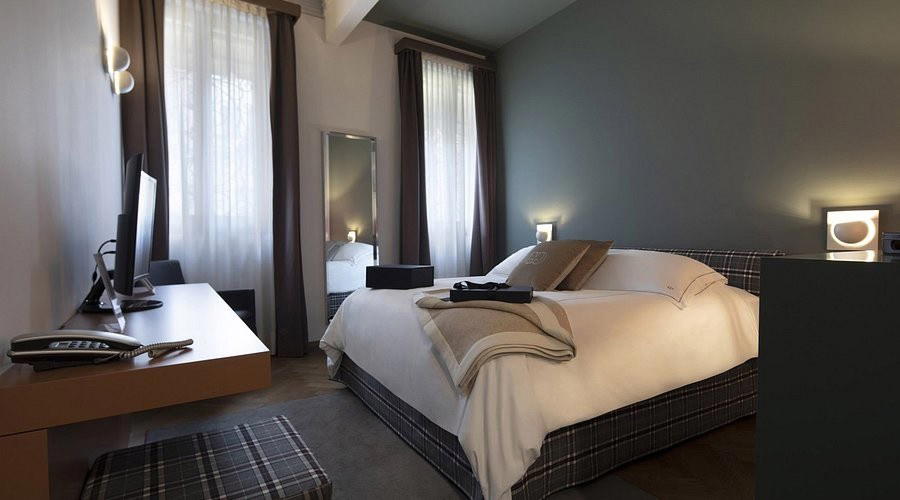
Hotels in Venice
All hotels in Venice →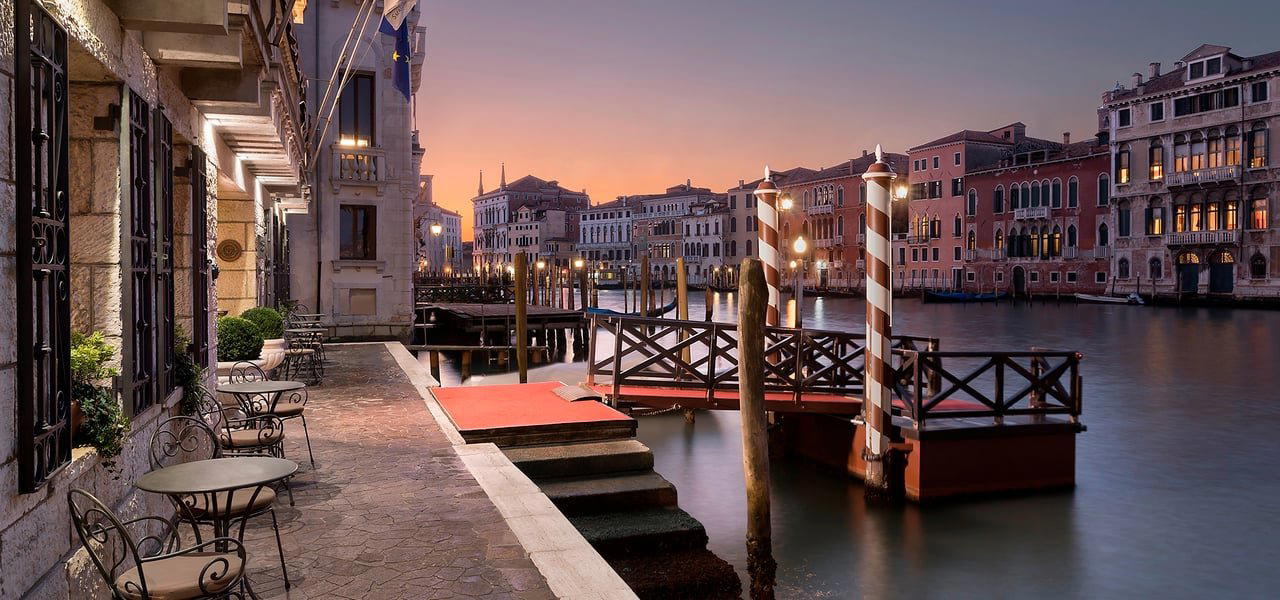
Bars in Venice
All bars in Venice →
Details
- Classic
- Well Known
- Scenic
- Romantic Getaway
- Weekend Escape
- Historic Building
- Panoramic View
- Terrace
- Wi Fi
- Street Scene
- Step Free Entrance
Light and airy with elegant arches and loggias in a historic Gothic palace setting.