LUX* Khorfakkan
<strong>LUX* Khorfakkan</strong> sits <strong>in a coastal UAE market</strong> where hotel dining has to answer two demands at once: <strong>resort</strong> ease and a stronger sense of place than the big-city dining rooms of Dubai or <strong>Abu Dhabi</strong>. Public EP Club data does not list awards, prices, chef names, room categories, or booking channels, so planning should be handled directly through current hotel communications.
 Discover on Pearl
Pearl is the En Primeur Club membership app — saves, bookings, and concierge access live there. Same editors, same standards.
Where the coast changes the brief
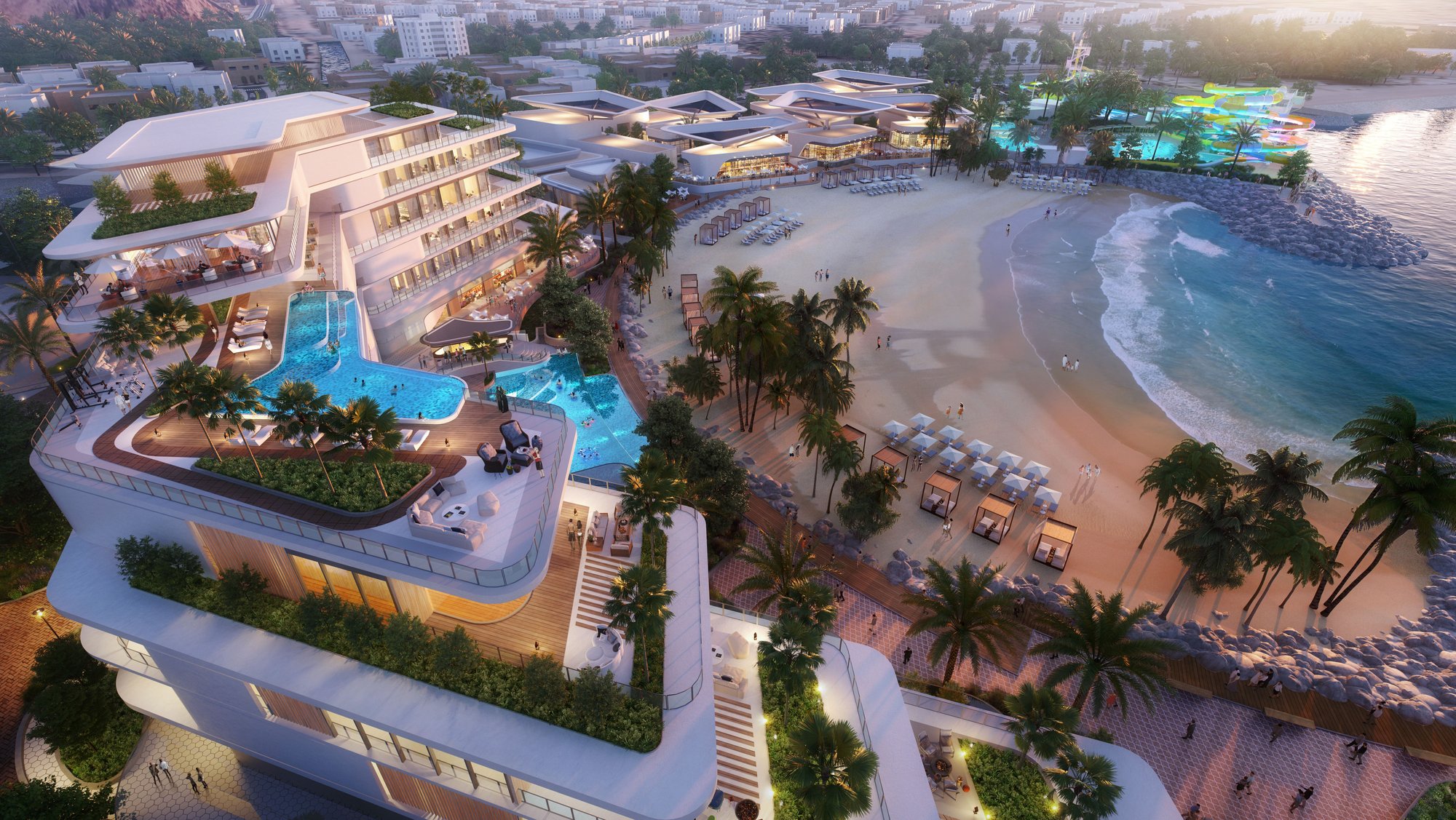
Approaching Khorfakkan, the usual Gulf hotel vocabulary shifts. The city sits between the Hajar Mountains and the Gulf of Oman, so the first impression is not the glass-and-mall density associated with Dubai, but a tighter coastal setting where rock, sea air, and slower traffic shape the rhythm of a stay. That matters for hotel dining. A resort in Khorfakkan is judged less by how loudly it competes with metropolitan restaurant culture and more by whether its restaurants and bars can make sense of the place: beach days, mountain drives, family travel, and evenings that do not require a transfer across town.
LUX* Khorfakkan belongs to that more location-led resort conversation. The available EP Club record confirms the property name and city, but does not provide a chef, cuisine type, awards, star rating, price range, room count, address, website, phone number, or formal restaurant list. That absence should not be treated as a blank cheque for invention. It places the hotel in a different editorial category: a property to read through the destination first, then verify through direct planning before dates are fixed. For a broader view of the local dining frame, see Our full Khorfakkan restaurants guide, which is the cleaner starting point for comparing independent tables with hotel-run dining.
The useful question is not whether Khorfakkan can mimic Dubai’s chef-led dining machine. It cannot, and that is part of its appeal. The city’s hospitality logic is closer to a coastal pause than a reservation sprint. In the UAE, resort dining often splits between spectacle-led destinations and functional hotel programmes built around breakfast, poolside service, casual evening meals, and lobby or terrace drinking. Khorfakkan naturally favours the second model unless a property has verified, named restaurants with outside critical recognition. At present, EP Club’s data for LUX* Khorfakkan does not list such recognition, so expectations should be calibrated toward setting, convenience, and resort rhythm rather than award-chasing dining.
The dining programme as the real test
Hotel restaurants in smaller UAE leisure markets carry a heavier burden than their city counterparts. In Dubai or Abu Dhabi, a weak hotel restaurant can be ignored because taxis and competing dining districts are close at hand. In Khorfakkan, the hotel dining programme is more central to the stay. Breakfast quality, poolside pacing, non-alcoholic drinks, evening variety, child-friendly timing, and the ability to move from beach clothes to dinner without ceremony all become part of the hospitality product. That is the lens through which LUX* Khorfakkan should be assessed.
Because no cuisine type, chef name, price range, or award record is supplied in the EP Club database, the responsible reading is conservative. There is no basis here to claim a signature restaurant, celebrity chef, tasting menu, cocktail programme, or destination bar. The property should instead be placed among UAE coastal resorts where dining is expected to support the day rather than dominate it. That is a valid category. It suits travellers who want a hotel meal after a swim or mountain excursion, and it suits families who value predictability over a multi-stop evening plan.
The comparison set clarifies the point. Dubai properties such as Atlantis The Royal in Dubai operate in a restaurant-as-headline market, where imported culinary names and destination dining rooms shape the identity of the hotel. Resorts such as Mövenpick Resort Al Marjan Island in Ras al Khaimah and Fairmont Fujairah Beach Resort in Dibba sit closer to the leisure-coast model, where restaurants must be accessible across a multi-generational guest mix. LUX* Khorfakkan, on the data available, reads nearer that latter conversation than the chef-stage model of the major cities.
This distinction helps avoid a common UAE resort mistake: assuming that luxury automatically means culinary ambition at the level of a capital-city dining address. In resort settings, hospitality can be highly polished without the dining programme functioning as a standalone restaurant destination. The better test is operational coherence. Are meals scheduled around beach and excursion days? Is there enough range for a two- or three-night stay? Are the bars designed for long, low-key evenings rather than quick pre-dinner theatre? Those answers require current hotel confirmation, but the questions are the right ones.
Khorfakkan's hotel scene is not Dubai with fewer towers
Khorfakkan’s appeal comes from geography. The city is part of Sharjah emirate but faces the Gulf of Oman, which gives it a different travel pattern from the western Gulf coast. Visitors tend to pair beach time with mountain drives, heritage stops, diving or snorkelling excursions, and slower family itineraries. That shifts the role of a hotel. It becomes a base, not simply a room above a restaurant lobby. For the wider accommodation frame, Our full Khorfakkan hotels guide gives a clearer citywide comparison.
The same geography affects drinking culture and evening planning. Khorfakkan is not a bar-hopping city in the Dubai Marina or DIFC sense. Hotel bars, where available, tend to matter because they may be the simplest option after dark. EP Club’s current record for LUX* Khorfakkan does not list bar names, drinks formats, or licensing details, so any plan involving alcohol should be checked directly before travel. For context on the city’s broader drinking options, use Our full Khorfakkan bars guide.
Food travellers should also understand what Khorfakkan is not. It is not a dense restaurant district built around tasting counters, late-night cocktail rooms, and reservation scarcity. The more relevant pleasures are coastal proximity, regional hotel hospitality, and the chance to slow down after spending time in the country’s larger urban centres. That makes the dining programme at LUX* Khorfakkan important, but important in a practical way. It must carry breakfast, lunch, and evening fallback duties. It does not need to behave like a stand-alone restaurant capital unless the hotel publishes evidence to support that ambition.
Wine travel is a separate matter. The UAE is not a vineyard destination in the conventional sense, and Khorfakkan should not be planned around cellar-door touring. EP Club maintains Our full Khorfakkan wineries guide for category completeness, but travellers should expect the wine conversation here to centre on hotel lists and licensed venues rather than local production. Experiences work better as the organising category: coastal drives, water activities, mountain scenery, and cultural stops. For that side of the trip, see Our full Khorfakkan experiences guide.
How it compares across the UAE resort map
The UAE’s resort market is not a single category. Desert retreats, island wildlife resorts, urban beach hotels, and mountain-adjacent coastal properties answer different questions. LUX* Khorfakkan should be compared with properties that use setting as part of the stay, not only with big-city luxury hotels. Anantara Sir Bani Yas Island Al Yamm Villa Resort in Abu Dhabi and Anantara Sir Bani Yas Island Al Sahel Villa Resort in Sir Bani Yas Island are useful references because their appeal is tied to remoteness and nature rather than urban density. Desert Islands Resort & Spa by Anantara in Al Dhafra sits in the same broader pattern of destination-led hospitality.
Desert properties create another contrast. Anantara Qasr al Sarab Desert Resort in Liwa Desert, Telal Resort Al Ain in Al Ain, Bateen Liwa Resort in Mzeer Ah, and Al Badayer Retreat by Sharjah Collection in Sharjah sell a different kind of silence: dunes, long horizons, and evening temperatures that change the pace of dinner. Khorfakkan is not desert theatre. It is coastal and mountainous, so the dining expectation should lean toward ease after active days rather than camp-style drama or destination-setpiece dinners.
Urban and near-urban beach hotels sharpen the distinction further. Andaz by Hyatt – Palm Jumeirah in Palm Jumeirah, Fairmont Ajman in Ajman, and Anantara Santorini Abu Dhabi Retreat in Ghantoot sit closer to large leisure corridors, where access to other dining rooms can soften pressure on the hotel’s own restaurants. Khorfakkan’s relative separation makes on-property dining more consequential. A traveller choosing LUX* Khorfakkan should therefore ask about restaurant variety before asking about decorative style.
Global comparisons are useful only up to a point. Palace hotels such as Hôtel de Paris Monte-Carlo in Monte Carlo, Badrutt's Palace Hotel in St. Moritz, Aman Venice in Venice, Cipriani, A Belmond Hotel, Venice in Venice, Bvlgari Hotel Tokyo in Tokyo, Mandarin Oriental Ritz, Madrid in Madrid, and The Fifth Avenue Hotel in New York City operate in cities where dining can draw a local audience every night. Khorfakkan’s hotel dining is more dependent on resident guests and weekend leisure patterns. That does not make it lesser; it makes the criteria different.
Planning the stay around meals
With no address, phone number, website, hours, price range, booking method, dress code, or room categories supplied in the EP Club record, planning should be direct and current. Travellers should confirm the active restaurant and bar lineup, meal periods, alcohol policy where relevant, children’s dining arrangements, and any seasonal closures before committing. This is especially sensible in smaller resort markets, where outlets can operate on demand patterns that differ between weekdays, weekends, holidays, and school-break periods.
Price expectations also need verification. No price range is listed in the EP Club data, and Khorfakkan does not provide the same public menu density as Dubai’s major dining districts. The practical move is to request current menus or half-board details directly from the hotel before arrival, particularly for longer stays. If the trip includes a special dinner, dietary requirements, or a late arrival, those details should be settled in advance rather than handled at check-in.
Room selection should follow the trip’s daily rhythm. Since no verified room categories are available in the data, this page cannot recommend a named category. The smarter framework is functional: travellers spending most of the day outside the hotel may prioritise value and breakfast access, while those planning a resort-heavy stay should ask which categories give easier access to pools, beach areas, or dining venues. Families should confirm bedding layouts and meal-plan rules. Couples should ask about quieter room positions rather than assuming a premium label guarantees calm.
The timing question is similar. Khorfakkan attracts weekend and holiday demand from within the UAE, so planning ahead is sensible around public holidays and school breaks. The EP Club record does not provide a booking window, official website, or phone number, so the safest route is to contact the hotel through current public channels and get written confirmation of dining, room, and cancellation details. That is not bureaucracy; it is how to avoid arriving at a coastal resort with assumptions imported from a larger city.
Continue exploring
More in Khorfakkan
Hotels in Khorfakkan
Browse all →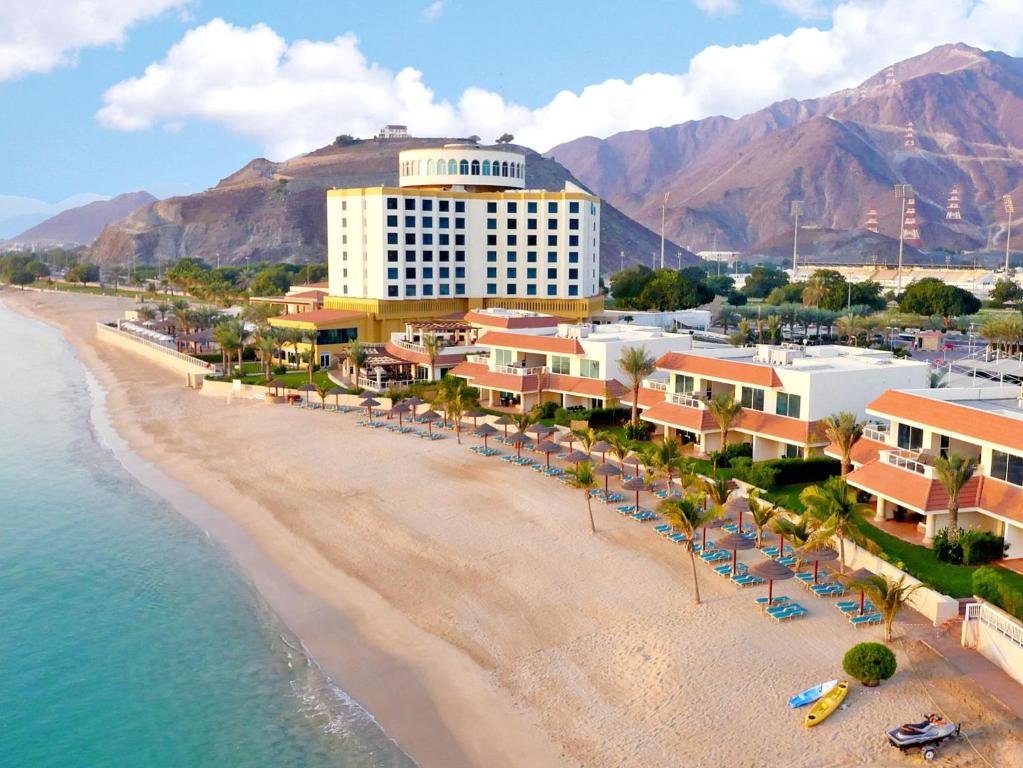
At a Glance
- Scenic
- Modern
- Elegant
- Sophisticated
- Minimalist
- Opulent
- Romantic Getaway
- Family Vacation
- Weekend Escape
- Anniversary
- Beachfront
- Panoramic View
- Design Destination
- Wifi
- Concierge
- Room Service
- Pool
- Fitness Center
- Spa
- Waterfront
- Mountain
A refined hillside resort atmosphere that feels modern and beachside, with a strong sense of nature-forward luxury and scenic coastal-mountain surroundings.