Anantara Sir Bani Yas Island Al Sahel Villa Resort

1 Michelin Key
A Michelin Selected villa resort on Sir Bani Yas Island, Al Sahel places guests within one of the UAE's most serious wildlife conservation areas, where the architecture draws directly from the savannah setting. The property operates in a remote-island tier of Gulf hospitality that prioritises natural immersion over resort amenity excess, positioning it apart from mainland UAE luxury.

Pearl is the En Primeur Club membership app — saves, bookings, and concierge access live there. Same editors, same standards.
- Address
- Sir Bani Yas Island, Sir Bani Yas Island, UAE
- Phone
- +971 2 801 5400
- Directions
- Get directions
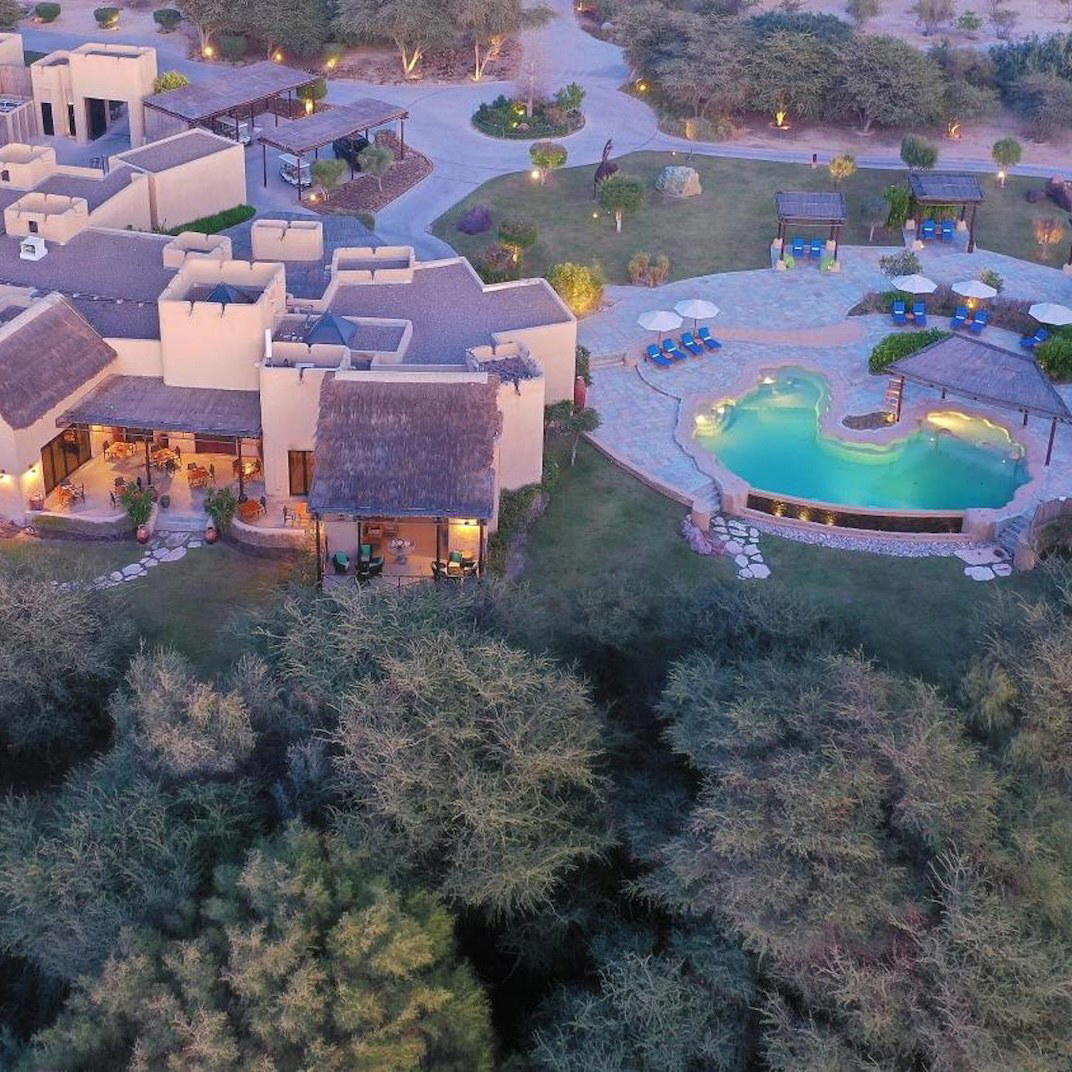
Where the Architecture Answers the Landscape
Sir Bani Yas Island sits roughly 250 kilometres southwest of Abu Dhabi in the Persian Gulf, and the journey itself signals a shift in register. The island is not a resort destination in the conventional Gulf sense. It is a wildlife reserve first, home to more than 13,000 free-roaming animals across a terrain that alternates between acacia scrubland, coastal mangrove, and open savannah. The Anantara Al Sahel Villa Resort occupies the island's inland savannah zone, and that positioning is not incidental. The architecture is calibrated directly to its surroundings: low-profile stone and timber structures that track the contours of the land rather than imposing against them, with sightlines drawn deliberately outward toward open terrain where Arabian oryx, gazelle, and giraffe move through the property's perimeter without barrier.
This design approach places Al Sahel in a specific niche within Gulf hospitality. The dominant model across Dubai and Abu Dhabi runs toward vertical scale, maximalist interiors, and urban density, from the towers of Atlantis The Royal in Dubai to the city-edge position of properties like Conrad Abu Dhabi Etihad Towers. Al Sahel operates in deliberate contrast: a low-density villa format where the built environment is subordinate to the natural one. The same logic governs other properties in this remote-nature tier, including the sister property Desert Islands Resort & Spa by Anantara in Al Dhafra, but Al Sahel's savannah orientation gives it a character distinct even within the island's own accommodation options.
The Interior Logic of Immersive Design
Internationally, the design language of wildlife-adjacent luxury has converged around a recognisable set of principles: materials that weather and belong, fenestration that frames landscape rather than blocking it, and a deliberate suppression of anything that might read as urban. Al Sahel's villa architecture follows this grammar consistently. Warm stone exteriors, open-plan layouts with direct terrace access, and private plunge pools oriented toward the surrounding terrain are the structural constants. The effect is less about theatrical interior design, as one finds at landmark properties like Aman Venice or Cheval Blanc Paris, and more about a studied withdrawal of visual noise so that the landscape can register fully.
Within the Gulf region, this restraint is relatively unusual. The prevailing aesthetic at high-end UAE properties tends toward decorative richness, imported marble, and statement lighting. Al Sahel's departure from that register is a design position, not an absence of ambition. It sits in the same conceptual territory as Anantara Qasr al Sarab Desert Resort in Liwa Desert, where architecture is asked to serve landscape rather than compete with it, though the desert context there produces a different formal vocabulary.
Michelin Recognition and What It Signals
The Michelin Selected designation, confirmed in the 2025 Michelin Hotels listing, places Al Sahel within a small cohort of UAE properties that the guide considers worth singling out. Michelin's hotel selection criteria weight consistency, sense of place, and quality of welcome alongside physical comfort, meaning the designation functions as an editorial endorsement rather than a star-grade assessment. For a remote island property with no urban dining scene nearby, the recognition is particularly meaningful: it positions Al Sahel as a destination stay with independent merit rather than a resort that competes on proximity to city amenities.
Within Abu Dhabi's broader hospitality tier, a Michelin Selected status places Al Sahel in good company. Other Anantara properties in the region, including Anantara Sir Bani Yas Island Al Yamm Villa Resort on the same island, have also drawn editorial attention, reinforcing the island's positioning as a serious alternative to mainland resort options. For travellers weighing options across the Emirates, comparisons might also include Al Badayer Retreat by Sharjah Collection or Telal Resort Al Ain, both of which operate in the nature-immersive tier without urban adjacency.
The Island's Conservation Context
Sir Bani Yas was originally developed as a private wildlife reserve by Sheikh Zayed bin Sultan Al Nahyan in the 1970s, with the explicit goal of protecting and reintroducing species that had declined across the Arabian Peninsula. The island today holds one of the largest populations of Arabian oryx outside the wild, alongside cheetah, hyena, and multiple antelope species. This conservation history is not background colour. It is the structural reason the resort exists in this form, and it fundamentally shapes what a stay here involves. Activities are built around tracked wildlife drives and island exploration rather than the beach-club or spa programming that anchors Gulf resort itineraries elsewhere.
That context also limits the property's accessibility in ways that distinguish it from mainland UAE alternatives. Reaching Sir Bani Yas requires a flight or ferry connection from Abu Dhabi, which adds planning friction. This is not a property you arrive at after a short taxi from an international terminal. The distance is part of the proposition: the island's remoteness is what preserves the conservation environment that makes the wildlife experience possible. For travellers accustomed to the immediacy of Dubai's hotel corridor, the logistics require adjustment. For those who make the journey, the isolation is the point.
Placing Al Sahel in a Global Frame
Safari-adjacent lodge architecture has a long reference tradition in East and Southern Africa, and Gulf wildlife resorts inevitably invite comparison to that lineage. Al Sahel occupies a specific position within that global frame: higher in service register than most East African tented camps, with villa-format accommodation and full resort amenity provision, but operating with a genuine conservation mandate that separates it from theme-resort wildlife experiences found elsewhere in the Middle East.
Among Anantara's own portfolio, the range spans from urban properties to remote nature formats. Anantara Santorini Abu Dhabi Retreat in Ghantoot sits at the accessible, view-driven end of the spectrum, while Al Sahel represents the group's most ecologically embedded position in the region. Travellers who have experienced the brand at properties in Southeast Asia or East Africa will find the island format familiar in structure, if substantially different in landscape character.
Planning a Stay
The cooler months between October and April represent the period when outdoor activities, particularly wildlife tracking, are most comfortable given the Gulf's summer heat. Access from Abu Dhabi to Sir Bani Yas is available by scheduled ferry from Jebel Dhanna or by light aircraft, and the resort can assist with logistics from the mainland. The villa format means accommodation comes with a higher degree of privacy than conventional hotel-room stays, which is relevant for families or groups travelling together. For travellers building a wider UAE itinerary that also includes Mövenpick Resort Al Marjan Island in Ras al Khaimah or Fairmont Ajman, positioning Sir Bani Yas as a standalone leg rather than a day excursion makes the most of what the island offers. A minimum of two nights is the practical baseline for experiencing the wildlife programming without feeling rushed. For a broader orientation to accommodation and dining in the area, see our full Sir Bani Yas Island restaurants guide.
A Quick Peer Check
Comparable venues nearby, for context on price, style, and recognition.
| Venue | Cuisine | Price | Awards | Notes |
|---|---|---|---|---|
| Anantara Sir Bani Yas Island Al Sahel Villa ResortThis venue — the venue you are viewing | Luxury all-villa safari resort inspired by African lodge design, blending rustic charm with contemporary five-star amenities on a protected wildlife sanctuary. | $2,500+ | 1 Michelin Key | Not listed |
| Desert Islands Resort & Spa By Anantara | Eco-luxury resort harmonizing with natural island surroundings and wildlife conservation. | Not listed | Michelin Selected | Sir Bani Yas Island |
| Ski Dubai | modern rustic ski chalet | Not listed | Not listed | Al Barsha 1 |
| Fairmont Fujairah Beach Resort | Arabic bohemian art hotel concept blending historical and modern sophistication with contemporary luxury interpretation | Not listed | Michelin Selected | Dibba |
| One&Only Royal Mirage | Luxurious Arabian palace resort with three distinct wings: Arabian Court, Palace, and Residence. | Not listed | Michelin Selected · La Liste Top Hotels | Al Sufouh 2 |
| InterContinental Ras Al Khaimah Resort and Spa | Contemporary Arabian luxury beachfront resort | Not listed | Michelin Selected · Virtuoso Luxury Hotel Partner | Al Riffa |
Recognition history
Dated appearances from independent guides and award organizations, with the underlying list record or original source where available.
Michelin 1 Key
Michelin
Full recognition history (2 entries)
Michelin Selected
Michelin
Continue exploring
More in Sir Bani Yas Island
Hotels in Sir Bani Yas Island
Browse all →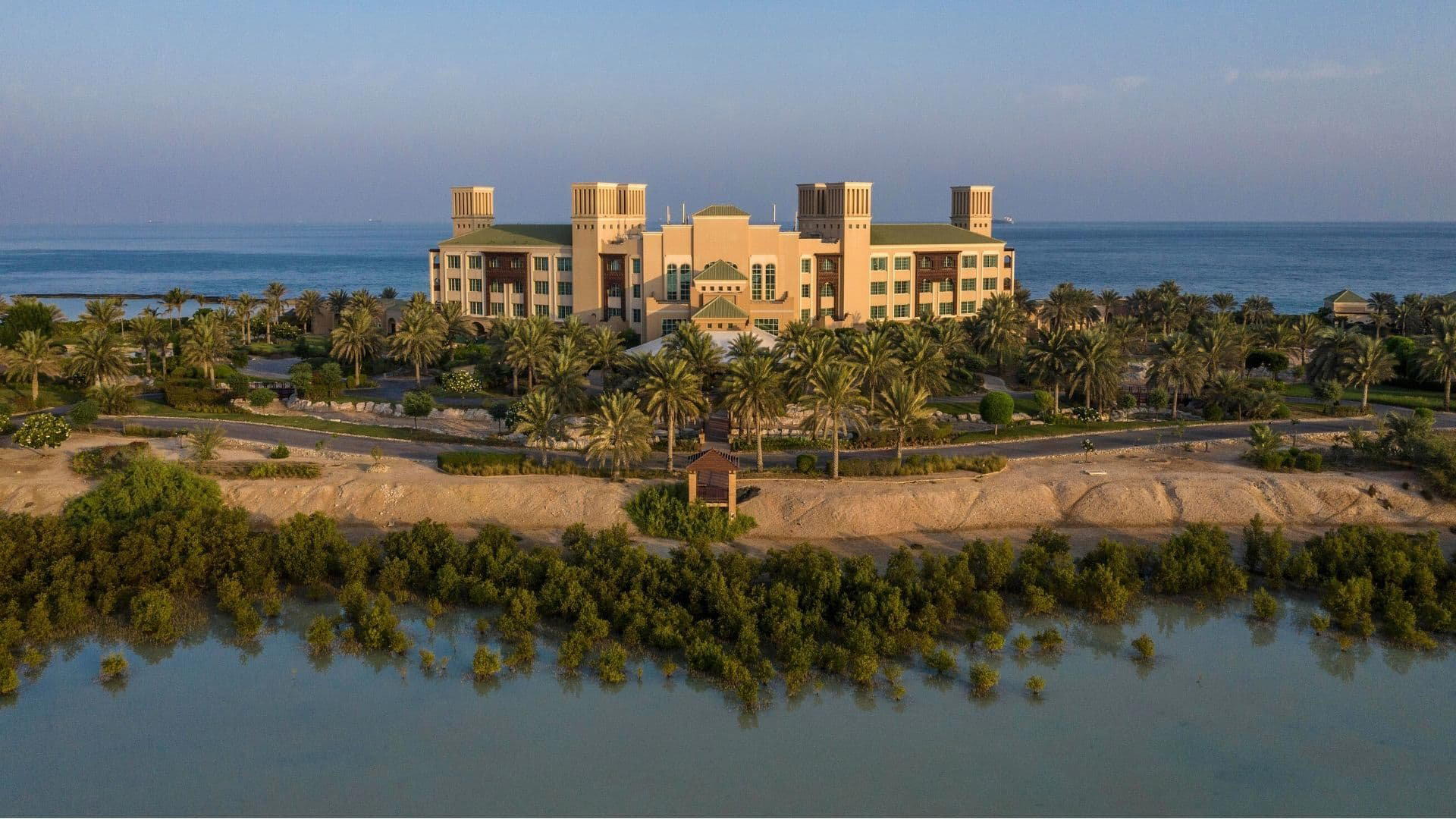
Restaurants in Sir Bani Yas Island
Browse all →
Details
- Romantic
- Scenic
- Quiet
- Elegant
- Rustic
- Honeymoon
- Romantic Getaway
- Family Vacation
- Wellness Retreat
- Anniversary
- Celebration
- Private Villa
- Garden
- Terrace
- Private Dining
- Panoramic View
- Destination Spa
- Wi Fi
- Pool
- Spa
- Fitness Center
- Room Service
- Concierge
- Kids Club
- Restaurant
- Bar
- Garden
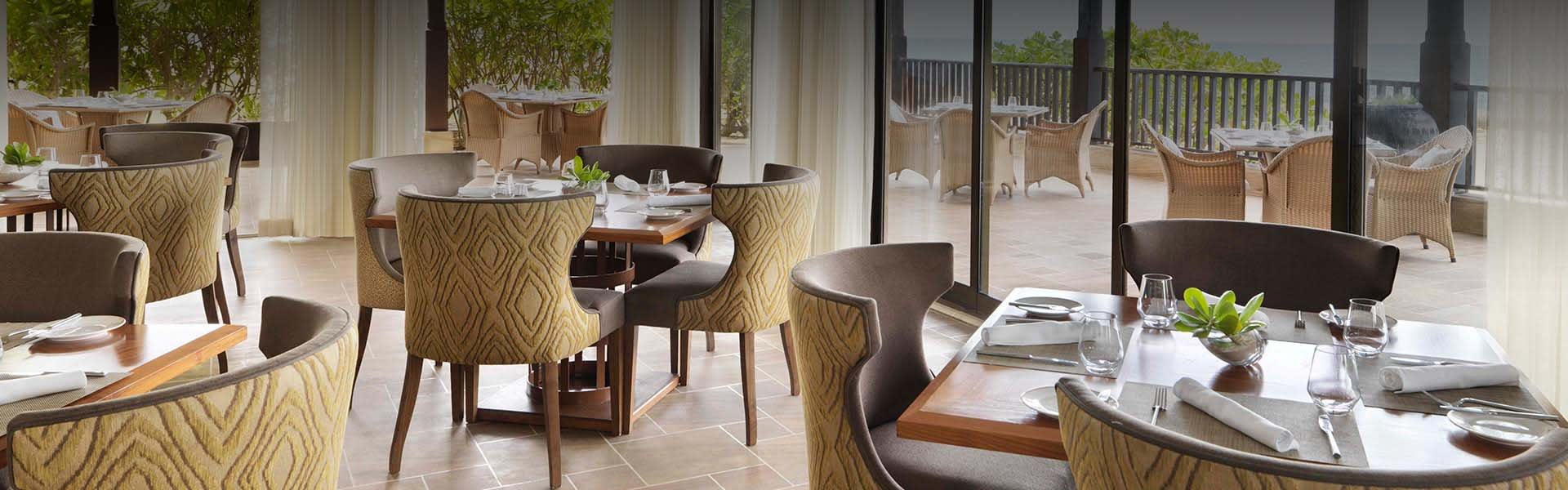
Serene and naturalistic with savannah views, designed to evoke African lodge aesthetics while maintaining five-star comfort; guests wake to wildlife sightings and dine under stars on private terraces.