Lido Palace


1 Michelin Key · Leading Hotels of World Member
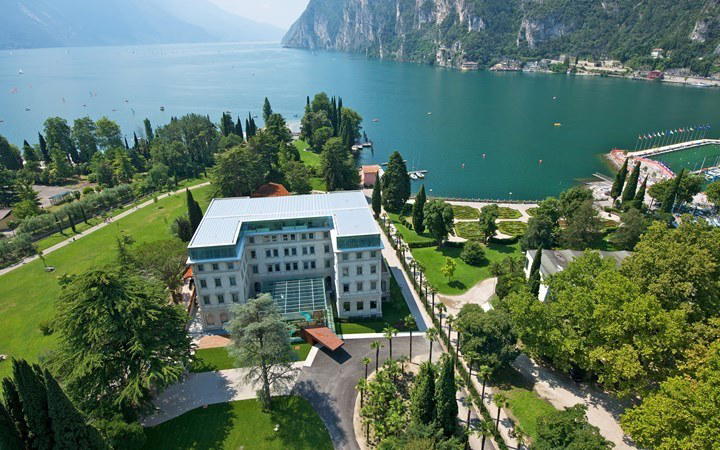
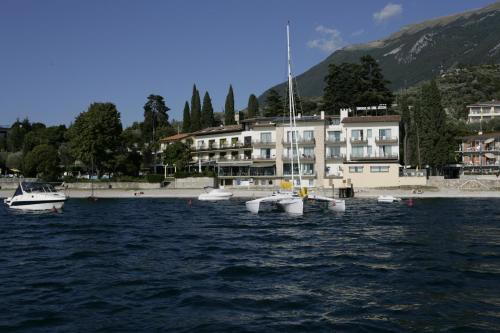
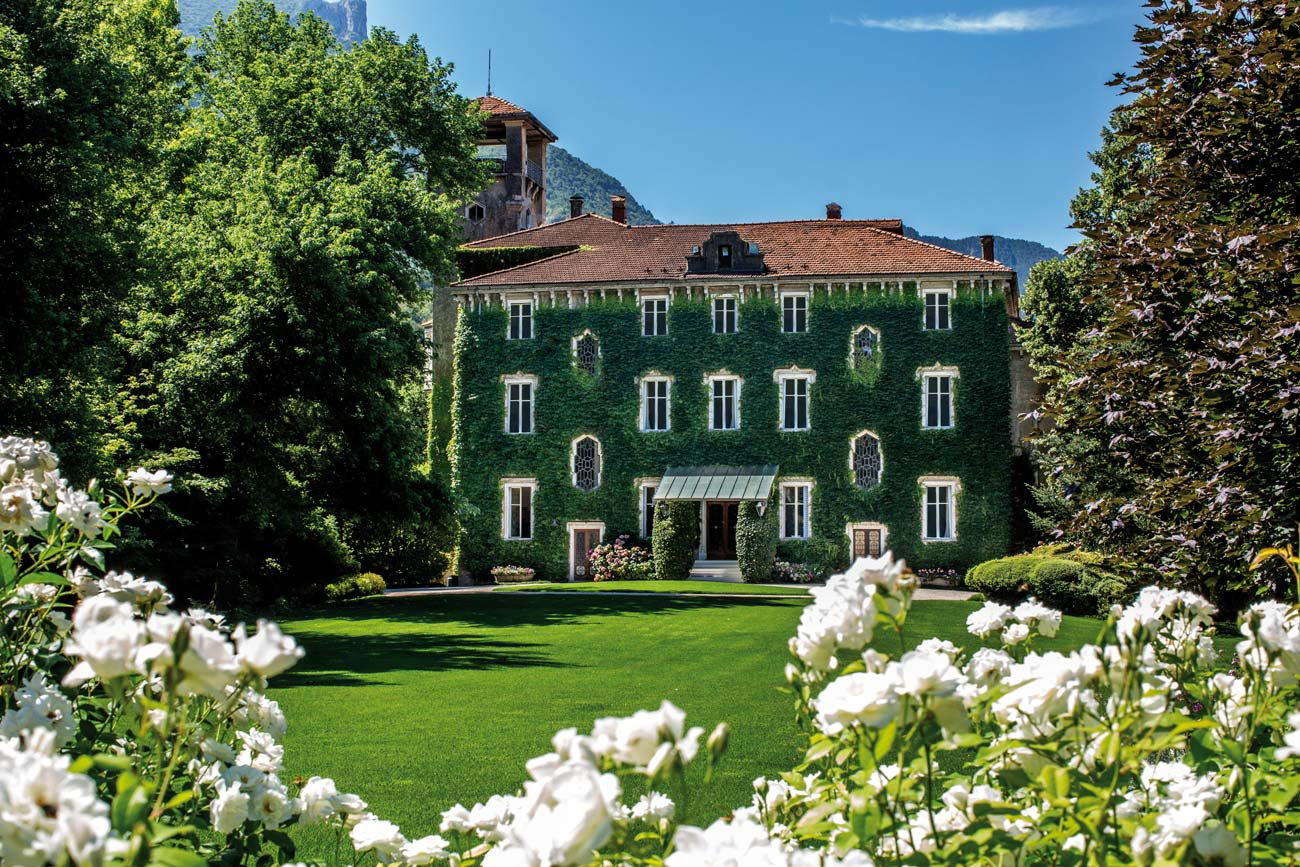
Founded in 1899 and a Leading Hotels of the World member, Lido Palace sits on the northern shore of Lake Garda with a guest history that runs from Archduke Franz Ferdinand to Cornelius Vanderbilt. Architect Alberto Cecchetto's interventions give it a split identity: Belle Époque bones alongside sharp contemporary extensions, 42 rooms rated by Michelin with one Key in 2024, and a spa that faces the lake through floor-to-ceiling glass.

Pearl is the En Primeur Club membership app, where members save venues, book tables and use the concierge.
Where the Belle Époque Meets Radical Architecture
Lake Garda's northern tip operates at a different frequency from the resort clusters further south. Riva del Garda sits where the lake narrows into something almost Alpine, the water colder and the light sharper, the surrounding peaks close enough that snow remains on them well into spring. Hotels here have historically traded on that scenery. The more interesting question is what happens when a property also has 125 years of accumulated history and an architect willing to treat a 19th-century palazzo as a provocation rather than a constraint.
Lido Palace opened in 1899, which places it at the outer edge of what counts as a genuine Belle Époque property. Its early guest register reads like a cross-section of turn-of-the-century European power: Archduke Franz Ferdinand, King Vittorio Emanuele, and Cornelius Vanderbilt each passed through, in an era when northern Lake Garda was a favored retreat for the continent's aristocratic and industrial elite. That lineage is documented, not performed. The hotel carries it without requiring every surface to confirm it. What changed the calculation entirely was the decision to bring in Alberto Cecchetto, whose architectural interventions reframe the property as something considerably more complex than a preserved Grand Hotel.
Cecchetto's Additions: The Case for Productive Tension
The most discussed approach in European heritage hospitality is how to modernize without erasing. Many properties in the same tier Grand Hotel Tremezzo in Tremezzo and Bellevue Syrene 1820 in Sorrento among them, have approached this conservatively, preserving period features while updating systems and finishes. Cecchetto did something less comfortable and more interesting: he designed additions that declare their own era rather than mimic the original.
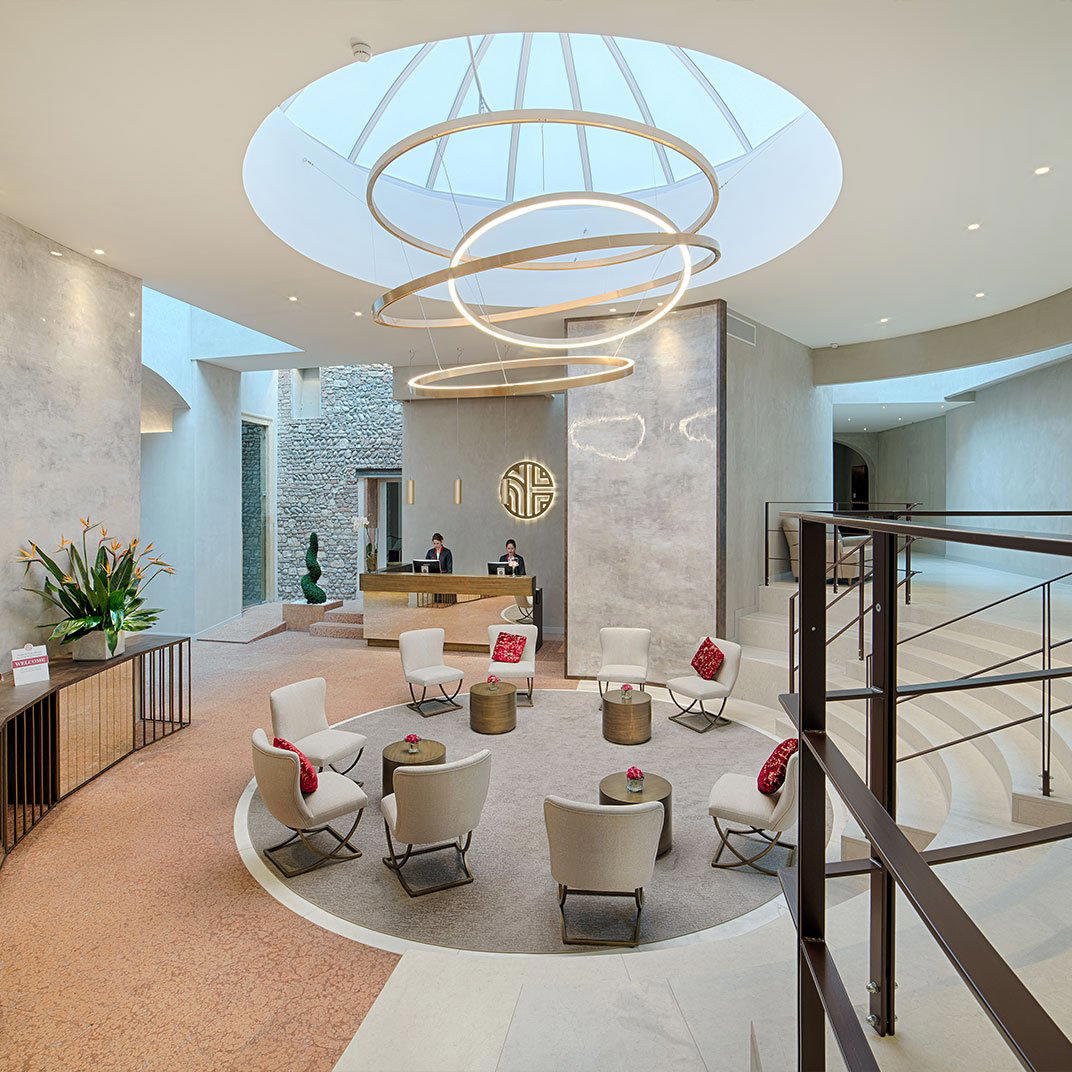
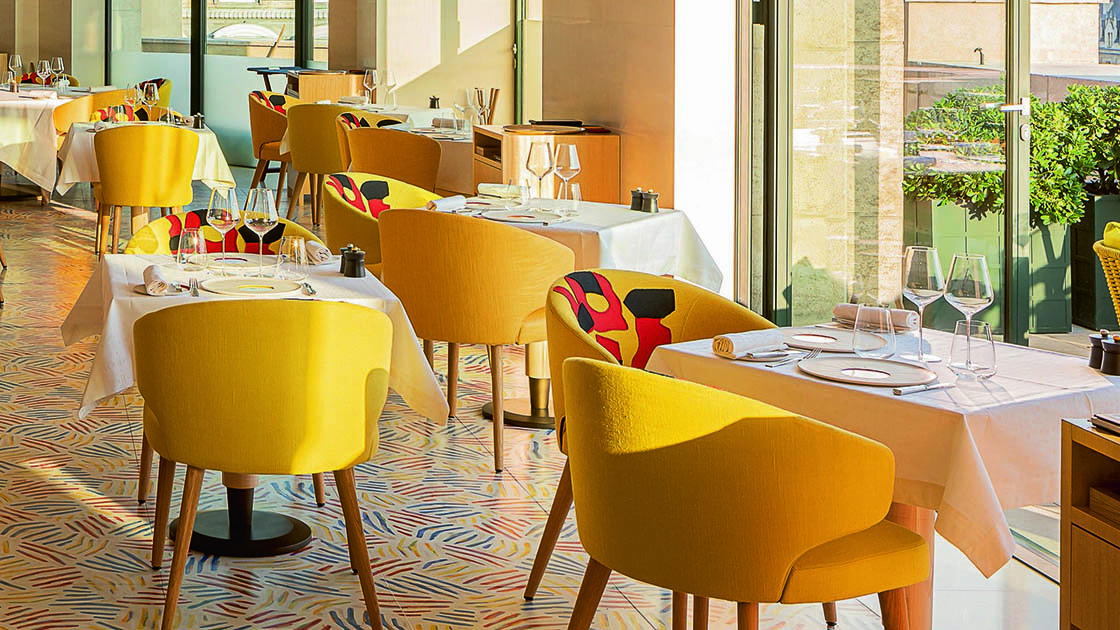
The lobby extension is the clearest example. It projects outward from the original edifice as a museum-like volume, its partitioned glass ceiling flooding the space with northern light. The structure does not try to pass as 1899. It reads as a distinct architectural moment placed in deliberate dialogue with what came before. The dining enclosure pushes this further: a glass-and-metal construction that stretches nearly to the lakeshore, turning the view into the central architectural element rather than an amenity visible from inside a conventional room. When considered as a set, Cecchetto's interventions make Lido Palace legible as a conversation between two periods rather than a single continuous property.
That productive tension places it in a specific category of Italian lakeside hotel, not the all-preserving heritage property, not the purpose-built contemporary resort, but something more compound. Passalacqua in Moltrasio, on Lake Como, operates in a comparable register, though its design logic moves in a different direction. EALA My Lakeside Dream in Limone sul Garda, a few kilometers down the same western shore, represents the other end of the spectrum: contemporary architecture without a historic base. Lido Palace occupies the middle ground, which in this case means the most architecturally layered position of the three.
Forty-Two Rooms and the Logic of Restraint
At 42 rooms, including 12 suites, Lido Palace sits in the tighter end of the historic Italian hotel format. Properties at this scale make particular choices visible: because there are fewer rooms, the quality of individual decisions carries more weight. The room program here favors traditional luxury, built around a chocolate-and-white palette that reads as considered rather than default. King beds are standard throughout; the pillow menu adds a layer of customization that has become a reliable marker of the upper segment.
The bathrooms are the most concentrated expression of the hotel's practical positioning. Rainforest showers, deep soaking tubs, underfloor heating, and steam-resistant mirrors constitute an amenity list that aligns with properties like Castel Fragsburg in Merano or Forestis Dolomites in Plose, both of which operate in the northern Italian Alpine-adjacent luxury tier. Acqua di Parma amenities confirm the brand-alignment logic: a Parma-based house with consistent positioning in the Italian luxury hotel segment.
The lake views are not incidental here. Because Riva del Garda sits at the northern apex of the lake, the views from the upper floors take in both water and snowcapped peaks simultaneously, a framing that distinguishes this address from properties further south where the lake reads as wide and flat rather than enclosed and dramatic. Select rooms carry this view as a primary feature; it functions as architectural context that no interior decision can replicate.
CXI Spa and the Wellness Argument
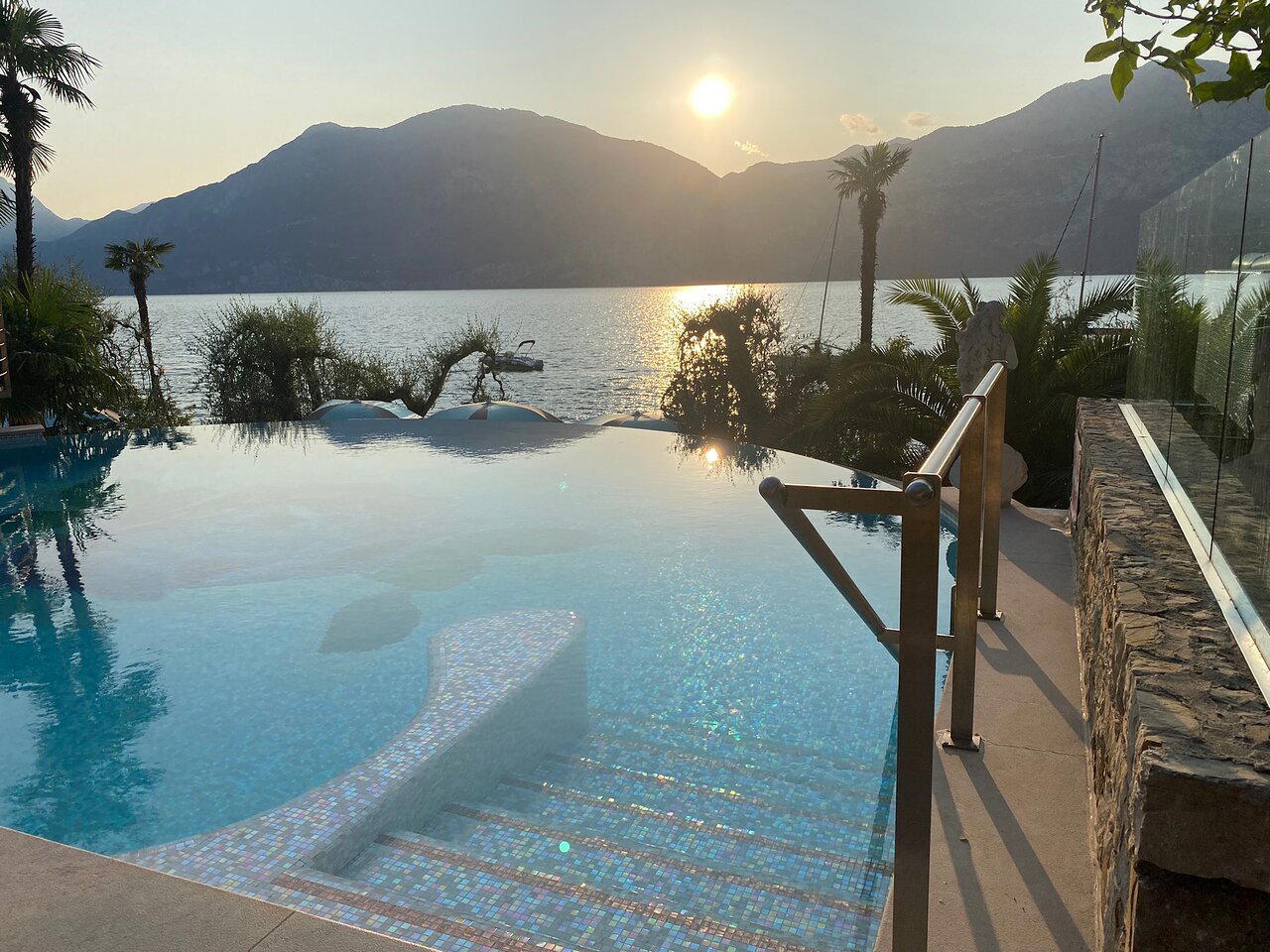
Lake Garda has a well-established wellness tradition, rooted in the thermal geography of the broader Alpine-Adriatic corridor. Lido Palace's CXI spa operates within this tradition while adding specific features that anchor it in the contemporary high-end format. The indoor and outdoor pools are both heated, which matters considerably at the northern end of the lake where the season is shorter and temperatures more variable than at Sirmione or Malcesine. Floor-to-ceiling windows mean the spa's interior maintains a visual connection to the lake, which reinforces rather than competes with the setting.
The chromatherapy suite and salt room represent treatments that have moved from novelty to standard expectation in this segment over the past decade. The menu of global treatments broadens the offering beyond Alpine-specific formats. Taken together, the spa program positions the hotel as a destination for guests whose primary intention is recovery and restoration, not merely a property with a pool and a massage room attached. For that kind of stay, the lake at the northern tip operates as a genuine environmental complement rather than a postcard backdrop.
Balì Bar and the Stile Liberty Interior
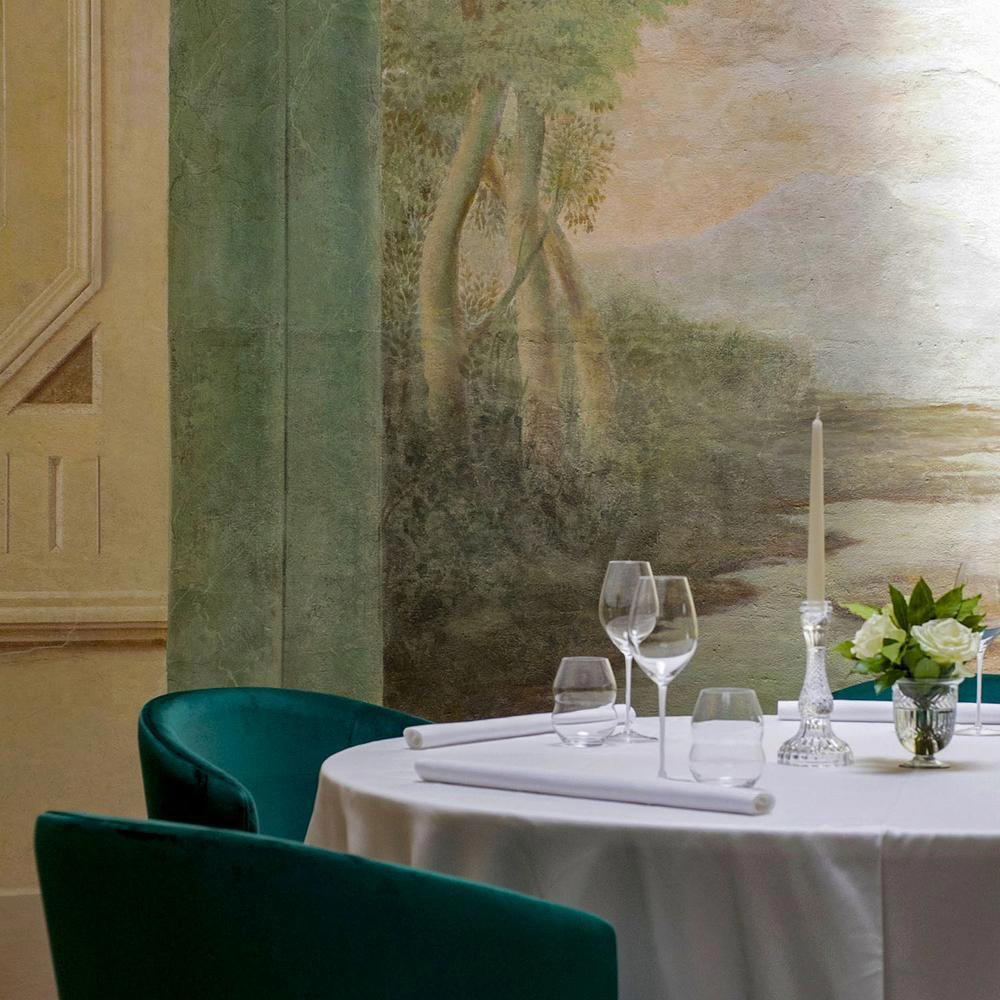
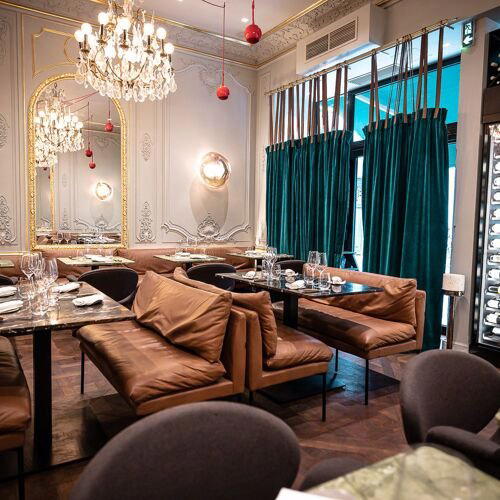
Stile Liberty, Italy's interpretation of Art Nouveau, reached its peak in the first two decades of the 20th century, precisely the period when Lido Palace was establishing its initial guest culture. The Balì Bar preserves this in watercolor finishes and Stile Liberty frescoes that connect the space directly to the hotel's founding era without requiring explanation. In the broader category of historic hotel bars, this kind of period interior carries weight: it anchors the room in a specific moment rather than the ahistorical luxury-neutral aesthetic that has become dominant in newer properties. Comparable period bar experiences in Italy exist at Aman Venice and, at a different scale, in the public rooms of Four Seasons Hotel Firenze, though both of those properties operate in larger cities with different competitive contexts.
Leading Hotels of the World membership (2025) places Lido Palace in a curated set of independent and privately managed properties that prioritize physical quality and service standards over brand-system scale. The collection is selective enough to function as a meaningful credential in the Italian luxury market. More notable is the Michelin One Key awarded in 2024, part of the guide's new hospitality rating system. Michelin Keys in the Italian lake district are not yet numerous, which gives the designation local significance beyond its general market meaning.
Room rates from approximately $242 position Lido Palace in the accessible-upper range for Italian luxury lake hotels, below the pricing of properties like Borgo Egnazia in Savelletri di Fasano or Bulgari Hotel Roma, and broadly comparable to properties like Borgo San Felice Resort in Castelnuovo Berardenga. Given the architectural interest, the historic guest lineage, and the Michelin Key, the price-to-credential ratio sits in the hotel's favor for guests making a considered choice at this level. Google's rating across 844 reviews adds market-level confirmation that delivery is consistent rather than aspirational.
For Riva del Garda's dining scene beyond the hotel, our full Riva del Garda restaurants guide covers the town's options at length. Those traveling the broader northern Italian circuit may also find useful reference in comparable properties across the country: Casa Maria Luigia in Modena, Castello di Reschio in Lisciano Niccone, Castelfalfi in Montaione, Il Pellicano in Porto Ercole, Rosewood Castiglion Del Bosco in Montalcino, Portrait Milano, Borgo Santandrea on the Amalfi Coast, Il San Pietro di Positano, JK Place Capri, and Corte della Maestà in Civita di Bagnoregio.
Planning Your Stay
Lido Palace is located at Viale Giosuè Carducci, 10, in Riva del Garda, at the northern end of Lake Garda in Trentino. The town is accessible by road from Verona (approximately 90 minutes) or from Brescia via the western shore. The spring and early summer season, April through June, brings optimal conditions at this end of the lake, when the peaks retain snow but the valley warms sufficiently for outdoor use of the lakeside spaces. Peak summer brings higher occupancy and warmer water; autumn offers quieter access and cooler temperatures suited to the spa program.
Comparable Spots, Quickly
Comparable venues nearby, for context on price, style, and recognition.
| Venue | Cuisine | Price | Awards | Notes |
|---|---|---|---|---|
| Lido PalaceThis venue (the venue you are viewing) | Belle Epoque luxury with modern design | $300–500 | 1 Michelin Key · Leading Hotels of World Member | Not listed |
| Vista Verona | Intimate boutique luxury hotel with modern Italian flair in a historic city center setting. | $500–750 | 1 Michelin Key · Small Luxury Hotels of the World Member | Citta' Antica |
| Violino D'Oro | Venetian boutique in historic 1700 building renovated 2023 | $500–750 | 1 Michelin Key · Mr & Mrs Smith Seal of Approval | San Marco |
| Ca’ di Dio | Historic Venetian palace reimagined with 21st-century luxury, blending austere architectural elements with refined contemporary design and locally sourced materials. | $750–1,000 | 1 Michelin Key · Mr & Mrs Smith Seal of Approval | Castello |
| Pensione America | Historic villa with timeless Italian elegance and contemporary comfort. | $750–1,000 | 1 Michelin Key · Conde Nast Hot List Hotels | Forte dei Marmi |
| Palazzo Venart Luxury Hotel | Restored 16th-century Venetian palazzo blending historic grandeur with modern luxury | Not listed | 1 Michelin Key · Virtuoso Luxury Hotel Partner | Santa Croce |
Recognition history
Dated appearances from independent guides and award organizations, with the underlying list record or original source where available.
Michelin 1 Key
Michelin
Leading Hotels of World Member
Leading Hotels of World
Full recognition history (4 entries)
Michelin 1 Key
Michelin
Michelin 1 Key
Michelin
Continue exploring
More in Riva del Garda
Hotels in Riva del Garda
All hotels in Riva del Garda →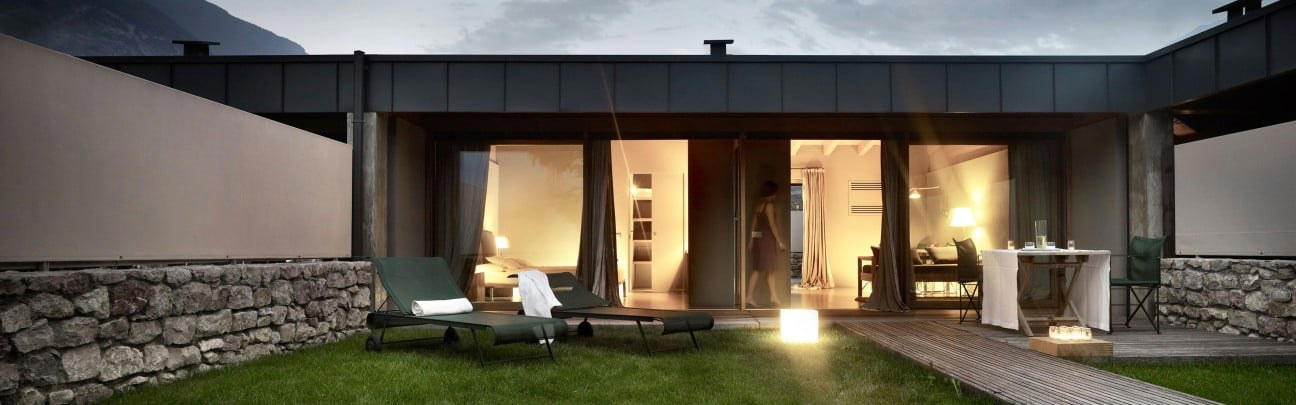
Bars in Riva del Garda
Browse all →
Details
- Elegant
- Sophisticated
- Romantic
- Scenic
- Ornate
- Honeymoon
- Romantic Getaway
- Wellness Retreat
- Anniversary
- Panoramic View
- Destination Spa
- Infinity Pool
- Terrace
- Spa
- Pool
- Indoor Pool
- Outdoor Pool
- Sauna
- Fitness Center
- Room Service
- Concierge
- Restaurant
- Garden
- Waterfront
- Garden
- Wheelchair Accessible
- Elevator
- Step Free Entrance
- Accessible Parking
Elegant and serene atmosphere with soundproofed rooms, live piano music, and a tranquil spa environment enhanced by natural light and lake vistas.