A Building That Earns Its Setting
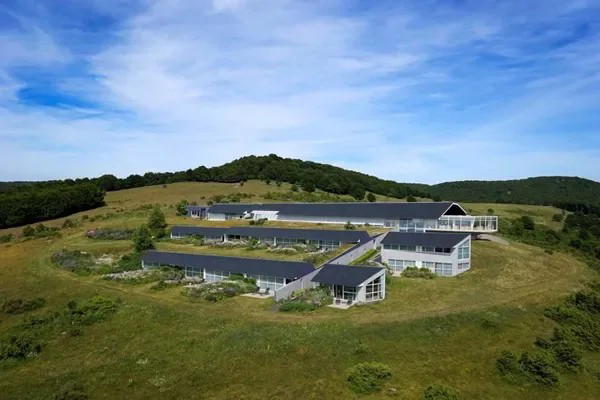
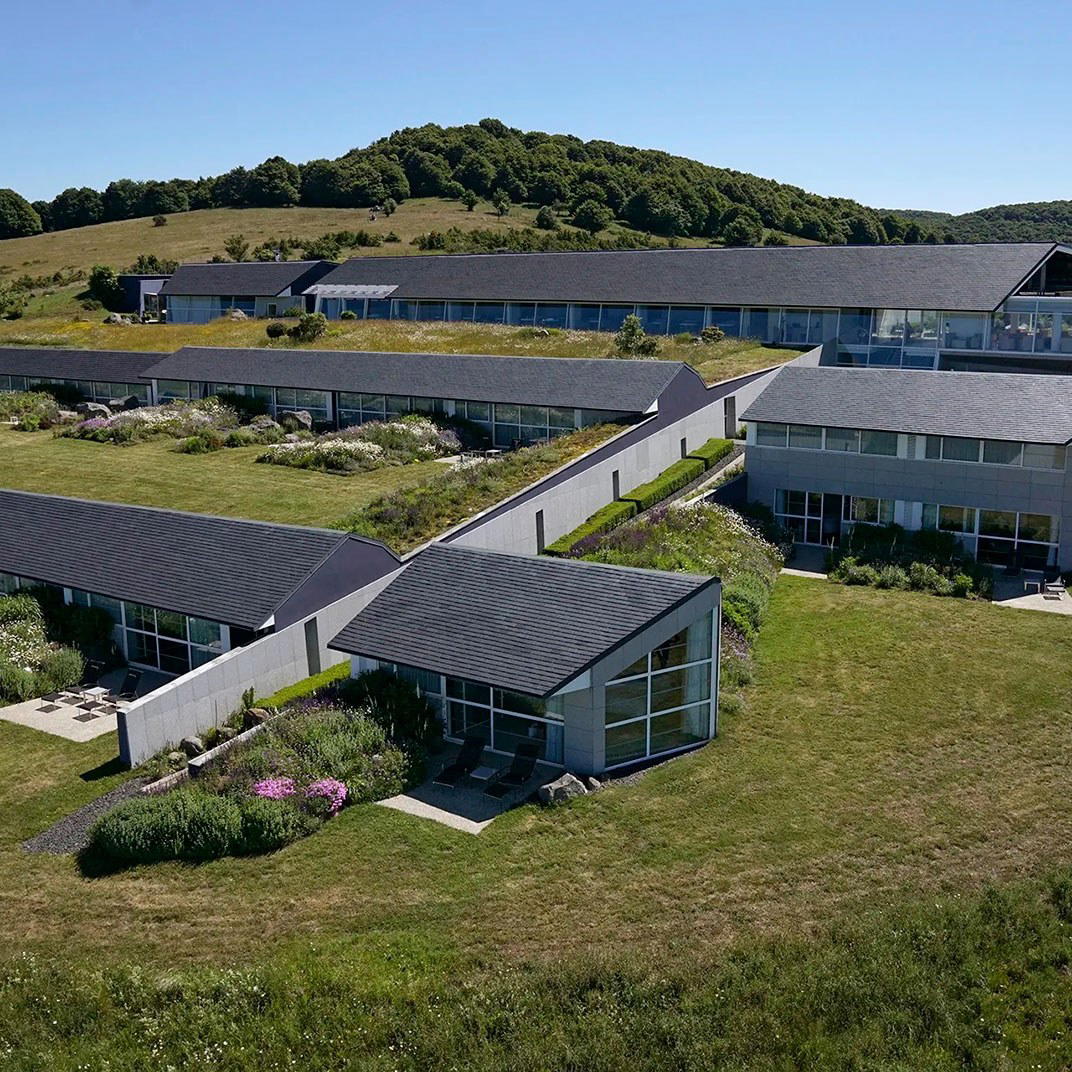
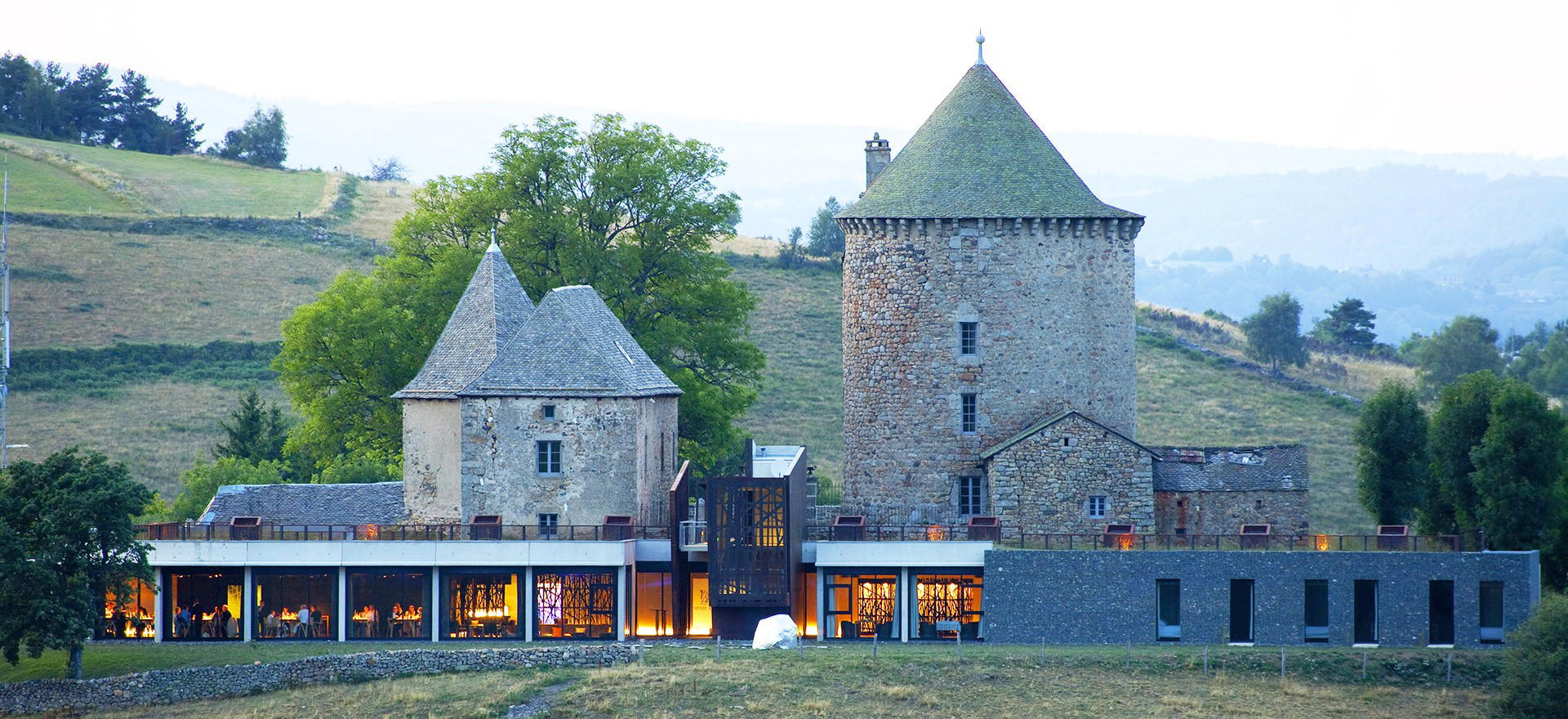
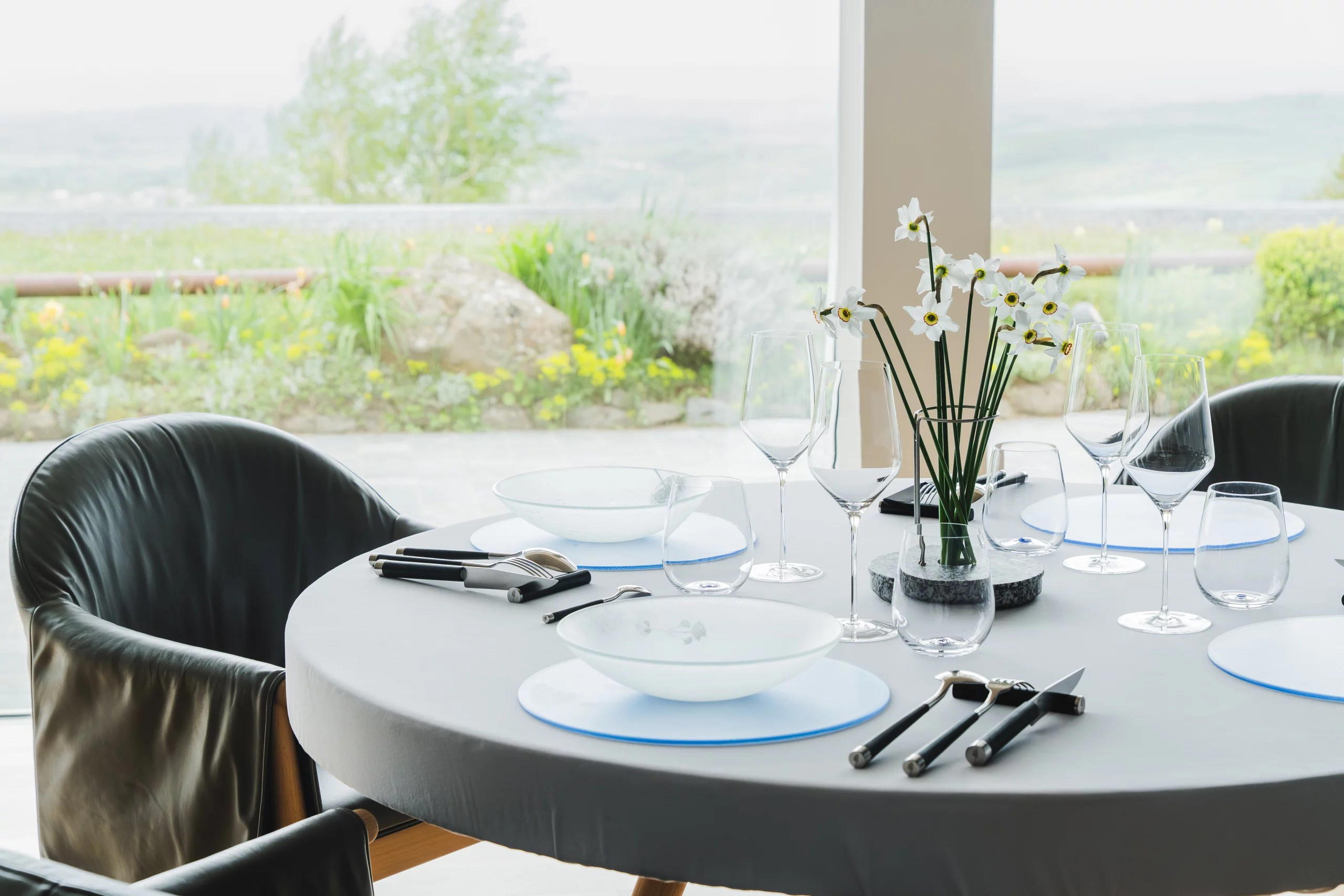
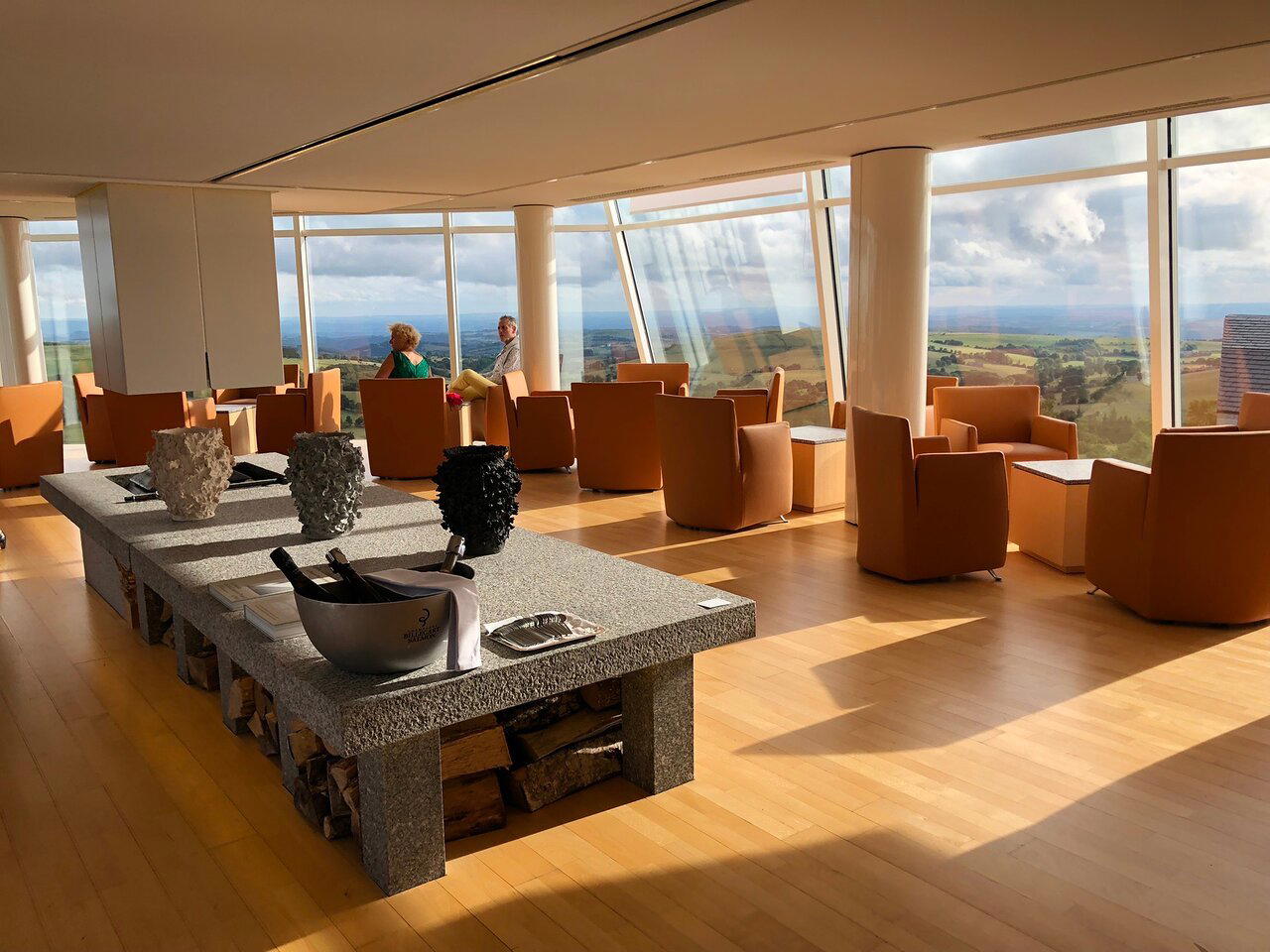
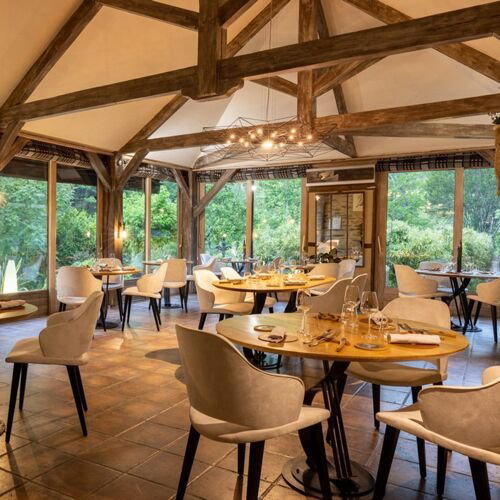
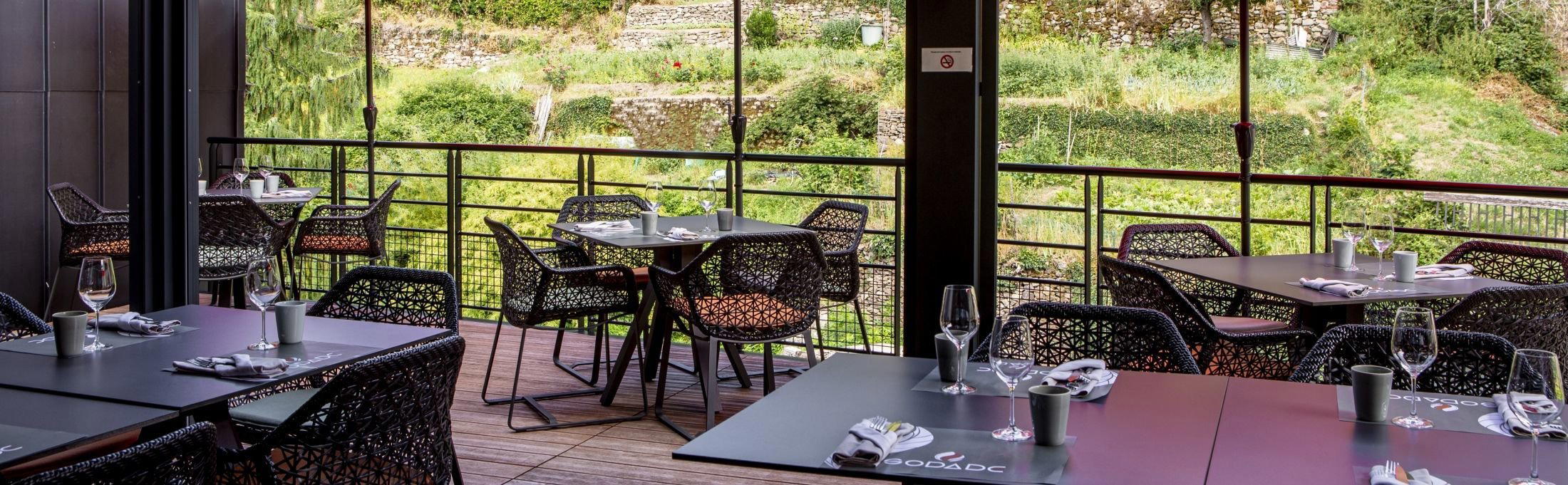
The design language at Le Suquet belongs to a tradition of French regional modernism that resists ornament in favour of material honesty. Stone, wood, and glass appear in proportion to what the site asks of them. The dining room's orientation prioritises the plateau view, so that at any hour the landscape functions as part of the room's composition. On long summer evenings, which represent the property's peak season running through May, July, and August, the light across the Aubrac performs work that no interior decorator could replicate.
This is not accidental. Baumanière Les Baux-de-Provence works in a similar register in Provence, using the Alpilles as architectural collaborator. Villa La Coste in Le Puy-Sainte-Réparade does it with commissioned sculpture. At Le Suquet, the collaborator is the Aubrac itself: its grasses, its volcanic basalt, its particular quality of silence. The building at Route de Laguiole is designed not to compete with that but to frame it.
The Michelin Signal and What It Means Here
Two Michelin stars in 2025 places Le Suquet in the tier of restaurants where the credential functions as much as a statement about consistency and identity as it does about technique. At this level, the guide is confirming a point of view, not just rewarding skill. The phrase "The Taste of Aubrac" appears in the restaurant's own self-description, and Michelin's sustained recognition across the Bras family's tenure at this address suggests the inspectors have accepted that framing on its own terms.
The family-run designation matters here in a way it doesn't at urban addresses. In a remote property without the foot traffic or corporate infrastructure that supports city restaurants, a multi-generational family operation provides the continuity of vision that keeps a place coherent across decades. That continuity is part of what Michelin is evaluating when it awards stars to addresses this far from any metropolitan dining circuit.
For context, the French properties that hold comparable standing through a combination of remote location, sustained awards, and family or independent ownership form a short list. A high aggregate from that cohort is harder to achieve than the equivalent score at a busy urban address.
Aubrac as Editorial Subject
The Aubrac plateau is the kind of French terroir that reads differently depending on who's reading it. To an agronomist, it's known for the Aubrac cattle breed and its transhumance traditions. To a hiking community, it's a stretch of the Via Podiensis, one of the Camino de Santiago routes. To the culinary world, it's primarily associated with the Bras address at Laguiole and the idea that wildflowers, roots, and highland ingredients could constitute a serious gastronomic vocabulary.
That last framing has spread considerably since it was first articulated here. The "ode to nature" positioning that Le Suquet now uses is language that has entered the broader fine-dining conversation globally, but the address on the Aubrac has a claim to the longer tenure. What began as a regional proposition has become, over decades, something that visiting chefs reference as a source point. The cuisine of the plateau has influenced how other kitchens think about their own local materials, even when those kitchens are nowhere near Aveyron.
Planning the Visit
Getting to Laguiole requires real logistical intention. The nearest significant rail connection is Rodez, roughly an hour's drive south, with Clermont-Ferrand offering a longer but more connected option. Most guests arriving from Paris route through either Rodez or Millau. Those travelling from the Mediterranean coast often approach via the Millau Viaduct, which deposits you in the Aveyron from the south. Car is the practical choice at this address; there is no meaningful public transport covering the final approach.
The restaurant and hotel close annually from 25 August to 1 September 2025, which compresses the summer window meaningfully for those targeting the peak July and August period. Bookings for the height of summer should be secured well in advance, as destination restaurants of this standing operating in short seasonal windows fill their capacity quickly. The combination of one Michelin star, a remote address, and a loyal returning clientele creates a booking environment where last-minute availability is unlikely.
For those building a wider French itinerary around Le Suquet, the Aveyron sits at a reasonable driving distance from the Bordeaux wine country, where Les Sources de Caudalie and Château Lafaurie-Peyraguey offer comparable seriousness of hospitality in a different terroir register. Those approaching from the east can consider the Provençal circuit, where La Bastide de Gordes and Château de la Gaude represent the design-led end of French regional hospitality. See our full Laguiole restaurants guide for further context on the area.
For travellers whose broader itinerary includes Paris before or after the plateau, Cheval Blanc Paris occupies the highest end of the capital's hotel register, while the Reims corridor, home to Domaine Les Crayères and Royal Champagne Hotel and Spa, provides a northern French counterpoint to the Aubrac's southern-central character. Those extending into the Alps might consider Four Seasons Megève or Cheval Blanc Courchevel, both of which share Le Suquet's tendency to use landscape as the primary design material.