Serge Vieira






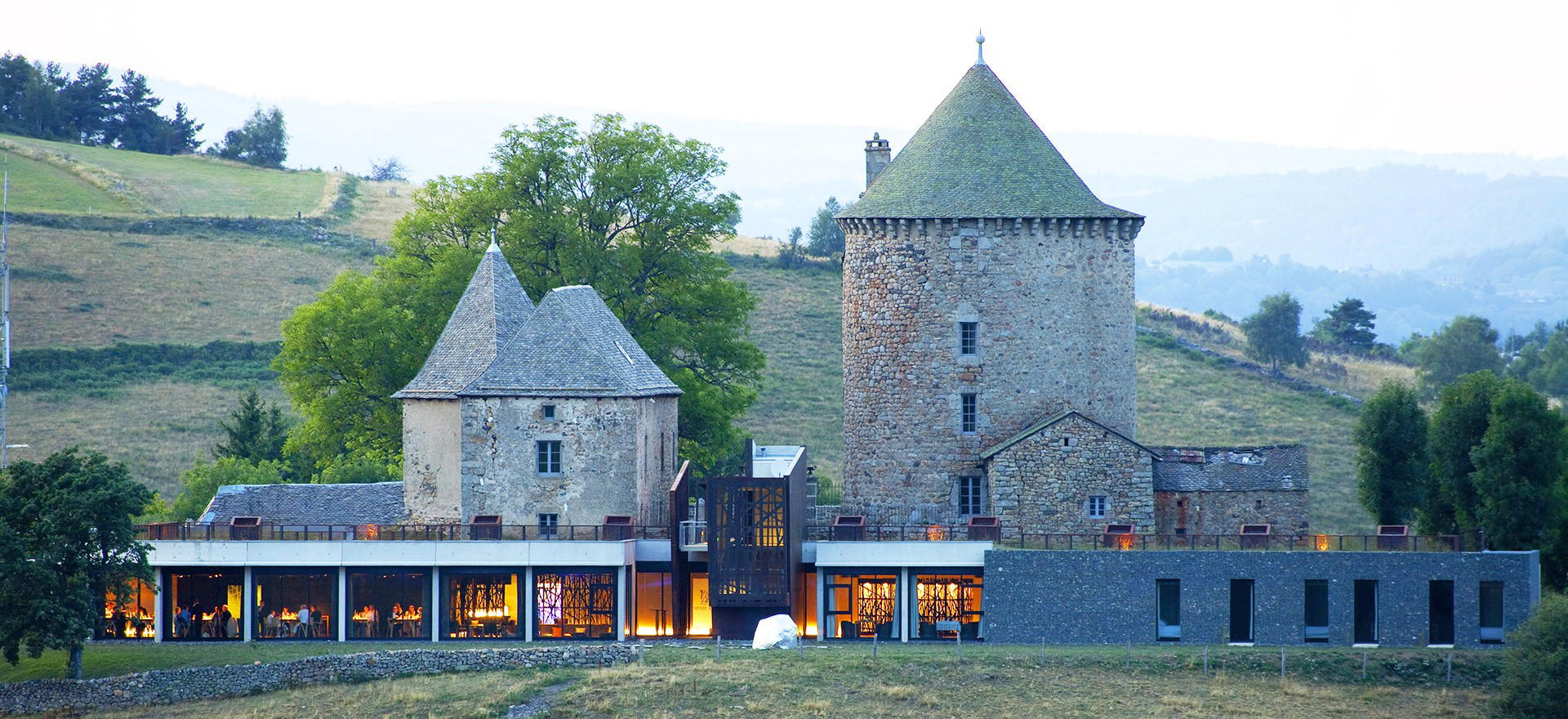
Set within a listed medieval castle above Chaudes-Aigues in the volcanic highlands of Auvergne, Serge Vieira holds two Michelin Stars and a Green Star, scoring 87.5 points on La Liste 2025. The cooking draws directly from the surrounding Massif Central terrain, placing it among France's most geographically committed fine-dining addresses.
Pearl is the En Primeur Club membership app — saves, bookings, and concierge access live there. Same editors, same standards.
- Address
- Le Couffour Allée du, 15110 Chaudes-Aigues, France
- Phone
- +33 4 71 20 73 85
- Website
- sergevieira.com
- Directions
- Get directions
 Saves & bookings on Pearl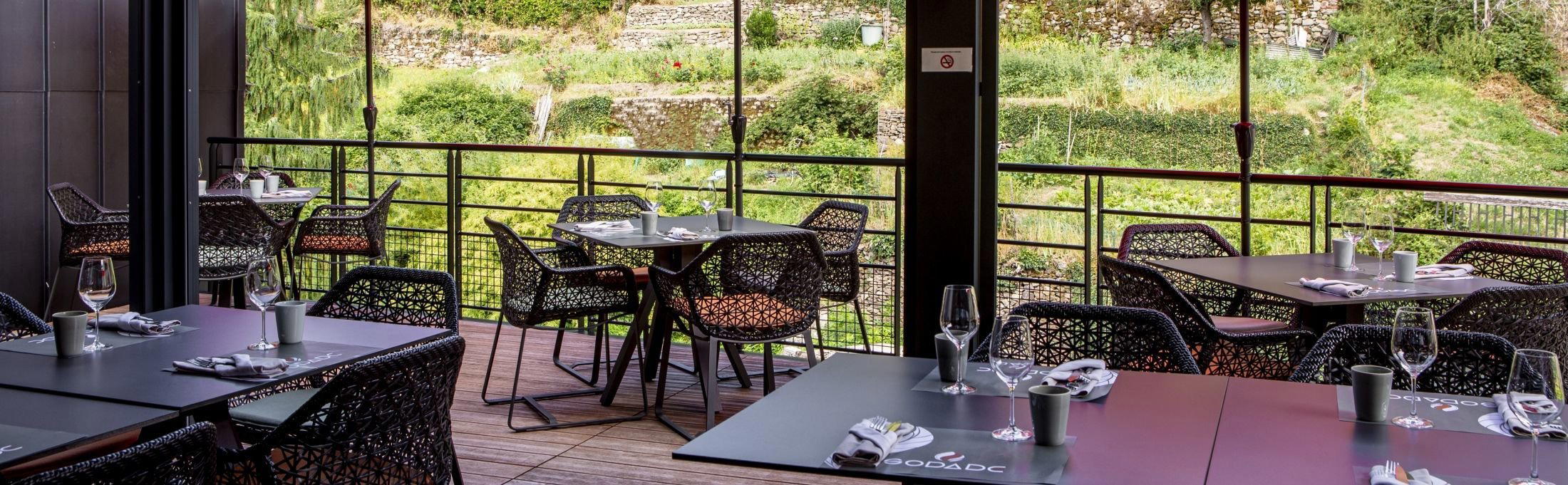
A Castle Above the Volcanic Plateau
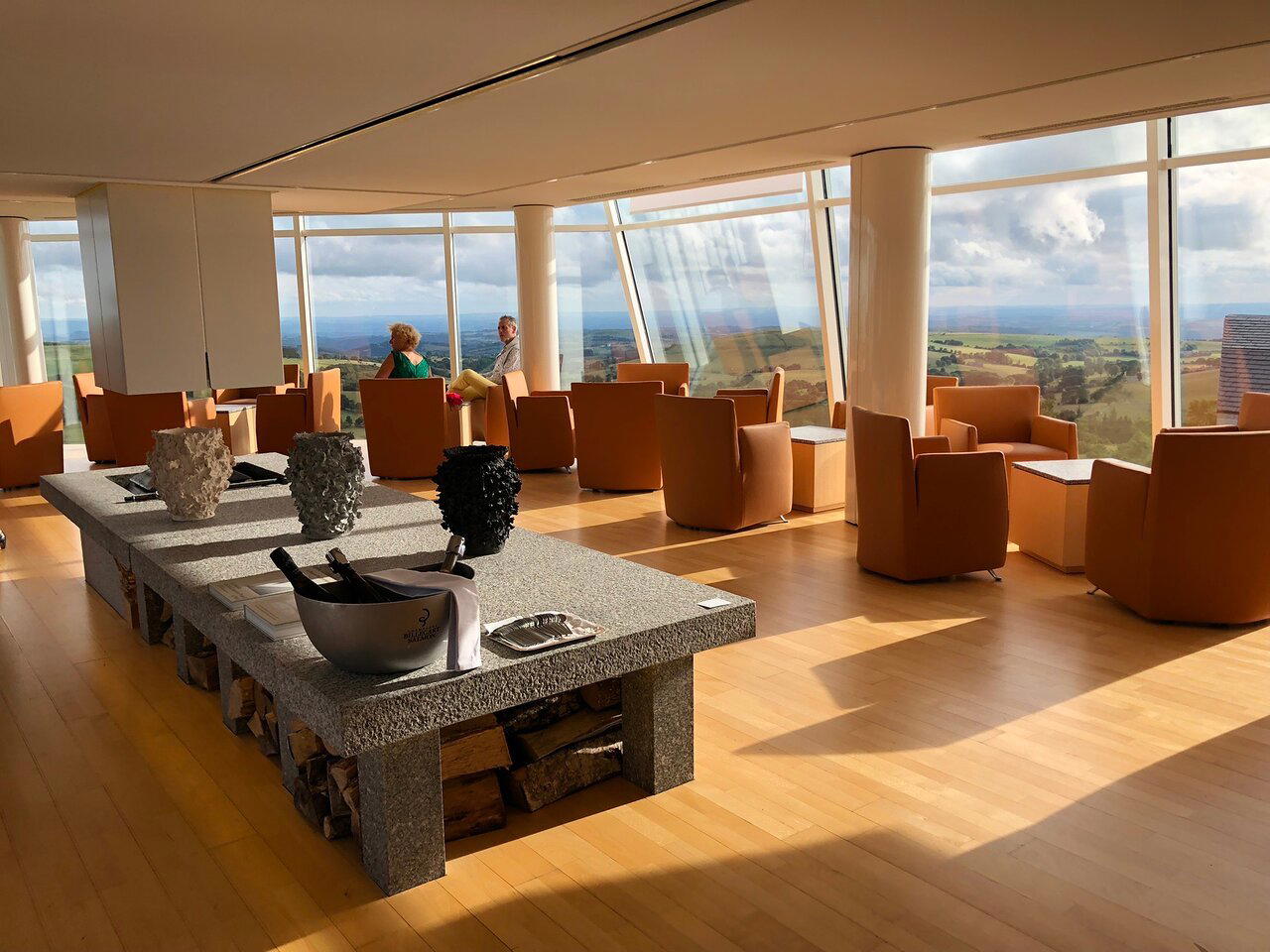
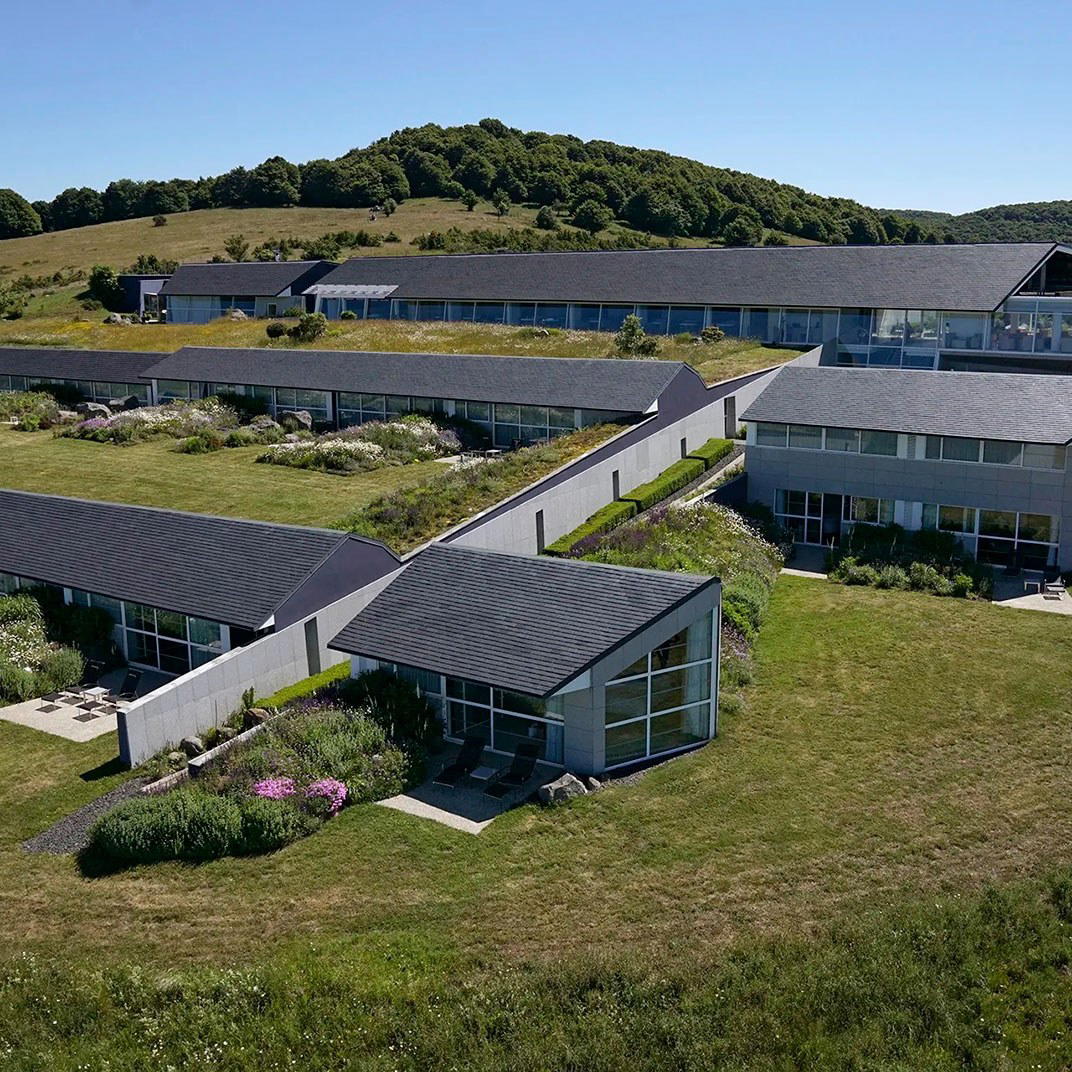
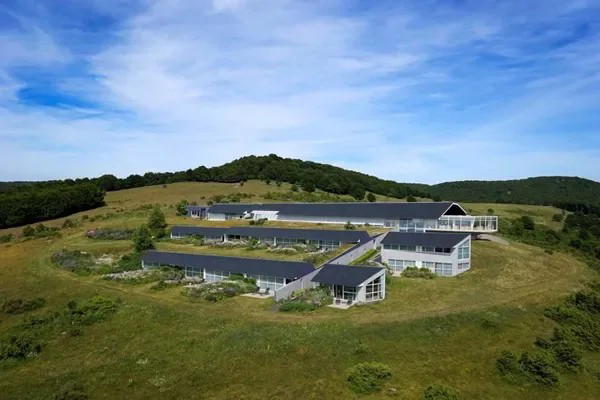
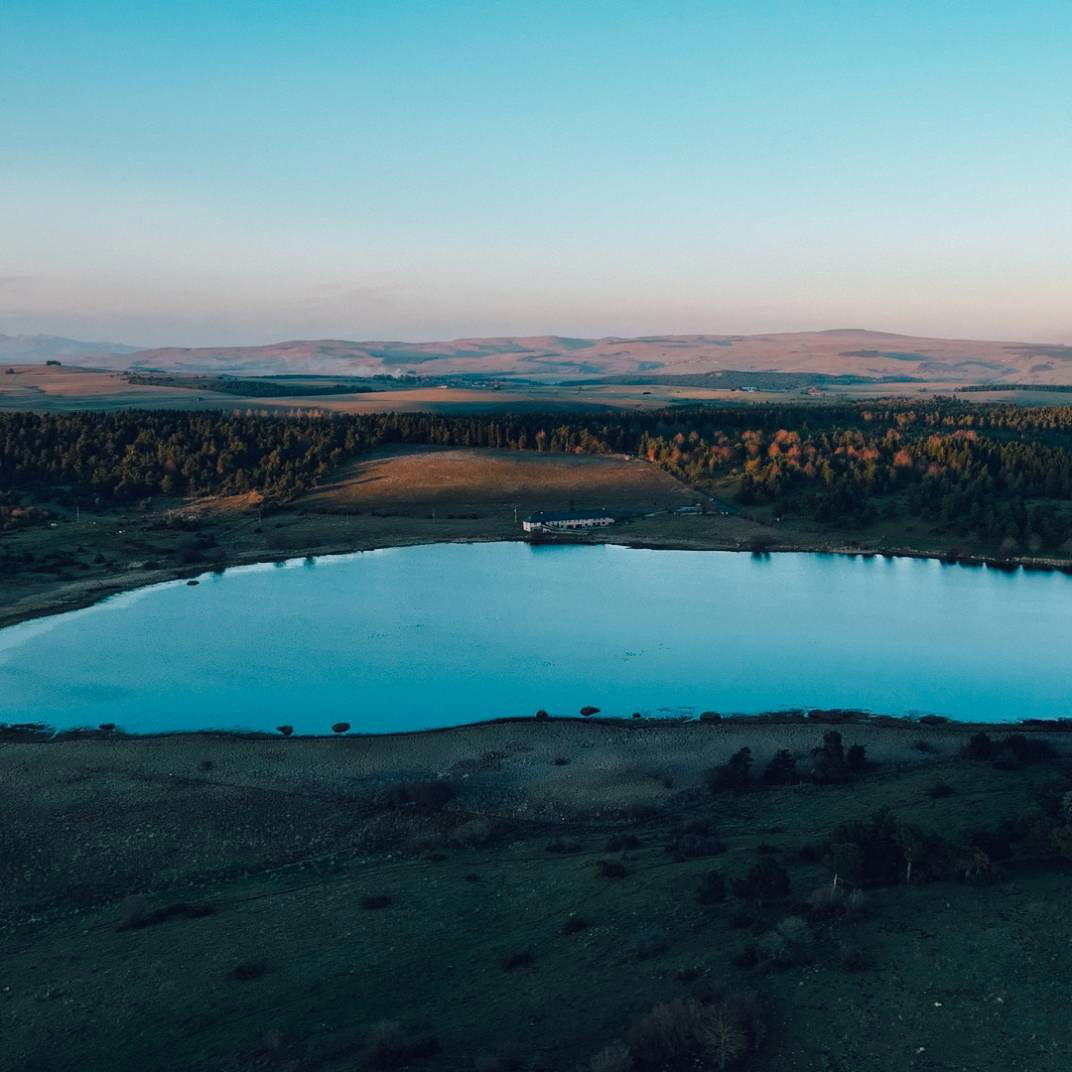
The drive into Chaudes-Aigues prepares you for something unusual. The Truyère valley cuts deep through the Massif Central, the roads narrow, and the town itself, one of Europe's hottest natural thermal springs, where geothermal water surfaces above 80°C, sits at an altitude where the light shifts even in summer. The restaurant occupies Le Couffour, a listed medieval castle set on a rise above the valley, and the 360-degree panorama of the surrounding volcanic highlands is not incidental to the experience. It is, in every sense, the frame through which the cooking is meant to be read.
This kind of geographical commitment, a two-Michelin-starred kitchen operating not from Lyon or Paris but from a hilltop in the Cantal département, places Serge Vieira among French chefs who have anchored their work to a specific territory rather than a metropolitan dining scene. The comparison is most naturally drawn with Bras in Laguiole, roughly 60 kilometres south, where the gargouillou has spent four decades encoding the Aubrac plateau into a single dish. Both restaurants operate on the principle that the land surrounding them is not backdrop but ingredient, a position that requires the kitchen to change with the terrain and the season rather than impose a fixed identity onto whatever arrives from the market.
Terroir as Method, Not Marketing
The Massif Central is not a fashionable ingredient source. It lacks the maritime glamour of Brittany, the prestige of Périgord truffle country, or the photogenic market culture of Provence. What it has instead is altitude, basalt soil, volcanic water, short growing seasons, and an agricultural tradition built around cattle, lentils from Le Puy, and foraged flora that changes week by week across the plateau. A kitchen serious about this territory has to work with what it gives rather than supplement it with luxury imports, and the Green Star awarded by Michelin in 2025 signals that the approach here is formally recognised as environmentally grounded rather than performatively local.
Among France's two-star addresses, the combination of classical technique and demonstrable provenance has become a defining distinction. Houses like Flocons de Sel in Megève have built a comparable identity around Alpine terroir, while Mirazur in Menton draws from its own biodynamic gardens at the Franco-Italian border. What separates Serge Vieira from either is the austerity of the surrounding raw material: the Cantal highlands do not flatter a chef's ego with beautiful produce, they demand that the kitchen make something compelling from ingredients that require both patience and skill to read correctly.
Awards and Competitive Position
The kitchen has held two Michelin Stars consistently through 2024 and 2025, with the Green Star added in 2025. On La Liste, which aggregates global critical opinion rather than relying solely on inspector visits, the restaurant scored 87.5 points in 2025 and 86 points in 2026, a figure that places it in the upper tier of classical French fine dining outside the major cities. The Opinionated About Dining ranking tells a more specific story: ranked #114 in Classical Europe in 2023, the house moved to #188 in 2024 and #206 in 2025, a trajectory that reflects the inherent difficulty of maintaining visibility from a remote address rather than any decline in kitchen quality.
That visibility gap is structural. A restaurant in Chaudes-Aigues is physically inaccessible to the critic-dense dining circuits centred on Paris, Lyon, and the Côte d'Azur. The two-star houses closest in spirit, Troisgros in Ouches, Assiette Champenoise in Reims, operate in towns with better transport infrastructure and larger tourist flows. Serge Vieira requires genuine intent to visit, which has the effect of concentrating the dining room with guests who have specifically sought out the experience rather than those filling a convenient itinerary slot.
For context on where the restaurant sits within the broader French creative fine-dining spectrum, the contrast with urban contemporaries is instructive. Alléno Paris au Pavillon Ledoyen, Le Clarence, and L'Astrance operate within a Parisian competitive set that prizes technique, sourcing breadth, and critical proximity. Serge Vieira operates by different logic: the restaurant's credibility depends on depth of place rather than breadth of influence. The same distinction separates it from AM par Alexandre Mazzia in Marseille, where the cooking is intensely personal but city-anchored, or from Au Crocodile in Strasbourg, where Alsatian tradition provides the territorial frame. At the restaurant, the Massif Central itself is the argument.
The Castle and What It Means for the Experience
The setting is not merely scenery. Le Couffour is a listed historical monument, and the modern architectural elements introduced within and around the medieval structure create a spatial tension that shapes how guests experience the meal. Fine dining in landmark buildings across France tends toward either reverence for the heritage fabric or aggressive contrast with it. The combination of medieval stone and contemporary design language at the restaurant aligns more closely with what has been achieved at Auberge de l'Ill in Illhaeusern, where centuries of accumulated character become part of the proposition rather than a constraint on it. The 360-degree view of the surrounding volcanic terrain functions as a continuous reminder that the cooking is accountable to a specific geography, you can look out and see, in most seasons, the landscape from which the plate in front of you was partly sourced.
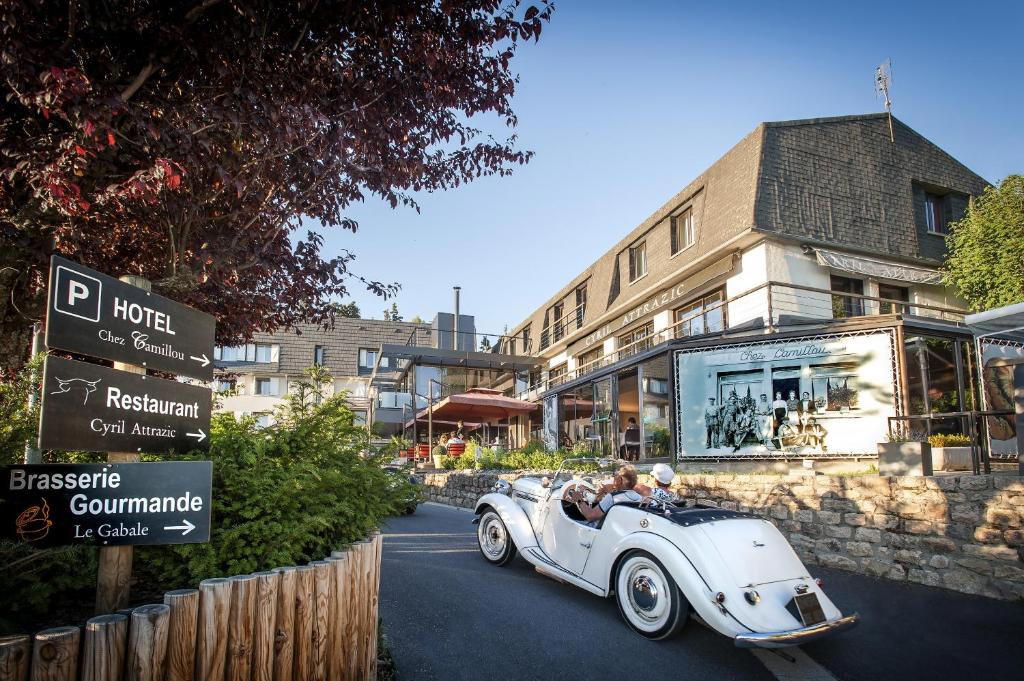
The thermal dimension of Chaudes-Aigues itself adds a further layer. The town's geothermal springs have sustained a spa culture for centuries, and the broader experience of visiting, particularly for guests staying overnight in the region, carries a restorative rhythm that urban fine dining rarely provides. Visitors planning around the restaurant would do well to review our full Chaudes-Aigues hotels guide for the accommodation options that make an overnight visit viable without a long return drive after dinner.
The Broader Chaudes-Aigues Dining Context
Chaudes-Aigues is not a dining destination in the way that Laguiole or Roanne are, where a single famous kitchen has generated a supporting ecosystem of producers, bistros, and visitors. The town is small, its dining scene limited, and the restaurant at Le Couffour represents a significant outlier in terms of ambition relative to the local context. Sodade offers a more casual entry point for visitors exploring the area's Modern Cuisine, and the full picture of what Chaudes-Aigues offers across categories, bars, wineries, and local experiences, is covered in our dedicated guides: restaurants, bars, wineries, and experiences.
The wider Auvergne region does have a fine-dining tradition worth understanding in this context. The Michelin map for the Massif Central and its surrounding areas is thinner than those of France's more celebrated culinary corridors, which means that a two-star house here carries disproportionate regional significance. What the restaurant represents for this part of France is closer in function to what Paul Bocuse's Auberge du Pont de Collonges historically represented for the Lyon region: a fixed point around which serious food travel organises itself.
Planning a Visit
The restaurant is located at Le Couffour, Allée du, 15110 Chaudes-Aigues.
Comparison Snapshot
Comparable venues nearby, for context on price, style, and recognition.
| Venue | Cuisine | Price | Awards | Notes |
|---|---|---|---|---|
| Serge VieiraThis venue — the venue you are viewing | Modern French Fine Dining | $$$$ | Michelin 2 Star | Not listed |
| Sodade | Modern French Bistronomique | $$ | Bib Gourmand | centre-ville |
| La Mere Brazier | Modern Lyonnaise Fine Dining | $$$$ | Michelin 2 Star | Quartier Bas des Pentes Presqu'île |
| La Pyramide - Maison Henriroux | Modern French Gastronomique | $$$$ | Michelin 2 Star | Vienne |
| La Côte Saint-Jacques | Modern French Fine Dining | $$$$ | Michelin 2 Star | Faubourg de Paris |
| Le Grand Restaurant | Modern French Fine Dining | $$$$ | Michelin 2 Star | Golden Triangle |
Recognition history
Dated appearances from independent guides and award organizations, with the underlying list record or original source where available.
Falstaff Restaurant - 95 Falstaff Points
Falstaff
La Liste Top Restaurants
La Liste
Michelin 2 Stars
Michelin
Relais Chateaux Award
Relais Chateaux
Gault & Millau Remarkable Restaurant
Gault & Millau
La Liste Top Restaurants
La Liste
Michelin 2 Stars
Michelin
Opinionated About Dining Classical in Europe Ranked #206
Opinionated About Dining
Relais Chateaux Award
Relais Chateaux
Michelin 2 Stars
Michelin
Opinionated About Dining Classical in Europe Ranked #188
Opinionated About Dining
Opinionated About Dining Classical in Europe Ranked #114
Opinionated About Dining
Continue exploring
More in Chaudes-Aigues
Restaurants in Chaudes-Aigues
Browse all →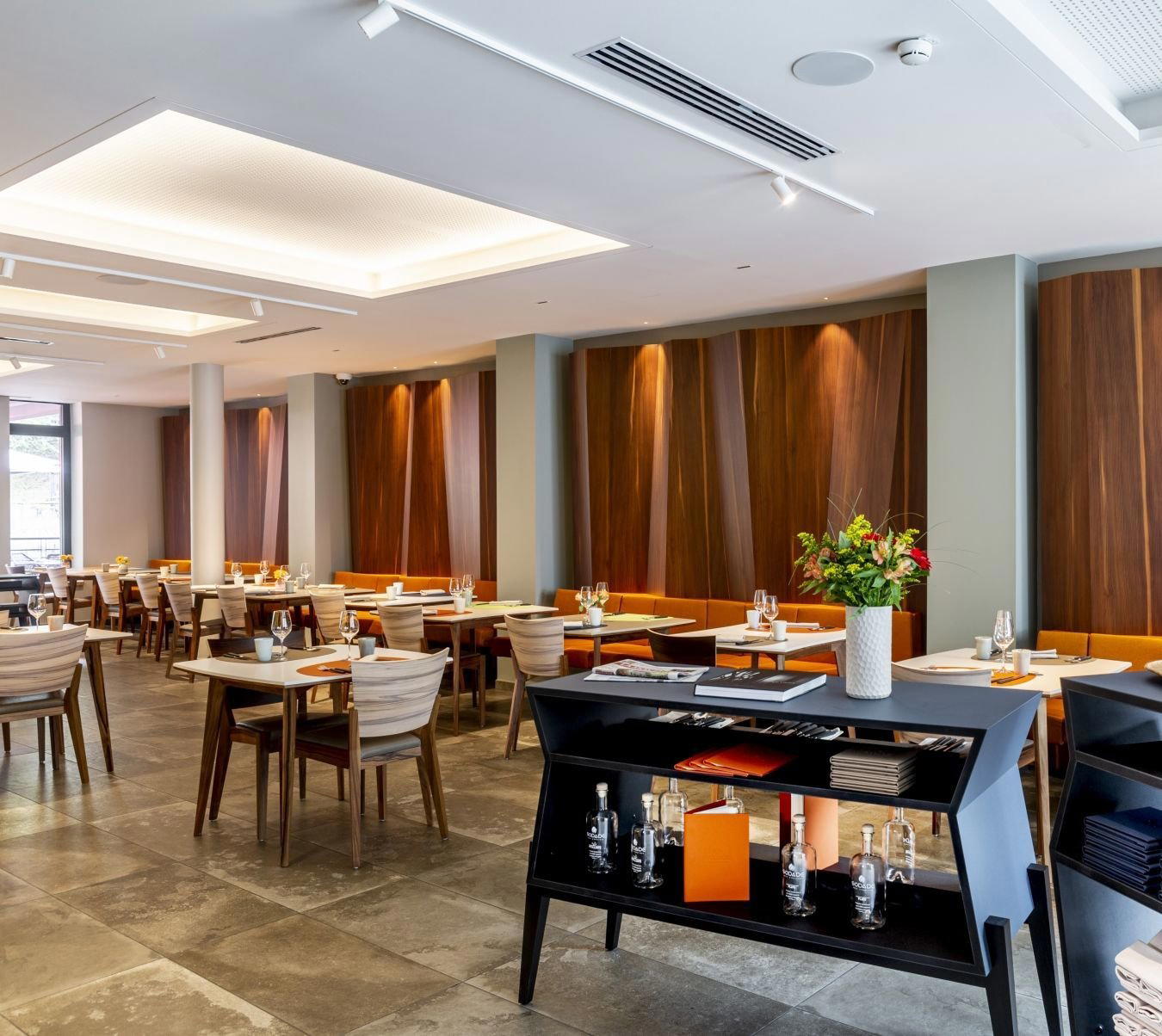
At a Glance
- Elegant
- Sophisticated
- Scenic
- Intimate
- Rustic
- Special Occasion
- Date Night
- Celebration
- Historic Building
- Panoramic View
- Terrace
- Private Dining
- Extensive Wine List
- Sommelier Led
- Local Sourcing
- Mountain
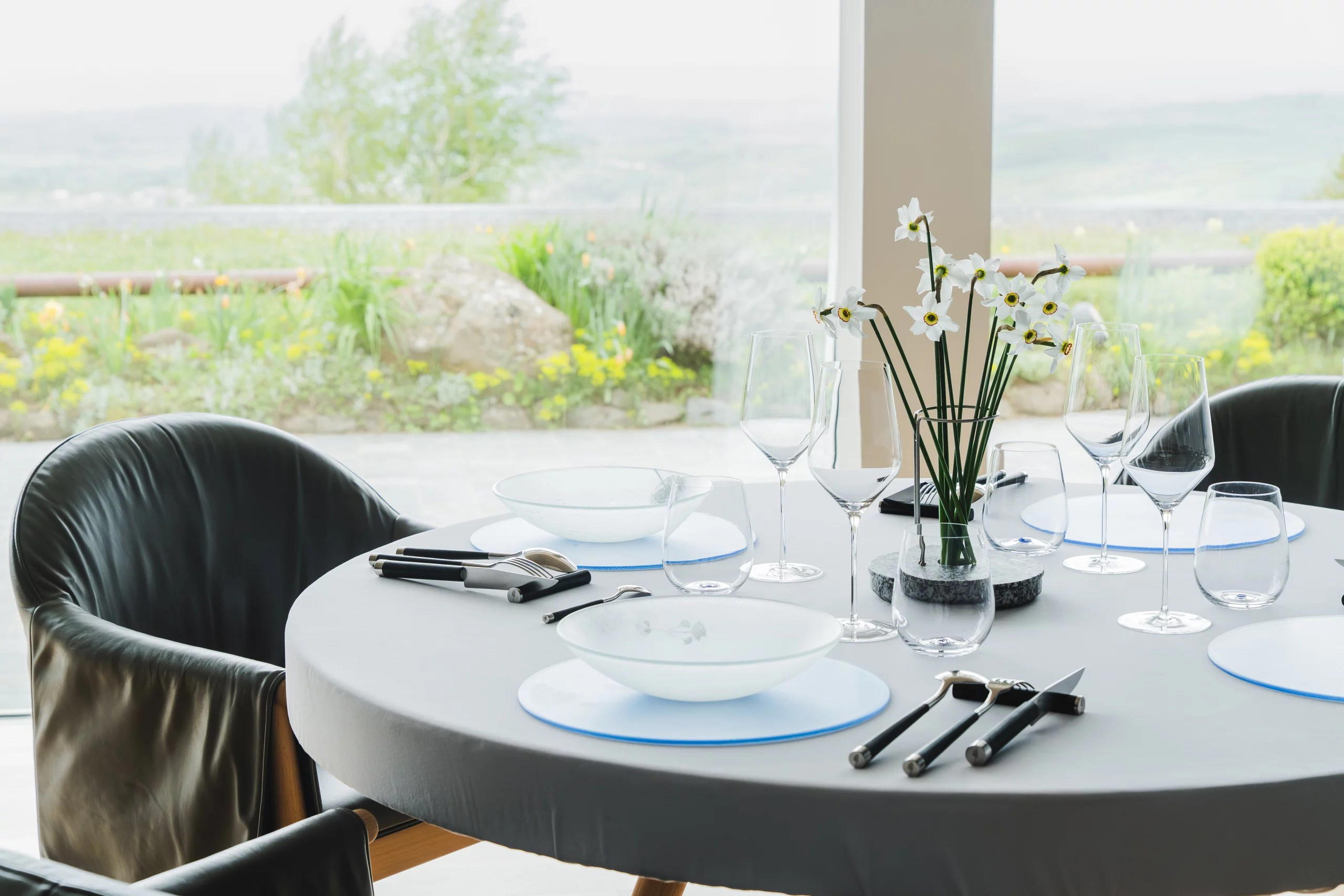
Serene and warm atmosphere with large bay windows offering far-reaching mountain vistas, professional yet familial service, and a sense of timeless elegance.