

Set across floors 36 to 48 of a central Changsha skyscraper, JW Marriott Hotel Changsha places guests above the city's dense urban fabric with rooms from 484 square feet, marble bathrooms, and panoramic skyline views. The design draws on Chinese art heritage through latticework, calligraphic paintings, and an earth-toned palette. Hao Yu serves Hunan and Cantonese cooking, and Spa by JW occupies the 33rd floor.
Pearl is the En Primeur Club membership app — saves, bookings, and concierge access live there. Same editors, same standards.
- Address
- 567 Fu Rong Zhong Lu, Yu Hua Qu, Chang Sha Shi, Hu Nan Sheng, 410000
- Phone
- +86 731 8329 9999
- Website
- marriott.com
- Directions
- Get directions
 Saves & bookings on Pearl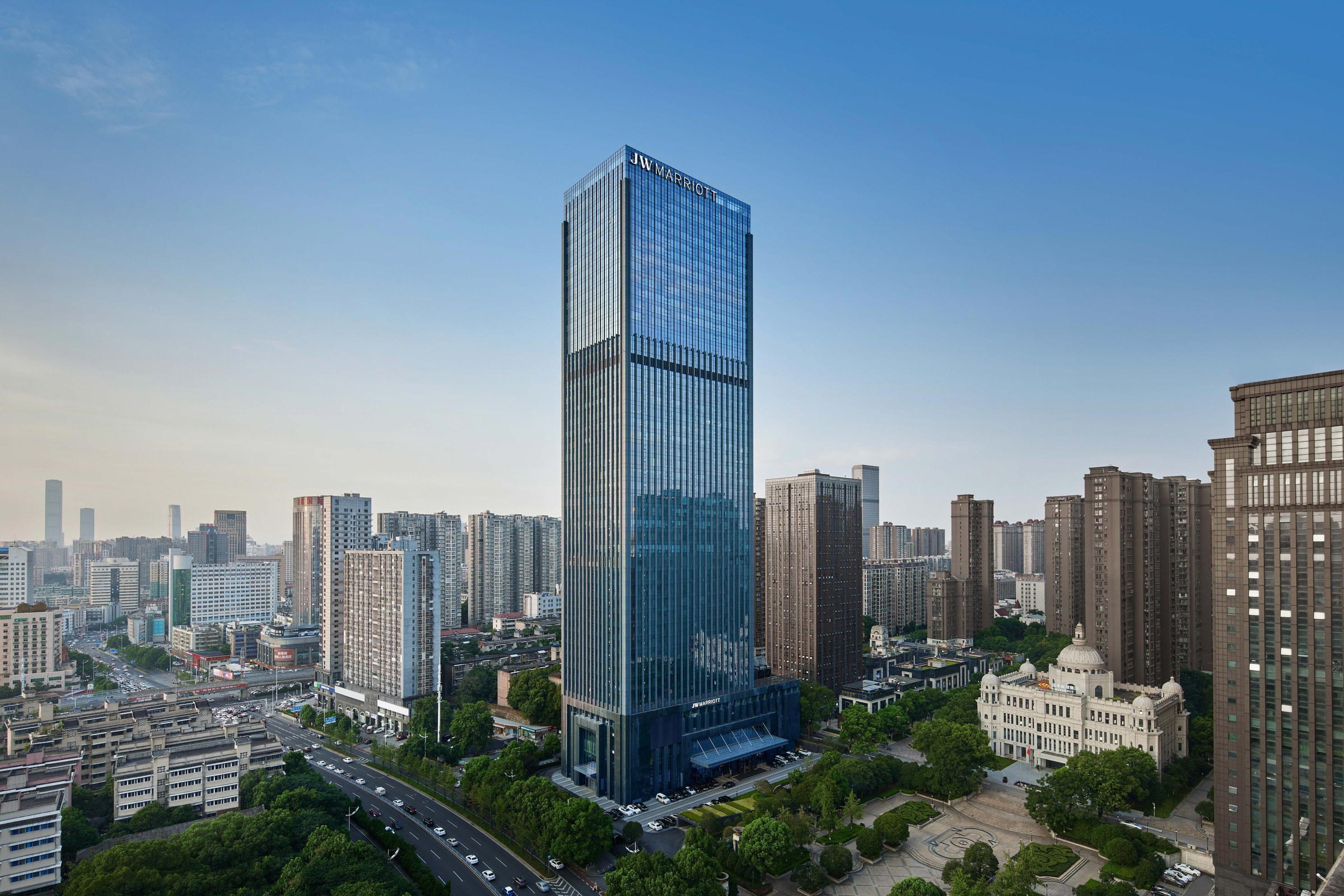
A Skyscraper That Takes Changsha's Identity Seriously
Approach Furong Middle Road in Yuhua District and the building announces itself with the kind of vertical confidence that Changsha, a city rewriting its skyline at pace, has been building toward for two decades. The JW Marriott Hotel Changsha occupies the upper registers of a striking tower at 567 Furong Middle Road, and from street level the geometry alone signals that what happens inside will be considered rather than incidental. This is not a hotel that treats its address as a backdrop.
Changsha sits at an interesting inflection point in Chinese luxury hospitality. The city has long been known as a cultural and political nerve centre, home to institutions tied to modern Chinese history, to a food culture fierce enough to anchor one of China's most recognised regional cuisines, and to a younger generation of residents who consume design and entertainment with genuine critical appetite. Hotels entering this market in the past decade have had to decide whether to apply a generic international finish or engage with the city's specific character. The JW Marriott here positions itself in the latter camp, using a design language that draws from Chinese art, heritage forms, and material culture without resorting to the folkloric kitsch that often passes for cultural sensitivity in international chain hotels.
Design Logic from Lobby to Skyline
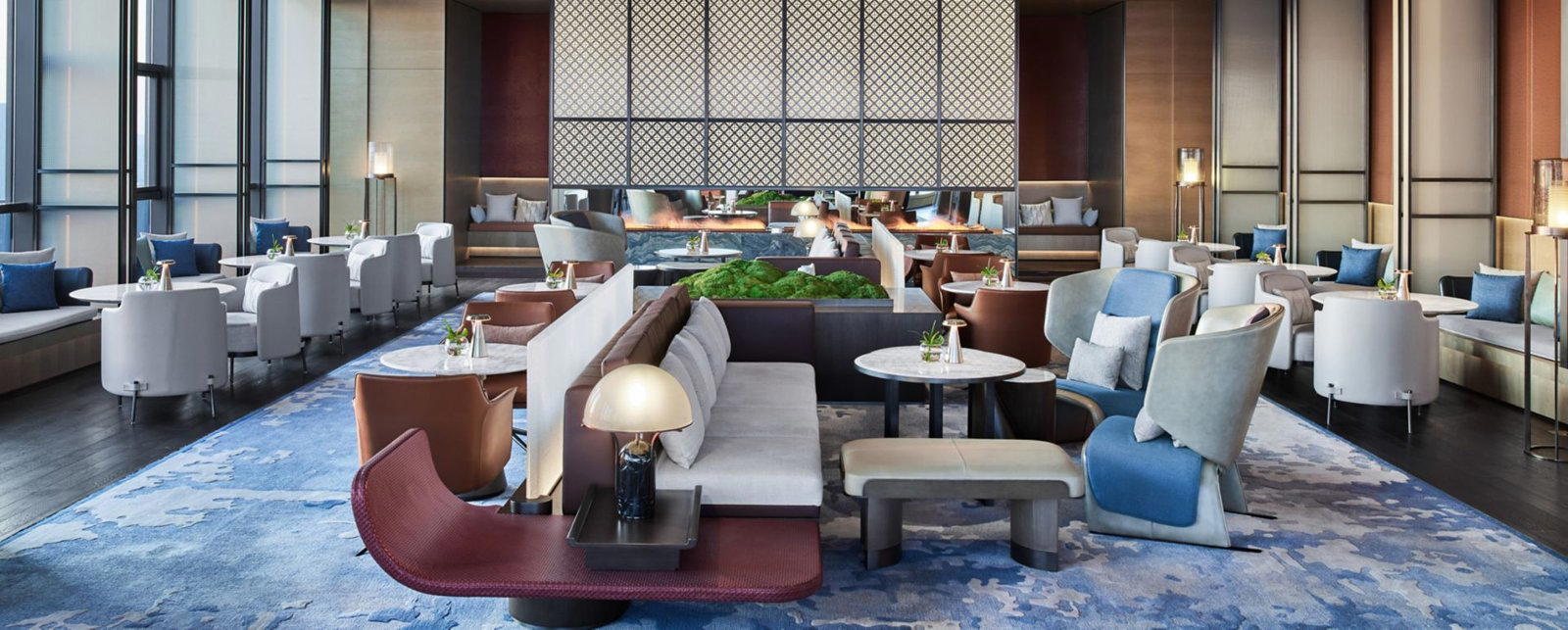
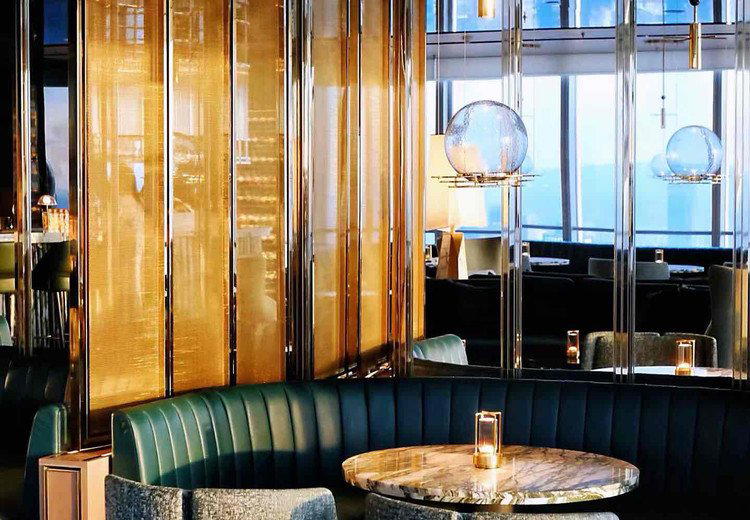
The interior scheme operates on an earth-toned palette, warm rather than austere, punctuated by latticework detailing, sinuous sculptural forms, and paintings that reference calligraphy's gestural vocabulary. The effect is coherent without being heavy-handed. Where some luxury properties in second-tier Chinese cities default to marble maximalism as a proxy for quality, this property uses restraint as its primary design instrument. The calligraphy-inspired paintings in particular connect the space to a Hunanese cultural inheritance that goes back through the province's scholarly and artistic traditions.
This approach places the JW Marriott Changsha in a different conversation from the more heritage-forward properties found elsewhere in China. Compare it to something like Mandarin Oriental Qianmen in Beijing, where the design brief was explicitly rooted in hutong preservation and courtyard architecture, or Amanfayun in Hangzhou, which situates itself within a UNESCO-listed tea village. The Changsha property is urban in a different register, vertical, contemporary, skyline-facing, and its design language functions accordingly, drawing on Chinese aesthetic codes rather than historical fabric.
Rooms Above the Cloud Line
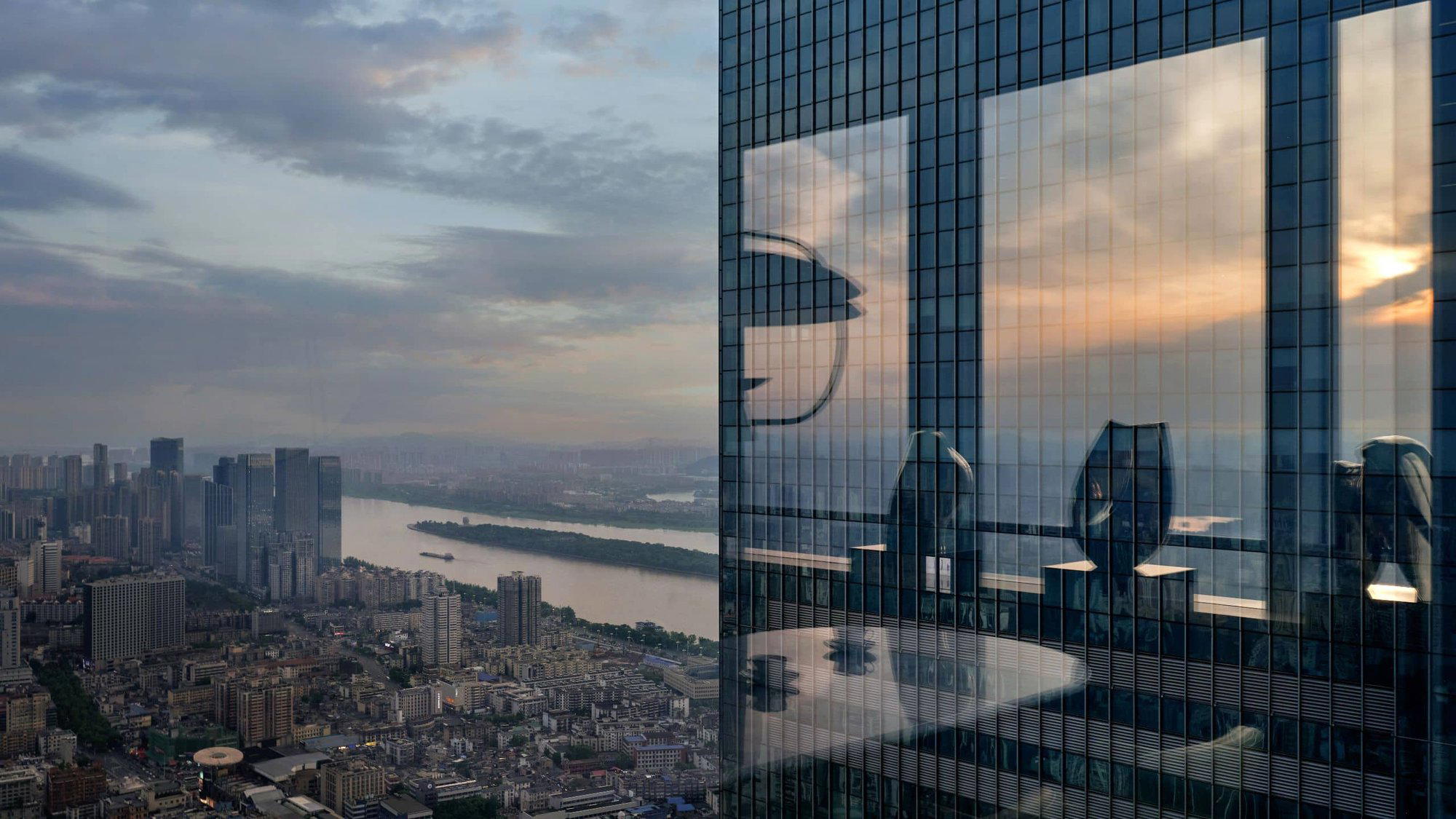
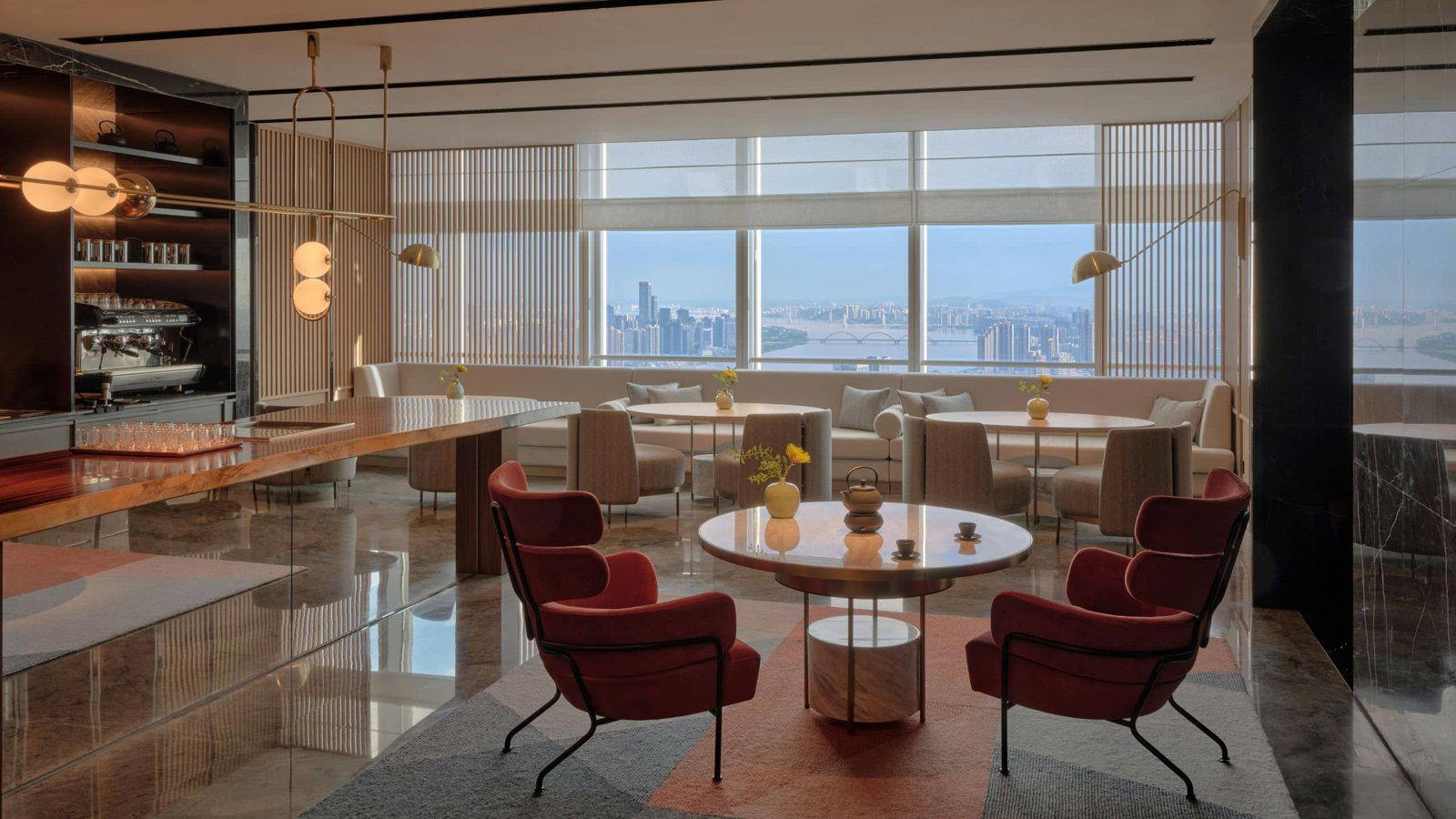
Guest accommodation runs from the 36th to the 48th floors, which changes the nature of the stay in practical terms: the city below reads as a panoramic field rather than an immediate street presence. Rooms begin at 484 square feet, which in the context of urban luxury towers represents a considered baseline rather than a compressed compromise. Dark wood flooring, marble bathrooms with jet-equipped tubs, and sofas positioned toward the city view are the key material choices, finishes that hold up against peer properties in the JW Marriott network globally, including JW Marriott Hotel Shanghai at Tomorrow Square, itself a vertical property in a dense commercial district.
For those who want a qualitatively different layer of access, the Executive Room tier unlocks the Executive Lounge on an upper floor, where private check-in, complimentary food and drinks, and the panoramic view function as a self-contained hospitality zone. In a city where business travel and leisure increasingly overlap, this format, common across the JW tier in China, serves a distinct purpose. It compresses the friction of a large-hotel stay into something closer to a private-club arrangement.
Dining Across Two Traditions
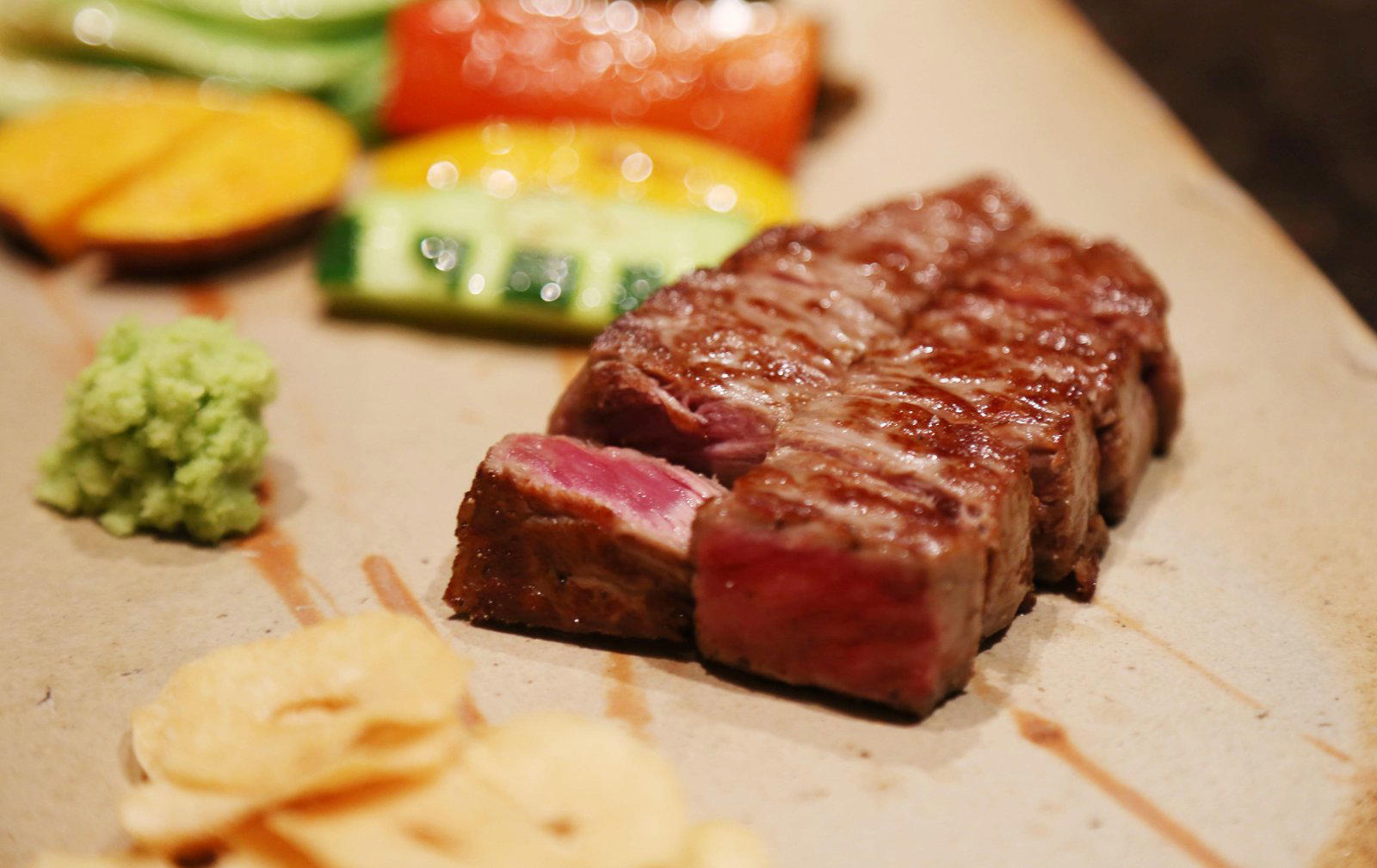
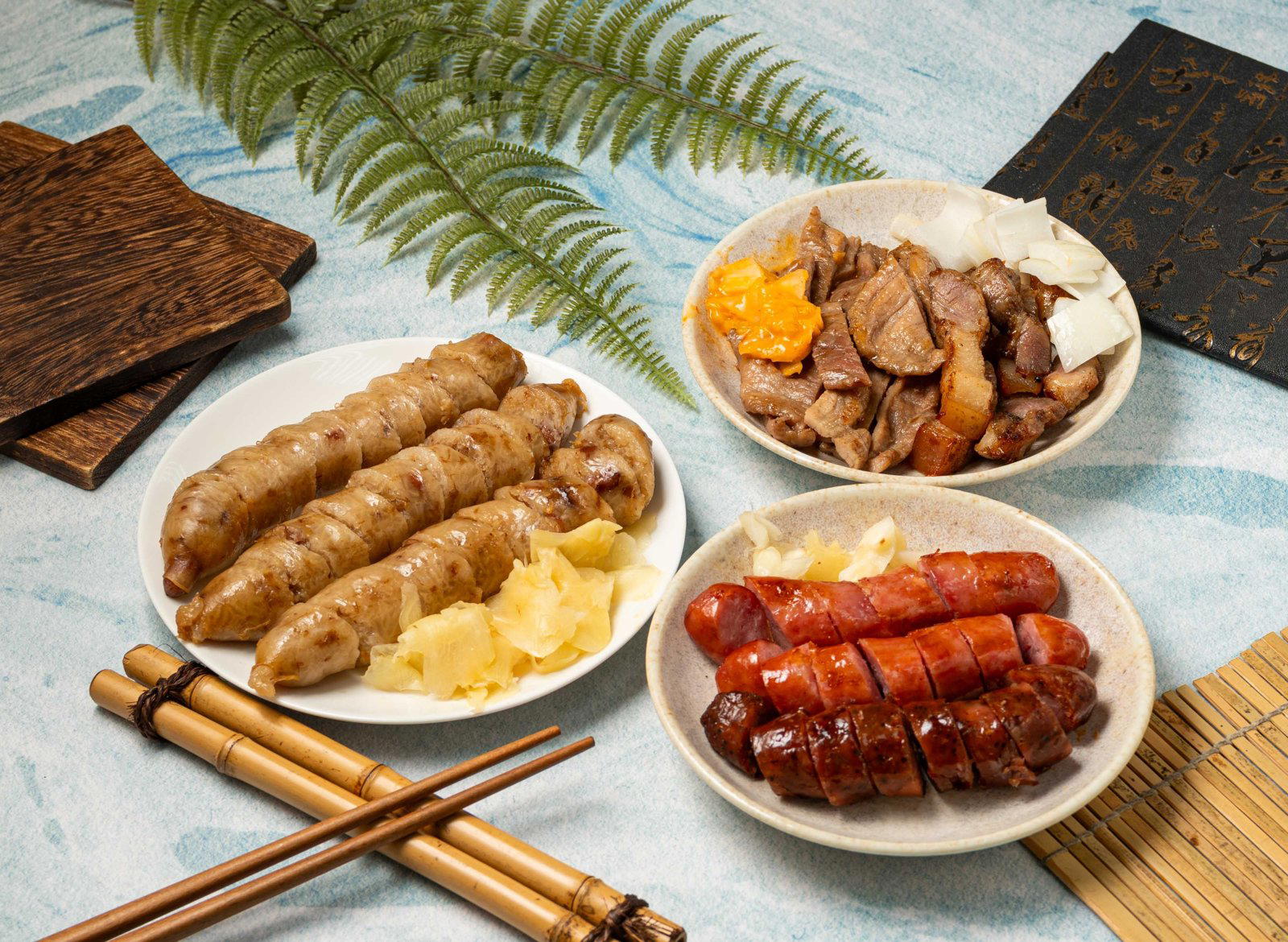
Hunan cuisine is not a background note in the city's identity: it is the identity. Changsha's food culture has national visibility, driven by the province's characteristic approach to chilli heat, fermentation, and smoked ingredients that sets it apart from the more internationally familiar Cantonese or Sichuan traditions. At Hao Yu, the hotel's signature restaurant, the menu brings together authentic Hunanese preparations alongside Cantonese classics, a pairing that reflects both the hotel's local positioning and the practical reality that a luxury property in a major city needs range. For visitors less committed to regional cuisine, Yun Kitchen provides international options. Both restaurants appear designed to function across the full guest profile: business travellers, domestic leisure visitors, and the city's own residents using the hotel as a dining destination.
For broader context on where these restaurants sit within Changsha's dining scene, see our full Changsha restaurants guide.
Wellness at Altitude
The wellness floor sits on level 33 and includes a fitness centre, a heated indoor pool, and Spa by JW. In the logic of a tower hotel, concentrating these facilities on a single floor creates a contained zone with its own atmosphere, removed from the guest room levels, removed from the lobby's transactional rhythm. The heated indoor pool is a meaningful differentiator in this tier: outdoor pools are impractical in Changsha's climate for a significant portion of the year, and the indoor alternative signals a year-round wellness program rather than a seasonal amenity.
City Context and the Immediate Neighbourhood
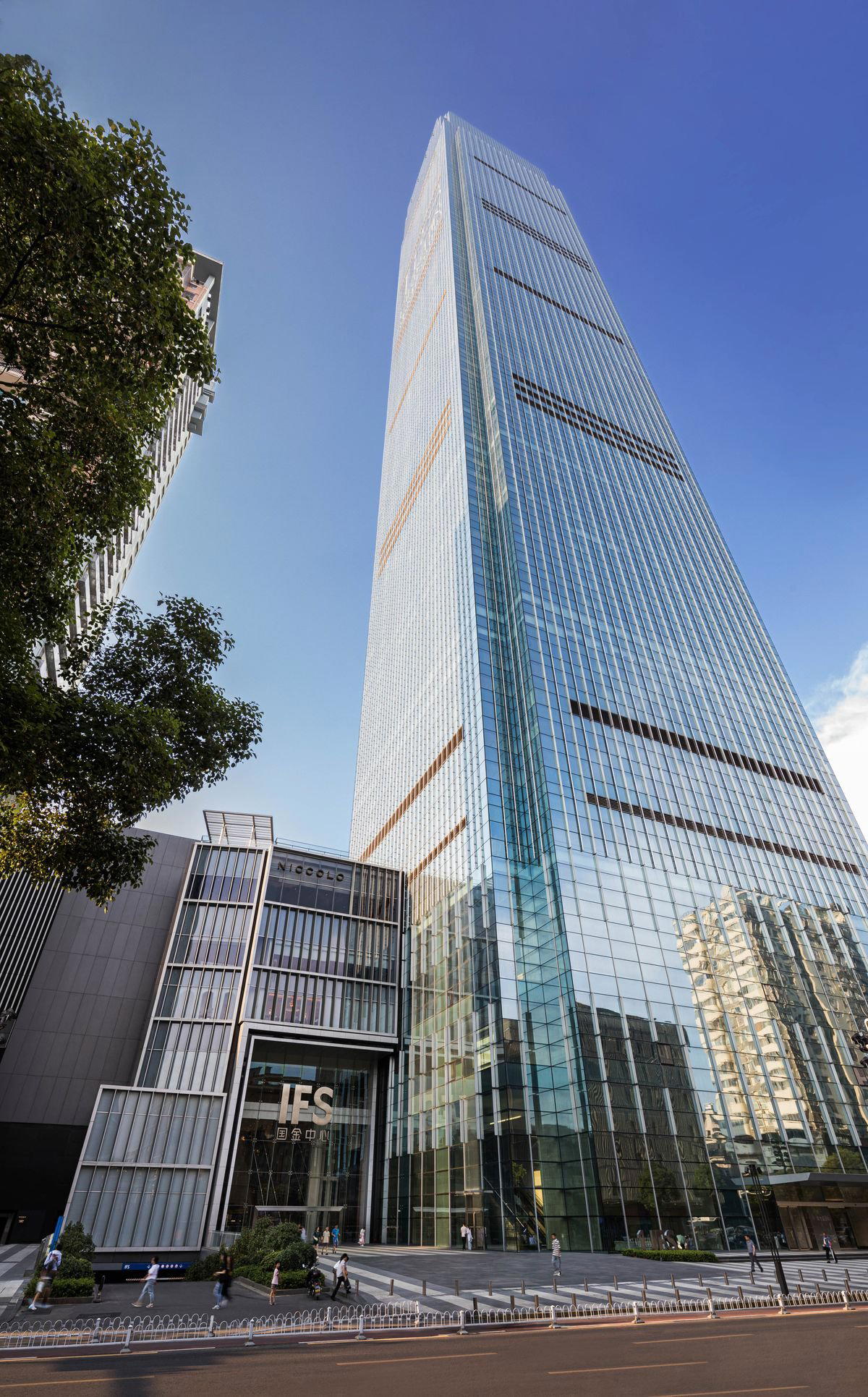
The hotel's address in Yuhua District places it within reach of central Changsha's commercial and cultural anchors. The Changsha IFS complex, a twin-tower development that includes the city's tallest structure and over 400 retail and dining outlets, is among the closest landmarks. Orange Island, which sits in the Xiang River and carries significant historical and cultural associations, provides a contrast to the urban intensity: greenery, pathways, the River Watching Pavilion, and the large-scale sculpture of Mao Zedong that has become one of the city's most visited reference points.
Yuelu Mountain, a short drive west, offers hiking trails and the Yuelu Academy, a Confucian learning institution dating to the Song Dynasty and among the stronger-preserved examples of its kind in China. Changsha Window of the World, a theme park approximately 30 minutes out, sits at the lighter end of the city's attraction spectrum. The hotel's central positioning means these varied destinations are accessible without significant logistical planning.
Competitive Position in Changsha's Upper Tier
Changsha's luxury hotel tier has grown with intent over the past decade. Properties like Niccolo Changsha and Park Hyatt Changsha operate in the same bracket, each with a distinct brand register. The JW Marriott differentiates primarily through its design coherence, the clarity of its Chinese aesthetic references and the execution of the tower-hotel format, and through the network reliability that Marriott International's infrastructure provides for frequent travellers. Against design-led independents or the more architecturally specific Aman properties (see Amandayan in Lijiang for a contrasting approach to Chinese heritage hotels), the JW Marriott competes on breadth: full-service amenities, multiple dining formats, comprehensive wellness, and meeting facilities that smaller properties cannot match.
For travellers moving through China's interior cities rather than the coastal tier, properties like the JW Marriott Changsha represent a reliable upper register: not the intimate or experimental end of the market, but a standard of finish and service breadth that the city's other luxury hotels hold as their reference point. For comparison elsewhere in the country, Andaz Shenzhen Bay in Shenzhen, Banyan Tree Chongqing Beibei in Chongqing, and Conrad Guangzhou in Guangzhou occupy similar positions in their respective cities, internationally backed, design-conscious, locally engaged.
Planning Your Stay
The hotel is located at 567 Furong Middle Road, Yuhua District, Changsha 410021. Amenities include 24-hour room service, bar, gym, fitness classes, indoor pool, spa, kids club, restaurants, meeting rooms, and a house car. Booking directly through Marriott International's platform or via a recognised travel agent is the practical approach. The Executive Room category warrants consideration for anyone whose stay includes business meetings or who values condensed, lounge-based hospitality over conventional room-only access.
Comparison Snapshot
Comparable venues nearby, for context on price, style, and recognition.
| Venue | Cuisine | Price | Awards | Notes |
|---|---|---|---|---|
| JW Marriott Hotel ChangshaThis venue — the venue you are viewing | Luxury urban hotel blending historical cultural significance with modern well-being. | $$$$ | 5-Star | Not listed |
| Park Hyatt Changsha | Contemporary luxury mansion blending traditional Xiang cultural elements with modern sophistication, occupying premium tower floors with curated residential-inspired design. | $$$$ | 5-Star | Fu Rong |
| Niccolo Changsha | Contemporary luxury high-rise icon in prime financial district; modern minimalist elegance with curated sophisticated decor throughout. | $$$$ | 5-Star | Furong District |
| W Changsha | Futuristic luxury hotel inspired by stars and galaxy | $$$$ | 5-Star | Yuhua District |
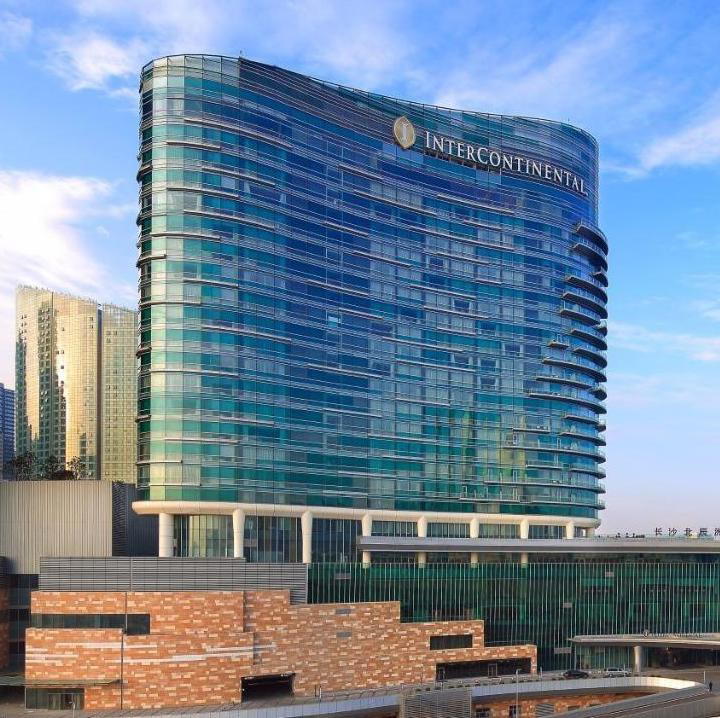
| InterContinental Changsha | Grand-style modern luxury hotel with contemporary tower design seamlessly integrated into its scenic surroundings in China's largest urban development project. | $$$$ | 5-Star | Kaifu District |
| voco Hangzhou Binjiang Minghao | Modern design hotel with Art Deco architecture and thoughtful, unstuffy charm. | $$$$ | 5-Star | Binjiang District |
Recognition history
Dated appearances from independent guides and award organizations, with the underlying list record or original source where available.
Forbes Recommended
Forbes
Forbes 4-Star
Forbes
Michelin Guide New Hotels New Hotel
Michelin Guide New Hotels
Forbes 4-Star
Forbes
Michelin Selected
Michelin
At a Glance
- Elegant
- Sophisticated
- Modern
- Business Trip
- Romantic Getaway
- Rooftop Pool
- Panoramic View
- Infinity Pool
- Wi Fi
- Pool
- Spa
- Fitness Center
- Room Service
- Concierge
- Business Center
- Valet Parking
- EV Charging
- Skyline
- Wi Fi
- Pool
- Spa
- Fitness Center
- Room Service
- Concierge
- Business Center
- Valet Parking
- EV Charging
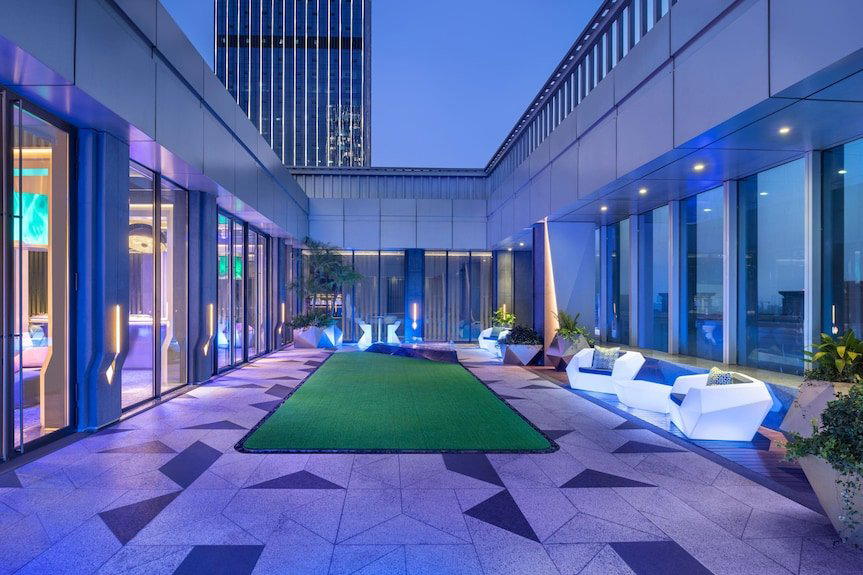
Light-filled spaces with elegant interior design blending urban style, relaxing spa atmosphere, and far-reaching city views from fitness center and pool.