

A 32-storey Michelin Key-awarded property in Osaka's Grand Front development, InterContinental Osaka combines a Michelin-starred French-Japanese restaurant, a full-size indoor pool, and onsen-style spa facilities with direct access to Umeda's main rail hub. Rooms start from around $386 per night across 272 keys, with Club Level access unlocking a 28th-floor lounge serving breakfast through evening cocktails.
 Discover on Pearl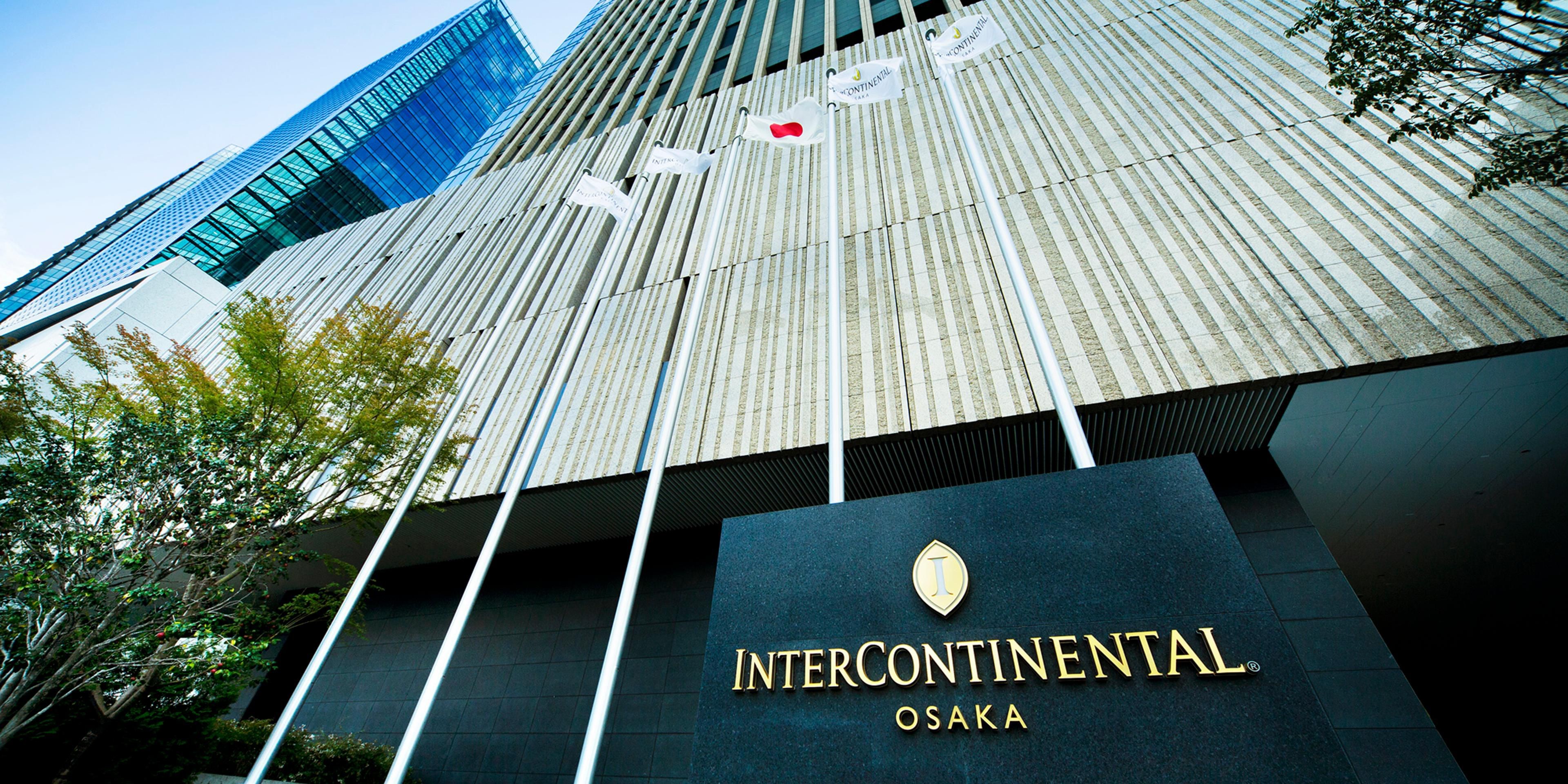
Where Umeda's Commercial Core Meets Considered Hospitality
Osaka's luxury hotel tier has consolidated around a handful of addresses in the Kita Ward, where the density of rail connections, retail, and corporate demand makes central positioning as commercially important as design credentials. InterContinental Osaka sits inside the Grand Front Osaka development at 3-60 Ōfukachō, a mixed-use complex that integrates the hotel with retail, dining, and business infrastructure in a way that removes the usual friction of urban travel. The main rail hub at Osaka-Umeda is a short walk away, which places day trips to Kyoto, Kobe, and Nara within practical reach without requiring advance logistical planning. For travellers treating Osaka as a base rather than a single destination, that connectivity carries real weight.
At 32 storeys, the building's height is not incidental. Floor-to-ceiling windows across the guest rooms and restaurants convert altitude into a sustained amenity, with Osaka's skyline shifting through different registers depending on the time of day. The 272 rooms are spacious by Japan's urban hotel standards, each configured with deep soaking tubs and walk-in rain showers as separate fixtures, which reflects the property's positioning against a peer set that includes The Ritz-Carlton, Osaka, The St. Regis Osaka, and Conrad Osaka, all of which hold Michelin Key recognition in the same city. The InterContinental earned its own Michelin 1 Key in the 2024 cycle, placing it within a cluster of Kita Ward properties that the guide now treats as a distinct competitive bracket.
The Food Program as Editorial Statement
French-Japanese fusion has existed in Osaka long enough to become a default mode for international hotel restaurants, but the version operating inside this property carries a structural detail that distinguishes it from the format's more generic iterations. Pierre, the flagship restaurant, holds a Michelin star, and its seasonal multi-course menu changes every three days, anchored to vegetable and seafood sourcing cycles rather than to a fixed kitchen formula. That rotation interval is operationally demanding and signals a commitment to ingredient timing over menu stability, a discipline more associated with independent kaiseki counters than with hotel dining rooms. The skyline framing from the dining room converts the views from backdrop to deliberate context.
Noka Roast and Grill functions as a secondary dining register, serving lunch and dinner with à la carte mains alongside buffet-format salads, appetizers, and desserts, and floor-to-ceiling windows that maintain the visual continuity the building enforces across its food and beverage spaces. The 3-60 Lounge, named for the hotel's street address, operates as an afternoon tea and pre-dinner cocktail space and carries a rotating art collection. Adee handles the late-evening positioning, with cocktails and three distinct afternoon tea formats, and live music scheduled on Friday and Saturday evenings. On the ground floor, Stressed functions as a patisserie offering Japanese pastries and souvenir tea sets, including the hotel's own bespoke peach-and-apple blend. That tea is also provided in guest rooms, a small but precise detail that places seasonal and local flavour signals throughout the stay rather than concentrating them only at the restaurant tier. See our full Osaka restaurants guide for broader context on where this food program sits within the city's dining range.
Sourcing Rhythms and Responsible Luxury in Practice
The editorial angle of sustainability in luxury hospitality often reduces to a list of procedural commitments, green certifications, and vague pledges. What distinguishes a more considered approach is when operational decisions visibly connect environmental intent to guest experience rather than offsetting them against each other. At this property, the three-day menu rotation at Pierre is the clearest example: it functions as both a creative discipline and a procurement constraint, requiring kitchen teams to build menus around what is seasonally and logistically available rather than around what is convenient to stock year-round. The emphasis on just-plucked vegetables and freshly caught seafood is not decorative language; it describes a supply chain that prioritises ingredient timing over menu predictability.
The in-room amenity choices follow a related logic. Sakura and sandalwood bath salts and the bespoke peach-and-apple tea blend are Japanese in origin and character, sourced and positioned as regional expressions rather than generic international hotel standards. In a category where amenity homogeneity is the norm, that specificity reads as a deliberate decision. Larger Japanese luxury properties operating outside the IHG system, such as HOTEL THE MITSUI KYOTO in Kyoto or Amanemu in Mie, build entire identities around regional material sourcing. The InterContinental's approach is more selective, applying that orientation to food, beverage, and in-room sensory details within an otherwise internationally branded operating structure.
The Pool, the Spa, and What They Signal About the Property's Positioning
A full-size indoor swimming pool is rare among Osaka's hotel tier, and the InterContinental's pool functions as a genuine differentiator rather than a checkbox amenity. Swimming caps, goggles, and extra towels are available to borrow, which removes the friction that typically limits pool use to guests who have planned for it. That operational detail is worth noting because it suggests the property manages the pool as an active amenity rather than a prestige feature that looks better in photography than in daily use.
The spa includes onsen-style hot bath houses with separate men's and women's facilities, a format that places it in dialogue with Japan's traditional bathing culture even within a contemporary luxury context. Properties such as Gora Kadan in Hakone or ENOWA Yufu in Yufu build their entire offering around onsen access in dedicated ryokan formats. What the InterContinental offers is a hybrid: onsen-adjacent facilities within an urban international hotel, which serves a different traveller profile but draws from the same cultural tradition. The locker room facilities are described as generous in scope, which aligns with the property's broader pattern of building out amenity depth rather than relying solely on room quality and dining credentials.
Club Level and the Logic of Layered Access
The Club Level tier operates on the 28th floor with access to a lounge serving à la carte and buffet breakfast, afternoon tea, evening canapés, and cocktails, all set against city views that justify the floor designation on their own terms. In Osaka's luxury hotel market, Club Level access tends to function as a value-capture mechanism for travellers whose stay patterns include multiple meal periods, since consolidating breakfast and evening drinks into a single lounge reduces the per-meal cost of staying at this price point. Rooms start from approximately $386 per night, with Club Level commanding a premium above that baseline. For guests whose itineraries include day trips to Kyoto or Kobe, having a reliable and included breakfast and drinks circuit at the hotel simplifies the daily rhythm considerably. See our full Osaka hotels guide for a comparison of how Club Level formats vary across the city's major properties.
Location, Practicalities, and How to Plan Your Stay
Hotel's address within Grand Front Osaka places it adjacent to Osaka Station and the Umeda rail interchange, which serves Shinkansen connections, private rail lines, and the municipal subway network. Universal Studios Japan, Osaka Castle, and the Osaka Aquarium Kaiyukan are each described as accessible on foot or by short transit from the property, which makes the location functional for both leisure and business itineraries without requiring a hire car. For travellers extending their Japan itinerary beyond Osaka, the rail access supports easy connections to properties such as Fufu Nikko in Nikko, Benesse House in Naoshima, or Bvlgari Hotel Tokyo in Tokyo for those building a multi-city route. Within Osaka itself, the bar scene, experiences, and wine programming are covered separately in EP Club's city guides. The 272-room scale and IHG loyalty infrastructure make booking direct through the IHG system, though Pierre's dining reservation should be treated as a separate priority given the Michelin star and changing menu cycle. Google reviewer scores of 4.4 across 2,424 reviews indicate consistent performance across a broad guest base, which at this price tier and scale is a meaningful signal rather than an outlier result.
Frequently Asked Questions
Cost and Credentials
Comparable venues for orientation, based on our database fields.
| Venue | Price | Awards | Notes |
|---|---|---|---|
| InterContinental Osaka | Michelin 1 Key | This venue | |
| Conrad Osaka | Michelin 1 Key | Michelin 1 Key | |
| The Ritz-Carlton, Osaka | Michelin 1 Key | Michelin 1 Key | |
| The St. Regis Osaka | |||
| W Osaka | Michelin 1 Key | Michelin 1 Key | |
| Imperial Hotel, Osaka |
Preferential Rates?
Our members enjoy concierge-led booking support and priority upgrades at the world's finest hotels.
Get Exclusive Access