
Michelin Selected
A Michelin Selected hotel occupying a historic building on Bahnhofstraße in Aurich, East Frisia's quiet administrative capital. Hochzeitshaus sits within a small tier of recognised properties in Germany's North Sea hinterland, where the gap between urban hotel infrastructure and genuinely curated stays is wide enough to matter.

Pearl is the En Primeur Club membership app — saves, bookings, and concierge access live there. Same editors, same standards.
- Address
- Bahnhofstraße 4, 26603 Aurich, Germany
- Phone
- +49 4941 604460
- Website
- hochzeitshaus-aurich.de
- Directions
- Get directions
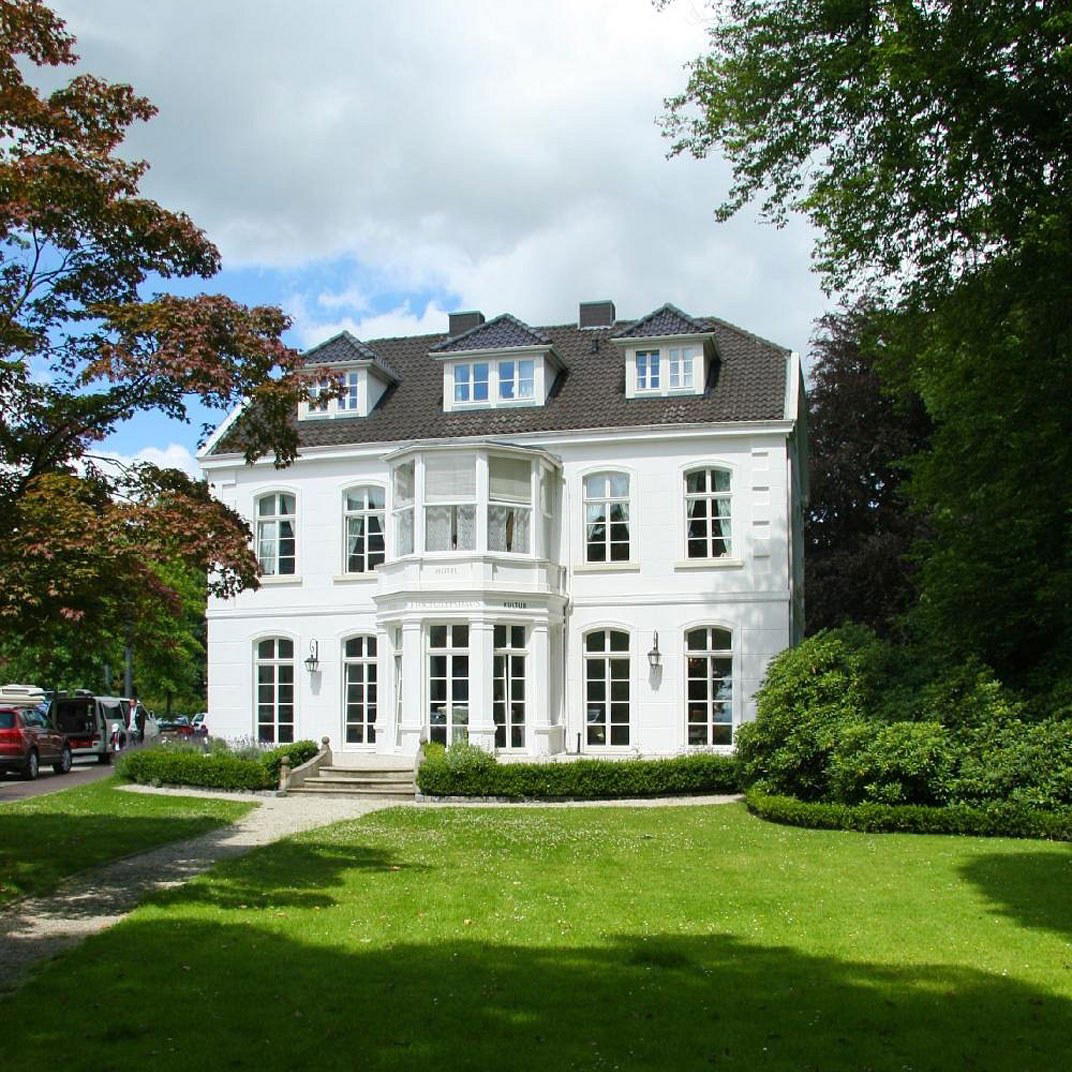
A Historic Address in East Frisia's Understated Capital
Aurich does not announce itself. The capital of East Frisia sits roughly 30 kilometres from the North Sea coast, surrounded by flat polder farmland and windmill-dotted horizons that have defined this region's character for centuries. It is not a city that competes with Hamburg or Hanover for visitor attention, which is precisely what gives Hochzeitshaus its context. In a town where the architectural register runs from modest Hanseatic brick to austere civic buildings, a property that earns Michelin recognition occupies a genuinely distinct position.
Hochzeitshaus stands at Bahnhofstraße 4, the address placing it close to Aurich's central axis and within walking distance of the market square. In smaller German towns, the relationship between a historic building and its current use as a hotel often defines the property's character more than any interior refurbishment. The name itself — literally "wedding house" — carries architectural and civic weight in the German tradition, where such buildings historically served as town-owned celebration venues, a function that shaped their scale and formal ambition long before any conversion to hospitality use.
The Architecture and What It Signals
Germany's Michelin Selected hotel tier, published as part of the 2025 guide, does not include properties on the basis of room count or spa square footage alone. The selection process weighs setting, character, and a coherent sense of place against the physical quality of the stay. For Hochzeitshaus to sit within that tier in a market like Aurich, where recognised accommodation options are limited, the building's architectural identity almost certainly carries significant weight in the assessment.
Historic civic buildings converted to hotels in northern Germany tend to share certain qualities: high ceilings, substantial façades, and a formal proportion to their public spaces that purpose-built hotels rarely replicate. These are structures designed to impress at a civic scale, and that ambition is embedded in their bones regardless of subsequent interior decisions. Where properties in this category succeed, it is usually because the conversion respects rather than overrides the original spatial logic. Where they disappoint, it is typically because contemporary hotel programming has been inserted into spaces that resist it.
The Michelin designation for 2025 suggests that Hochzeitshaus avoids the latter failure. Among the broader set of Michelin Selected properties across Germany, the recognition functions as a marker of character and quality rather than a statement about luxury tier. It places Hochzeitshaus in a peer group that includes smaller, often independently operated properties with a clear architectural or locational identity, distinct from the grand city hotels like the Fairmont Hotel Vier Jahreszeiten in Hamburg or the Sofitel Frankfurt Opera in Frankfurt, whose recognitions rest on different foundations entirely.
East Frisia as a Travel Context
Placing Hochzeitshaus within the broader geography of North German travel matters. The East Frisian coast and its hinterland attract a specific type of visitor: those drawn to the North Sea islands, the flat light that painters have documented for two centuries, and a pace of life that urban Germany has largely discarded. Aurich serves as the administrative and commercial hub for this region, which means it functions as a practical base for exploring the surrounding area rather than a destination in its own right.
The North Sea island properties closest in spirit to this tier of stay include options like Seesteg Norderney on Norderney, where the island setting adds its own layer of character to the accommodation proposition. On the mainland, the gap between recognised and unremarkable stays is wide, which is why a Michelin-flagged property in Aurich carries more practical significance for the informed traveller than the same recognition might in a more densely served market.
For visitors planning a North Sea itinerary that combines coast and hinterland, Aurich's position makes it a logical overnight point. The town's weekly market, its provincial museum, and the East Frisian tea culture, the region's most distinctive culinary tradition, involving a specific ritual of rock sugar and cream served alongside black tea, provide enough local texture to justify a stay of more than a single night. For context on the wider dining and drinking scene in the area, see our full Aurich restaurants guide.
Where Hochzeitshaus Sits in the German Hotel Conversation
The Michelin hotel guide's German selection spans a wide range of property types, from resort-scale stays like Schloss Elmau in Elmau and Hotel Traube Tonbach in Baiersbronn to smaller, independently managed properties in secondary cities and market towns. Hochzeitshaus falls into the latter grouping, where the selection criteria prioritise the authenticity of the stay over the comprehensiveness of the facilities.
This matters for how prospective guests should calibrate expectations. Properties in this sub-tier of the Michelin selection, particularly those in smaller German towns, are not typically competing with the full-service resort model. They are making a different argument: that an architecturally coherent building, operated with care in a location with genuine regional character, constitutes a more interesting stay than a chain hotel with a longer amenity list. The Telegraphenamt in Berlin and Villa Contessa in Bad Saarow occupy similar positions in their respective markets, where building character does substantial narrative work. Internationally, this logic extends to properties like Badrutt's Palace in St. Moritz or Hôtel de Paris in Monte Carlo, where the building itself is inseparable from the case for staying there.
Across northern Germany's coastal belt, a handful of properties make a similar argument from character rather than scale. Söl'ring Hof on Sylt and BUDERSAND Hotel in Hörnum serve a different market segment but share the principle that location and identity matter more than facility count. Weissenhaus Private Nature Luxury Resort on the Baltic coast takes that logic further into the estate model. Hochzeitshaus operates on a more modest scale and with a different architectural vocabulary, but the underlying editorial logic is comparable.
Planning a Stay
Aurich is accessible by rail from Emden and from the wider Dutch-German border corridor, with the town's train station sitting close to Bahnhofstraße and therefore close to the property itself. Direct road access from Bremen or Groningen in the Netherlands makes it a practical stop on longer regional itineraries. Given the limited number of recognised accommodation options in the immediate area, booking ahead is advisable for peak summer periods when North Sea coastal tourism concentrates on this stretch of the German coast. Specific room availability, rates, and reservation methods should be confirmed directly with the property, as those details are not available through this listing.
Side-by-Side Snapshot
Comparable venues nearby, for context on price, style, and recognition.
| Venue | Cuisine | Price | Awards | Notes |
|---|---|---|---|---|
| HochzeitshausThis venue — the venue you are viewing | 19th-century villa with modern boutique design | $100–200 | Michelin Selected | Not listed |
| Leonardo Mainz | Modern full-service city hotel with business and leisure positioning. | $1–100 | Not listed | Oberstadt |
| Rosendomizil | Family-run historic hotel with modern comforts | $100–200 | Michelin Selected | Malchow |
| me and all hotel Ulm | Modern urban lifestyle hotel blending old and new. | $100–200 | Michelin Selected | Bahnhofplatz |
| Zleep Hotel Hamburg Volkspark | Economy lifestyle hotel with functional Danish design and modern guest services. | Not listed | Not listed | Eidelstedt |
| Brunfels Hotel | Urban grand hotel in a historic Old Town setting, blending modern comfort with regional character. | $100–200 | Not listed | Altstadt / Schillerplatz |
Recognition history
Dated appearances from independent guides and award organizations, with the underlying list record or original source where available.
Michelin Selected
Michelin

Details
- Romantic
- Quiet
- Cozy
- Elegant
- Classic
- Business Trip
- Romantic Getaway
- Celebration
- Destination Wedding
- Weekend Escape
- Historic Building
- Garden
- Terrace
- Wi Fi
- Free Parking
- Breakfast Included
- Restaurant
- Bar
- Garden
- Garden
- Street Scene
Quiet, romantic, and elegant, with a historic villa setting, individually designed rooms, and garden views.