

Mr & Mrs Smith Seal of Approval · Design Hotels Member
A restored 17th-century palazzo on Via delle Colonnette places Elizabeth Unique Hotel at the geographic and cultural core of Rome's historic center. The property occupies a bracket of intimate, character-led accommodation that operates differently from the large international luxury brands clustered around the Spanish Steps and Via Veneto, fewer keys, more architecture, and a setting where the building itself does much of the storytelling.

Pearl is the En Primeur Club membership app, where members save venues, book tables and use the concierge.
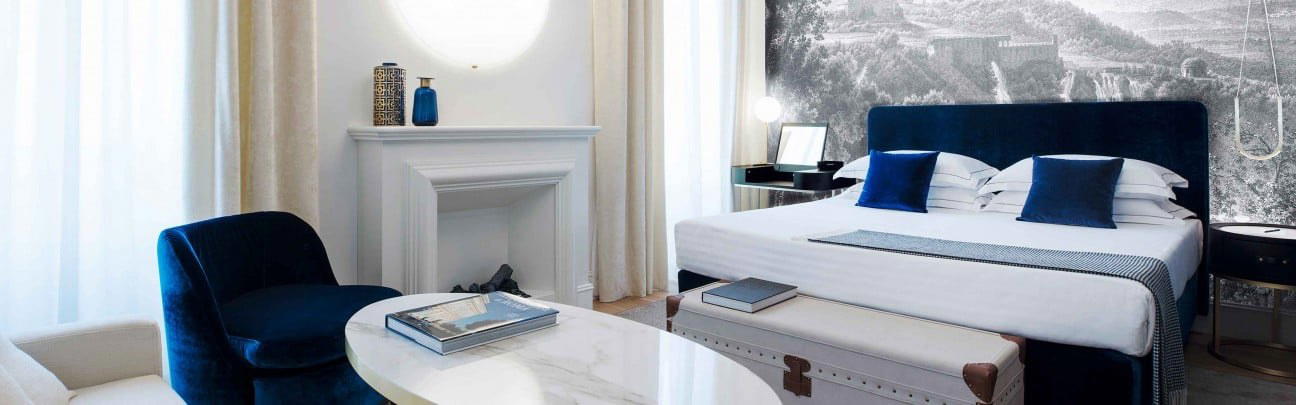
A Palazzo in the Fabric of the Historic Center
Rome's hotel market has split along a familiar axis. On one side sit the grand international addresses, the Bulgari, the Eden, the Hassler, with full-service infrastructure, flagship restaurants, and price points that reflect their global brand positioning. On the other sits a smaller cohort of palazzo conversions and design-led independents that compete on intimacy, location specificity, and architectural character rather than amenity breadth. Elizabeth Unique Hotel, occupying a restored 17th-century palazzo at Via delle Colonnette 35 in Rome's historic center, belongs firmly to the second group.
The address matters. Via delle Colonnette sits within the dense medieval and baroque grid that runs between the Pantheon and Campo de' Fiori, an area where the streets narrow to the width of a single car and the surrounding stonework predates most European capitals by several centuries. Properties in this pocket of the centro storico carry an inherent positional advantage: the monuments are walkable, the trattorias are local rather than tourist-facing, and the morning light on the piazzas arrives before the crowds. That geography shapes the experience before a guest even crosses the threshold.
What the Building Tells You Before You Check In
A 17th-century Roman palazzo conversion carries specific spatial logic. The ground-floor rooms tend toward darker, cooler proportions, with vaulted ceilings and thick stone walls that were designed for a pre-air-conditioning climate. Upper floors, by contrast, offer height and, in properties with a courtyard orientation, a certain remove from street-level noise. The decision about which room tier to book at Elizabeth Unique Hotel follows that same structural grammar: guests sensitive to natural light should prioritize upper floors, while those who value thermal insulation and the specific acoustic quality of heavy masonry may find the lower levels more compelling.
Among Rome's boutique palazzo set, the Elizabeth sits in a peer group that includes Hotel Vilòn, Maalot Roma, and Portrait Roma, all of which position on architectural heritage and location precision rather than on spa facilities or celebrity chef partnerships. The category rewards guests who understand what they are buying: proximity to the Rome that existed before the 20th century, compressed into a building whose walls have absorbed several lifetimes of the city's history.
The Daytime Case: Morning Rome from a Central Base
The argument for staying in this part of the historic center is strongest in the morning. Between 7am and 10am, the Pantheon piazza holds a fraction of its midday volume, the coffee bars on the surrounding streets serve their regulars at the counter, and the light across the ochre and travertine facades sits at its most considered angle. A hotel on Via delle Colonnette puts guests inside that window without a taxi or a metro transfer.
For a property in this district, daytime use of the hotel itself tends to be transactional: a breakfast, a bag drop, a map consultation with reception before heading back out. The centro storico does not reward those who stay inside. The value proposition here is access, to the Pantheon, to Campo de' Fiori's morning market, to the warren of antiquarian book shops and artisan workshops that still occupy the ground floors of the surrounding buildings. The room is a staging post for a city that demands you walk it.
The Evening Shift: When the Palazzo Format Changes Register
By evening, the calculus shifts. The tourist volume in this quarter drops more sharply than in the area around the Trevi Fountain or the Colosseum, which means the restaurants within a ten-minute walk revert to something closer to their neighborhood identity. A boutique palazzo hotel in this position becomes less a logistical base and more an atmospheric counterpart to the evening city: the return after dinner to a building whose entrance, staircase, and room proportions carry their own historical weight is a materially different experience than returning to a modern business hotel on a peripheral boulevard.
For travelers comparing evening atmosphere across Rome's boutique tier, the centro storico properties hold an advantage over those positioned in Prati or Parioli precisely because the surrounding streets remain animated at dinner hour without the aggressive tourist-trade concentration found around the major monuments. That ambient quality, locals eating, students crossing on bicycles, the smell of stone after the day's heat, belongs to the neighborhood as much as to the hotel.
Placing Elizabeth in Rome's Broader Accommodation Picture
For context, Rome's historic center accommodation ranges from the full-service grandeur of Hassler Roma at the top of the Spanish Steps and the contemporary luxury of Bulgari Hotel Roma, through the curated design of JK Place Roma and the Edwardian character of Hotel Locarno, down to smaller boutique conversions that operate without full restaurant infrastructure. The Elizabeth sits in that last tier, which is not a criticism but a category distinction. Guests who require an in-house spa, a rooftop bar, or a dedicated concierge desk handling complex itineraries should look at Hotel Eden or the Bulgari. Those whose priority is the building, the block, and the walking radius will find the boutique palazzo format more coherent.
Across Italy, this same split plays out in different registers. In Venice, Aman Venice represents the grand palazzo conversion at its most resource-intensive. In Tuscany, Castello di Reschio and Rosewood Castiglion Del Bosco apply the same logic to rural estates. The Elizabeth operates in the compressed urban version of that tradition, less land, more city, all stone.
For those considering Rome alongside other Italian coastal or southern options, Borgo Santandrea on the Amalfi Coast, Il San Pietro di Positano, and Borgo Egnazia in Puglia offer different propositions entirely, seaward, resort-paced, and seasonally concentrated. Rome's historic center hotels operate year-round, with spring and autumn delivering the most manageable climate and the lightest tourist pressure.
Planning Your Stay
The historic center's most favorable windows run from late March through May and again from September through November, when daytime temperatures sit between 15°C and 22°C and the summer crowds have either not yet arrived or have dispersed. August presents the opposite conditions: the city empties of Romans and fills with tourists, the heat concentrates between the close-set buildings, and many local restaurants shutter for part of the month. For a property whose value proposition rests on neighborhood character, that seasonal context matters.
Booking lead times for boutique properties in this district vary, but rooms in well-located palazzo conversions tend to fill earlier than their limited online profiles might suggest, particularly for spring weekends and the October-November window that Italian travelers favor for city breaks. For current rates, availability, and room configuration details, contact the hotel directly or consult the EP Club Rome guide for comparative context across the city's accommodation tiers.
Comparable Options
Comparable venues nearby, for context on price, style, and recognition.
| Venue | Cuisine | Price | Awards | Notes |
|---|---|---|---|---|
| Elizabeth Unique HotelThis venue (the venue you are viewing) | Italian styled boutique art hotel in a renovated 19th-century palace near Spanish Steps | Not listed | Mr & Mrs Smith Seal of Approval · Design Hotels Member | Not listed |
| Palm Suite | Eclectic luxury residences in historic 18th-century palazzo | Not listed | Michelin Selected · Mr & Mrs Smith Seal of Approval | Monti |
| Rocco Forte House, Piazza di Spagna Roma | Contemporary Roman palazzo apartments blending tradition with luxury. | $1,500–2,500 | Virtuoso Luxury Hotel Partner · Mr & Mrs Smith Seal of Approval | Campo Marzio |
| Hotel Raphaël | Luxury boutique hotel blending classic and modern design. | $300–500 | Relais Chateaux Award | Ponte |
| Hotel Viminale | Refined historic hotel blending timeless elegance with contemporary design. | $200–300 | Michelin Selected | Monti |
| MyNavona | Elegant 17th-century townhouse renovated with contemporary Italian design. | $100–200 | Not listed | Parione |
Recognition history
Dated appearances from independent guides and award organizations, with the underlying list record or original source where available.
Design Hotels Member
Design Hotels
Mr & Mrs Smith Seal of Approval
Mr & Mrs Smith
Continue exploring
More in Rome
Hotels in Rome
All hotels in Rome →
Bars in Rome
All bars in Rome →
Restaurants in Rome
All restaurants in Rome →

Details
- Romantic
- Elegant
- Modern
- Intimate
- Sophisticated
- Romantic Getaway
- Honeymoon
- Anniversary
- Historic Building
- Design Destination
- Terrace
- Wi Fi
- Room Service
- Concierge
- Restaurant
- Street Scene
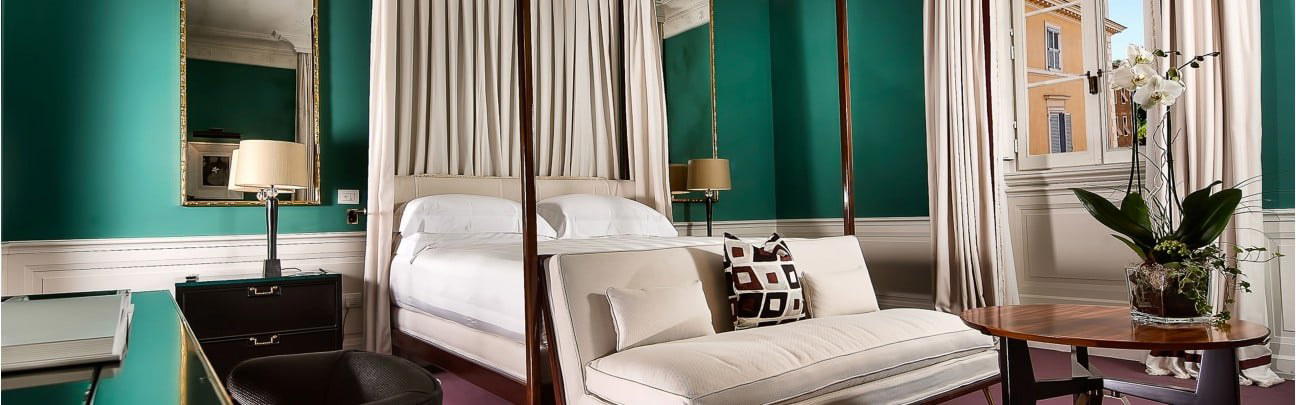
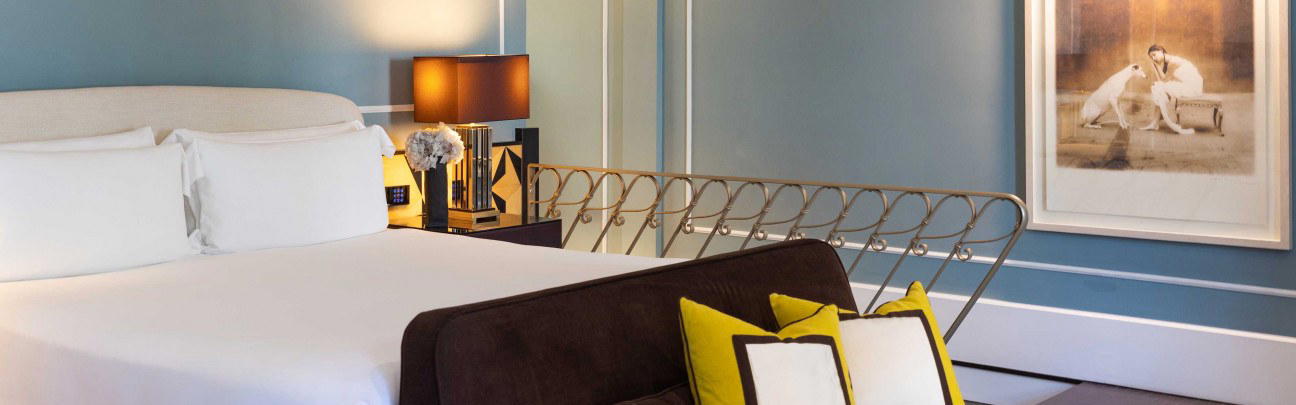
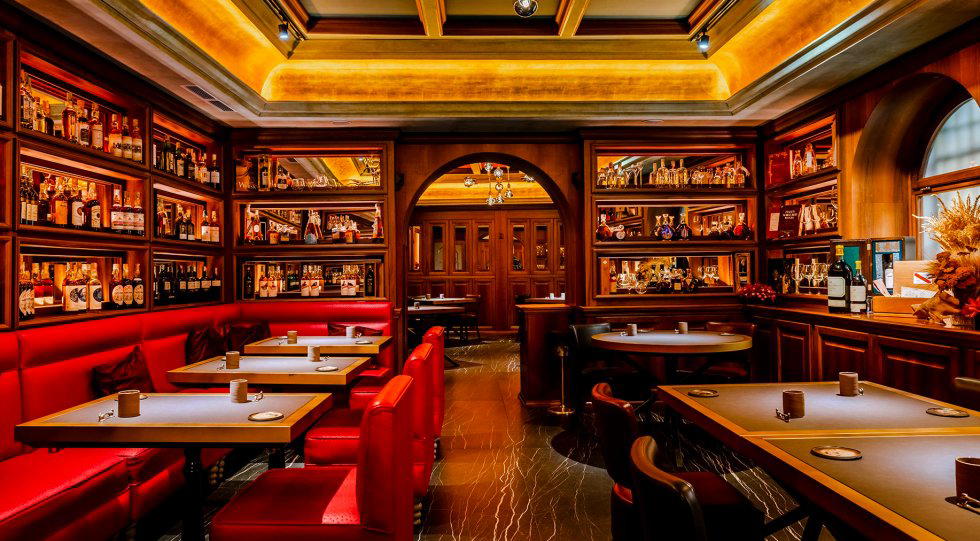
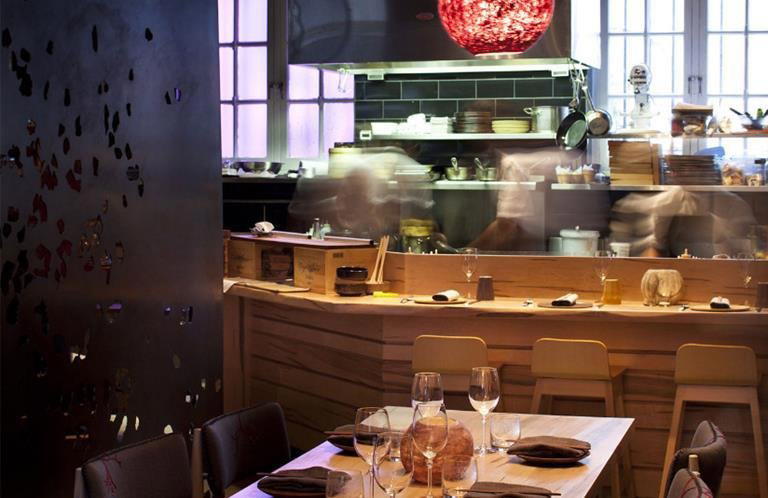
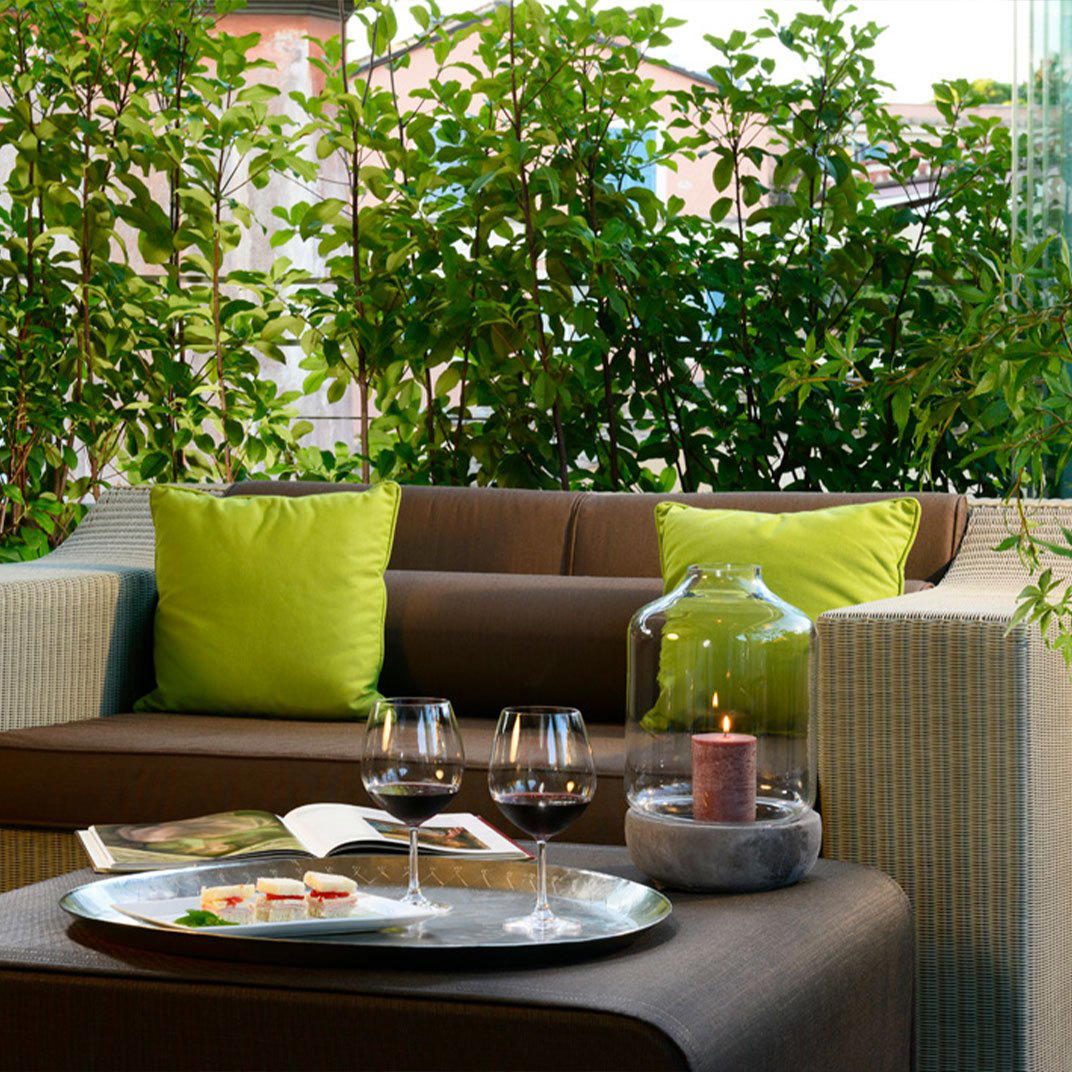
Refined lobby with double-height entrance, cozy reading room fireplace, modern art, marble and velvet furnishings, and a laid-back stylish bistro atmosphere.