
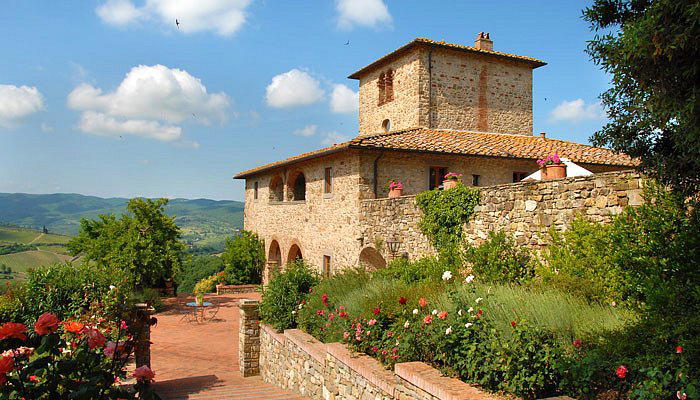
A private Renaissance hamlet in the Florentine hills, Dimora Ghirlandaio is a five-villa retreat in Impruneta, fifteen minutes from central Florence. With connections to the 15th-century Ghirlandaio artists and a guest-only restaurant set against a garden, it occupies a distinct tier among Tuscan countryside properties seeking deep historical character alongside contemporary hospitality.
Pearl is the En Primeur Club membership app — saves, bookings, and concierge access live there. Same editors, same standards.
- Address
- Via di Colle Ramole, 59, Impruneta, Tuscany
- Directions
- Get directions
 Saves & bookings on Pearl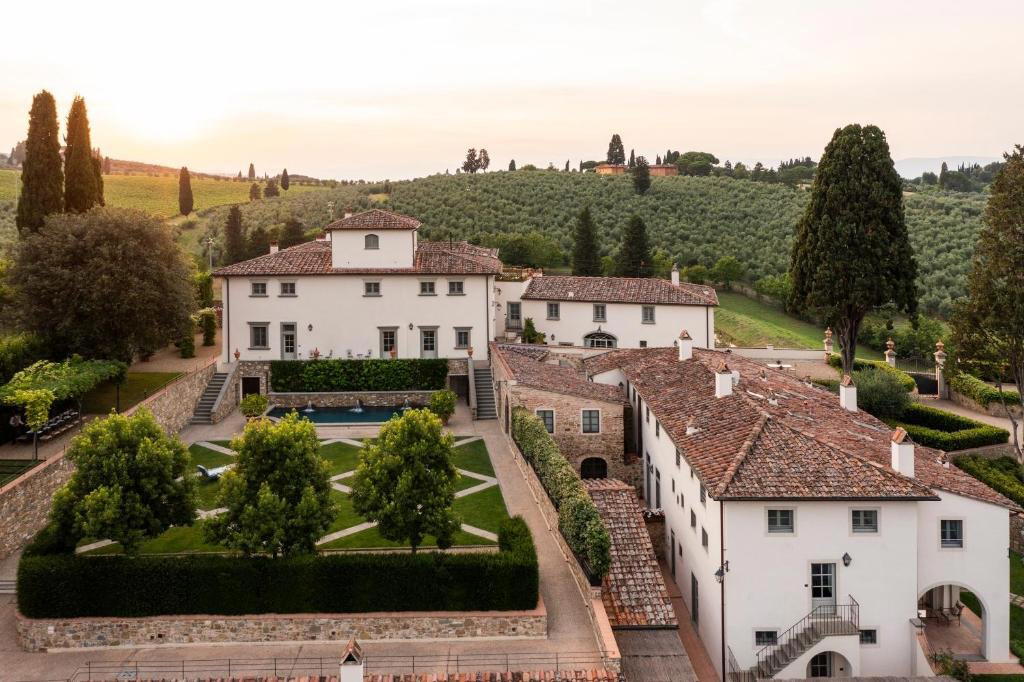
A Renaissance Hamlet, Fifteen Minutes from Florence
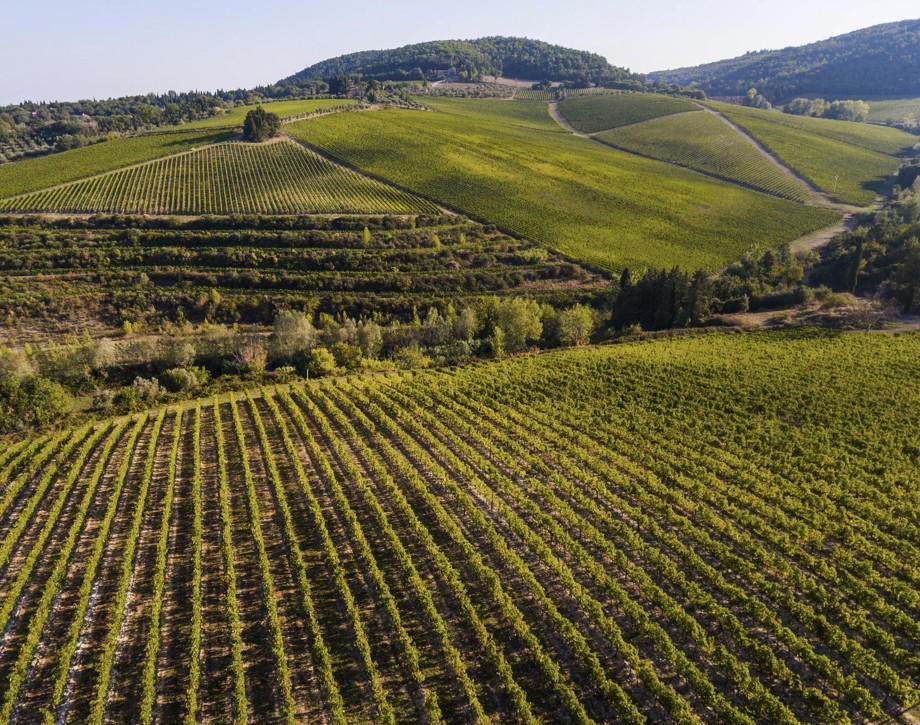
The road to Impruneta climbs quietly away from Florence's congestion into a belt of cypress-lined hills that most visitors never reach. At Via di Colle Ramole, the transition is abrupt: terracotta, stone walls, and a spatial logic built for a different century. Dimora Ghirlandaio is a five-star hotel in Impruneta, Tuscany, a recovered hamlet, a cluster of structures that functioned as an estate long before the hospitality industry existed. That distinction matters, because it shapes everything about how a stay here operates, from the scale of the accommodation to the structure of the dining.
Among Florentine luxury properties, the category has bifurcated sharply in recent years. On one side sit the palazzo hotels of the centro storico, the Four Seasons Hotel Firenze, the Palazzo Portinari Salviati Residenza D'Epoca, the Hotel Lungarno, each offering urban luxury within walking distance of the Duomo. On the other sit properties that trade proximity for land, privacy, and architectural depth. Dimora Ghirlandaio belongs firmly to the second category, alongside properties like Villa La Massa and Villa Cora, though its hamlet structure sets it apart from the single-villa format most Tuscan retreats adopt.
The Weight of the Ghirlandaio Name
In the 15th century, the Florentine countryside served as more than a retreat from city heat, it was a working extension of patronage culture, where artists maintained residences through the support of wealthy sponsors. The Ghirlandaio family's connection to this specific site carries that logic: Domenico Ghirlandaio, who worked under the patronage of Lorenzo de' Medici and taught Michelangelo from 1488, used this hamlet as a residence. His son Ridolfo, whose friendship with Raphael is documented in art-historical records, continued that association. The Chapel of the Visitation of the Blessed Virgin Mary within the property, painted by Ridolfo Ghirlandaio and restored during a recent renovation, makes the connection material rather than merely historical. Guests can encounter the work in the same physical space where it was made, an experience that no museum visit replicates, because the architecture surrounding it is intact.
That kind of layered provenance is not easily manufactured. It places Dimora Ghirlandaio in conversation with Italy's deeper tradition of dimora storica hospitality, where the property itself is the primary credential. Comparable properties elsewhere in Italy, Castello di Reschio in Lisciano Niccone and Rosewood Castiglion Del Bosco in Montalcino, operate with a similar logic, where the architecture and land are the proposition, and hospitality is built around them rather than the reverse.
Five Villas, One Hamlet: How the Space Works
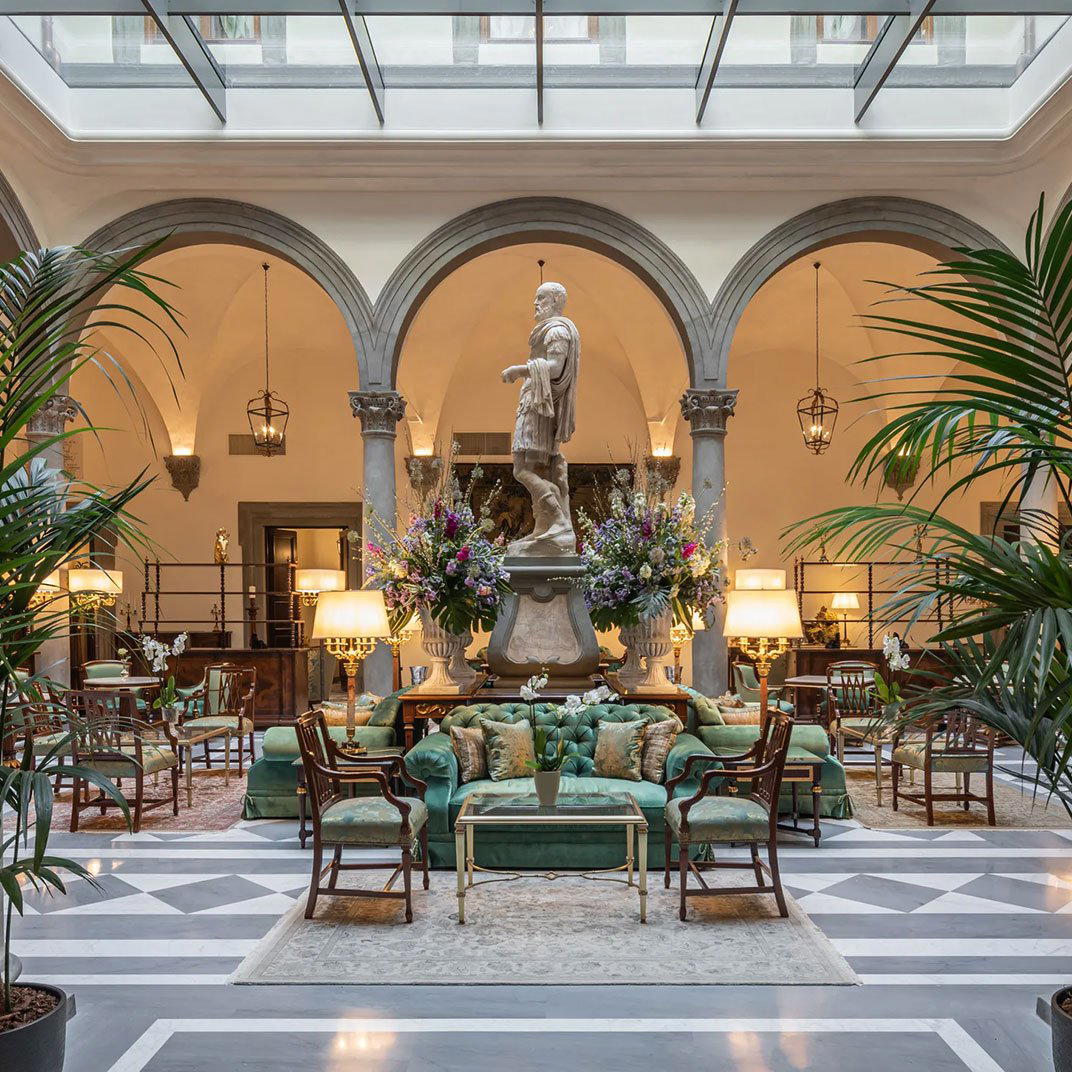
The retreat operates across five distinct villas and one suite, totalling twenty rooms: seventeen doubles and three singles. That configuration is deliberate. Rather than a single large structure subdivided into rooms, each villa maintains its own identity, with Renaissance architectural detailing restored by local craftsmen. The result is a property that functions more like a private village than a conventional hotel, guests occupy a residence rather than a room, with shared access to the park, the pool, the spa, and the restaurant forming the connective tissue between structures.
The park itself extends across verdant grounds, with a 150-square-metre pool at its centre. An ancient bastion in the eastern section has been converted into a natural viewpoint, positioning it as the kind of space that rewards an early morning walk rather than a programmed excursion. The aromatic planting throughout the gardens is a form of design that functions sensorially without requiring description: the territory communicates its character through its own materials.
For travellers choosing between this format and an urban base, the fifteen-minute drive to Florence's centre is the key practical variable. Properties like the Brunelleschi Hotel, Hotel Calimala, and Ad Astra place guests within the ring of the historic centre; Dimora Ghirlandaio trades that immediacy for space, silence, and the particular logic of a working estate. Neither choice is wrong, they answer different questions about what a Florentine visit is for.
The Restaurant as Private Infrastructure
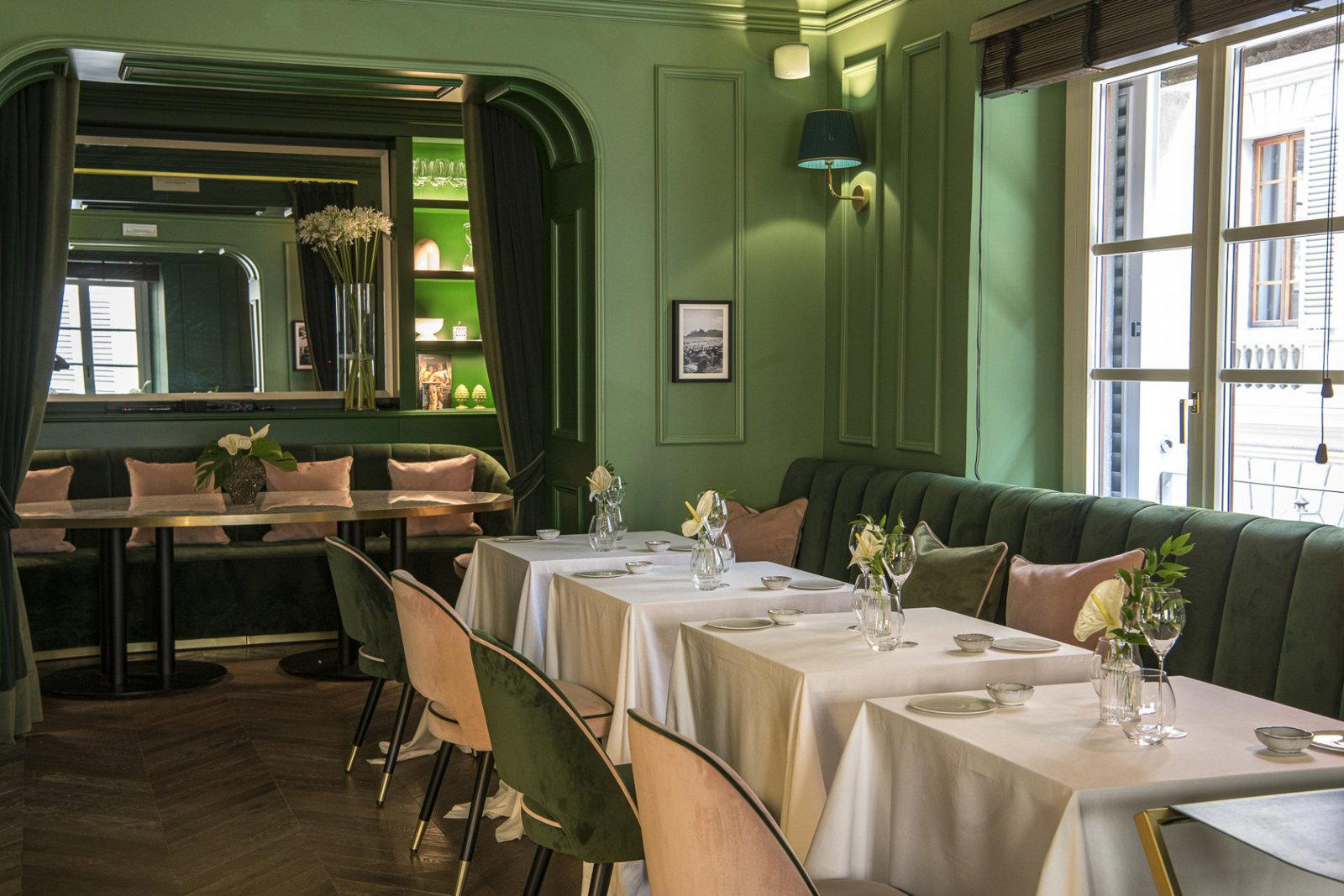
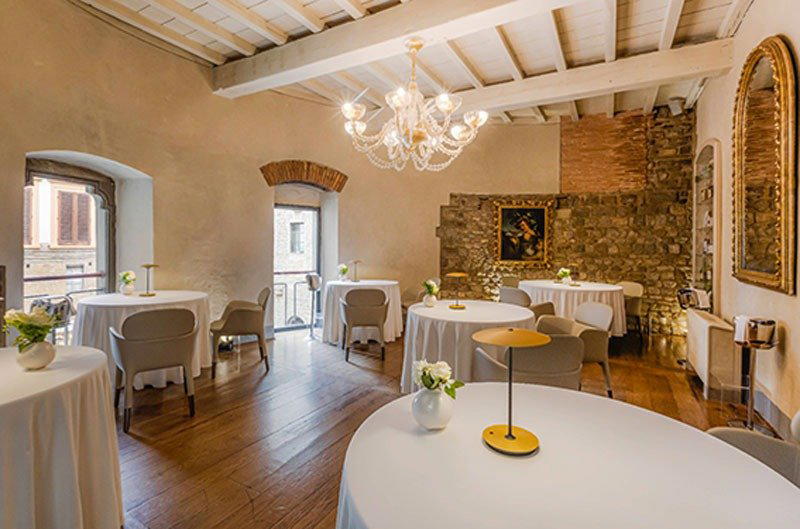
The restaurant at the hotel is open exclusively to guests. That restriction is not incidental, it is a statement about who the dining room is designed to serve and what it is designed to do. In the premium rural retreat category across Italy, this approach is relatively common: Casa Maria Luigia in Modena and Borgo Egnazia in Savelletri di Fasano both operate variations of captive dining that position the table as an extension of the stay rather than a standalone destination.
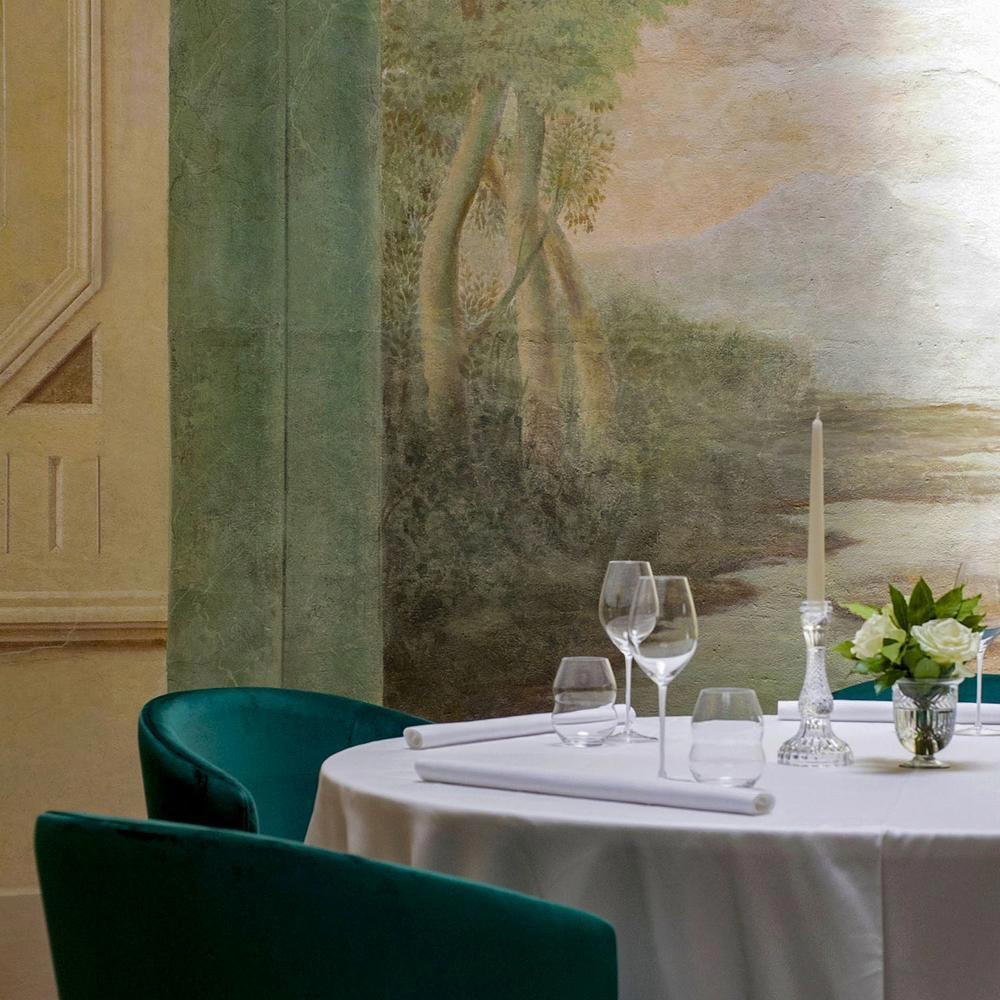
What this format implies, structurally, is that the menu must work across multiple meals for the same guests, it cannot rely on the single-visit logic of a destination restaurant. The kitchen faces the more demanding brief of sustaining interest across a stay rather than delivering one spectacular evening. That tends to produce either deep engagement with local seasonal produce (the approach most serious rural Italian kitchens take) or a retreat into safe international repertoire. The garden-facing setting of the restaurant, and its position within a property with connections to Florentine Renaissance culture, suggests the former orientation.
Where Dimora Ghirlandaio Sits in the Wider Italian Conversation
The Italian countryside retreat has become a significant hospitality category in its own right, with properties across regions competing for a traveller who wants deep provenance alongside five-star service. Aman Venice, Il Pellicano in Porto Ercole, Il San Pietro di Positano, and Passalacqua in Moltrasio each anchor their appeal in a specific geographical identity. The hotel's proposition is more compressed geographically, it is, at its core, a Florentine hills property, but the specificity of its Renaissance art history gives it a narrative that purely scenic properties cannot match.
That specificity is also what determines who will find it most satisfying. Travellers drawn by the Ghirlandaio-Michelangelo-Raphael thread of Florentine art history will find the property adds a dimension to their visit that no city-centre hotel can replicate. Those primarily interested in Florentine dining, nightlife, or museum intensity may find the fifteen-minute remove a friction that compounds over a longer stay. The hotel is a considered choice, not an obvious one, and that is, in itself, a meaningful signal about the guest it is built for.
Planning Your Stay
The property is located at Via di Colle Ramole, 59, in Impruneta, approximately fifteen minutes by car from central Florence. The hamlet's five-villa, one-suite configuration across twenty rooms means availability is limited by design, advance planning is advised. The intimate spa, the pool, and the guest-only restaurant together shape the on-property rhythm, so the balance between in-house time and city excursions is worth thinking through before arrival.
Fast Comparison
Comparable venues nearby, for context on price, style, and recognition.
| Venue | Cuisine | Price | Awards | Notes |
|---|---|---|---|---|
| Dimora GhirlandaioThis venue — the venue you are viewing | Historic Tuscan estate with authentic Florentine charm | $$$$ | 5-Star | Not listed |
| Hotel Number Nine | Family-owned 5-star luxury boutique in Renaissance building | $$$$ | 5-Star | Santo Spirito |
| Borgo Pignano Florence - A Virtuoso Preview Property | Historic Tuscan estate blending Renaissance heritage with contemporary luxury and artistic curation | $$$$ | 5-Star | La Pietra |
| The Excelsior, a Luxury Collection Hotel, Florence | Historic Florentine palazzo reimagined as a contemporary luxury retreat, blending Renaissance architectural heritage with modern sophistication and refined Italian design. | $$$$ | 5-Star | San Frediano |
| The James Suite Hotel Firenze 1564 | 16th-century Renaissance palazzo with modern luxury restyling | $$$$ | 5-Star | San Niccolo |
| Bernini Palace Hotel | Historic Florentine palazzo with classical architecture, string-course cornices, and wooden shutters; modernized interiors preserving period charm with antiques and contemporary amenities. | $$$$ | 5-Star | San Niccolo |
Recognition history
Dated appearances from independent guides and award organizations, with the underlying list record or original source where available.
Virtuoso Luxury Hotel Partner
Virtuoso
Continue exploring
More in Florence
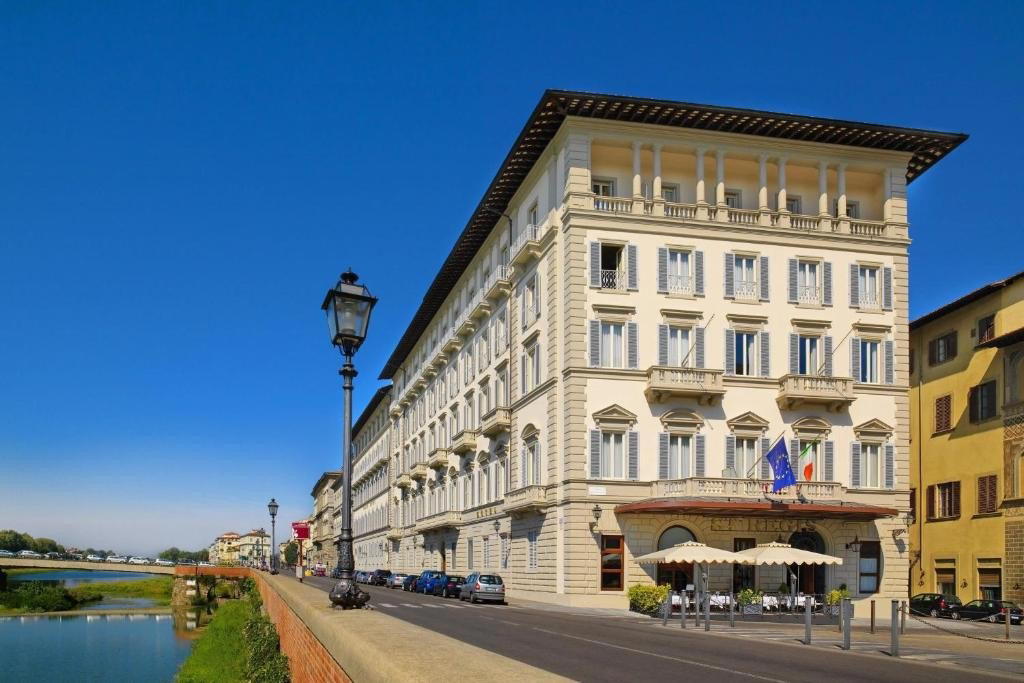
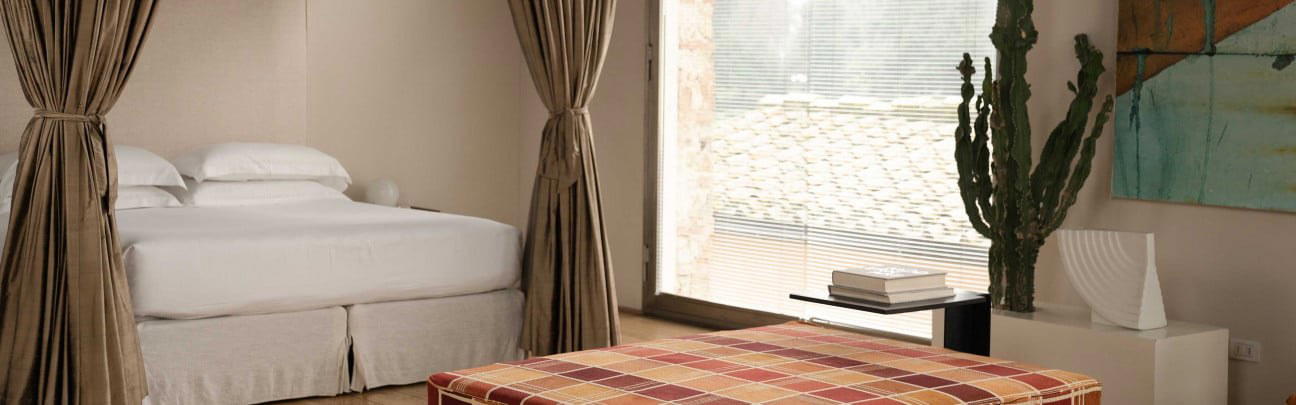
Hotels in Florence
Browse all →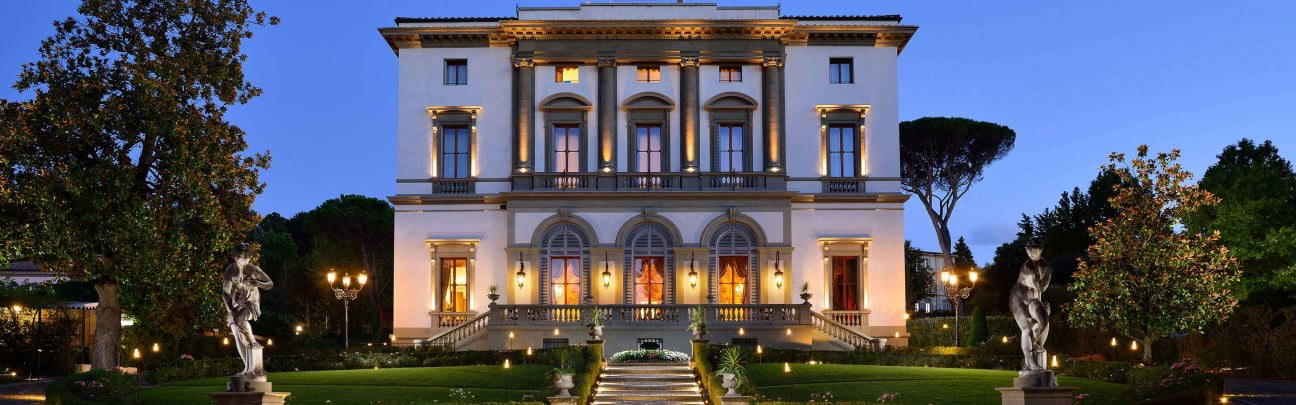
Bars in Florence
Browse all →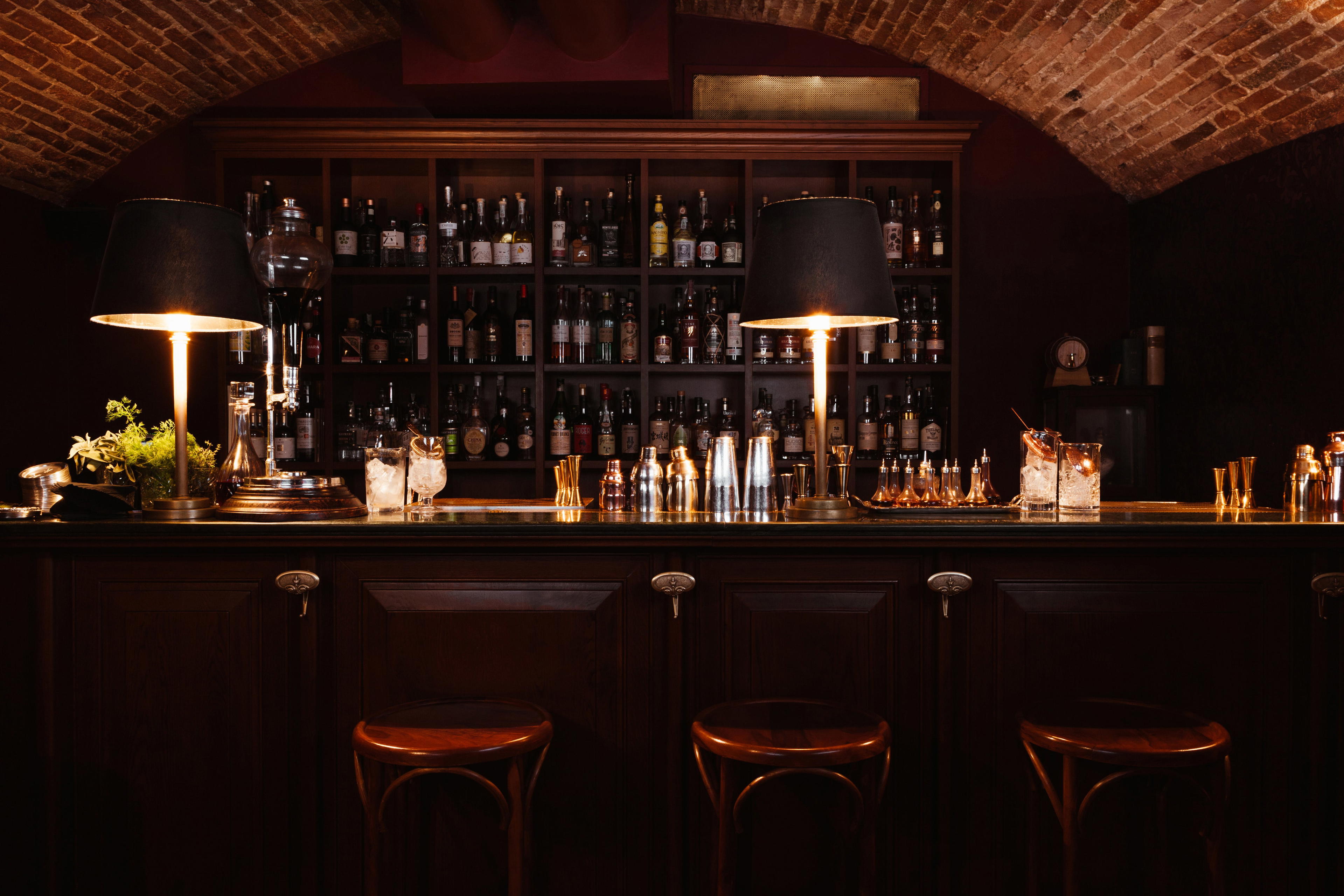
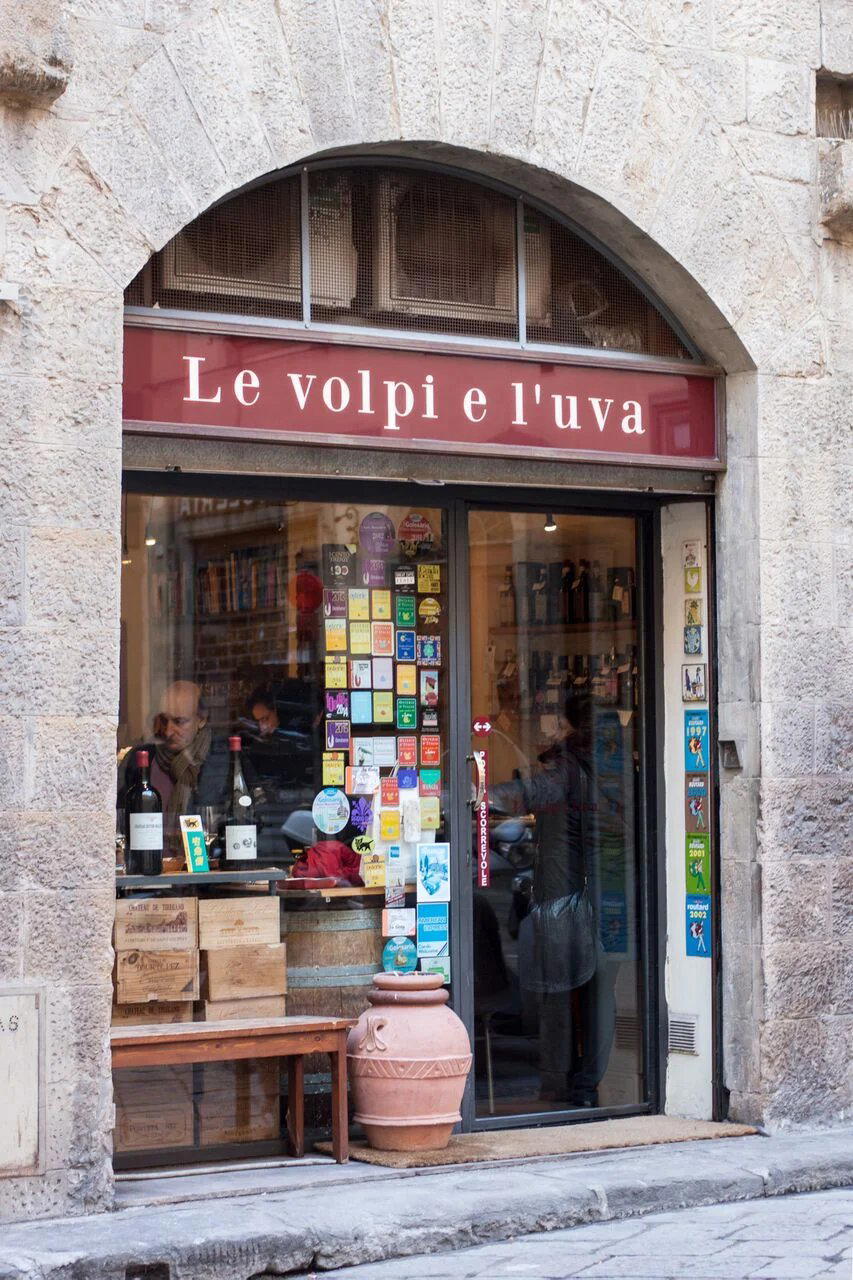
Restaurants in Florence
Browse all →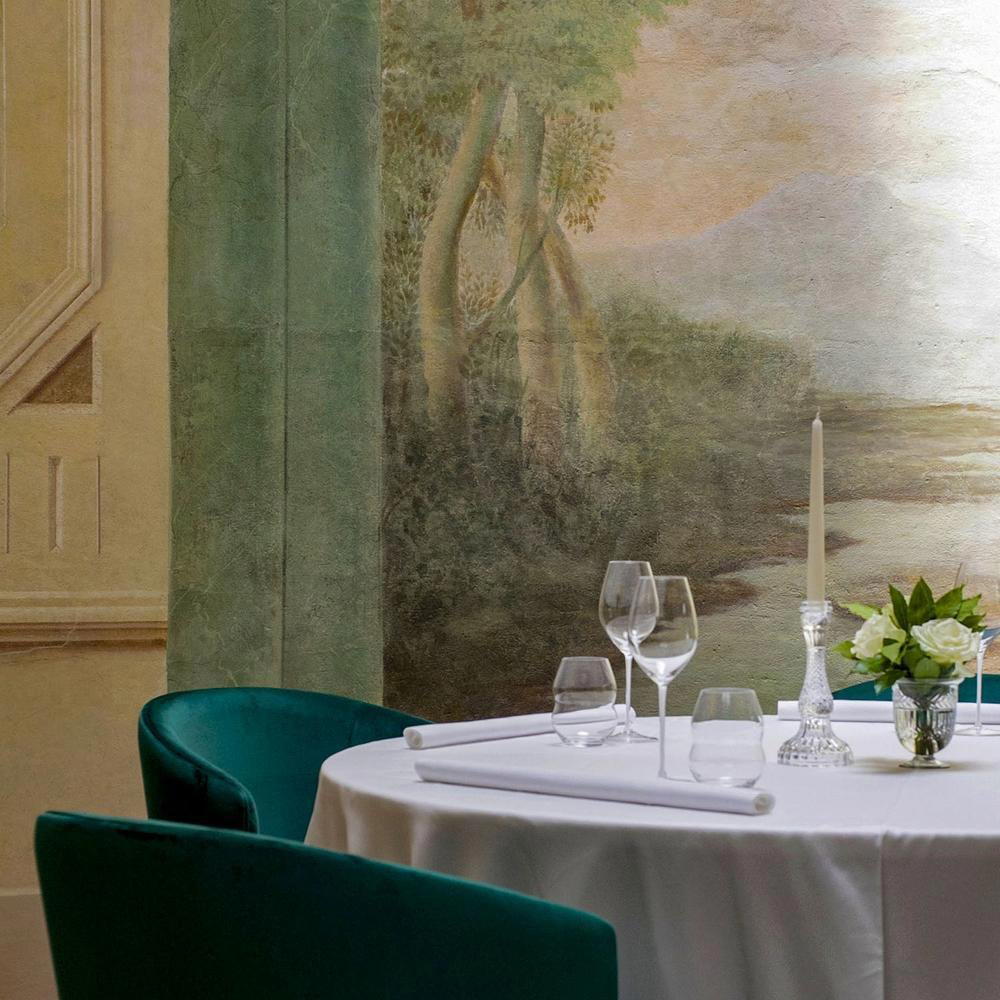
At a Glance
- Elegant
- Romantic
- Cozy
- Classic
- Scenic
- Honeymoon
- Romantic Getaway
- Anniversary
- Wedding
- Weekend Escape
- Historic Building
- Garden
- Terrace
- Panoramic View
- Wi Fi
- Pool
- Spa
- Sauna
- Fitness Center
- Room Service
- Concierge
- Breakfast Included
- Garden
- Wi Fi
- Pool
- Spa
- Sauna
- Fitness Center
- Room Service
- Concierge
- Breakfast Included
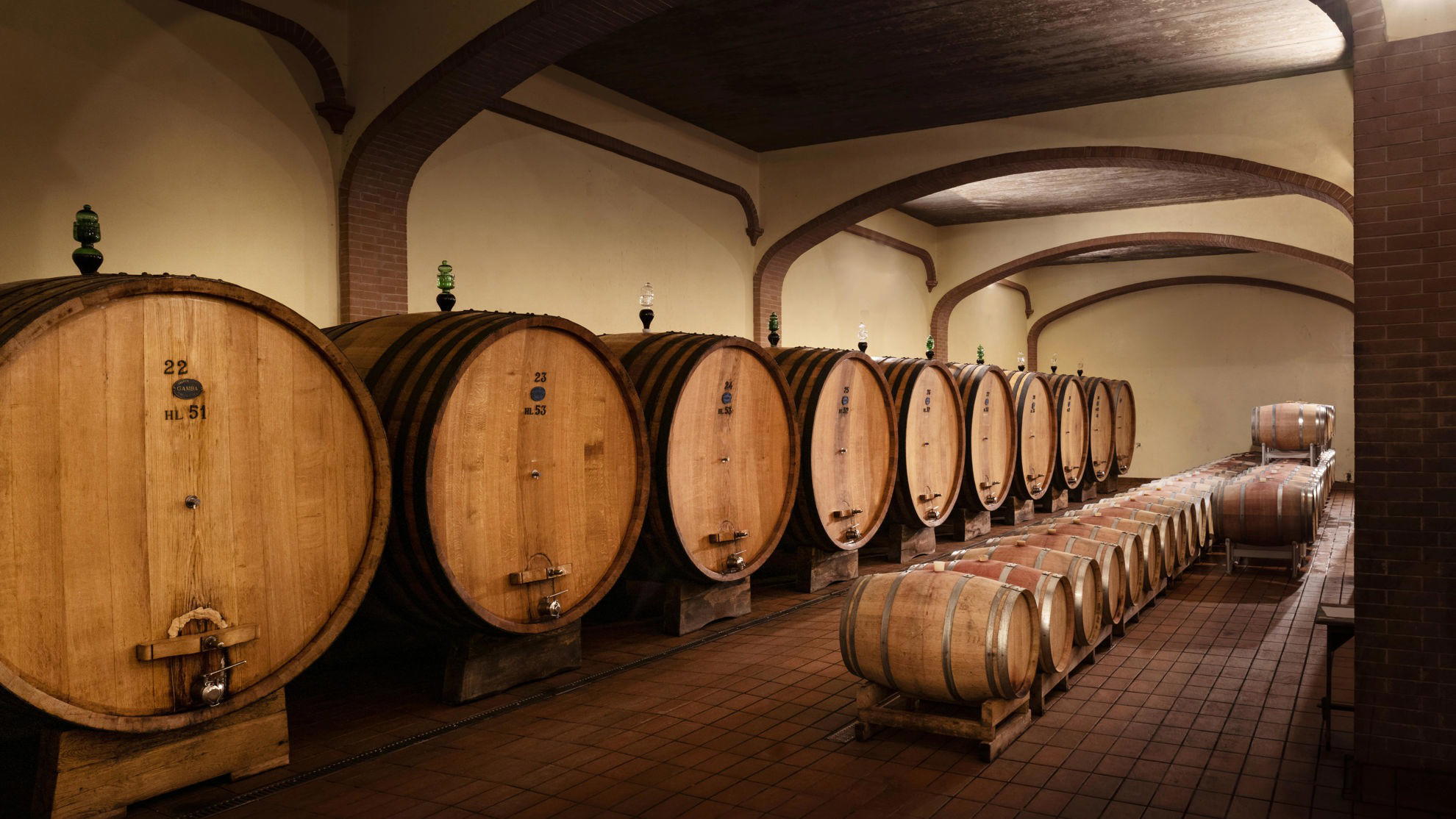
Elegant Tuscan ambiance with vaulted ceilings, stone fireplaces, terracotta tiles, and serene natural surroundings enhanced by spa-like wellness facilities.